On June 8th, 1991, 8,000 U.S. troops marched triumphantly through the streets of Washington, D.C., fresh from a stunning victory in the Persian Gulf. They had ousted Saddam Hussein’s army from Kuwait in one of the most spectacular military operations in history. The 1991 Gulf War was a watershed moment, showcasing the first wide-scale use of smart bombs and a masterclass in multinational cooperation. But beneath the cheers and confetti, a terrifying mystery was already taking root—one that would haunt these heroes for decades.
Statistically, around 2,600 of those 8,000 men would fall extremely ill as a result of their service. Their lives would be marred by disease and pain, their sacrifices forgotten in the fog of victory. This is the mystery of Gulf War Syndrome—a story of invisible wounds, bureaucratic denial, and a battle for recognition that continues to this day.
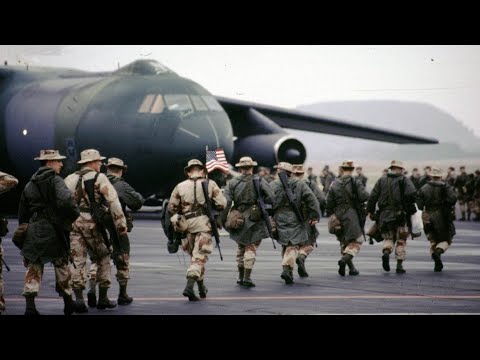
It didn’t take long after the war’s end for veterans to start experiencing medical conditions at alarmingly high rates compared to service members deployed elsewhere. At first, there was reluctance to link these illnesses to combat. Doctors often attributed symptoms to normal ailments or dismissed them as physical manifestations of post-traumatic stress disorder. In the early 1990s, PTSD—still stigmatized as ‘shell shock’—carried a heavy burden. Many service members hid their symptoms, fearing they’d be branded cowards or unfit for duty. Consequently, countless sufferers went undiagnosed for far longer than they should have.
By 1995, U.S. authorities, inundated with complaints from veterans and their families, conducted a massive survey. They compared 15,000 Gulf War veterans with 15,000 personnel deployed elsewhere. The results were shocking: around half of the Gulf War veterans reported illnesses related to their service, compared to just 19% in the control group. This wasn’t just an American problem. In the UK, the British Commons Defense Committee published its first report on what was now being called Gulf War Syndrome.
But the research presented both answers and problems. Yes, service personnel were more likely to suffer ill health after Desert Storm, but their symptoms were wide-ranging and lacked a common factor. There was no specific disease that could be categorized as Gulf War Syndrome. Yet it was impossible to ignore that something was happening to thousands of veterans. Common symptoms included chronic fatigue syndrome, fibromyalgia, gastrointestinal issues, and respiratory and skin conditions. The medical community began moving away from the term ‘Gulf War Syndrome’ toward ‘Gulf War Illness’ or ‘undiagnosed illnesses,’ but the public consciousness held onto the original name.
As the new millennium dawned, urgency grew. By 2003, with American and British troops poised to return to the Gulf for Operation Iraqi Freedom, the question of what caused these illnesses became critical. Almost from the moment the correlation was made, blame was pointed at a controversial weapon system: depleted uranium.
Depleted uranium, a byproduct of nuclear power, was repurposed for anti-tank weapons. Its density and kinetic force made it extraordinarily lethal. Upon impact, DU rounds would punch through armor, igniting fuel and ammunition. It wasn’t uncommon for entire turrets of Iraqi tanks to fly off their hulls. Victorious troops would examine the wrecks, often without protective gear. This exposure to radioactive particles became a prime suspect. Professor Yagasaki Katsuma of the University of Ryukyu argued that DU ammunition causes serious radioactive contamination, scattering radioactive materials in the environment. Yet the American and British militaries insisted DU conformed to safety procedures.
Research in 2021 from the University of Portsmouth claimed to ‘conclusively prove’ that DU shells did not play a part in Gulf War veterans’ health conditions. Professor Randall Parish told the BBC that debunking this connection allows the medical community to focus on likely causes. But public confidence in DU weapons remains low. It’s one of the primary potential causes, but not the only theory.
Another theory involves Iraq’s biological and chemical weapon caches. Saddam Hussein had repeatedly used such weapons against Iranian troops and Kurdish resistance. Coalition commanders undertook a three-pronged approach: deny deployment, destroy stockpiles, and vaccinate troops. The first approach succeeded, but the other two generated criticism.
On March 4th, 1991, U.S. combat engineers detonated large numbers of explosives at the Khamisiyah ammunition storage facility in Iraq. The massive explosion produced an ominous black mushroom cloud that rose into the sky and could be seen for miles. At the time, commanders believed only conventional weapons were stored there. But later evidence emerged that chemical weapons may have been present. When the demolition was carried out, deadly chemical agents were released into the plume and carried across the Persian Gulf, where troops were celebrating victory.
In 1996, U.S. authorities admitted they knew such weapons were at Khamisiyah in March 1991. The investigation into the ‘plume of death’ has been frustrating. Computer models from the Department of Defense and CIA proved wildly inconsistent, with estimated troop exposure numbers varying wildly. In 2017, Dr. Linda Chao of the San Francisco Veterans Affairs Medical Center found that veterans with predicted exposure had significantly smaller hippocampi on brain scans—a difference that remained significant even after accounting for other factors.
Vaccinations also came under scrutiny. U.S. troops received inoculations against yellow fever, typhoid, cholera, and more. 150,000 troops received anthrax vaccines, and 8,000 received the botulinum toxoid vaccine. Thousands were issued pyridostigmine bromide tablets, not approved by the FDA but given under a waiver. Soldiers who refused were reportedly threatened with severe punishment. The National Academy of Sciences concluded in 2000 that there was inadequate evidence to determine an association between multiple vaccinations and long-term health problems. But many veterans were angered that paperwork concerning who received what went missing on both sides of the Atlantic.
In 2003, former British soldier Alex Izett won a case arguing that his osteoporosis was the result of a cocktail of inoculations. What makes this case intriguing is that Izett did not deploy as planned, yet continued to suffer conditions attributed to Gulf War Syndrome. The Ministry of Defense said they would not contest the ruling, but later clarified they still disagreed and saw no link between vaccinations and the syndrome. Izett went on a 40-day hunger strike in 2004 to force an inquiry.
According to the U.S. National Gulf War Research Center, 250,000 veterans out of 700,000 deployed have some form of ill health they believe stemmed from their deployment. The U.S. acknowledged this in 2004, followed by the UK in 2007. But the causes remain debated. Another often-cited cause is the Iraqi army’s setting fire to Kuwaiti oil fields. Over 600 oil fields were ignited, creating an immense black cloud that turned day into night. The fires burned for months, and soldiers inhaled carbon dioxide, sulfur dioxide, and acidic aerosols. Many veterans attribute their ill health to this polluted air.
Despite official acknowledgment, veterans seeking compensation face an impossible task. In 2014, 80% of cases brought forward by veterans were unsuccessful. The 1991 Gulf War shaped geopolitics for 30 years, but the personal stories of those who fought—and still suffer—are often forgotten. This is the mystery of Gulf War Syndrome, a battle that continues long after the guns fell silent.
But the story of Gulf War Syndrome does not end with official recognition. For the men and women who wake each morning to aching joints, crushing fatigue, and a fog that clouds their thoughts, acknowledgment is only the first step in a much longer journey. The fight for effective treatment—and for answers—has become its own kind of war, fought in hospital corridors and research labs rather than desert battlefields.
In the years since 2007, a new generation of researchers has taken up the cause. Unlike the early investigators who sought a single culprit, many now believe the truth is far more complicated. Gulf War Syndrome may not be one illness at all, but a cluster of conditions with multiple triggers—a toxic combination of chemical exposure, experimental drugs, and environmental hazards that overwhelmed the bodies of those who served.
Dr. Lea Steele, a prominent epidemiologist, has argued that the syndrome resembles a ‘toxic soup’ effect. Veterans weren’t exposed to just one hazard; they breathed oil fire smoke, received multiple vaccinations in rapid succession, took pyridostigmine pills, and in some cases encountered chemical agents. Their immune systems and nervous systems were assaulted from several directions at once. For some, the damage proved permanent.
Perhaps the most disturbing findings have come from studies of veterans’ children. Research conducted by Dr. Melissa McDiarmid and others has suggested that Gulf War veterans may be more likely to father children with certain birth defects. A 2005 study of British veterans found a significantly elevated risk of malformations in the offspring of those who served in the Gulf compared to those who did not. The implications were chilling—that the war’s legacy might be written into the very DNA of the next generation.
The U.S. Department of Veterans Affairs has funded numerous research programs, yet many veterans remain skeptical. They point to the slow pace of progress and the fact that, decades later, there is still no definitive diagnostic test for Gulf War Illness. Without a test, there can be no clear diagnosis; without a diagnosis, benefits and treatment remain elusive. Veterans describe a Kafkaesque bureaucracy where they must prove their illness is real, often facing skeptical doctors who suggest their symptoms are psychological.
In 2013, the Institute of Medicine released a report stating that Gulf War Illness is a real condition affecting roughly one-quarter of the 700,000 veterans who served. The report called for a comprehensive treatment strategy, but funding for such programs has remained inconsistent. Meanwhile, veterans continue to age, and their symptoms often worsen. Many now face a second battle: convincing a new generation of physicians that their illness is not simply a product of aging.
Advocacy groups like the National Gulf War Resource Center and Britain’s Gulf War Veterans Association have fought tirelessly for better care. They organize campaigns, lobby politicians, and provide support to suffering veterans. Their motto, ‘Not forgotten,’ serves as both a promise and a demand. Yet the emotional toll is evident in the faces of aging veterans who gather at memorials, their bodies betraying them even as they stand in remembrance of fallen comrades.
As the 30th anniversary of the war approached, the COVID-19 pandemic added a new layer of vulnerability. Veterans with Gulf War Illness often have compromised immune systems, making them more susceptible to severe infections. For many, the isolation of lockdown mirrored the isolation they had felt for years—unseen, unheard, and struggling alone. The pandemic also slowed research, delaying trials of potential treatments that might have offered relief.
One promising avenue of research involves the gut-brain axis. Scientists have observed that many Gulf War veterans suffer from gastrointestinal problems alongside neurological symptoms. Studies are now exploring whether probiotics or dietary interventions could alleviate some of the suffering. Early results have been modest but encouraging, offering a rare glimmer of hope to those who have tried countless failed therapies.
Another area of focus is mitochondrial dysfunction. Some researchers believe that exposure to toxins may have damaged the mitochondria—the energy-producing structures within cells—leading to the profound fatigue that characterizes the illness. If this theory holds, treatments that support mitochondrial health could become a game-changer. Clinical trials are underway, but progress is slow, and veterans grow weary of waiting.
For the families of veterans, the burden is often invisible to the outside world. Spouses become caregivers, children grow up watching parents struggle with simple tasks. The syndrome doesn’t just affect the veteran; it ripples outward, touching everyone who loves them. Support groups have formed online and in person, creating communities of shared experience and mutual understanding. In these spaces, veterans find something the government could never give them: the knowledge that they are not alone.
Yet the question of compensation remains contentious. In the U.S., veterans with Gulf War Illness can receive disability benefits, but the process is arduous. Claims are frequently denied, appealed, and denied again. In 2020, the VA reported that it had granted benefits to more than 100,000 Gulf War veterans, but thousands of claims remained pending or were rejected. The backlog is a source of constant frustration, and many veterans die before their claims are resolved.
In the UK, the situation is similarly fraught. The Ministry of Defence has consistently maintained that there is no single syndrome, and veterans have fought for years for recognition. Some have taken their cases to the European Court of Human Rights, arguing that the government’s failure to provide adequate care violates their rights. The legal battles drag on, consuming time and energy that veterans can ill afford.
As the years pass, the ranks of Gulf War veterans thin. Some have succumbed to their illnesses; others simply grow too tired to keep fighting. But a core group remains determined. They march in parades, they speak at hearings, and they refuse to let the world forget. Their battle is not just for themselves, but for the generations of service members who followed them into conflict—in Iraq, Afghanistan, and beyond.
For the 8,000 who marched through Washington that June day in 1991, the cheers have long faded. But their story—of sacrifice, suffering, and stubborn resilience—continues to unfold. The mystery of Gulf War Syndrome is not just a medical puzzle; it is a human story, written in the lives of those who served and the families who stood by them.
Today, the fight continues in laboratories and courtrooms alike. Researchers are now testing whether exercise therapy or cognitive behavioral therapy can ease symptoms without causing relapse—a delicate balance for bodies that crash after exertion. Meanwhile, younger veterans of Iraq and Afghanistan watch closely, wondering if their own unexplained illnesses will face the same decades of denial.
For the marchers of 1991, the parade is over. What remains is a quieter courage: the daily choice to keep living, keep advocating, and keep hoping. Their war did not end when the guns fell silent—it simply changed battlefields.
So we ask you: when a nation sends its sons and daughters to war, what does it owe them when the invisible wounds appear? Share your thoughts below.
Report this article
Select a reason for reporting:






