On February 19th, 1943, the Eastern Front was on the brink of collapse. In the Wolf’s Lair at Zaporozhia, Hitler remained obstinate, his no-retreat policy absolute. Field Marshal Erich von Manstein, growing desperate, pressed once more. He warned the Führer, “Without permission to retreat, his army faced imminent destruction.” Manstein laid out his strategy—a mobile defense, a tactical withdrawal to overstretch Soviet supply lines, followed by a decisive counteroffensive. But Hitler dismissed the plan. The disagreement boiled over. Furious, Hitler thought about dismissing the Field Marshal.
Suddenly, shouts erupted outside the chamber. The Soviets had launched a blistering, lightning-fast offensive, thrusting deep into German-held territory. They were less than 60 km from Zaporizhzhia, Hitler’s Werewolf headquarters. There was no time to argue. Hitler had to be evacuated immediately. For the first time, the grim reality of the Eastern Front seemed to sink in. His defiance wavered. The counteroffensive was sanctioned. Now, only Manstein and his plan stood between the Wehrmacht and annihilation.
The disaster at Stalingrad in early February 1943 marked a watershed moment in World War II. The encirclement and eventual surrender of the German Sixth Army, including almost 300,000 soldiers trapped and annihilated, shattered Hitler’s dream of conquering the Soviet Union. A campaign that had seemed well on track to defeat the Soviet Union was turned on its head. The Soviets were emboldened, eager for vengeance. They launched a series of ferocious offensives across the Eastern Front.
By February 1943, the Red Army had ripped through the Axis lines along the Don River, decimating the Hungarian Second Army, the Italian Eighth Army, and several Romanian divisions. The German front collapsed like a set of dominoes as the Soviets captured Voronezh and encircled cities such as Kursk, Kharkiv, and Rostov. Even now, Hitler refused to acknowledge the severity of the situation. It was as if he himself had bought the Nazi propaganda that claimed the Soviets were defeated, exhausted, and incapable of fighting a prolonged war. Most German officers clung to the idea that any Soviet counterattack would be short and unorganized.
Hitler did what he had done the year before when the Wehrmacht was repelled at the gates of Moscow. He ordered his armies to hold their positions at all costs, and there would be no retreats under any circumstances. Furloughs for all German soldiers were immediately suspended. All Germans on the front line had to fight until their last breath. Hitler even swallowed his pride and contacted Benito Mussolini to ask him to order his Italian army in Russia to do the same and hold their ground. Mussolini accepted reluctantly, not without pleading with Hitler to reach a peace deal with Stalin. For Il Duce, this was the only way they could come victorious in the war, as the situation in the west and North Africa was quickly deteriorating. And he did not see how the Axis could continue to fight on several major fronts at once. Hitler, of course, had no intention of negotiating peace with Stalin.
Field Marshal Erich von Manstein, who had been sent to liberate the Sixth Army trapped in Stalingrad, found himself in a harrowing situation. Not only was there no army to save by early 1943, but his own army group was on the verge of being encircled in another pincer maneuver similar to that which sealed the fate of the Sixth Army. He needed to retreat now, or his forces would be annihilated and with them the stability of the entire German front. He repeatedly urged Hitler to authorize strategic withdrawals to avoid encirclement and regroup for a counteroffensive. Manstein, known for his operational brilliance, argued that it was in letting the overconfident Soviets overextend their advantage that they could create an opportunity to strike back. But Hitler would not have it. The situation became so hostile between them that Hitler seriously considered dismissing him as field marshal.
The disagreement reached a critical point on February 19th, 1943, when the shocking news arrived. The Soviet vanguard was less than 60 km away. There were no German troops between the approaching force and Zaporozhye. Hitler was evacuated immediately, not before relenting and accepting Manstein’s plan. The field marshal finally had the permission to retreat and counterattack and the resources to do so. However, the Soviet offensive was upon him. For Manstein, it was perfect. The farther the Soviets overextended, the more effective his trap would be once it snapped.
The Third Battle of Kharkov began on February 21st, 1943, when Manstein executed his carefully laid plan. Using the SS Panzer Corps and the 48th Panzer Corps, he would strike the flanks. His objective was to encircle and destroy the Soviet spearheads and then use the momentum to retake the city of Kharkov.
As Soviet forces, high on their numerous victories after Stalingrad, continued to push deep into German-held territory, their momentum seemed unstoppable. But Manstein could see they were overextending their supply lines and spreading their manpower too thinly. Most of the forces had been deployed to the spearhead of the bulge, leaving the flanks woefully exposed.
The field marshal instructed his group to allow the Soviets to continue their advance, meeting their eagerness with measured and strategic retreats. When the moment was right, Manstein swiftly organized the 7th, 11th, and 17th Panzer divisions, along with the elite Wiking SS division, to form a striking force and attack from the south near Stalino. At the same time, the Fourth Panzer Army and SS Panzer Corps attacked from the west, creating a classic pincer maneuver.
This move, a callback to the Blitzkrieg tactics that had taken Europe by storm at the beginning of the war, took the Soviets off guard and threw their advance into disarray. Manstein also leveraged the weather and terrain to his advantage. The harsh winter conditions that had often hampered German offensives were now turned against the Soviets. Frozen rivers and snow-covered plains became avenues for rapid Panzer movement, while the cold immobilized the rapidly stretching Soviet supply lines trying to catch up with the vanguard.
Cleverness was the only thing he could use to his advantage now. If his memoirs are to be believed, Army Group South was outnumbered eight to one by the beginning of 1943. The gamble paid off. The spearheads of the Soviet 6th Army and mobile group Popoff were caught off guard, encircled, and destroyed in one devastating and overwhelming swoop. The massively overextended supply lines meant the vanguards had no way to get reinforcements. And what was a victory dash was turned into a humiliating defeat.
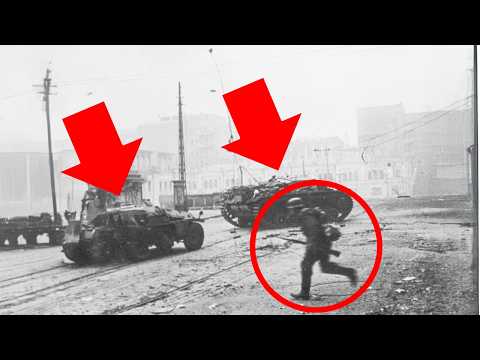
With the spearheads annihilated, Kharkiv was left cut off and vulnerable. Manstein pushed his advantage, and by March 11th, the city was encircled by German forces. The 2nd SS Panzer Corps launched its assault on Kharkiv on March 5th, 1943, spearheaded by Leibstandarte SS Adolf Hitler, Das Reich, and Totenkopf divisions.
The attack was characterized by brutal close-quarters combat as the Soviets had transformed the city into a fortress with barricades, mined streets, and sniper nests embedded in the ruins. The SS units adopted a combined arms approach using assault guns, flamethrowers, and infantry in small unit tactics to clear Soviet strong points block by block. The T-34s of the Soviet 3rd Tank Army attempted counterattacks, but struggled in the city’s tight confines against German Tiger and Panther tanks, which dominated long sight lines.
By March 9th, Das Reich captured Dzerzhinsky Square, the city’s administrative heart, but fierce resistance from Soviet Guards Rifle Divisions slowed their advance. On March 11th, Totenkopf flanked the defenders from the north, completing the encirclement. Over 4,500 Soviet troops were cut off and annihilated in the city’s industrial sector. By March 15th, Kharkiv had fallen, leaving over 20,000 Soviet fallen and another 15,000 captured. The Germans suffered around 11,500 casualties.
Manstein’s strategy had done the impossible and had given the Germans what would become their last major victory in the war. Not only that, but historians argue that if it hadn’t been for this sudden pushback by the Germans, thanks to Manstein’s genius, the Soviets would have reached Berlin an entire year before they actually did. Single-handedly, Manstein had extended the war for a year.
After taking the city, Manstein was hailed as a national hero. The front lines stabilized and the Germans again believed they were on an inevitable path towards victory. The next 3 months saw limited actions with Hitler even allowing German soldiers to go back home.
But no matter how brilliant Manstein’s tactics were, it was only a matter of time before attrition and overextension brought the Third Reich’s eventual collapse.
Yet the victory at Kharkov carried a poison pill that few in the German high command fully grasped. The SS Panzer Corps, which had been the spearhead of Manstein’s counterstroke, had suffered heavily. The Leibstandarte, Das Reich, and Totenkopf divisions were now bloodied and exhausted, their ranks thinned by weeks of brutal urban combat. Manstein pleaded with Hitler to keep these elite formations under his operational control, to husband them for the next inevitable Soviet thrust.
Hitler refused. “The SS divisions are needed elsewhere,” he declared, and in a decision that would haunt the German war effort, he ordered them transferred to the West and to Italy. Manstein was left with a hollow victory—his best troops stripped away just as the spring rasputitsa began to dry and the Soviets regrouped.
In Moscow, Stalin was furious. The loss of Kharkov and the destruction of the advancing Soviet spearheads was a humiliation that could not stand. He summoned his senior commanders, including Zhukov and Vasilevsky, and demanded answers. The Red Army had been caught with its flanks exposed, its supply lines stretched to breaking point. It was a lesson written in blood.
The Stavka began a thorough reorganization. New tank armies were formed, reserves were mobilized, and the Red Army’s logistics corps was overhauled to prevent the kind of overextension that Manstein had so ruthlessly exploited. The Soviets were learning—and they were learning fast.
By early summer, the front had settled into an uneasy quiet. Both sides prepared for the next round. Manstein, ever the operational thinker, proposed a new plan. He wanted to strike first—to launch a limited offensive that would trap Soviet forces in the Kursk salient, a massive bulge in the German lines that invited encirclement. Hitler, however, had his own ideas.
The Führer was determined to prove that Germany was still capable of great offensive action. He ordered the preparation of Operation Citadel, a massive pincer attack against the Kursk salient. Manstein warned that the Soviets had had months to fortify the salient. “They know we are coming,” he argued. “They have turned Kursk into a fortress.”
But Hitler was adamant. The new Tiger and Panther tanks, along with the Ferdinand tank destroyers, would smash through the Soviet defenses. The German war machine would demonstrate its superiority once more. Manstein, though skeptical, prepared his forces for the assault.
What neither man knew was that the Soviets had placed a mole deep within the German intelligence apparatus. Lucy, the spy ring operating out of Switzerland, had provided the Red Army with detailed plans of the German offensive. The Soviets knew the exact timing, the exact axis of advance, and the exact composition of the German forces.
The stage was set for the greatest tank battle in history—and for the moment when the tide of war would finally and irrevocably turn against the Third Reich.
When Operation Citadel began on July 5th, 1943, the Soviets were ready. Eight defensive belts, a million mines, and thousands of anti-tank guns met the German spearheads. “The Tigers are burning,” a Soviet gunner reportedly radioed, as the new panzers stalled in the minefields.
Manstein’s northern pincer made little headway; the southern thrust under Hoth ground forward but bled white. At Prokhorovka, the SS Panzer Corps collided with the Soviet 5th Guards Tank Army in a swirling melee of steel and smoke. Neither side broke—but the Germans could not afford the losses.
On July 12th, the Soviets struck the exhausted German flanks, and Hitler, alarmed by the Allied landings in Sicily, cancelled Citadel entirely. Manstein was furious. “We were on the verge of a great victory,” he protested, but the Führer had already turned away.
From that summer onward, the Wehrmacht never regained the initiative. Manstein’s brilliance had bought a year—but time was now the enemy’s ally. The road to Berlin had begun.
Was Manstein a military genius trapped by a madman—or does brilliance without a moral compass only prolong the inevitable?
Report this article
Select a reason for reporting:






