At 6:30 a.m. on June 6, 1944, an 18-year-old German machine gunner named Franz Gockel pressed his eye to the slit of a concrete bunker overlooking Omaha Beach. Through the morning haze, he saw hundreds of landing craft emerging from the gray water, their ramps dropping to release wave after wave of American soldiers directly into his kill zone. The largest seaborne invasion in human history had begun—and the young men inside those bunkers were about to endure the most terrifying morning of their lives.
For the defenders of the Atlantic Wall, June 6th was not a story of glory or heroic last stands. It was a story of confusion, terror, and a catastrophic failure of command that left ordinary soldiers fighting alone against overwhelming odds.
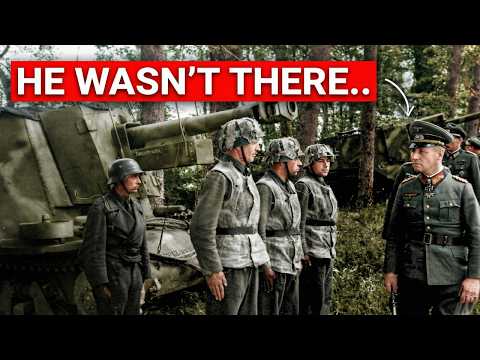
These were not faceless enemies. They were young men, many still teenagers, who woke that morning expecting another routine day of occupation duty. By nightfall, thousands would be dead, wounded, or prisoners, their defensive positions shattered by the largest armada ever assembled.
The Atlantic Wall was Nazi Germany’s answer to the inevitable Allied invasion of Western Europe—a vast network of fortifications stretching from Norway to the Spanish border. Hitler had ordered its construction in 1942, envisioning an impenetrable barrier. By 1944, it consisted of over 15,000 concrete emplacements, reinforced with artillery batteries, machine gun nests, and millions of mines.
Propaganda films showed formidable bunkers bristling with guns. The reality on the ground was considerably less impressive.
Field Marshal Erwin Rommel, the famous Desert Fox, had been appointed commander of Army Group B in late 1943 with orders to prepare the defenses. Rommel brought an energy and urgency that had been lacking. He knew from North Africa what Allied air power and naval gunfire could do. He was convinced the invasion had to be stopped on the beaches within the first 24 hours. If the Allies established a secure beachhead, he believed, the war would be lost.
Rommel drove his men relentlessly through the winter and spring of 1944. He ordered over 6 million mines along the French coast—though he wanted far more. He had wooden poles, many tipped with mines, driven into the beaches and fields. These became known as Rommel’s asparagus. He ordered the flooding of low-lying areas to trap paratroopers. He inspected positions constantly, appearing unannounced to terrify complacent officers.
The field marshal understood what many in the High Command refused to accept: this would be the decisive battle in the west, won or lost in the first crucial hours.
Yet the Atlantic Wall suffered from critical weaknesses that propaganda carefully concealed. The fortifications were incomplete, particularly along the Normandy coast, considered a less likely target than the Pas de Calais. Many positions lacked their intended heavy artillery. Ammunition was limited. And the troops manning these defenses varied wildly in quality and motivation.
Some units, like the 352nd Infantry Division at Omaha Beach, contained experienced soldiers transferred from the Eastern Front who had survived years of brutal combat. Others were static divisions filled with older men, wounded veterans, and—most problematically—the Ost battalions.
These Ost battalions were one of the war’s strangest and most tragic ironies. Composed of former Soviet prisoners of war—Georgians, Ukrainians, Armenians, Azerbaijanis, Poles, and Central Asians—they had been given a grim choice between starving in German camps or serving in the Wehrmacht. Many were barely 20 years old and simply wanted to survive. Now they found themselves defending Hitler’s Europe against the very Allies who might liberate their homelands. Their reliability was a constant concern.
The 716th Infantry Division, responsible for defending Gold, Juno, and Sword beaches, was one such static formation. Its approximately 7,000 men were spread impossibly thin, with strongpoints spaced 600 to 1,000 meters apart. The division included Ost battalions 439, 441, and 642, composed of Ukrainian and Eastern European conscripts. The commander, General Leutnant Wilhelm Richter, had reported that Ost battalion 642’s attitude and training were “not fit at all for combat.” By February 1944, this unit had been relegated to construction work. Many of these men had never fired a weapon in combat. Some did not even speak German well enough to understand orders. They were expected to hold against the finest armies Britain and America could field.
The 352nd Infantry Division presented a starkly different picture. Formed in late 1943 from cadres with extensive Eastern Front experience, it had reinforced the Normandy coast only months before D-Day—a crucial fact Allied intelligence had missed entirely. The division fielded roughly 12,000 men, with its 916th Grenadier Regiment directly defending Omaha Beach. These soldiers knew what war was. They had survived the Russian winter and the grinding attrition of the Eastern Front. They would not break easily under fire.
In the weeks leading up to June 6th, life along the Normandy coast had settled into a tense but predictable routine. The Germans knew an invasion was coming. The only questions were where and when. Allied bombing had been intensifying for months. The Luftwaffe had been swept from the skies. German reconnaissance aircraft rarely returned. The defenders could only wait and watch the gray waters of the English Channel.
On the morning of June 4th, 1944, Rommel departed his headquarters for Germany. He arrived at his family home on June 5th. June 6th was his wife Lucie’s 50th birthday, and he had brought her a gift: a pair of gray suede shoes, size 5 and 1/2, purchased in Paris. He also planned to meet with Hitler to request additional panzer divisions. His departure had been encouraged by the Luftwaffe meteorologist Major Heinz Lettau, who advised that bad weather made an invasion impossible for at least two weeks. The storms raging across the Channel seemed to confirm this.
That forecast proved fatally wrong because of a critical intelligence gap the Germans did not even know existed. They had lost access to weather stations in the North Atlantic after Allied forces captured or destroyed facilities at Jan Mayen Island, Greenland, and Spitsbergen. German submarines that had once provided weather data were being hunted relentlessly. Professor Walter Stube, the Luftwaffe meteorologist in Paris, predicted two weeks of continuous storms based on limited information. Meanwhile, the Allies possessed weather data the Germans could not obtain. Group Captain James Stagg identified a brief window of acceptable weather from a single ship’s barometric reading 600 miles west of Ireland. General Eisenhower seized that narrow window, committing to June 6th. The Germans never saw the break in the storm coming.
Rommel was not the only senior commander absent. General Friedrich Dollmann of the 7th Army had scheduled a war game exercise in Rennes on June 6th—ironically designed to simulate an Allied landing in Normandy. The scheduling had pulled division commanders onto the roads, away from their headquarters. General Edgar Feuchtinger of the 21st Panzer Division, the only armored unit within immediate striking distance, was reportedly visiting his mistress in Paris. Sepp Dietrich of the 1st SS Panzer Corps was in Brussels. The entire German command structure along the Normandy coast had been decapitated before a single shot was fired.
The first warnings came shortly after midnight when German sentries reported low-flying aircraft over the Cotentin Peninsula. By 0030, reports of paratroopers landing behind the beaches began reaching Corps headquarters. The initial reaction was uncertainty and confusion. Previous false alarms and the memory of the 1942 Dieppe raid made commanders reluctant to declare a maximum alert. Some units were stood to, then stood down. Communications were sporadic and filled with contradictory reports.
At roughly 0100 hours, German naval radar detected what appeared to be a massive invasion fleet heading toward Pas de Calais. This was actually Operations Glimmer and Taxable—elaborate Allied deception operations using aircraft dropping strips of aluminum foil called Window to create phantom radar signatures mimicking a huge naval convoy. A full invasion alert was issued for the Calais and Dunkirk sector. German attention was fixed on entirely the wrong stretch of coast.
Meanwhile, hundreds of dummy parachutists were landing across the Norman countryside. These were simple burlap dummies about three feet tall, equipped with devices that simulated rifle fire and small explosions when they hit the ground. The Germans called them Puppen—dolls. Operation Titanic succeeded far beyond Allied hopes in sowing chaos. Most significantly, the 915th Grenadier Regiment, the 352nd Division’s only mobile reserve, was dispatched inland to chase these phantoms away from the actual landing beaches. When the real invasion began at dawn, this regiment was miles from where it was desperately needed.
General Leutnant Wilhelm Falley of the 91st Air Landing Division was driving back to his headquarters from the Rennes war game when he heard aircraft engines overhead and saw parachutes blossoming in the darkness. He ordered his driver to turn around and race back to his command post. Near the village of Picauville, his staff car drove directly into an ambush set by paratroopers of the American 82nd Airborne Division’s 508th Parachute Infantry Regiment. First Lieutenant Malcolm Brannon later recalled the chaotic encounter. Falley’s car came roaring toward them and was immediately taken under fire from multiple directions. The vehicle crashed into a wall. In the confusion, the general fell out and attempted to draw his pistol. Brannon and his men opened fire. Within seconds, it was over. Falley became the first German general killed in Normandy, shot dead on a dark French road before ever reaching his troops. His division would fight the coming battle without its commander.
At approximately 0400, Franz Gockel’s position at Widerstandsnest 62 on Omaha Beach spotted the first silhouettes of ships appearing on the horizon. The young machine gunner could scarcely believe what he was seeing. Four days later, still recovering from his wounds in a field hospital, he wrote to his parents describing what happened next: “At dawn, around 4:00 in the morning, they could make out the silhouettes of the first large enemy ships. They had barely been seen when flashes of lightning were already erupting from their guns at an infernal rate.” The naval bombardment had begun.
For the men inside the concrete bunkers, what followed was beyond anything they had experienced or imagined. Five battleships, 23 cruisers, and 65 destroyers opened fire nearly simultaneously along a 50-mile front. Gockel described the incoming shells as forming “a monstrous rolling wall of fog and smoke” that advanced toward his position, knocking everything down. The ground shook violently. Concrete cracked. Men pressed themselves against the walls and prayed. Veterans who had survived the Eastern Front said this bombardment was worse than anything they had experienced on the Russian steppes.
At Widerstandsnest 62, 20-year-old Heinrich Severloh of the 352nd Infantry Division prepared his MG 42 machine gun as the bombardment lifted. This belt-fed weapon could fire 1,200 rounds per minute in short bursts—its distinctive tearing sound earning it the nickname “Hitler’s buzzsaw.” Beside him, First Lieutenant Bernhard Frerking coordinated pre-registered artillery fire using coded target zones with names like Arnsberg, Anhalt, and Ursula. Every section of the beach below had been carefully designated, measured, and assigned to specific artillery pieces. They had rehearsed this defensive plan countless times.
The bombardment finally lifted, and in the sudden relative silence, the defenders strained to see through the lingering smoke. Then they saw them clearly for the first time—landing craft by the hundreds, wallowing through the surf toward the beach in long parallel lines.
At 0630, the first American assault wave hit Omaha Beach. The 352nd Division’s defenders, firing from elevated positions overlooking a natural amphitheater of sand, had exactly the killing ground they had been trained to exploit. The bluffs rose 30 to 40 meters above the beach. The draws—the few natural exits leading inland—were covered by interlocking fire from multiple bunkers. It was a near-perfect defensive position against an amphibious assault.
Severloh later described the scene in his memoir, published in 2000 after more than 50 years of painful silence: “Then the killing began. There was shooting for all the barrels could hold. Soon, the whole beach was full of Americans. They could not understand that they kept coming in the hail of fire despite their heavy losses.” He fired his MG 42 in sustained bursts, watching tracer rounds arc across the beach, watching men fall in the surf and on the sand. When the machine gun overheated, he grabbed a rifle and continued. He fired until his fingers cramped and his shoulder ached.
Omaha Beach was different from the other four landing zones, and the German defenders there achieved a terrible efficiency that nearly threw the invasion back into the sea. Allied intelligence had missed a critical fact: the 352nd Infantry Division had recently reinforced the original 716th Division defenders, nearly doubling the defensive strength the Americans would face. The 15 Widerstandsnest along Omaha were designed for enfilade fire—the pillboxes in the draws fired laterally along the length of the beach rather than directly at it, remaining concealed from naval guns while sweeping the sand with devastating crossfire. Soldiers advancing straight toward the bluffs exposed their flanks to murderous fire from both directions simultaneously.
Within minutes of the first wave landing, the beach became a charnel house. Landing craft exploded when they struck underwater obstacles or took direct hits from artillery. Bodies piled against the seawall where men sought shelter. Officers and sergeants fell in disproportionate numbers, leaving leaderless men pinned down in the bloody water and behind steel obstacles. The few tanks that made it ashore were quickly knocked out by anti-tank guns. Survivors huddled behind steel beach obstacles and the bodies of their fallen comrades, unable to move forward toward the bluffs or retreat back to the sea.
Offshore, General Omar Bradley watched the disaster unfold through binoculars with growing horror. He later admitted he seriously considered evacuating Omaha Beach entirely and diverting all follow-up forces to Utah Beach instead.
Inside the bunkers, the German defenders kept firing without respite. First Lieutenant Frerking directed artillery with cold precision, calling fire onto specific coded zones as American soldiers clustered for cover in predictable locations. When telephone communications with the artillery batteries failed due to severed lines, he switched to visual signals and prearranged firing schedules. The artillery continued to fall on the beach at regular intervals, adding to the carnage already being inflicted by the machine guns and mortars.
The defense was working exactly as Rommel had designed it to work. Yet even at bloody Omaha, the German position was fundamentally doomed by factors the men in the bunkers could not control. They had no reserves coming—only the phantom-chasing 915th Regiment wandering inland. They had no air support; not a single Luftwaffe aircraft appeared over the beaches that entire morning. They had no naval forces to contest the massive fleet offshore. They could inflict terrible casualties on the assault waves, but they could not throw the invasion back into the sea permanently.
One by one, small groups of American soldiers began finding paths up the bluffs between the strong points—led by sergeants and lieutenants and sometimes privates who simply refused to die on that beach. Navy destroyers sailed dangerously close to shore as the morning progressed, their crews risking grounding on sandbars to provide direct fire support against the visible bunkers. The commander of the USS McCook ordered his ship into water barely deep enough to float, firing point-blank at German positions he could see clearly from the bridge. The destroyer USS Frankford approached so close to shore that there were only inches of water beneath her keel, engaging targets at nearly point-blank range.
One by one, the bunkers that had been causing such carnage began to fall silent as naval shells found their marks. By mid-afternoon, the tide of battle was turning. The beach was still a slaughterhouse littered with bodies and burning equipment, but Americans were finally getting up the bluffs in significant numbers.
At approximately 3:00 in the afternoon, a shell fragment tore through Franz Gockel’s hand, ending his battle. He later wrote about the moment with grim humor in his letter home: he saw three of his fingers dangling from their tendons, but for him, it was a “million-dollar wound”—the injury that would take him out of the war without killing him. He was evacuated, survived with permanent disability, and became a roofer in post-war Germany. He returned to Normandy every summer for reconciliation work with American veterans until his death in 2005 at the age of 79.
By approximately 3:30 in the afternoon, the E3 draw behind Widerstandsnest 62 was finally opened by advancing American forces. First Lieutenant Frerking, who had directed artillery fire with such deadly precision throughout the battle, was killed by a shot to the head during the final chaotic withdrawal. His last words to Severloh were simply, “You go next.” Severloh obeyed, escaping into the hedgerow country behind the beach under covering fire from his surviving comrades. He would survive the war, spend years in prisoner of war camps, and return to a Germany that preferred to forget what its soldiers had done. He did not tell his story publicly until 1963 and did not publish his memoir until 2000.
The experience at Utah Beach differed markedly from the slaughter at Omaha. The 709th Static Infantry Division, supplemented by elements of the 91st Air Landing Division and Major Friedrich August von der Heydte’s elite 6th Parachute Regiment, defended this sector. Strong currents pushed the American landing force approximately one mile south of the intended landing zone, coincidentally placing them on a less heavily defended stretch of beach. The airborne operations behind Utah had also created chaos throughout German rear areas, disrupting communications and preventing any coordinated defensive response.
Von der Heydte commanded approximately 4,500 young paratroopers with an average age of only 17 and a half. These were elite troops—volunteers motivated by Nazi ideology and intense unit pride. Unlike the reluctant Ost Battalion conscripts, these young men believed in their cause and would fight hard. Von der Heydte climbed the church spire at Sainte-Come-du-Mont in the early morning to observe the invasion fleet’s approach. The sight that greeted him was almost beyond comprehension: thousands of vessels crowded onto the water in an impossible density that stretched to every horizon. Despite their extreme youth, his paratroopers would fight so tenaciously in the following days that American commanders would nickname them the Lions of Carentan.
At Gold, Juno, and Sword beaches on the eastern flank, the British and Canadian forces faced the 716th Division and portions of other static units. These troops—many older men well past their prime or Ost Battalion conscripts with no personal loyalty to the German cause—offered resistance that varied wildly. Some strong points surrendered almost immediately when attacked with determination. Others fought back with unexpected tenacity that significantly delayed the Allied advance inland.
At strong point Hillman near Sword Beach, Colonel Ludwig Krug’s garrison of approximately 150 men held out in an elaborate complex of 18 interconnected bunkers until 8:15 in the evening. The position included reinforced concrete command bunkers, underground tunnels, extensive minefields, and carefully sited overlapping fields of fire. The 1st Suffolk Regiment attacked Hillman repeatedly throughout the entire day, suffering approximately 35 casualties in multiple assaults before finally securing the main position as darkness fell. Krug and roughly 70 survivors held out in deep command bunkers overnight, surrendering only the following morning. This single strong point’s stubborn defense contributed significantly to the British failure to capture Caen on D-Day—an objective that would not fall for another grinding month of bitter close combat.
The confusion and fragmentation of German High Command reached its catastrophic peak in the crucial early morning hours when the Panzer reserves that might have crushed the vulnerable beachheads remained frozen in place by Hitler’s personal command structure. At approximately 4:00 in the morning, Field Marshal Gerd von Rundstedt, Commander-in-Chief West, recognized the extreme gravity of the situation from the reports flooding into his headquarters. He ordered the 12th SS Panzer Division Hitlerjugend and Panzer Lehr Division to begin moving immediately toward Caen on his own authority, despite knowing he technically lacked formal authorization.
By 7:30 that morning, the Armed Forces High Command in Germany countermanded his order with a curt message: only Hitler himself could authorize the deployment of these strategic Panzer reserves. They were under his direct personal control—a situation that reflected his profound distrust of his own generals and his determination to maintain final authority over all important military decisions.
And at 7:30 on the morning of June 6th, 1944, Hitler was fast asleep at the Berghof. The Führer had gone to bed at approximately 3:00 in the morning after watching newsreels with Joseph Goebbels and Eva Braun at his mountain retreat in Bavaria. He had taken a sleeping pill to ensure uninterrupted rest, as was his regular habit. His personal physician, Dr. Theodor Morell, had been administering an increasingly bizarre cocktail of medications and stimulants for years. General Alfred Jodl, Chief of Operations at the Armed Forces High Command, received the early morning reports about parachute landings and possible invasion, but refused to wake Hitler to seek authorization. No one at headquarters dared disturb his sleep.
The morning hours passed with agonizing slowness for commanders who needed the Panzer reserves. Juno Beach fell to the Canadians. Sword Beach fell to the British. Utah Beach fell to the Americans. Gold Beach fell. Two powerful Panzer divisions comprising over 300 tanks and thousands of experienced armored warfare soldiers sat completely motionless in their assembly areas, waiting for an order that would not come for many more hours.
The cruel irony of that morning was the weather itself. Heavy overcast that blanketed Normandy would have provided the Panzer divisions with excellent concealment from Allied aircraft during their approach march. The fighter-bombers that would later devastate German armor throughout the Normandy campaign could not have operated effectively in those low visibility conditions. By the time Hitler finally awoke in the late morning, received his briefings, and authorized the release of the Panzer reserves at approximately 4:00 in the afternoon, the clouds had broken and the sun was shining. Allied fighters and fighter-bombers roamed freely over the Norman countryside, attacking anything that moved on the roads. Panzer Lehr’s 90-mile drive to reach Caen became a gauntlet of relentless air attacks. Division Commander Fritz Bayerlein later reported that the approach march alone cost him five tanks, 84 half-tracks and armored vehicles, and 130 supply trucks—all without firing a shot at the enemy.
The bitter absurdity of that morning was captured in a famous line from the 1962 film The Longest Day. In a dramatized scene, General Blumentritt delivers a devastating verdict that, while not a documented historical statement, perfectly encapsulated the frustration of German commanders that day: “They were going to lose the war because the glorious Führer had taken a sleeping pill.”
The single significant armored counterattack that did occur on D-Day came from the 21st Panzer Division—the only German tank unit that actually engaged Allied forces on June 6th. This division had a complicated history. It had been destroyed as a fighting force in Tunisia in 1943, then reconstituted in France with a mixture of veterans, raw recruits, and improvised equipment including tanks built on converted French chassis. After General Erich Marcks finally managed to gain local command authority over the division around noon—bypassing the paralyzed higher command structure through personal initiative—Colonel Hermann von Oppeln-Bronikowski received his attack orders. The briefing came with a stark assessment: General Marcks told Oppeln-Bronikowski directly that if he did not succeed in throwing the British back into the sea, they would have lost the entire war.
The colonel understood the enormous stakes, but he also understood with professional clarity that he was being asked to attack with a single understrength division against an enemy that had already established itself firmly ashore with overwhelming naval gunfire support and complete air supremacy. The 192nd Panzergrenadier Regiment drove north through the gap that still existed between Sword and Juno beaches, finding to their astonishment that there was actually a seam between the two Allied beachheads that had not yet been closed. At approximately 7:00 in the evening, German forces briefly reached the English Channel coast near the small resort town of Lion-sur-Mer. For a few tense hours, there existed a theoretical possibility of actually splitting the Allied beachhead in two.
Then reality intervened with brutal and overwhelming force. Allied naval gunfire from destroyers and cruisers offshore hammered the exposed German Panzers with devastating accuracy. Fighter-bombers swooped in to attack anything moving on the ground. British anti-tank guns positioned in hastily prepared positions engaged the German armor at close range. And at roughly 9:00 in the evening, as the German attack was already faltering, approximately 246 gliders carrying the British 6th Airlanding Brigade thundered low overhead in the largest glider operation of the entire day, appearing to land directly in the German rear area and threatening to cut off their line of retreat. General Feuchtinger, who had finally reached his division headquarters after his night in Paris, immediately ordered a general withdrawal. The 21st Panzer Division lost approximately 70 of its 124 operational tanks on D-Day, leaving barely 50 combat capable. The brief opportunity to split the beachhead was gone forever.
The French Resistance contributed enormously to German paralysis throughout June 6th through a coordinated nationwide sabotage campaign designated Plans Vert and Violet. On the night of June 5th and continuing into the early hours of June 6th, Resistance fighters carried out approximately 1,000 individual sabotage operations against German infrastructure. Under Plan Vert, they cut 577 separate rail lines throughout France, making it nearly impossible for German reinforcements to reach Normandy by train in any reasonable time frame. Under Plan Violet, they systematically destroyed telephone exchanges and cut communication lines, paralyzing the carefully planned communication networks throughout the region. German commanders at every level found themselves suddenly unable to contact neighboring units or reach higher headquarters by secure telephone. The carefully prepared communication system that was supposed to coordinate the defense of France collapsed almost completely within hours of the invasion beginning.
Commanders were forced to rely on radio communication, often transmitted unencrypted due to the emergency, which was partially intercepted and decoded by Allied Signals Intelligence. The 2nd SS Panzer Division Das Reich, ordered to reinforce Normandy immediately from southern France, faced a journey that should have taken only three days by road. Between Resistance sabotage of railroads, guerrilla attacks on road convoys, fuel shortages, and Allied air strikes on anything that moved by daylight, this elite armored division took a full 17 days to reach the Normandy front. By the time it finally arrived, the critical battle for the beaches was long since decided.
Perhaps the most tragic irony of German intelligence on D-Day was that they had actually intercepted the invasion signal well in advance of the landings. Lieutenant Colonel Helmuth Meyer’s radio monitoring unit had been carefully tracking BBC broadcasts to the French Resistance for many months. They knew the Allies were using coded messages based on lines from French poetry to signal coming operations. On the evening of June 5th, they detected a specific line from a poem by Paul Verlaine broadcast clearly over the BBC airwaves: “Wound my heart with a monotonous languor.” Meyer’s unit correctly identified this as a predetermined signal meaning a major invasion operation would occur within 48 hours.
Meyer immediately reported his finding to the 15th Army headquarters through proper channels. The 15th Army, responsible for defending the Pas de Calais region where the Germans expected the main invasion, was placed on full combat alert. But through a chain of miscommunication and incorrect assumptions between the Armed Forces High Command, Commander-in-Chief West, and Army Group B, the 7th Army—which actually defended the Normandy coast where the invasion was going to land—was never alerted at all. A previous false alarm approximately one month earlier had discredited the intelligence service’s warnings in the eyes of senior commanders. Meyer’s genuine and accurate warning was treated as routine, just another of many reports that usually proved meaningless. The massive invasion fleet sailed to Normandy without the actual defenders ever receiving the alert that German intelligence had correctly identified and reported.
Major Hans von Luck of the 125th Panzergrenadier Regiment, 21st Panzer Division, left one of the most compelling and frustrated officer-level accounts of D-Day’s catastrophic command failures. Stationed southeast of Caen with his experienced regiment, he clearly heard British 6th Airborne Division paratroopers landing all around him in the darkness of the early morning hours. His combat instincts, honed through years of fighting from Poland to Africa to Russia, screamed at him to attack immediately while the enemy paratroopers were still scattered, disorganized, and vulnerable to aggressive armored action. Von Luck formally requested permission to launch an immediate counterattack. His request was firmly denied. His division commander, General Feuchtinger, who was still apparently en route from Paris, cited strict standing orders prohibiting engagement of the Panzer reserves without explicit authorization from the Armed Forces High Command. Von Luck argued strenuously, pleaded his case, and cursed the bureaucratic paralysis. He was simply ordered to wait.
In his memoir, Panzer Commander, he reflected that his extensive experience in previous theaters had taught him that the more critical a military situation became, the more calmly every experienced leader should react and act decisively. But on D-Day, decisive reaction was explicitly forbidden by standing orders. He was ordered to wait passively while British paratroopers consolidated their positions, established defensive perimeters, and prepared at leisure to resist the armored attacks that finally came many hours later at much greater cost in German lives and equipment.
By nightfall on June 6th, 1944, all five designated beach sectors had been breached by Allied forces. The 716th Infantry Division was effectively destroyed as a coherent fighting formation. Commander Richter later acknowledged bitterly that his division had been defeated and badly beaten. Allied forces had penetrated three to five miles inland at most points along the invasion front. Approximately 156,000 Allied soldiers had successfully landed from sea and air operations. The German dream of throwing the invasion back into the sea within the first 24 hours had failed completely and irreversibly.
German casualty figures for D-Day itself remain frustratingly imprecise due to chaotic record-keeping during the battle and the subsequent destruction of many unit documents during the retreat across France. The consensus range across major authoritative historical sources, including the United States National World War II Museum and the Imperial War Museum in London, is between 4,000 and 9,000 Germans killed, wounded, missing, and captured on June 6th alone. The wide variance reflects the inherent difficulty of separating D-Day casualties from those suffered in the immediately following days and the destruction of administrative records in units that were overrun or subsequently annihilated.
For the broader Normandy campaign extending from June through August 1944, German losses were utterly catastrophic. Approximately 290,000 soldiers were lost in total according to Imperial War Museum estimates. An estimated 23,000 were confirmed killed. 67,000 were wounded severely enough to require evacuation from the theater, and over 200,000 were listed as missing or captured. Between 25 and 27 of the 38 German divisions committed to the extended Battle of Normandy were effectively destroyed as fighting formations. The German 7th Army essentially ceased to exist as a coherent military organization. The cream of the Wehrmacht in Western Europe was shattered forever in the Norman hedgerows and the deadly killing ground of the Falaise Pocket.
The men who survived D-Day on the German side carried their memories very differently than their Allied counterparts. There were no victory parades waiting for them, no homecoming celebrations, no grateful nations eager to honor their wartime service. Many spent years in Allied prisoner of war camps in America, Britain, France, or elsewhere. Those who eventually returned home found a Germany lying in absolute ruins, its major cities bombed flat, its population starving, and its international reputation destroyed forever by the full revelation of Nazi atrocities. Their military service under the swastika became a source of deep shame rather than pride for most. Unlike American or British veterans who could speak openly and proudly of their combat experiences, German veterans of D-Day often remained completely silent about their service for decades.
Heinrich Severloh did not tell his story publicly until 1963, nearly 20 years after D-Day, when he met American veteran David Silver. Silver had landed at Omaha Beach that terrible morning and been wounded in the same battle where Severloh had manned his machine gun hour after hour. The two former enemies, now aging men approaching middle age, found themselves face to face at a memorial ceremony. They spoke hesitantly at first, then with growing emotion. They embraced before witnesses. Silver reportedly told Severloh directly that he forgave him for what had happened on that beach. Severloh wept openly. He finally published his memoir WN 62 in 2000, breaking his long painful silence. He died in 2006 at the age of 82.
Franz Gockel’s letter to his parents dated June 10th, 1944, written just four days after the invasion while he was still recovering from his hand wound in a military hospital, remains one of the most valuable primary source documents from the German side of D-Day. Its raw immediacy and evident modesty, its complete lack of the embellishments and selective memory that decades of retelling inevitably add to war stories, have made it a document that historians trust implicitly. Gockel did not present himself as a hero. He simply described what he had seen and felt with youthful directness: the absolute terror of the bombardment, the shock of watching the landing craft approach, the chaos of sustained combat, and the strange relief when his wound took him out of the fighting.
After the war ended, he returned to Normandy repeatedly over many decades, participating in reconciliation ceremonies and meeting with American veterans who had stormed the very beach he once defended with his machine gun.
The German experience of June 6th, 1944, was not a single unified story, but rather hundreds of individual experiences shaped by position, unit quality, and the random chances of combat. There was the teenager praying desperately as naval shells shook his bunker. There was the experienced Panzer major forbidden by higher orders to move against enemies he could clearly hear landing all around him in the darkness. There was the Georgian conscript surrendering with evident relief to American soldiers whose language he could not speak—his forced service to Hitler finally and mercifully over. There was the general shot dead on a dark country road before ever reaching his command post. There was the field marshal hundreds of miles away with birthday shoes for his wife. There was the Führer sleeping soundly through the crisis that would ultimately cost him his empire and his war.
What unified all these disparate individual experiences was a command structure so thoroughly fractured—by Hitler’s paranoid personal control over strategic reserves, by the unresolved dispute between Rommel and von Rundstedt over how and where to deploy the precious Panzer divisions, and by an Allied deception campaign of unprecedented sophistication that kept the entire 15th Army frozen uselessly at Pas de Calais for weeks after D-Day—that even the most determined local resistance at the tactical level could not compensate for strategic paralysis at higher headquarters. Individual German soldiers fought bravely that day. Some fought with extraordinary tenacity against impossible odds. But courage in the bunkers could not overcome catastrophic failure in the command posts.
Rommel had warned anyone who would listen that the first 24 hours of the invasion would be absolutely decisive. He was right, but when those crucial hours came at last, he was in Germany with a pair of shoes for his wife’s birthday. His Führer was asleep with sedatives in his blood. His precious Panzer reserves were frozen in place by command structures deliberately designed to prevent generals from ever acting independently without Hitler’s explicit approval. And the ordinary German soldiers in the bunkers along the Norman coast faced the largest invasion armada in all of human history essentially alone—without reinforcement, without air cover, without hope of the coordinated counterattack that might conceivably have thrown the invasion back into the sea.
Today, more than 80 years later, the concrete bunkers of the Atlantic Wall still stand along the Normandy coast as silent monuments to the young men who fought and died within their walls. Some have been carefully preserved as museums where visitors can examine the cramped firing positions and try to imagine the absolute terror of that June morning. Others crumble slowly into the sand and coastal weeds, gradually forgotten by all but dedicated historians and the occasional curious tourist. The beaches that ran red with blood on that day are now peaceful vacation destinations where families swim in summer and children build sandcastles in the same sand where thousands of young men fell.
The German soldiers who defended Normandy on June 6th, 1944, served a criminal regime that brought unprecedented suffering to Europe and the entire world. Their cause was historically unjust. Their government’s documented crimes against humanity are beyond any possible defense or moral excuse. Yet they were also individual human beings—young men who experienced the same raw terror and battlefield confusion that their Allied counterparts felt wading through the bloody surf under withering fire. Many were conscripts who had not freely chosen their uniforms or their war. Some came from occupied nations forced against their will into German military service. Others were teenage volunteers who had been indoctrinated with Nazi ideology since early childhood and knew nothing else.
Understanding the German perspective of D-Day does not require or imply any sympathy whatsoever for the Nazi cause or its documented crimes. It requires only the basic historical recognition that war is experienced by individual human beings on both sides of every armed conflict. The young men who manned the machine guns at Omaha Beach saw something that June morning that would haunt their memories forever: thousands of young Americans walking steadily into their concentrated fire, falling by the score, and being replaced immediately by thousands more who kept coming despite the obvious carnage all around them.
Franz Gockel expressed his bewilderment simply in his letter home: “They could not understand that the Americans kept coming in the hail of fire despite their obviously heavy losses.” That shared incomprehension, that mutual awe at human courage displayed in the face of seemingly certain death, was perhaps the one profound experience that German and Allied soldiers genuinely shared on that terrible day of sacrifice. Both sides witnessed something that day that exceeded the boundaries of normal human experience. Both sides were forever changed by what they witnessed and what they did in those bloody hours when the sea came alive with ships and the ultimate fate of nations hung suspended in the balance along a few miles of wind-swept Norman beach.
If a single sleeping pill and a pair of birthday shoes could shape the fate of empires, what does that tell us about how history is really made—and what might have happened if Hitler had simply woken up on time?
Report this article
Select a reason for reporting:






