In 1989, a famous television star shocked Hollywood by slapping a police officer. She was not alone. From bitter feuds to career-ending scandals, these 40 classic TV actresses brought real-life drama that rivaled their biggest hits.
But behind the glamour and the laugh tracks, there was another story—one of fierce ambition, raw emotion, and battles that played out far from the scripted lines. These women were not just characters on a screen; they were forces of nature who refused to be controlled.
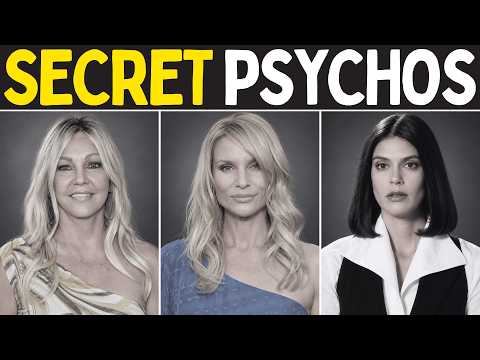
Take Shannen Doherty, for instance. She was the rebellious Brenda Walsh on Beverly Hills, 90210, a role that made her a global teen idol. But off-screen, her clashes with castmates and producers became the stuff of legend. After four years, Brenda was gone—but Doherty bounced back as Prue Halliwell on Charmed, only to face similar tensions. Her story is a reminder that leaving one hit show can simply open the door to the next storm.
Then there was Teri Hatcher, the lovable Susan Mayer on Desperate Housewives. On screen, the women of Wisteria Lane hid secrets behind perfect lawns. Off screen, the tabloids whispered of cold shoulders and jealousies. Hatcher won a Golden Globe, but the gossip followed her like a shadow. Every red carpet photo was studied for signs of who stood closest to whom—and the public couldn’t get enough.
And who could forget Nicollette Sheridan? As Edie Britt, she was the bold neighbor who always said exactly what she thought. But when her character was killed off in 2009, a much bigger drama began. Sheridan sued creator Marc Cherry for millions, claiming he struck her and then punished her. The case ended in a mistrial, but the questions lingered: once a dispute becomes public, can a star ever control how the story ends?
Roseanne Barr’s revival of Roseanne was one of the biggest comebacks in television history—until it wasn’t. In May 2018, a racist tweet about Valerie Jarrett led to the show’s cancellation within hours. The irony was sharp: a comedy about family life became a national debate about its own star.
Heather Locklear seemed to have it all—starring roles on Dynasty, T.J. Hooker, and Melrose Place. But as the years passed, her personal struggles became public through arrests and police visits. Amanda Woodward was always in control; the woman who played her was fighting battles no script could fix.
These are just the first five of forty actresses whose real lives were as dramatic as any plot twist. From Mackenzie Phillips’s harrowing addiction battle to Cybill Shepherd’s stormy Moonlighting set, the stories keep coming. Each one reveals a different kind of out-of-control—some self-destructive, some defiant, and some simply ahead of their time.
As we dive deeper, you’ll meet the women who walked away from hit shows, demanded fair pay, and faced down network executives. Their choices weren’t always popular, but they were always unforgettable. And in an industry that often tried to mold them into perfect images, these actresses proved that being out of control can sometimes be the only way to stay true to yourself.
Mackenzie Phillips was only 15 when One Day at a Time premiered in 1975, and the pressure of sudden fame hit her harder than anyone around her realized. She was struggling with addiction while playing America’s rebellious teenager, and the show’s producers eventually dismissed her in 1980 after she arrived on set unable to work. She returned a year later, only to be let go again in 1983. The writers had to keep rearranging the family at the center of the show, and Phillips later spoke openly about her long road to recovery. Her story raises an uncomfortable question that still haunts Hollywood: did the industry know how to protect young stars, or did it simply replace them when problems became too difficult?
Cybill Shepherd’s Moonlighting was another case of on-screen sparks born from off-screen friction. She and Bruce Willis argued constantly, and Shepherd later admitted their relationship could be stormy—yet she suggested that very tension fueled the chemistry between Maddie and David. The scripts were long, rewrites came constantly, and episodes ran so late that the network had to air reruns instead. When Shepherd became pregnant with twins and Willis was hurt in a skiing accident, the schedule collapsed entirely. The show ended in 1989, its legacy forever tied to the chaos that made it electric.
Shelley Long’s decision to leave Cheers in 1987 shocked the industry. She had won an Emmy and two Golden Globes as Diane Chambers, but reports described tension with the ensemble—she wanted more discussion before scenes, while the rest of the cast preferred a looser rhythm. Many predicted the show would collapse without her. Instead, Kirstie Alley arrived as Rebecca Howe, and Cheers ran six more years and grew even more popular. Long returned for the final episode in 1993, leaving fans to wonder: was Cheers better without Diane, or did it simply become a different show?
Farrah Fawcett’s red swimsuit poster made her a global icon, but after only one season of Charlie’s Angels, she wanted out. She wanted to make movies, but she was still under contract—so the producers sued her. The battle became headline news, a young actress against a powerful television machine. Eventually they reached a deal: Fawcett returned for guest appearances, and Cheryl Ladd joined as Jill’s younger sister. Yet no matter how far Fawcett traveled from the show, her single season as an Angel remained the image most people remembered.
Suzanne Somers’s fight on Three’s Company became one of the strangest standoffs in sitcom history. In 1980, she asked for a raise closer to John Ritter’s salary and a share of the profits—and instead of a raise, she got something bizarre. For the rest of the season, Chrissy appeared only in short scenes at the end of each episode, usually talking on the telephone from her parents’ home. Somers filmed those scenes separately, away from the main cast. When her contract ended, she was gone for good. More than 30 years later, she and Joyce DeWitt reunited and made peace, but the chill had lasted decades.
Joan Rivers’s betrayal of Johnny Carson in 1986 remains one of late night’s most painful stories. When Fox offered her her own show opposite The Tonight Show, she called Carson to tell him—and he hung up on her, never speaking to her again. Her new show struggled, her husband Edgar Rosenberg clashed with Fox executives, and after only seven months, the network fired them both. A few months later, Rosenberg died, leaving Rivers heartbroken. But she never stopped fighting, rebuilding her career through daytime television, jewelry sales, and red carpet coverage. In 2014, nearly 30 years after the split, she returned to The Tonight Show as a guest of Jimmy Fallon—a final, triumphant homecoming before her death months later at 81.
Valerie Harper’s fight over Valerie became a rare victory for an actor against a studio. When she demanded a bigger salary and more say in the show that carried her own name, producers fired her—and the writers killed off her character in an off-screen accident. Sandy Duncan was brought in as a new mother figure, and the series was renamed The Hogan Family. Harper sued Lorimar and in 1988, a jury sided with her, awarding her more than $1 million plus a share of the profits. The case revealed a hard truth: even when a show carries your name, it may not belong to you.
Loni Anderson’s turn as Jennifer Marlowe on WKRP in Cincinnati proved she was far more than a blonde bombshell. She had pushed for Jennifer to be clever rather than the butt of every joke, and the role earned her Emmy and Golden Globe nominations. But the public seemed more interested in her private life, especially her marriage to Burt Reynolds and their ugly 1993 divorce. Jennifer Marlowe was cool, composed, and never fooled by anyone—meanwhile, the headlines turned Anderson into a character in a real-life soap opera she had never auditioned for.
Kate Jackson’s exit from Charlie’s Angels was a quiet rebellion with lasting consequences. She had suggested the show’s famous title, and as Sabrina Duncan, she gave the series its intelligent center—but she grew frustrated with scripts that favored glamour over story. When she was offered the role of Joanna Kramer in Kramer vs. Kramer, the producers refused to adjust the schedule, and the part went to Meryl Streep instead. The film won Best Picture. Jackson left after the third season, and while the show continued with Shelley Hack, many fans felt the chemistry never recovered.
Diahann Carroll made history in 1968 with Julia, becoming one of the first black women to star in a weekly series in a non-stereotypical role. But every choice she made on screen was treated as a statement about an entire community, and she later said the experience left her exhausted. Years later, she found a different kind of freedom as Dominique Deveraux on Dynasty, a glamorous schemer who could trade insults with Alexis Carrington. Through it all, the industry rarely allowed her to be simply an actress.
Cloris Leachman’s genius was making herself look ridiculous while never losing control. She won an Oscar for The Last Picture Show and eight Primetime Emmys, a record at the time—yet many fans will always remember her as the snobbish Phyllis Lindstrom. As Frau Blücher in Young Frankenstein, she created a running joke so famous that fans still imitate the frightened horses. At 82, she became the oldest contestant on Dancing with the Stars, dancing wildly and joking with the judges. To some, she looked out of control. In reality, she knew exactly how far to push a joke.
Esther Rolle risked a hit show rather than accept a version she believed was harmful. On Good Times, she insisted the Evans family have a father in the home, and she clashed with producers over J.J.’s foolish catchphrase “Dyn-o-mite!” becoming the show’s focus. She complained publicly that J.J. was a poor role model who could barely read or write. After the fourth season, she walked away—though producers later persuaded her to return for the final season with promises of better stories. Many fans still wonder how Good Times might be remembered if the producers had listened to her from the start.
Phyllis Diller did not tell her first joke in a nightclub until she was 37, a mother of five working at a radio station. With her wild electric hair, crazy outfits, and a cackling laugh, she looked like a woman who had completely lost control—but behind the fright wig was one of the most disciplined workers in comedy. She kept a filing cabinet full of tens of thousands of jokes, sorted by subject, which she later donated to the Smithsonian. Her greatest trick was not losing control. It was creating a character so wild that she controlled the audience by seeming impossible to control.
Diana Dors was called the English answer to Marilyn Monroe, but her fame came with a price. Her first husband, Dennis Hamilton, managed her image hard and spent money wildly, and in 1968 she was declared bankrupt. The British press treated every marriage, debt, and quarrel as a never-ending scandal. Yet Dors was also a serious actress, giving a powerful dramatic performance in Yield to the Night. As film roles faded, she moved into television, where her big personality was perfect for chat shows and comedy. She died in 1984 at only 52, leaving behind one last mystery—stories that she had hidden a fortune and left a coded message about where to find it.
Joan Collins turned Dynasty into a smash hit the moment she walked into a courtroom wearing a large hat and a dark veil. As Alexis Carrington, she was rich, ruthless, and gloriously cruel, and her cat fights with Krystle Carrington became legendary—especially the famous battle in a lily pond. Collins was never shy about her own value. In the middle of the decade, she held out for a big pay raise during contract talks, and reports said producers even considered replacing her before giving in. Fans still wonder whether Alexis was a character she played or a glamorous mirror of a woman who always knew her own worth.
Zsa Zsa Gabor’s 1989 traffic stop became an international headline when she slapped a Beverly Hills police officer across the face. She was convicted and sentenced to three days in jail, community service, and a large fine—and newspapers around the world covered every detail of her trial. But Gabor had spent decades building that larger-than-life image on purpose. Born in Hungary, she became famous less for her acting than for her personality, her thick accent, and her habit of calling everyone darling. She married nine times and joked about it endlessly. Was she impossible to manage, or simply a master at turning every moment into another scene in her own legend?
Judy Garland’s 1963 variety show should have been a dream. But CBS scheduled her against Bonanza, and the show cycled through producers who kept changing its format. Yet when Garland sang, everything else vanished—her duet with a young Barbra Streisand remains one of television’s finest musical moments. After just 26 episodes, it was over. The machine around her never found a way to let her gift shine for long.
Tallulah Bankhead arrived at The Lucy Show set drunk and unpredictable, struggling with lines and handing her clothes to anyone who admired them. Lucille Ball, who ran a tightly organized set, was furious. Yet the episode was finished, and audiences loved it. Would anyone still remember it if Bankhead had behaved like an ordinary guest star? Probably not.
From Mae West’s banned interview to Eartha Kitt’s White House truth-telling, these women proved that being called difficult was often the price of refusing to be controlled. Some paid with their careers; others turned scandal into legend. Which of these forty actresses surprised you most—and who do you think should have made the list? Tell us in the comments below.
Report this article
Select a reason for reporting:






