In the summer of 1940, a small group of young men and their aircraft stood between the British people and invasion by the Nazi war machine. These were the pilots of RAF Fighter Command—outnumbered, exhausted, and flying against the seemingly invincible Luftwaffe. Over the months that followed, they would engage in savage aerial combat over Southern England, fighting not just for victory, but for survival.
Their story is one of courage, innovation, and desperate improvisation. It is the story of the Battle of Britain.
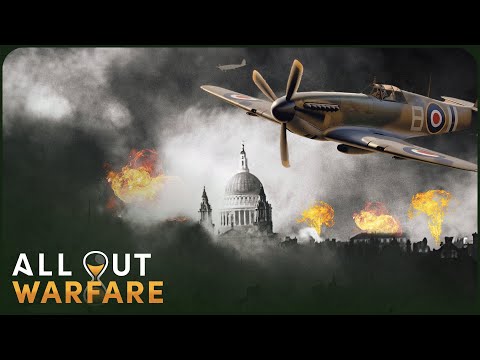
The morning of July 10, 1940, dawned with a German reconnaissance aircraft, escorted by Messerschmitt 109s, approaching a British convoy in the English Channel. Six Spitfires from 74 Squadron scrambled to intercept. The Germans were driven off, but they now knew the convoy’s position. They prepared to attack in force.
Another RAF squadron scrambled to protect the convoy. British radar detected a substantial buildup of enemy aircraft. A further three squadrons were scrambled. At 13:35, the first RAF squadron arrived over the channel and spotted the enemy. Outnumbered ten to one, they attacked.
Pilot Officer Geoffrey Wellum recalled: “We were scrambled and I came out of cloud at 18,000 feet. They could see me coming. For the last 500 feet of my climb, they hit me from in front and behind at the same time.” The Battle of Britain had begun.
Other British squadrons joined the fight. Though outnumbered, they engaged the fighter escorts and broke up the bomber formations. “My first experience seemed to always be we were being jumped,” said one pilot. “You pull around and break. In my innocence, I always tried to retain height, so I was probably going around in a circle with very little speed and I was the only aircraft up there on my own.”
It was a steep learning curve. Pilots had to adjust their eyes to spot enemy aircraft, learn the performance of their machines, and make split-second decisions. “Someone shouts ‘break,’ I pull round in a steep turn and stall the aircraft instead of diving to get some speed. It was learning on the job the whole time.”
By the end of the day, the RAF had lost six aircraft, the Luftwaffe thirteen. No ships were sunk. It was a small victory, but a significant one. The RAF had shown its capability.
This was largely thanks to the foresight of one man: Air Chief Marshal Sir Hugh Dowding, Commander-in-Chief of Fighter Command. Dowding was a reserved, scholarly man, nicknamed “Stuffy” by his pilots. But he was also a visionary. He had recognized the importance of technology and had overseen the development of radar—a chain of stations that could detect incoming enemy aircraft.
Radar was to be the single biggest technical advance of the war. It gave Fighter Command advance warning of German formations: their size, height, and direction. “Radar was absolutely vital because they put us in the right place at the right time,” said one controller. “Without it, I think we would have been fighting with one arm behind our back.”
But radar was top secret. “We could hear people on the buses looking at the aerials and remarking on them,” recalled a WAAF. “They’d say, ‘They do say that’ll stop your watch,’ or ‘If you stand in front of the aerials, you’ll be safe for the evening with your girlfriend because it makes you sterile.’ A lot of my good friends have had very large families since working on radar.”
As information flowed into Fighter Command from radar and the Observer Corps, emerging threats were plotted on map boards. Controllers watched and orchestrated the defense. “It was very exciting to watch a raid beginning to build up 90 miles away,” said a plotter. “A few little echoes would appear on the screen and slowly it would get bigger and bigger, like a thunderstorm.”
Thanks to radar, no RAF patrol was wasted. Dowding had overseen the creation of a control and reporting system without parallel. It was this system that would give the pilots of Fighter Command a crucial advantage in the desperate days to come.
On August 1, Hitler issued Directive 17: “The German Air Force is to overcome the British Air Force with all means at its disposal and as soon as possible.” The attacks on Channel convoys and coastal defenses had been only the opening act. Now the Luftwaffe had clear orders and a timetable. The campaign to destroy Fighter Command and expose Britain to bombing and invasion was about to begin in earnest.
In the summer of 1940, Britain possessed the most advanced and sophisticated air defense system in the world. Radar, assisted by 30,000 volunteers of the Observer Corps, and the command and control system that relayed this information, would give the pilots of Fighter Command a crucial advantage. But the Luftwaffe had nearly 3,000 combat aircraft, against the RAF’s 750 modern fighters. The odds were daunting.
Reich Marshal Hermann Göring, Commander-in-Chief of the Luftwaffe, was confident. He believed the Luftwaffe had proved itself invincible. He also believed the RAF was on its last legs. German intelligence estimated that the RAF had only 300 fighters left. It was a grossly overoptimistic assessment, but it was exactly what Göring wanted to hear.
On August 13, code-named Adlertag (Eagle Day), the Luftwaffe was to launch an all-out assault. But the day dawned with cloud and mist. Göring postponed the attack, but the order failed to reach some units already in the air. They flew towards England without their fighter escorts. The RAF was waiting.
Despite the muddled start, Göring ordered the attack to go ahead. There was heavy fighting over Southern England, but Göring was determined to launch a properly coordinated attack as soon as the weather permitted. On August 15, the weather dawned fine and clear. Three vast air fleets—over 2,500 German aircraft—prepared to make the attack that would finally wipe out Fighter Command.
For Göring, the decisive day of the air campaign was at hand. From the high command in Berlin to the Luftwaffe airfields in France, confidence was high. The plan was simple: bombers would strike at RAF airfields, aircraft factories, and war-essential infrastructure. Mass fighter escorts would fly high above the bombers, attacking with the advantage of height when RAF fighters attempted to intercept.
At 11:30 a.m., Ju 87 Stuka dive bombers with a heavy escort of Me 109s crossed the channel and attacked the forward airfields of Lympne, Hawkinge, and Manston. 54 Squadron Spitfires were scrambled alongside Hurricanes from 501 Squadron. These units would be in almost constant action over the following days. The dive bombers hit buildings and hangars and severed the cables carrying power to three of the radar stations on the Kent coast. There was now a blind spot in the warning system.
But the Luftwaffe command, convinced that British fighter strength was concentrated in the South, sent Air Fleet 5 based in Norway across the North Sea. The fleet of Heinkel bombers headed towards the Northeast Coast of Britain, confident there would be no opposition. They flew without Me 109 fighter escort. But the British radar stations that faced out across the North Sea had registered their approach. The information was passed to the fighter squadrons of 13 Group.
As the German bombers approached the Tyneside coast, the weather was fine and clear. Spitfire pilots of 72 Squadron, vectored into position by Ground Control, spotted the Heinkel bombers as they approached from a perfect attack position. The Spitfires struck, diving out of the sun. Hurricanes from 79 and 605 squadrons joined the fray. In desperation, the bombers jettisoned their bombs and turned back towards their distant bases. German air gunners fought back desperately, hammering away with their 7.9 mm machine guns as swarms of British fighters buzzed past at 300 mph. They could be brutally effective, as some were to discover.
“I can recall one bomber interception,” said one pilot. “In this particular instance, the bombers were coming in and we were at right angles. I turned in with my flight and told the CO I was going ahead on attack. We knocked down two in the head-on attack and went around to the rear. I went in after my third one, really close—about 150 yards—and of course he got me severely mauled.”
With 30 aircraft lost and many badly damaged, Air Fleet 5’s participation in the Battle of Britain was over. 13 Group’s casualties suffered only three damaged fighters. But over Southern England, a more finely balanced battle was raging.
As German bombers in the Northeast struggled back to their bases, more German aircraft gathered over the Pas de Calais to launch raid after raid across the channel. Bombers escorted by large numbers of Me 109s struck at targets throughout Southeast England. RAF fighters battled to break up incoming bomber formations but could not penetrate the massive fighter escort. The bombers reached their targets. The airfield at RAF Martlesham was bombed and put out of action. Further raids swept in, swamping 11 Group’s ground controllers. But still each incoming raid was met by heavily outnumbered RAF fighters attempting to hit the bomber formations.
To the West, large formations of aircraft were detected heading for Portland and Southampton. Squadrons from 10 Group rose to meet them. Nearly 150 fighters threw themselves at the Luftwaffe formations as fighting spread along the English Coast. “Not knowing what the hell was happening in the sky around me, I just did not know,” said one pilot. “I hadn’t seen anything. Then all of a sudden the sky was full of things with black crosses on and we exploded like a bomb, went every direction imaginable trying to avoid them.”
It became a one-on-one battle. “You were attacking an enemy aircraft or he was attacking you, in which case you were trying to get out of his way. But if you were attacking him, you concentrated on him and of course he was going all over the sky trying to evade you. Apart from the two of you, you got separated from everybody else.”
“I thought, ‘Well, this is it,’ and I turned my guns on and fired at him and he turned over and dived down towards the sea. This is fantastic because before we went up I was absolutely convinced that I would be killed. When you disposed of the chap you were attacking, you looked around and you couldn’t see another aircraft in the sky because everybody had scattered off in different directions.”
But a lot of time was spent trying to get into the right position. “When you sighted your bombers, you didn’t want to be below them, you wanted to be above. You wanted, if possible, to be into the sun. So a lot of time was spent following your squadron commander around the sky trying to get into a favorable position to attack.”
“I was recognized as one of the worst pilots in the squadron, and having shot something down myself, I thought, ‘This is something.’ As I followed him down, another one got behind me and started shooting at me. But he was a terrible shot and never hit me at all. This man overshot me, so I finished up in the same position behind the second one. I settled down behind him and shot him down as well.”
The fighting over the Solent and Portland was fierce. Two Hurricane squadrons scrambled from Exeter were heavily engaged. Losses on all sides were heavy. After an afternoon of furious and continual combat, the Luftwaffe launched their final raids of the day against airfields at Kenley and West Malling.
The Luftwaffe had used almost 2,000 aircraft in repeated sorties in their effort to destroy Fighter Command in the air and on the ground. They had caused considerable damage to RAF airfields and facilities but had suffered heavily in the process. The Luftwaffe loss rate was so high on this day that German air crews would refer to it as “Black Thursday.”
In England, this date—August 15, 1940—is remembered as the day on which the RAF won its greatest victory of the battle so far. But the fight was far from over. The attacks on RAF airfields and installations continued. RAF training manuals with their out-of-date tactical lessons were being torn up. Pilots replaced complex detailed regulations with their own simpler mantras: “Wait until you see the whites of their eyes. Always turn and face the attack. Never fly straight and level in the combat area for more than 30 seconds. Go in quick, punch hard, get out.”
Flight Lieutenant James Nicholson, badly wounded and his aircraft in flames, delayed bailing out of his blazing machine to pursue and shoot down another enemy fighter that crossed his path. Badly burnt, he won Fighter Command’s first and only Victoria Cross.
The reality of air combat was the swooping ambush, the bounce—hitting sudden, hard, and fast. Many pilots were shot down by an attacker they never saw. “I joined the squadron with a particular pilot and I saw him going down in flames probably about seven days later,” said one pilot. “So it is a very sobering thought that you are vulnerable. To start with, in your innocence, you don’t really know you are. But it only needed half a dozen flights when you came in contact with the enemy that you realized you were in a dangerous game and they were playing for keeps.”
“I had a bullet come through my shoulder from the front and a cannon shell came in from behind and exploded on my parachute. I was sitting on it. It put a lump through a foot which split my Achilles tendon, so I had a minus right leg. A bullet came through the arm, piercing behind, went through my watch—which annoyed me—into my hand. I had a couple of skins on my shins in front.”
The engagement initially only lasted a couple of seconds, and then you would break away and then attack them individually again until either you were out of ammunition or for one reason or another you weren’t able to attack anything. “Don’t forget that we only had 15 seconds’ worth of ammunition in both the Hurricane and the Spitfire. So if you attacked once, twice, three times, most of your ammunition was expended and the best thing you could do was to get home and rearm, refuel, get up again.”
“I suddenly saw a lot of black spots. I thought they were oil specs on the windscreen, but they rapidly turned into Me 109s going the opposite direction. One of which passed so low over me I could see the oil streaks on the fuselage and almost count the rivets in his wings. We passed in opposite directions. They were pretty smart and experienced, of course. They turned around quite quickly and dived down to attack us. But the chap who attacked me missed and shot past, so I managed to get on his tail and shoot him down, rather to my surprise. I got a bit worried—I said, ‘His chums will have seen that and it will have made them very angry. Let’s get out of here.’”
Several large raids targeted 11 Group’s airfields and radar stations. Losses were very heavy on both sides. The faster Spitfires were ordered to engage the fighter escort; Hurricane squadrons went after the bombers. Some pilots were only now realizing the implications of their actions. “When I shot down this aircraft, the rear gunner bailed out, got caught over the tail, and I saw the aircraft go in with him. That was the first time it really got to me—that I was shooting a person. Up to that point, obviously, I hadn’t been vaguely aware, but certainly joining the Battle of Britain, I was only shooting at aircraft. That there were people involved didn’t come into it. Even if someone bailed out, it didn’t really matter. I was just shooting an aircraft, that’s all.”
Time and again, RAF fighters were hurriedly refueled, rearmed, and returned to battle. Ground controllers attempted to vector them into favorable attacking positions amongst the countless hostile contacts. The Germans must have been frustrated in the extreme. “In other words, they must have said to one another, ‘Where the hell do they keep coming from?’ And of course, we’d got them taped.”
Casualty rates amongst the pilots and aircrew of both sides were climbing dramatically. In the fighting of August 18, the RAF lost 30 fighters with 10 pilots killed. The Luftwaffe lost 71 aircraft and 94 aircrew. But the British summer was about to intervene, bringing a much-needed respite for RAF pilots and the chance for commanders on both sides to reflect on the campaign so far.
On August 19, after a week of intense air combat, a spell of bad weather prevented major flying operations. Both sides took advantage of this respite to evaluate their tactics. In spite of Göring’s boast to Hitler, the RAF had not succumbed. Göring himself, a fighter ace of the First World War, rebuked his fighter pilots, criticizing what he saw as their lack of aggression. He replaced the older commanders with younger, more hawkish officers. “We have reached a decisive period of the air war. Our first aim is to destroy the enemy fighters. If they no longer take to the air, we shall attack them on the ground or force them into battle by directing bomber attacks against targets within range of our own fighters.”
In Britain, Dowding, Commander-in-Chief of Fighter Command, redeployed his battered squadrons—principally those of 11 Group, which had borne the brunt of the fighting. Exhausted units were rotated with fresh squadrons from quieter sectors in the north and west. “Gentlemen, I’m pleased to say that at long last we have 12.” Keith Park, Commander of 11 Group, had so far orchestrated a dogged resistance with limited resources. He had ordered controllers to send the minimum of aircraft to attack enemy fighters, emphasizing that enemy bombers must be engaged at every opportunity. Interceptions must be made quickly before the bombers reached their targets. And he wanted squadrons from 12 Group based in the Midlands to patrol and protect his airfields while his squadrons were away tackling incoming raids.
“Never in the field of human conflict was so much owed by so many to so few. All our hearts go out to the fighter pilots whose brilliant actions we see with our own eyes day after day. I hope indeed I pray that we shall not be found unworthy of our victory if after toil and tribulation it is granted to us. For the rest, we have to gain the victory. That is our job.”
But the constant challenge of aerial combat was taking its toll on the Few. “The demand on pilots during 1940 was very great,” said one. “The pilots in squadrons were scrambling almost all day through. They were really flying their guts out.”
“My overriding memory of the Battle of Britain is tiredness—incredible tiredness. We were on readiness from half an hour before dawn until half an hour after dusk at night. In dispersal, we had a bunch of camp beds which we threw ourselves on and went to sleep as soon as we landed. At that stage of my life, I went to sleep standing, sitting, or whatever. We slept in our clothes in dispersal, or actually underneath the wings of our airplanes. Otherwise we would sleep in dispersal huts next to our airplanes. We very seldom slept at the mess. I don’t suppose I slept in the mess more than a couple of nights in the whole of a year.”
“My batman shook me awake one morning. He’d taken the blackout curtains down off the window and he said, ‘I suppose you were awake all night?’ I said, ‘No, why?’ He said, ‘Look out of the window.’ There was a string of bomb craters across the garden right outside the window. I hadn’t heard a bomb. I hadn’t heard the anti-aircraft firing or anything. I was just asleep. And that was it.”
The poor weather persisted. Unable to launch full-scale raids, the Luftwaffe resorted to hit-and-run sorties by small groups of aircraft. The Luftwaffe pilots too were feeling the strain of daily sorties across the waters of the channel. The German bomber crews, who had suffered heavy losses, criticized their fighter escorts for failing to protect them. But to escort bombers to targets inland, German fighter pilots had to keep a careful eye on their fuel gauges. They were accused of avoiding combat to conserve their fuel.
On August 24, the weather began to improve. The Luftwaffe resumed its attacks against key RAF airfields and sector stations—the heart of the defense system. Massive formations of aircraft streamed towards their targets. For the RAF, the battle’s most critical phase was beginning. Sheer weight of numbers frustrated the attempts of outnumbered RAF pilots to disrupt the raids. Biggin Hill and the RAF base at Manston were the first targets. 11 Group’s airfields and sector stations, not for the first time, were in the front line. Manston, its airfield cratered and littered with unexploded bombs, had to be abandoned. With 11 Group’s fighter squadrons attempting to intercept several heavy raids across the southeast of England, their airfields were left badly exposed. Urgent calls were made to 12 Group to provide cover. Squadrons from Duxford scrambled but then took precious time to gather information before heading to confront the enemy. Duxford’s “Big Wing” as it became known arrived too late. By the end of the first day of renewed fighting, the RAF had lost 22 aircraft to the Luftwaffe’s 38.
But one raid was to help escalate the battle and drag the civilian population deeper into the conflict. On the night of August 24, a small formation of Heinkels flew up the Thames to bomb oil installations at Thames Haven. In the darkness, they overflew their target and strayed over Central London. There, in direct violation of orders, they released their bombs. Fires raged under the West India Docks. By this stage of the battle, more than 1,000 British civilians had been killed by the Luftwaffe in raids all over the country. Despite orders to attack only war-essential targets, it was impossible for the Luftwaffe to hit these, especially in cities, without killing civilians. The bombers were not accurate enough. But this latest provocation was the last straw. Now the British War Cabinet authorized retaliatory raids on Berlin.
Early the next morning, large fighter sweeps by German aircraft over Sussex were ignored by RAF controllers. As instructed, they saved their strength for the bombers that followed. By the day’s end, 20 German aircraft had been destroyed for the loss of 16 RAF machines. And that night, the RAF bombed Berlin for the first time.
In the days that followed, the battles between the RAF and the Luftwaffe intensified. Another massive raid built over France and headed for England. Keith Park, Officer Commanding 11 Group, ordered every squadron he had available into the air. RAF pilots had been instilled with the importance of getting airborne as quickly as possible—every second was vital to gain sufficient altitude. Once again, 12 Group was asked to protect the southern airfields. Again, the support arrived too late. Park was furious at the lack of cooperation from 12 Group. So there could be no further misunderstandings, he instructed his controllers to ensure all future requests for support from 12 Group went via Fighter Command headquarters. Tensions were beginning to grow between the British commanders.
Meanwhile, losses continued to mount. Biggin Hill, Kenley, and Hornchurch were all bombed as RAF fighters struggled to reach the bombers through a heavy screen of Me 109s. Sector stations were put out of action as aircraft clashed overhead. Personnel worked desperately on the ground to repair the damage to the command and control system. It was the day of the RAF’s heaviest losses: 39 machines destroyed for 41 German aircraft brought down. 14 RAF pilots were listed killed or missing. Since the battle began, 205 RAF pilots had been injured, 222 had been killed. It was a rate of loss that was becoming unsustainable.
As 11 Group’s airfields came in for yet more punishment, their fighter squadrons initiated large dogfights over Kent and Sussex. Aircraft factories were also under constant Luftwaffe attack. But losses to Fighter Command’s fighter strength were nevertheless being made good by industry. Mounting pilot losses were the primary concern. “At the beginning, we were losing the best pilots—the more experienced ones. Then our replacements came in and I wouldn’t allow them to fly until either myself or my other flight commander—I remember I was acting squadron leader but also flight commander—one of us would take them up and give them the best we could: a camera gun and combat tactics. Although we had a lot of new ones posted in, how can they cope? These chaps come in and they’d probably only done seven hours on Spitfires, if that. And they watched us taking off—everything we’d got—and coming back two pilots short. Every time we took off, their nerves must have been shot to blazes. I don’t know how they kept going. I couldn’t.”
Dowding was desperately worried, deeply concerned about the loss of life amongst the young men of his fighter squadrons. He also recognized the reality behind the losses: pilots were no longer being produced in sufficient numbers to fill the gaps in the fighting ranks. “The situation is extremely grave. It must be realized we are going downhill.”
Göring had been humiliated when bombs fell on Berlin. He had publicly promised such a thing would never happen. Hitler was furious. The landings planned for the British mainland could not take place until Göring’s Luftwaffe had gained control of the air over Southern England. Provoked and enraged, Hitler removed his restrictions on attacking London. He announced his intentions in front of a delighted and enthusiastic audience: “When the British Air Force drops two or three or four kilograms of bombs, then we will in one night drop 150, 230, 300 or 400,000 kilograms. In England they are filled with curiosity and keep asking, ‘Why doesn’t he come?’ Be calm, be calm. He is coming, he is coming.”
The Luftwaffe received new orders: German bombers would pulverize the industrial areas of London, simultaneously destroying Britain’s industrial capacity and her will to fight on. The remnants of RAF Fighter Command, believed to have been decimated in the last three weeks of attacks, would be destroyed in the air by fighter escorts forced into the air to defend the nation’s capital.
As day dawned, the radar screens remained clear. In plotting rooms, personnel waited expectantly for reports. The familiar sight of enemy aircraft building up over the Pas de Calais was absent. Pilots began to relax at their dispersal points. But on the coast of France, there was activity. Göring had arrived to watch in person as his mighty armada of aircraft set off to deliver the death blow to the Royal Air Force and bring death and destruction to the people of London. Over a thousand aircraft prepared to launch the largest air attack ever made on a city. The bombers climbed into the clear sky and met in one vast formation, turning for the English Coast. German fighter pilots had been increasingly accused of abandoning the bombers to their fate. Now they had new orders: to stand by the bombers at all costs.
At 4:15 in the afternoon, Göring, enjoying a picnic and champagne, watched as the immense fleet of aircraft streamed overhead, moving as one vast formation between heights of 14,000 and 23,000 feet and 20 miles in length. The aerial armada appeared invincible, impregnable. With the English countryside unfolding beneath them, their target—London—was within sight. “We will rub out their cities from the map. The hour will come when one of us will break, and it will not be Nazi Germany.”
In the summer of 1940, a small group of young men and their aircraft were all that seemed to stand between the British people and invasion by the Nazi war machine. In the months that followed, the Few of RAF Fighter Command would engage the Luftwaffe in savage aerial combat over Southern England. In the summer of 1968, some of those aircraft were in the skies again to appear in the classic British feature film Battle of Britain. Now, using unseen footage from that production, this series will tell the real story of the Battle of Britain.
Throughout late August, the Luftwaffe’s relentless attacks on the RAF in the air and on the ground had threatened to destroy Fighter Command. But as the Germans switched to a terrifying new attack on London, the RAF was given a vital breathing space—and the opportunity to hit back.
By the end of August, the RAF had lost more than 400 fighter aircraft and over 200 pilots killed or wounded. “Eric was shot down behind me and jumped out, but his parachute malfunctioned, so he was killed,” recalled one pilot. “After that, I definitely didn’t make any more close friends.”
Yet Fighter Command was recovering. New fighters arrived faster than losses, and Dowding rotated exhausted squadrons through quieter sectors. On September 15—Battle of Britain Day—the Luftwaffe launched its largest assault. Every available RAF squadron rose to meet it. “The sky was full of things with black crosses,” said one pilot. “We exploded like a bomb, every direction imaginable.”
By day’s end, the RAF had lost 26 aircraft; the Luftwaffe, 60. Two days later, Hitler postponed Operation Sea Lion indefinitely. The invasion would never come.
The Few had held the line. As Churchill declared: “Never in the field of human conflict was so much owed by so many to so few.”
What do you think was the single most decisive factor in Britain’s victory—radar, Dowding’s strategy, or the courage of the pilots themselves? Share your thoughts below.
Report this article
Select a reason for reporting:






