
In January 2021, Argentina released three jaguars into the Iberá Wetlands, a region where the species had been extinct for 70 years. Scientists gave the project a decade to prove itself. Four years
In January 2021, Argentina released three jaguars into the Iberá Wetlands, a region where the species had been extinct for 70 years. Scientists gave the project a decade to prove itself. Four years later, the population had grown well beyond expectations, with births occurring in the wild for the first time in generations.The wetlands span 13,000 square kilometers in Corrientes Province in northea…

In January 2021, Argentina released three jaguars into the Iberá wetlands, a region where the species had been locally extinct for 70 years. Scientists gave the reintroduction project a decade to
In January 2021, Argentina released three jaguars into the Iberá wetlands, a region where the species had been locally extinct for 70 years. Scientists gave the reintroduction project a decade to prove itself. Four years later, the population had grown beyond expectations, with wild births occurring for the first time in generations.The Iberá wetlands span 13,000 square kilometers in Corrientes Pr…
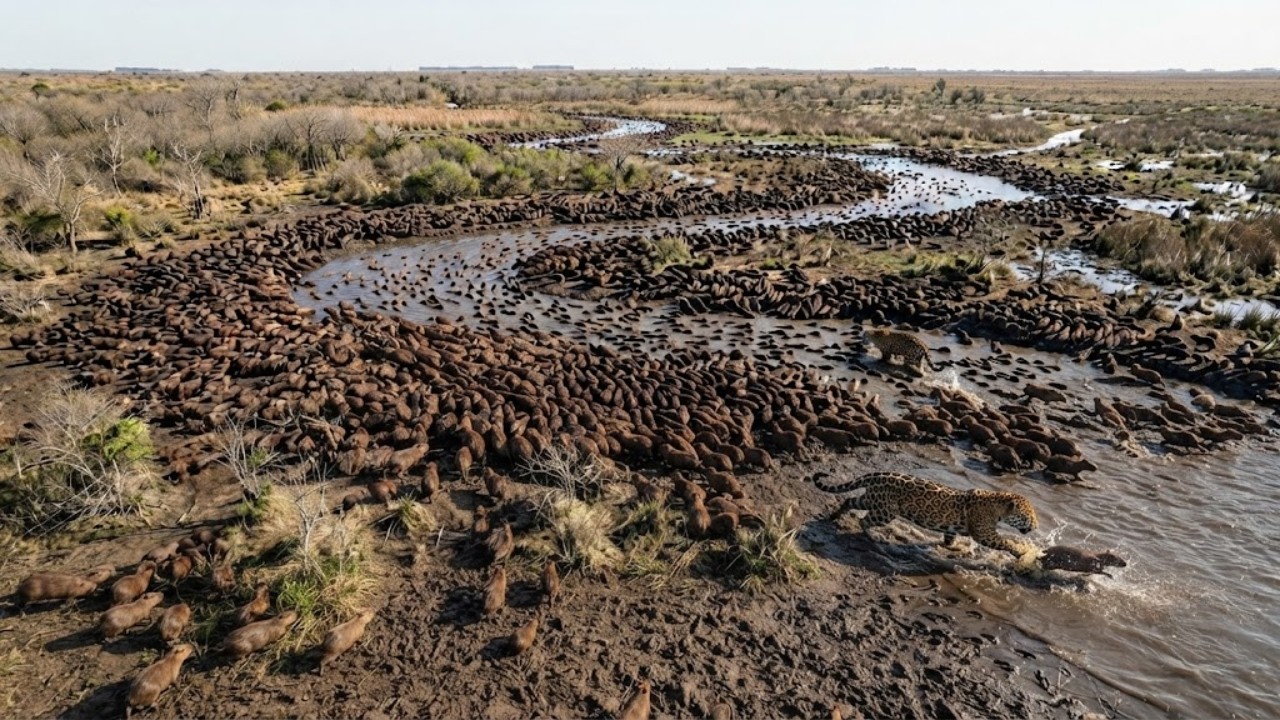
Argentina released three jaguars into a capybara-filled swamp as a bold rewilding experiment, hoping to restore a predator missing for decades. The big cats adapted faster than anyone predicted, hunting prey and breeding successfully in the dense marshlands.
In January 2018, a camera trap on San Alonso Island in Corrientes Province, Argentina, recorded footage that the research team had to review twice before acknowledging what it showed. Two jaguar cubs, alive and moving, had been born on Argentine soil for the first time in nearly 70 years. The field manager watched the clip four times before sending it to the team. She attached no text to the messa…