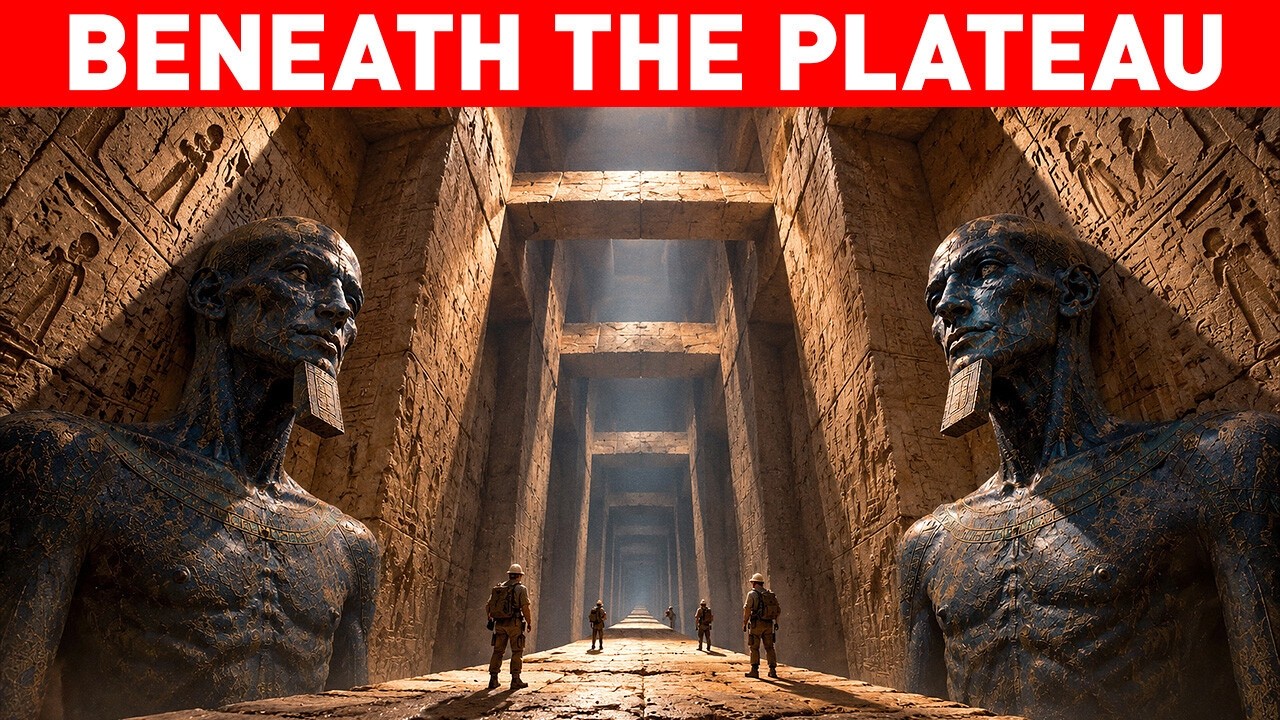
Beneath the Giza Plateau, a massive new discovery is threatening to rewrite everything we thought we knew about ancient Egypt. Archaeologists working with advanced scanning technology have identified a vast, previously unknown structure buried deep beneath the sands, far larger than anything mapped before.
Archaeologists working in Luxor on the west bank of the Nile made an unexpected discovery during a routine excavation at the courtyard of a tomb belonging to a man named Senna. The team, led by Egypt’s Supreme Council of Antiquities and the Zahi Hawass Foundation, broke into a sealed chamber carved into the bedrock that had not been documented previously. Inside, they found 22 painted wooden coffi…
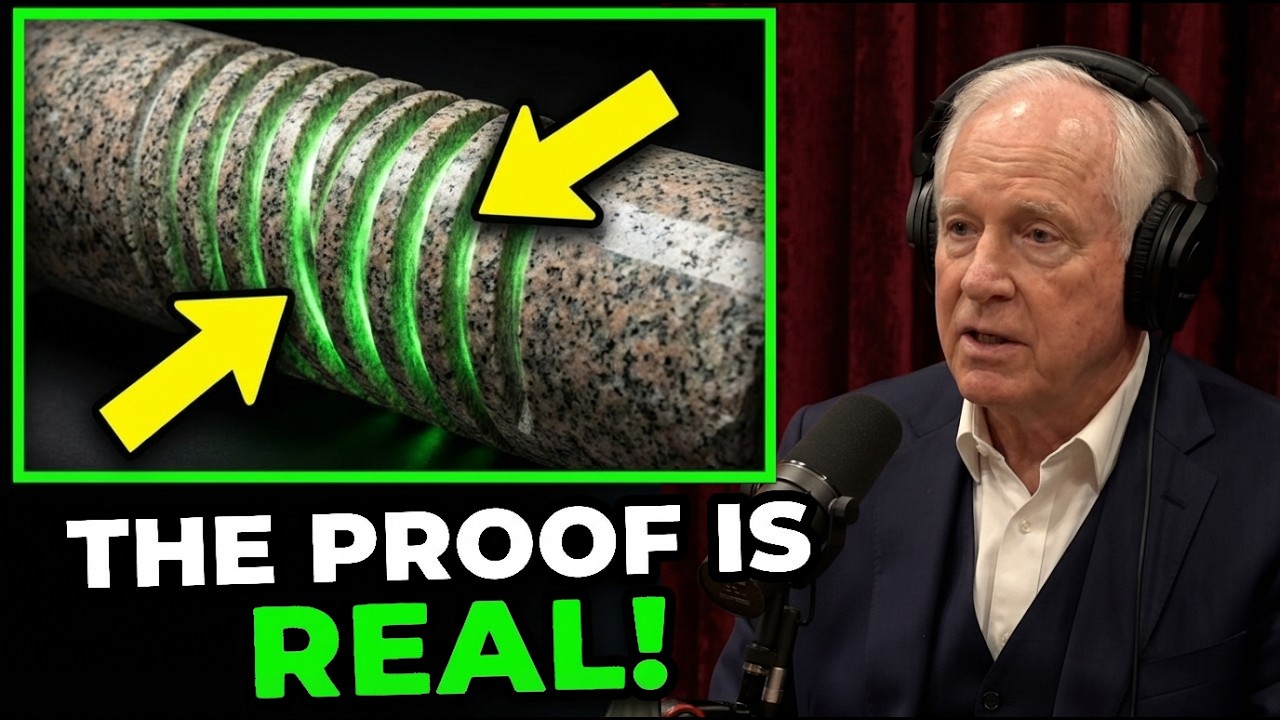
Deep inside the Great Pyramid, engineer Christopher Dunn claims he found physical proof of advanced machining—marks that should not exist in a structure built with copper tools. Examining tight granite passages, he identified what he describes as precision drill grooves and saw cuts, evidence that challenges everything we believe about ancient Egypt.
Christopher Dunn has spent more than five decades working in precision manufacturing, building components for jet engines, satellite guidance systems, and surgical implants. In his field, a deviation the width of a human hair means a part is scrapped. He is not an archaeologist or historian. He is an engineer who understands what controlled cutting processes leave behind in hard materials.In 1986,…

Scientists just revealed a new theory about the pyramids, and it could turn decades of accepted history upside down. For years, experts claimed the massive structures were built as tombs for ancient pharaohs, a belief so established it appears in textbooks worldwide.
A satellite radar survey published in 2024 identified the buried remains of a large ancient Nile branch running alongside Egypt’s pyramid fields. The waterway, named the Ahramat Branch, appears to have been roughly half a kilometer wide and at least 25 meters deep, comparable in scale to the modern Nile in Cairo. It extended about 64 kilometers from Giza south toward the town of Lisht.The discover…
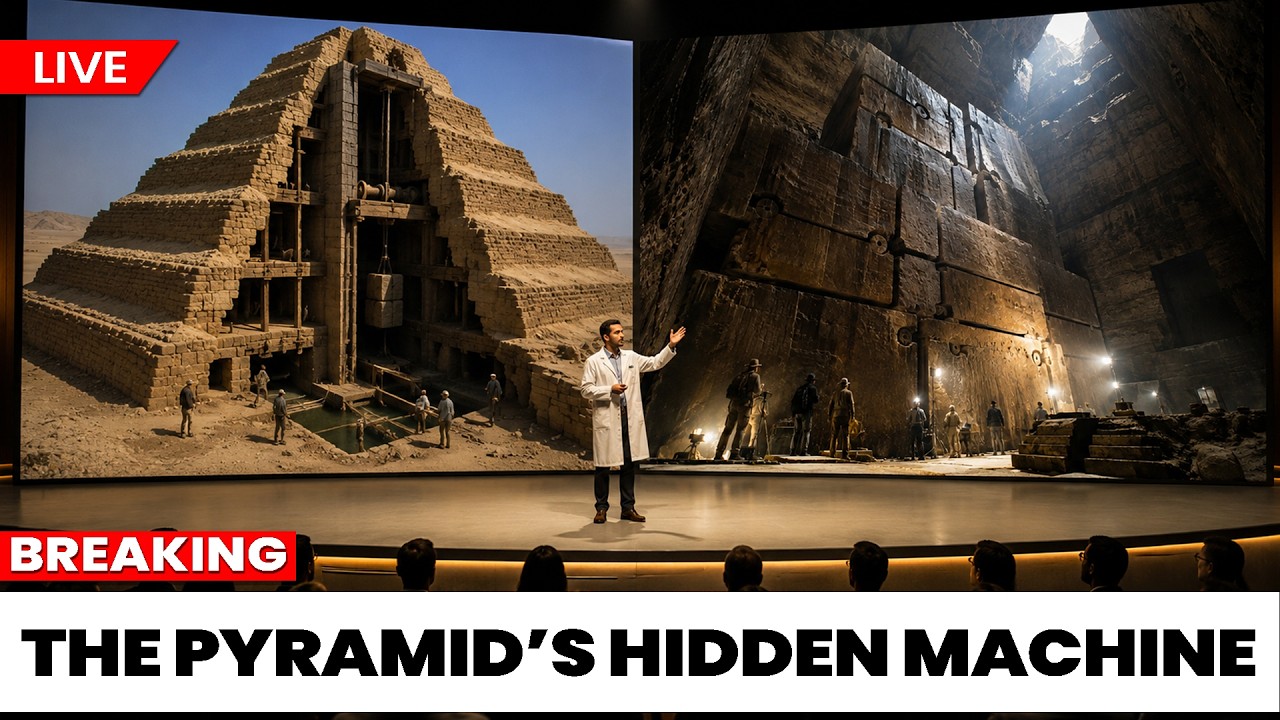
No ancient text reveals how Egypt’s first pyramid was built, but in 2024, a non-archaeologist team proposed a stunning answer: a water-powered hydraulic lift inside the Step Pyramid of Djoser. The theory, based on satellite data, claims a massive stone enclosure captured desert rain to drive a float and pulley system raising 300-kilogram blocks.
No ancient text describes how Egypt’s first pyramid was actually built. Nearly two centuries of research have not settled the question either. In 2024, a team of materials scientists and hydrologists—none of them Egyptologists—published a proposal that a water-powered lift helped raise the stones of the Step Pyramid of Djoser at Saqqara. Their findings, based largely on satellite data and existing…

Archaeologists uncovered ancient Egyptian storage chambers hidden for 4,000 years inside Sahure’s pyramid at Abusir—after two centuries of surveys declared the site fully explored. When a joint Egyptian-German team returned in 2019 to stabilize crumbling walls, clearing rubble from a blocked passage revealed rooms no modern researcher had documented.
Geologists in Egypt have reported the discovery of a tomb approximately 4,000 years old near the pyramids outside Cairo. For generations, researchers believed the major pyramids of the Old Kingdom had been fully explored. In 2023, work at the pyramid complex of Sahure at Abusir revealed previously undocumented chambers, prompting questions about what else might remain undiscovered at well-studied…