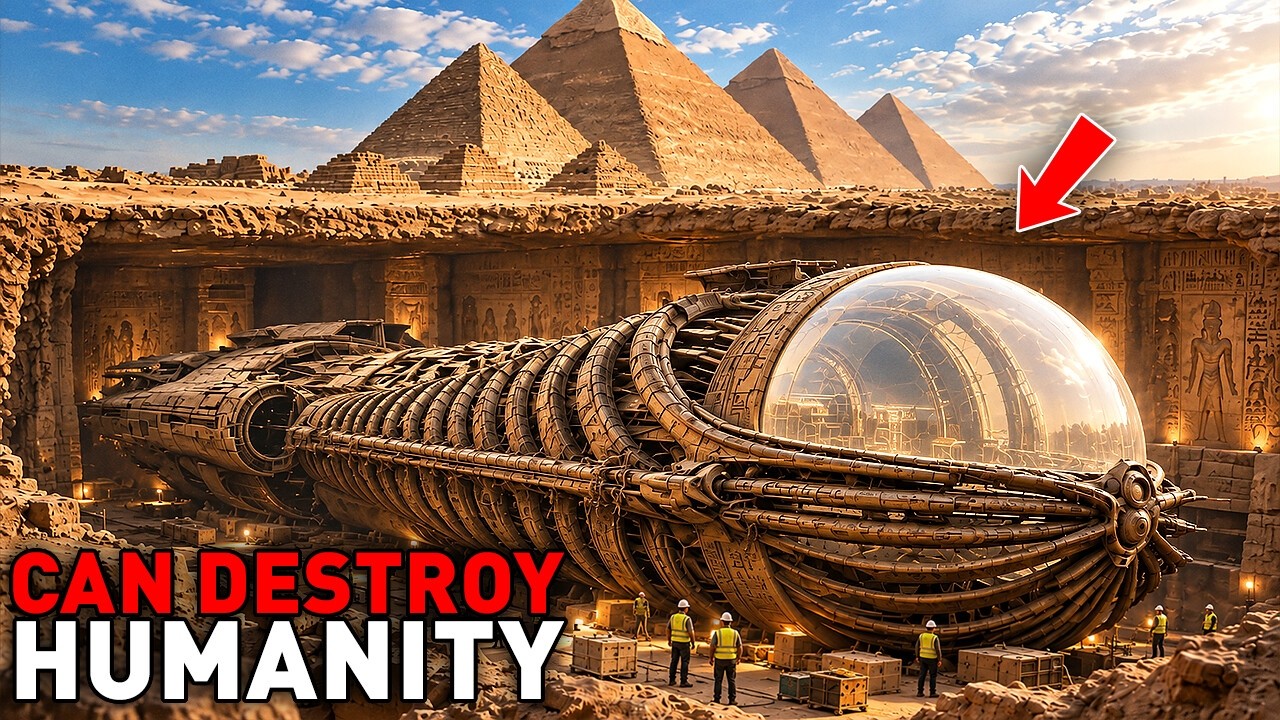
Deep beneath the Giza plateau, a discovery stuns archaeologists: a massive, mechanically complex machine sealed inside a hidden chamber. Experts insist this lost Egyptian device was designed with precision that challenges everything we know about ancient engineering.
Most people know the pyramids were built as grand tombs for pharaohs, designed to support their journey to the afterlife. The Great Pyramid of Giza, for example, was constructed for King Khufu. But the pyramid-building tradition itself began earlier, with the Step Pyramid of Djoser at Saqqara, built around 4,700 years ago for one of the rulers of Egypt’s Third Dynasty.The pyramid rises in seven di…

Google’s Quantum AI was asked who built the ancient pyramids, and its response reportedly changes everything. The futuristic system didn’t point to ancient Egyptians.
A 1940 aerial photograph of the Great Pyramid of Giza captured a shadow pattern that revealed the monument’s faces are not perfectly flat. Each of the four sides is slightly indented along its center line, producing an eight-sided structure. The detail is subtle and generally only visible under specific lighting conditions, which has kept it out of most popular accounts of the monument.The photogr…
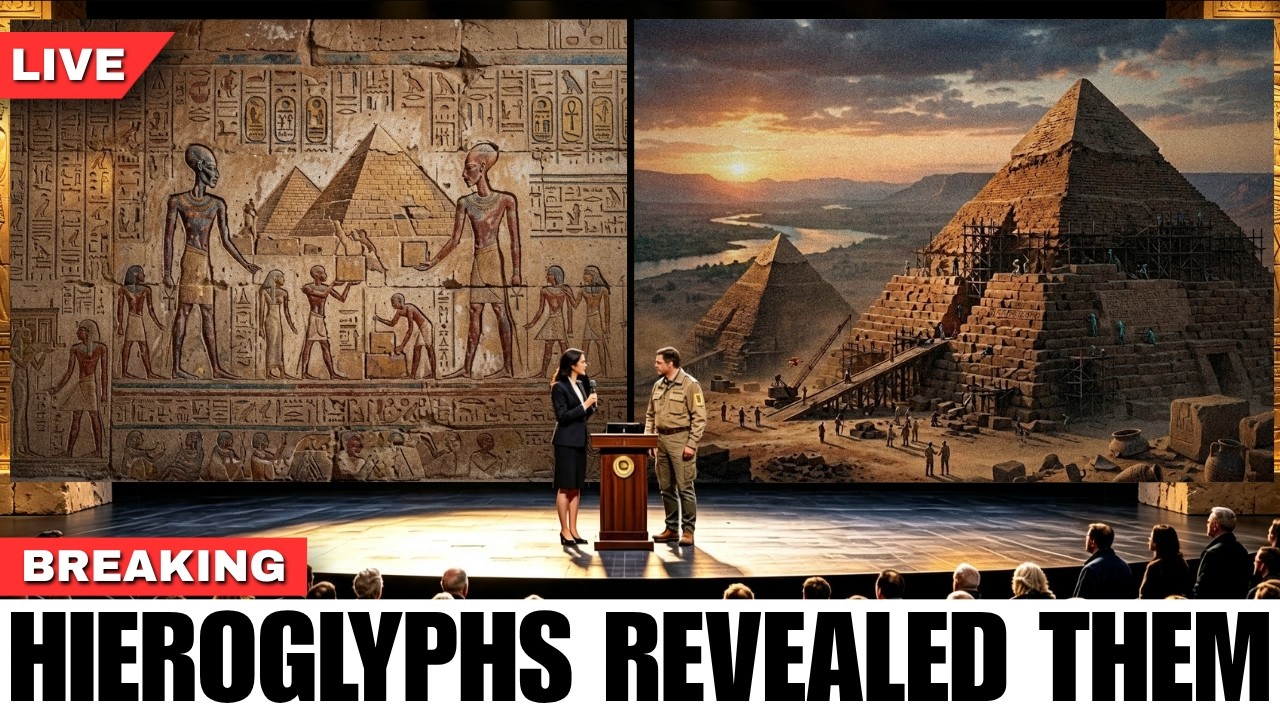
Egyptian tourists have been told for decades that tens of thousands of slaves built the pyramids, but a temple wall suggests something far stranger. High-priest records and village pay stubs reveal the workers were fed, housed, and respected laborers.
For most of recorded modern history, popular understanding of how the Great Pyramid was built rested on a single secondhand account. Around 450 BC, the Greek traveler Herodotus visited Egypt and reported that 100,000 men had labored for 20 years under harsh conditions to raise the monument. He recorded oral tradition passed down across roughly two thousand years, a gap comparable to someone today…
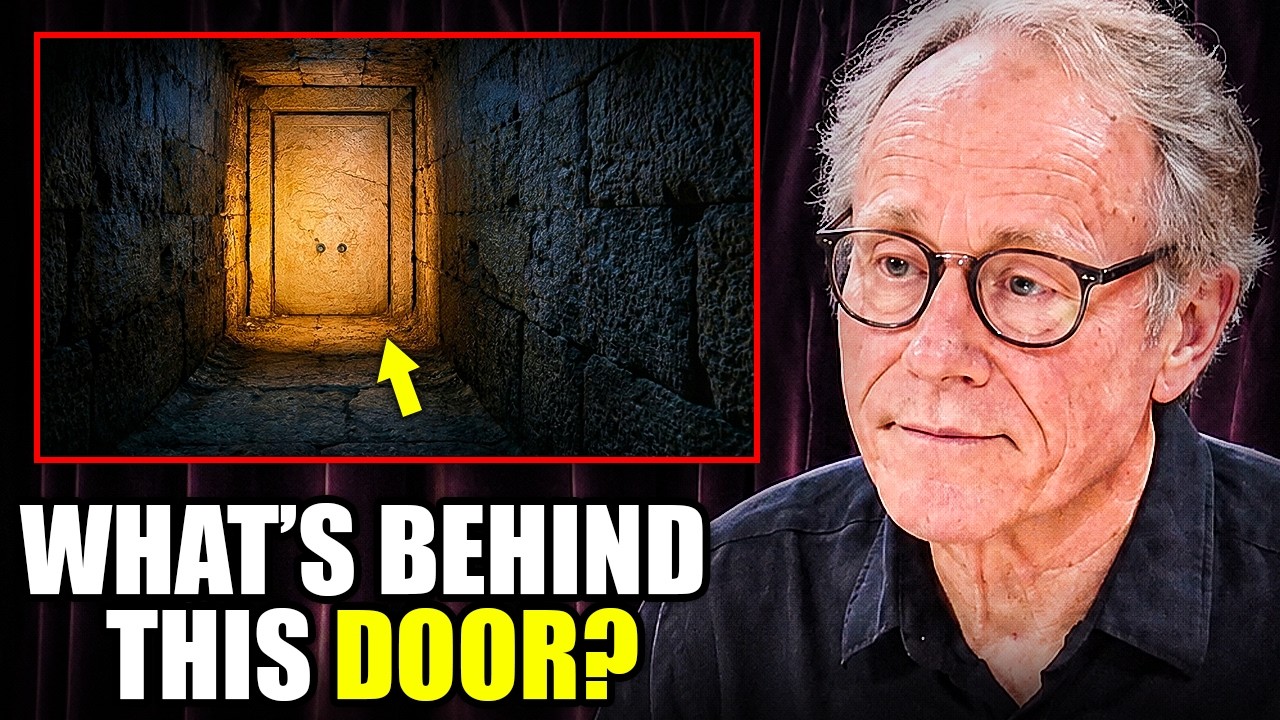
The Great Pyramid’s sealed door was finally breached by a robot, yet Egypt still refuses to say what lies beyond. For the first time in 4,500 years, cameras reached the mysterious chamber behind that ancient barrier.
A 30-meter corridor inside the Great Pyramid of Giza contains a sealed stone door at its far end. Robots have already reached the door, and in 2026, former Egyptian Antiquities Minister Zahi Hawass plans to reveal what lies behind it. The announcement follows a long-running dispute between physicists and archaeologists about whether the pyramid still contained undiscovered spaces.For most of the 2…
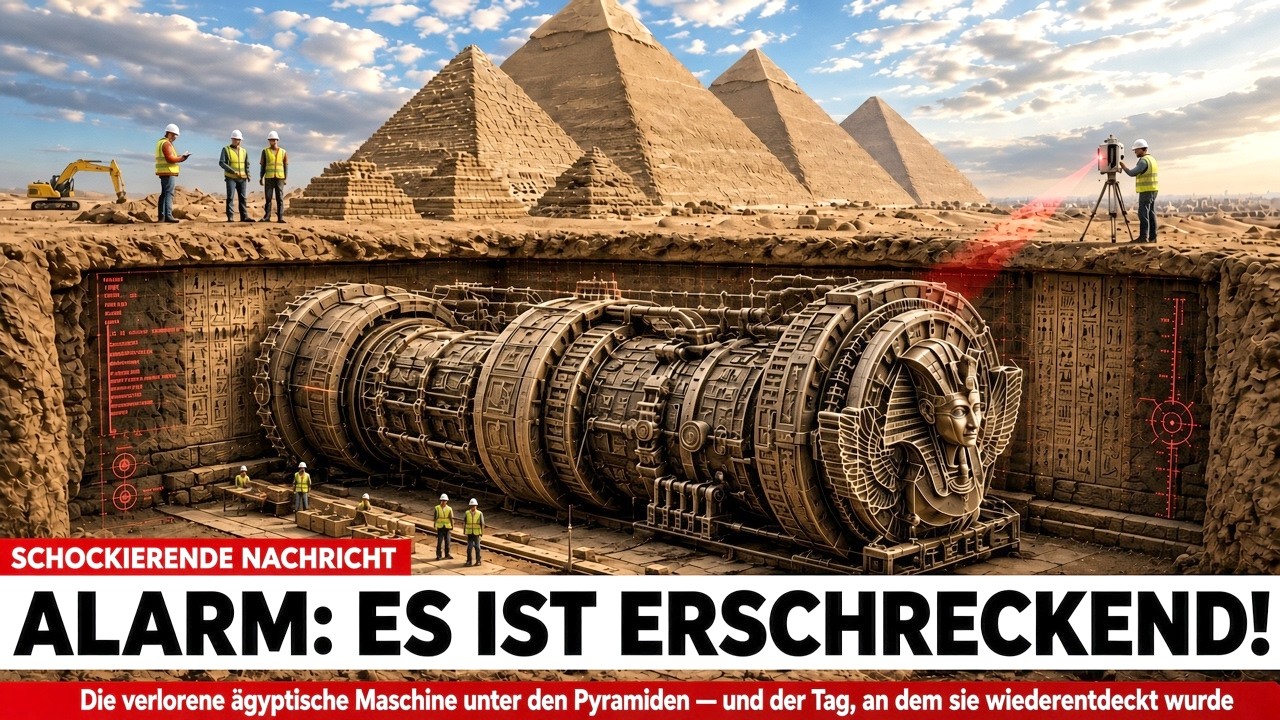
Archäologen entdecken unter Gizeh eine vergrabene Maschine, die Ägyptens Pyramidenbau erklären könnte. Jahrzehntelang rätselte die Forschung, wie die gewaltigen Steinblöcke bewegt wurden, doch jetzt deuten Bodenradar-Scans auf ein massives, künstlich angelegtes Bauwerk tief im Sand hin.
Die Great Pyramid von Gizeh wurde um 2560 vor Christus für Pharao Cheops errichtet. Mit einer ursprünglichen Höhe von etwa 147 Metern blieb sie fast 4.000 Jahre lang das höchste Bauwerk der Welt, bis im Mittelalter die Kathedrale von Lincoln diese Marke übertraf. Die Anlage besteht aus etwa 2,3 Millionen Kalksteinblöcken, die meist rund 2,5 Tonnen wiegen. Einzelne Granitbalken in der Königskammer…
Joe Rogan was visibly stunned mid-podcast, admitting, “So this is why we can’t dig under the Pyramids…” The comment followed a guest’s revelation about a massive, unexplained structure detected beneath the Giza plateau—something that defies conventional archaeology.
In March 2025, three researchers held a press conference and announced that they had identified large structures beneath the Pyramid of Khafre at Giza using a technique called synthetic aperture radar. They described eight vertical shafts descending more than 600 meters into the ground, spiral staircases, and an underground city extending roughly two kilometers beneath the plateau. The story sprea…

Graham Hancock just dropped evidence he claims rewrites everything we know about the pyramids, and the world is stunned. The controversial author has long argued the Giza monuments are far older than mainstream Egyptology admits, pointing to erosion patterns and celestial alignments.
The Great Pyramid of Giza is often cited as one of the most remarkable structures ever built. Its internal chambers, particularly the King’s Chamber, are constructed from massive granite blocks. The conventional account holds that Pharaoh Khufu built it around 2560 BCE using copper tools and a workforce of about 20,000 laborers over roughly two decades. Author and former journalist Graham Hancock…

A sealed chamber beneath the Great Pyramid has just yielded what experts call a “disturbing” discovery that could rewrite ancient history. The newly found space, long hidden behind a wall of massive limestone blocks, contains artifacts that directly contradict everything we believed about pyramid construction.
The Great Pyramid of Giza has been studied, measured, and debated for centuries. Every stone, angle, and passage has been documented, or so it was believed. In 2025, a research team reported finding structures buried deep beneath its base, a discovery that was not anticipated.Standing at the base of the Great Pyramid is an experience that is difficult to describe. The desert heat rises from the sa…
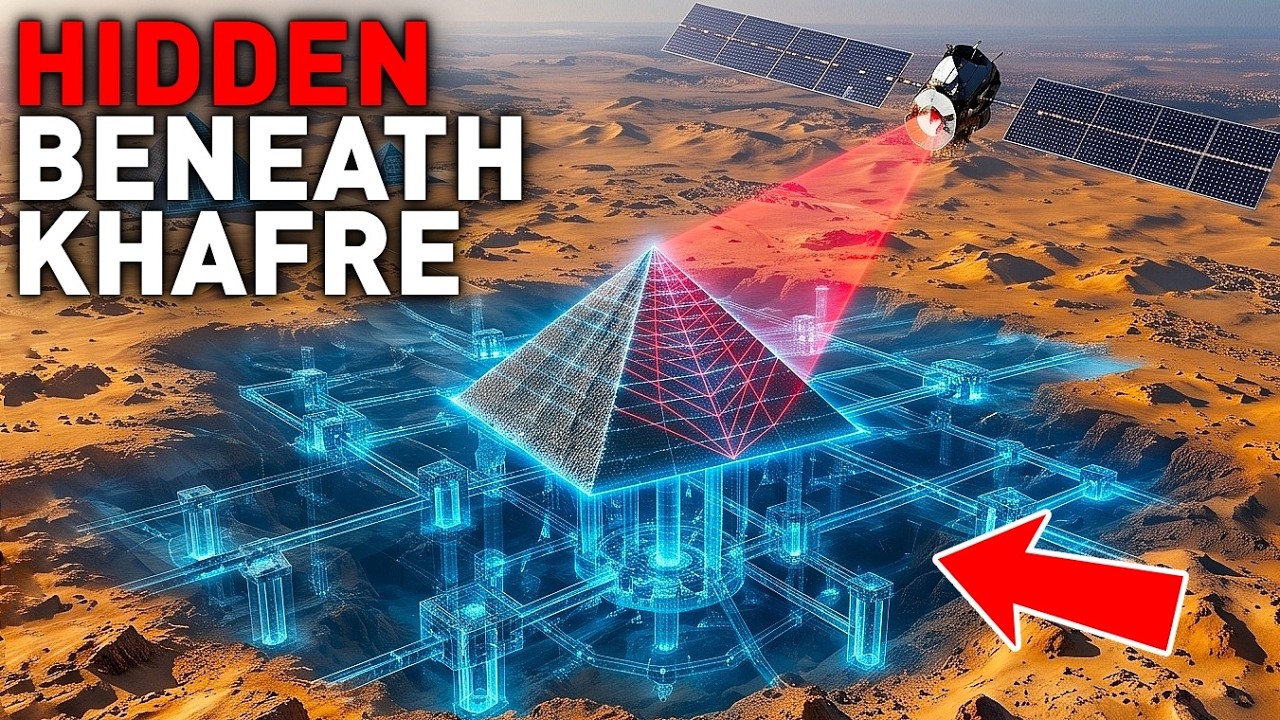
Four satellites just confirmed a massive, hidden structure beneath the Khafre Pyramid, and mainstream archaeology is scrambling for an explanation. Researchers say the underground complex features enormous vertical shafts and labyrinthine passages, but they refuse to call it a tomb.
The Great Pyramid of Giza and the surrounding plateau continue to be a source of archaeological and geological debate. Recent research and new scanning technologies have prompted renewed discussion about hidden structures beneath the sands and the methods used to build these ancient monuments.Much of the recent attention stems from a study by Italian and Scottish researchers who employed synthetic…
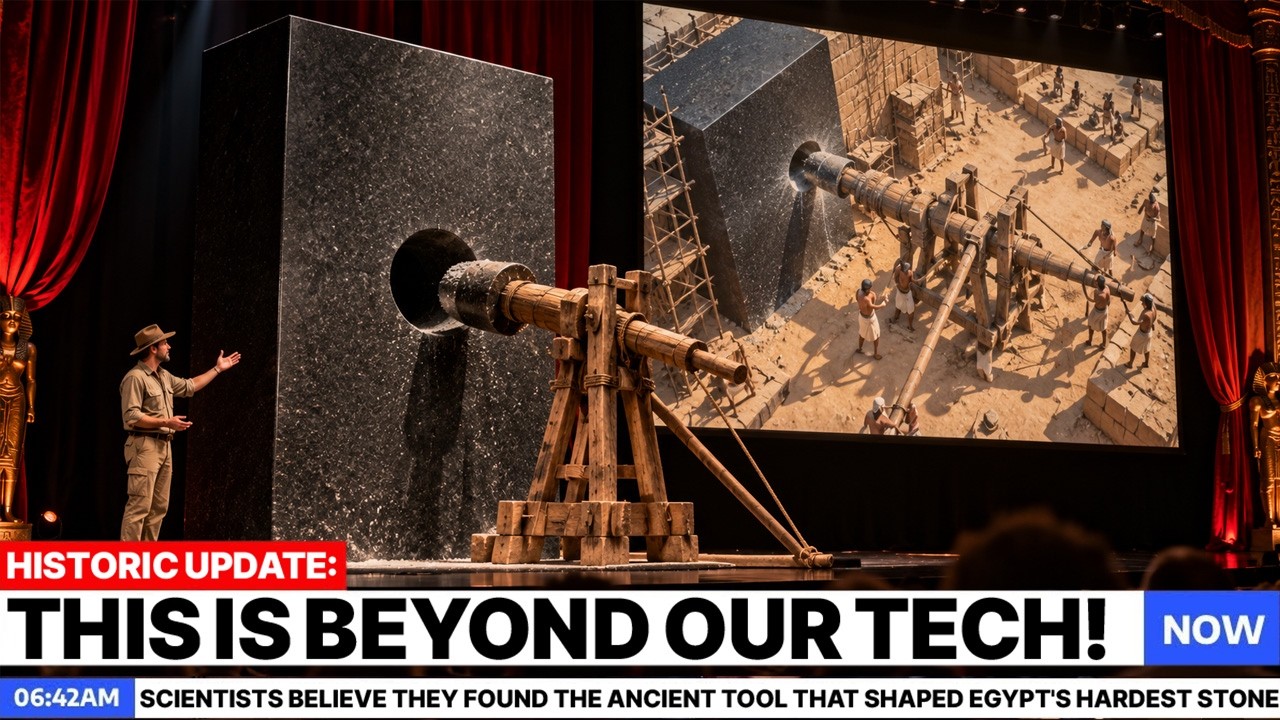
Scientists believe they found the ancient tool that shaped Egypt’s hardest stone, and it wasn’t what anyone expected. For decades, experts have puzzled over how the Egyptians carved granite with such precision using supposed copper tools, which should have been far too soft.
The Great Pyramid of Giza contains a granite sarcophagus that appears inconsistent with the tool technology generally attributed to ancient Egypt. The builders had access to copper, but copper is too soft to cut quartz embedded in granite. Yet the sarcophagus shows straight cuts and precisely drilled holes, with stone cores bearing spiral rings left by a rotating tool.Researchers have spent more t…