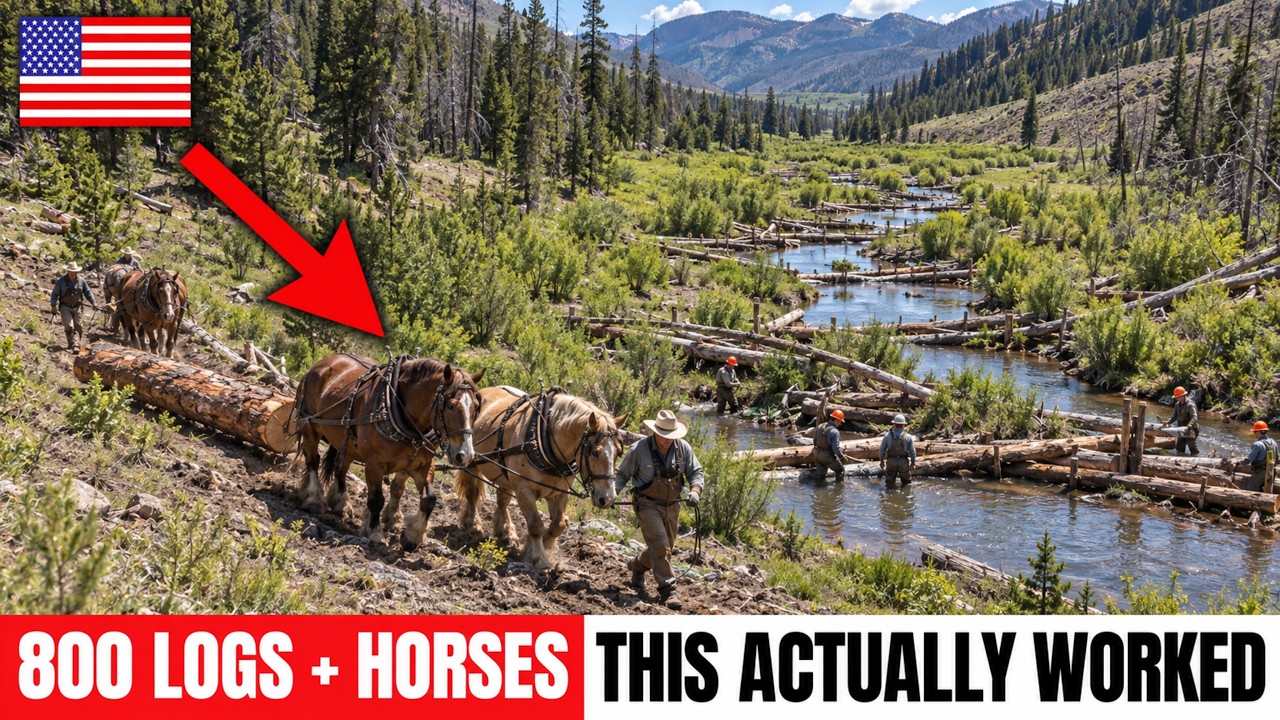
In 1956, a government plane sprayed Tin Cup Creek’s willows to “improve” the land, triggering a 60-year collapse of the entire ecosystem. Nearly seven decades later, a different federal agency admitted the mistake and sent teams of draft horses—the only equipment legally allowed—to haul 800 hand-cut logs into the remote canyon.
In the summer of 2024, a team of draft horses entered a steep-walled canyon in eastern Idaho where vehicles are legally prohibited. The trail was barely wide enough for a single horse, with pine trees pressing in on one side and open sky on the other. The horses dragged whole logs, cut by hand and tied to their saddles, one at a time toward a creek that had been in decline for roughly 70 years.The…
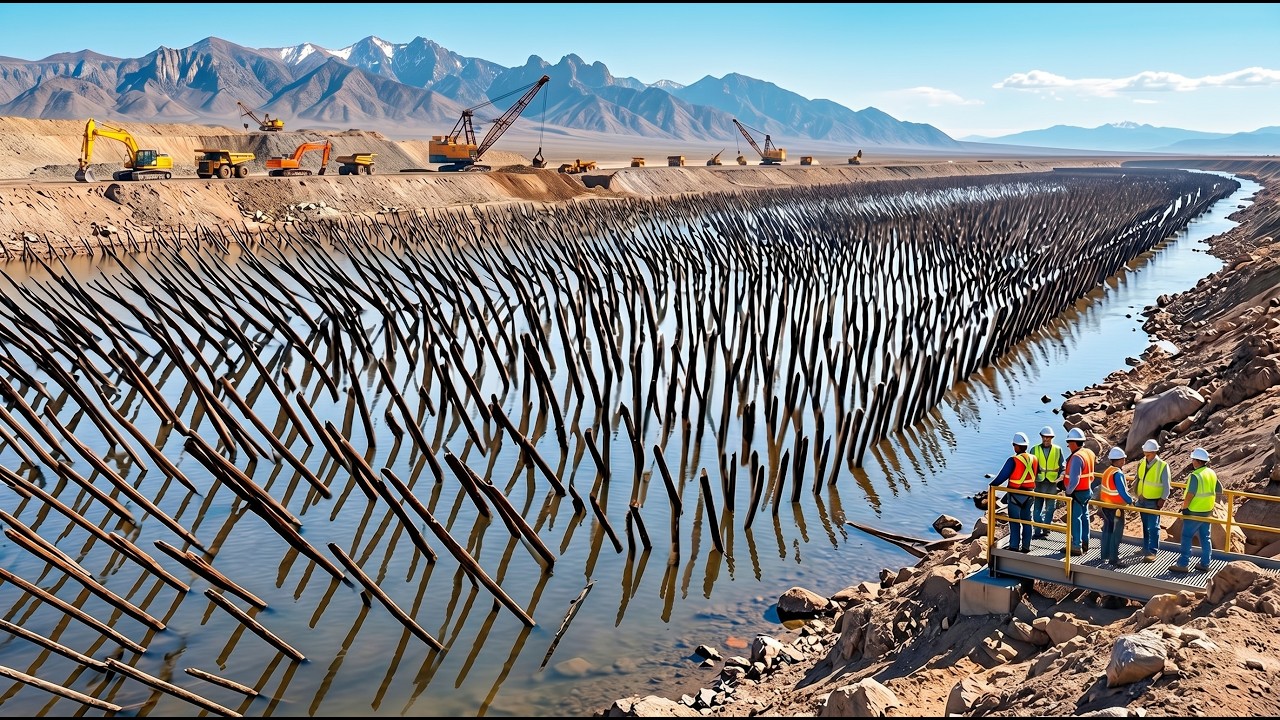
Wildlife officials placed 76 fake beaver dams across a dying river, hoping to trick nature into restoring itself. The structures slowed the water and raised its level, which should have worked.
In 2009, a restoration project in eastern Oregon installed 76 simple wooden structures along a degraded stretch of Bridge Creek, a tributary of the John Day River. The goal was modest: provide a foothold for the beavers already living there so they could do the work they were already attempting. The project cost $374,000 and introduced no new animals.The creek had been in decline for decades. By t…