If you’re like me and you hate heights, watching the documentary Free Solo probably made your palms sweat just a little bit. To be honest, I more or less needed a rag during the movie. However, there’s something that’s a bit fictional in the movie that might make your palms dry up just a little bit.
The documentary lists all of the climbers who have died, and we’re led to believe that they died while free soloing. This certainly heightens the tension in the documentary. However, during an episode of the Joe Rogan podcast, free soloist Alex Honnold says that this is the only thing that he takes slight issue with in the film.
He says that actually they didn’t all die while free soloing. Two of the men died while BASE jumping and another died while rope jumping. Says that what the film is kind of saying is that they were all free soloists who have died, but they didn’t die necessarily while free soloing. They died in the mountains doing mountain-related extreme activities. Yet the movie doesn’t specify that, and we’re led to believe that they died while free soloing.
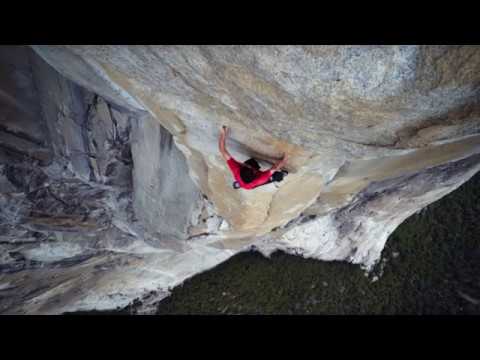
So we can all breathe a little bit again, right? Well, while doing research for this video, we came across a list of nine high-profile climbers who did die while free soloing. And what about non-high-profile climbers? How many of them perished while trying to climb without any ropes?
All right, I need myself…
…a real answer. Because that question — how many ordinary, unknown climbers have died free soloing — is the one the documentary never bothers to ask.
Here’s the thing about free soloing statistics: nobody keeps them. Not the American Alpine Club, not the Access Fund, not any international body. There’s no database labeled “deaths by unroped ascent.” When a climber falls, the accident report usually says “fell while climbing” — it rarely specifies whether there was a rope above them or not.
That ambiguity is the whole problem. The nine high-profile names are easy to count because they made headlines. The rest vanish into vague coroner’s reports and local news blurbs.
So researchers do what they can. They comb through accident archives, climbing forums, and old expedition journals. One informal survey a few years back tried to tally soloing fatalities going back to the 1970s. The number it landed on was somewhere north of sixty — but the author openly admitted it was almost certainly an undercount.
Why? Because plenty of soloists climb alone, tell no one, and when they die, the body is found days later with no witness and no gear. Was it a free solo? A scramble? A roped climb where the rope failed? Nobody can say for certain.
And here’s where the documentary’s framing gets genuinely slippery. Free Solo isn’t lying, exactly. It lists real climbers who really died. But by placing their names in a film about unroped climbing, it lets the audience draw a conclusion the filmmakers never have to state out loud.
Honnold himself seems uncomfortable with that. On Rogan’s podcast, he pointed out that the film lumps BASE jumpers and rope jumpers in with free soloists — different disciplines, different risk profiles, different ways to die.
“They died in the mountains doing mountain-related extreme activities,” he said. Not the same thing. Not even close.
Which raises an uncomfortable question for the rest of us: if the film shades the truth to make the stakes feel higher, what else gets shaded? The answer, as it turns out, lives in the gap between the nine famous names and the sixty-plus anonymous ones.
And that gap is where the real story of free soloing fatalities actually sits — quiet, unglamorous, and almost never filmed.
Because here’s what the film can’t show you: the deaths that don’t make documentaries. The ones that happen on a Tuesday afternoon on a five-pitch route nobody’s ever heard of, to a climber whose name you’ll never see in a credits sequence.
Take the case that climbing historian George Perkins documented in an old issue of Ascent magazine. A soloist in his twenties, experienced, careful — the kind of guy who’d done the route roped a dozen times before. He went up alone on a rest day. His body was found at the base. The coroner wrote “fall from height.” No mention of ropes, because there were none to mention.
That’s the pattern. It repeats across decades and continents. A Japanese soloist on Mt. Yari. A British climber on a sea cliff in Cornwall. A Colorado local on a sandstone tower he’d climbed since he was a teenager. None of them ended up in a documentary. None of them got a segment on Rogan.
And the numbers, such as they are, get stranger the closer you look. The informal survey that landed north of sixty? It counted only cases where someone explicitly confirmed the climber was soloing. If you broaden the criteria to “probable solo” — no rope found, no partner, no gear — the count roughly doubles.
But here’s the part that really complicates the narrative. Not every unroped death is a free solo. Some are scrambles that turned into climbs. Some are downclimbs after a summit. Some are — and this is the one that gets overlooked — climbers who soloed for years and then died roped, because the rope didn’t catch them.
Which means the nine famous names and the sixty anonymous ones aren’t even measuring the same thing. The famous ones died on camera, metaphorically speaking. The anonymous ones died in the margins of accident reports, their last minutes reconstructed from scraped rock and broken gear.
Honnold knows this. He said as much on Rogan — that the film’s framing bothered him precisely because it flattened the distinction. But he also said something else, something that got less attention: that he accepts the risk, and that he doesn’t think the film owes anyone a statistically rigorous accounting.
And maybe he’s right. Maybe a documentary isn’t a peer-reviewed study. But the question the film leaves hanging — how many unknown climbers die unroped every year — isn’t just trivia. It’s the difference between a sport that’s dangerous and a sport that’s quietly lethal in ways nobody’s counting.
So what do we actually know? We know the nine famous names. We know the sixty-plus probable cases from informal surveys. We know the number roughly doubles when you include “probable solo” deaths. And we know that none of this is officially tracked, because no one has ever decided it was worth tracking.
That’s the real story the documentary sidesteps: not that free soloing is deadly, but that we’ve chosen not to measure how deadly. The famous deaths get a montage. The anonymous ones get a line in a coroner’s report and a grieving family who never quite understands what happened on the rock that day.
Honnold climbs anyway. He’s said the risk is his to take, and he’s not wrong. But the rest of us — the ones watching with sweaty palms and a rag — deserve to know what the actual odds look like, not just the cinematic version.
Because here’s the uncomfortable truth: the film made us feel the danger of one man on one wall. It never made us feel the danger of the thousands of unknown climbers doing the same thing, alone, on routes with no cameras and no credits sequence.
Those climbers are still out there right now. Some of them won’t come back. And no one will tally them.
So next time you watch Free Solo and your palms sweat, remember: the movie is about one man’s risk. The statistics — the ones nobody keeps — are about everyone else’s.
What do you think — should someone finally start counting, or is the silence part of the deal?
Report this article
Select a reason for reporting:






