Most monster movies are content to entertain. But a handful from the 1980s didn’t just scare audiences—they terrified the people who decide what you’re allowed to see. Governments seized VHS tapes. Theaters refused to screen them. Censors demanded cuts that sometimes gutted entire scenes. These weren’t just movies; they were contraband.
And one of them became infamous for a scene so grotesque that audiences reportedly walked out before it even finished. Tonight, we’re uncovering 12 creature features so graphic, so disturbing that entire countries tried to erase them from existence. Some of these films were banned outright. Others were buried under legal threats and distribution bans. But decades later, they’ve clawed their way back into the spotlight—because horror fans never forget.
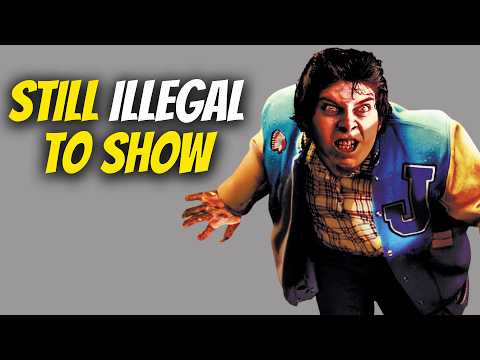
Take The Boogens (1981). On the surface, it’s a simple monster movie: miners reopen an abandoned Colorado silver mine and unleash something ancient and hungry. But the creatures are small, fast, and nearly invisible in the darkness. The real horror isn’t the monster—it’s the claustrophobia. Victims are dragged screaming into narrow tunnels, torn apart just beyond the flashlight’s reach. The violence is sudden, brutal, and often obscured, which somehow makes it worse. International releases demanded cuts, but the damage was done. The Boogens proved that restraint can be more disturbing than a full reveal.
Then there’s Alligator (1980). A baby alligator flushed down a toilet grows into a massive predator in the Chicago sewers, feeding on lab animals contaminated with growth hormones. Director Lewis Teague treats the creature like a force of nature—silent, unstoppable, and utterly indifferent. One sequence shows the reptile crashing through a suburban celebration and devouring victims in seconds. The camera doesn’t cut away. Several international distributors begged for edits, fearing the graphic tone would spark outrage. Instead, the controversy turned Alligator into a cult classic.
But the real nightmare fuel comes from The Beast Within (1982). A teenage boy begins suffering violent blackouts and grotesque physical changes. What shocked audiences wasn’t just the transformation—it was the length and detail. Skin tears. Bones reshape. Something insect-like struggles to emerge from beneath human flesh. The camera lingers on every horrific second. Several countries demanded edits, but the damage was done. It’s not just a monster reveal—it’s a prolonged biological nightmare. And that slow, grotesque metamorphosis is exactly what made the film unforgettable for horror fans and deeply uncomfortable for censors.
Few films sparked as much controversy as Humanoids from the Deep (1980). Produced during Roger Corman’s independent horror boom, the movie combined aquatic monsters with a coastal town festival that descends into chaos. The creatures are grotesque amphibian humanoids, but what made the film infamous wasn’t the design—it was the brutality. Instead of quick kills, the humanoids violently assault victims in chaotic nighttime sequences. Additional scenes of violence were reportedly inserted after filming, intensifying the graphic content beyond what viewers anticipated. Censorship boards in multiple countries objected. Some demanded cuts. Others restricted screenings entirely. Today, it remains one of the most debated creature features of the VHS era.
And then there’s Xtro (1982). A father vanishes after an alien encounter. Years later, something returns—but the way it returns shocked viewers. The alien creature gives birth to the man’s adult form through one of the most grotesque sequences in 1980s science fiction horror. The scene unfolds slowly, revealing the human body emerging from a horrifying biological transformation. The film doesn’t stop there. Alien influence warps reality around the boy at the center of the story. People transform. Creatures appear suddenly. Dream-like images blur the line between nightmare and physical reality. During the UK’s video nasties era, Xtro was seized from stores and banned from distribution. Even today, it feels less like a standard creature feature and more like a surreal horror experiment.
But the most disturbing is yet to come. Because one of these films became infamous for a scene so grotesque that audiences reportedly walked out before it finished. And the government didn’t just ban it—they tried to erase it from history.
Consider Rawhead Rex (1986). Clive Barker adapted his own short story into a creature feature that fused ancient mythology with brutal modern horror. Construction workers accidentally awaken a demon buried beneath the Irish countryside, and what emerges doesn’t lurk in shadows—it stalks victims across farmland and villages in broad daylight. The killings are raw and sudden, ripped apart in bursts of violence that clash violently with the quiet rural setting. Rawhead Rex isn’t simply an animal or an alien; it’s an ancient pagan force, almost ritualistic in its cruelty. Several regions demanded edits to soften the attacks, but the film’s strange blend of folklore and carnage earned it a cult following. Beneath the monster’s violence lies a darker idea: some evils were never meant to stay buried.
Then came The Kindred (1987), a film that traded a single monster for something far more unsettling—an entire laboratory of genetic mistakes. A dying geneticist leaves her son a desperate warning: destroy her research immediately. Something she created was never meant to exist. By the time he reaches the isolated coastal house, it’s already too late. Hidden rooms reveal illegal experiments blending human and marine DNA. The creatures are twisted hybrids—slimy textures, distorted limbs, grotesque biological shapes—and the camera refuses to look away. Unlike films that briefly reveal their monster, The Kindred forces viewers to confront these designs in prolonged close-ups. The climax unveils a massive mutant organism hidden beneath the house itself. International distributors trimmed the creature sequences, but for horror fans, that disturbing biological imagination became the film’s greatest strength.
Few low-budget films shocked audiences like The Deadly Spawn (1983). Made by a small independent team with almost no resources, it relied entirely on practical effects—and those effects turned out far more disturbing than anyone expected. A meteorite crashes in the woods, releasing parasitic creatures with enormous fanged mouths and an insatiable appetite. They don’t stalk slowly; they burst from dark corners, ventilation shafts, and basements, devouring victims in chaotic bursts of violence. One infamous moment involves a creature suddenly biting off a character’s head—a scene that stunned viewers with its abrupt brutality. During the early VHS era, censorship groups closely monitored graphic horror, and The Deadly Spawn drew heavy criticism. It wasn’t always formally banned, but it faced restrictions and controversy in several markets. Over time, it gained a loyal cult following, proving that the most disturbing creature movies sometimes come from passionate filmmakers working far outside Hollywood.
Remaking a 1950s classic sounds safe—until you see what Chuck Russell did with The Blob (1988). The original was a campy thriller about a gelatinous creature creeping through a small town. The remake turned that monster into a living biological organism that dissolves people alive. Victims aren’t simply attacked—they’re swallowed and slowly melted inside the blob itself, hands pressing against the translucent surface, faces distorting in panic. The camera lingers as bodies dissolve. One early sequence stunned viewers because it involved a young character, something earlier monster movies rarely dared to do. The film made it clear that no one was safe. Television broadcasts and international releases trimmed the most disturbing scenes, but even with edits, The Blob developed a reputation for pushing creature horror further than audiences expected. It doesn’t stalk or chase—it simply absorbs.
And beneath the streets of New York, C.H.U.D. (1984) imagined something far more disturbing than an alien invasion. The title explains it: cannibalistic humanoid underground dwellers. Once ordinary people, they were transformed by years of illegally dumped toxic waste into pale, distorted predators with glowing eyes and animalistic hunger. Director Douglas Cheek exploits a powerful urban fear—the idea that beneath every manhole cover lies an unseen world. Victims disappear in alleyways, underground passages, and empty subway corridors, dragged into darkness before anyone realizes what happened. Censorship boards in several countries requested minor edits to tone down the attacks, but the concept proved powerful. The monsters didn’t arrive from another world. They were created here. And according to the film’s dark imagination, they may still be waiting beneath the city streets.
Then there’s David Cronenberg’s The Fly (1986), a film that redefined body horror by turning the monster inward. Brilliant scientist Seth Brundle invents a teleportation device, tests it on himself, and unknowingly merges his DNA with a housefly trapped in the chamber. At first, he believes the accident improved him—stronger, faster, filled with unusual energy. But the improvement doesn’t last. Fingernails loosen and fall away. Lesions spread across his skin. His teeth begin to deteriorate. Cronenberg presents the transformation in haunting stages, forcing the audience to witness every horrifying step as the human form collapses into a grotesque insect-like hybrid. International distributors trimmed the most graphic sequences, yet The Fly remains one of the most respected creature horrors ever made—because beneath the grotesque imagery lies something far more tragic than a monster: the slow destruction of a man who realizes he is becoming something else entirely.
And then there’s the film that arguably terrified censors more than any other on this list. When John Carpenter’s The Thing premiered in 1982, audiences had no idea what they were about to witness. Set at an isolated Antarctic research station, the story follows a small team of scientists who discover that something has invaded their outpost—a creature with no single form that can imitate any living organism it touches. Suddenly, every man in the room becomes a potential threat. A colleague you spoke to minutes ago could already be something else. Carpenter lets suspicion spread through the station like a disease. Conversations grow shorter. Weapons appear in nervous hands. The brutal Antarctic environment outside only deepens the isolation.
Then the creature reveals itself. Human bodies split open into impossible shapes. Limbs twist and stretch as something alien struggles to escape from beneath the skin. In one unforgettable moment, a severed head sprouts spider-like legs and crawls across the floor. Special effects artist Rob Bottin designed transformations that looked grotesquely organic—far more realistic than anything horror fans had seen before. Some international releases trimmed a few moments of the most intense transformations, but the film’s greatest strength wasn’t just its gore. It was the paranoia. Because in The Thing, the monster isn’t simply outside the door. It could already be standing beside you.
Some horror movies scare audiences. But these creature films did something far more dangerous—they terrified the people in charge of censorship. Across the 1980s, governments seized tapes, theaters refused screenings, and entire scenes were cut because the imagery was simply too disturbing. Yet decades later, these same movies have become legendary among horror fans.
But there’s one film we haven’t fully uncovered yet. The one that sparked the harshest crackdown of all—the one whose most infamous scene reportedly sent viewers running for the exits before it even finished. And the government response went far beyond cutting a few frames. They tried to bury it entirely.
That film was Make Them Die Slowly (1981)—released in some territories as Cannibal Ferox. Director Umberto Lenzi claimed it was the most violent film ever made, and censors seemed to agree. Authorities in multiple countries seized prints, banned it outright, and in some cases prosecuted distributors under obscenity laws. The infamous scene that emptied theaters involved a brutal ritual killing, reportedly so graphic that projectionists were warned before screenings. For years, the film circulated only through grainy bootleg VHS tapes, passed hand to hand like contraband.
But the crackdown didn’t kill these movies—it preserved them. The very bans that were meant to erase them turned them into forbidden fruit, and horror fans spent decades hunting down uncut copies. Today, restored versions screen at festivals, and the films that once terrified censors are studied as landmarks of practical effects and boundary-pushing horror.
So the question remains: which of these banned creature features shocked you the most—and how many have you actually dared to watch?
Report this article
Select a reason for reporting:






