They were the faces that defined an era—glamorous, untouchable, and seemingly perfect. But behind the silver screen’s shimmering facade, some of Hollywood’s most beloved stars were running cons that would make today’s white-collar criminals blush. From forged birth certificates to stolen identities, from tax evasion to shoplifting, the Golden Age of Hollywood was as much about deception as it was about cinema.
These weren’t small-time grifts. These were A-list stars pulling off elaborate schemes, and the studios were often complicit, creating an environment where deception wasn’t just tolerated—it was required.
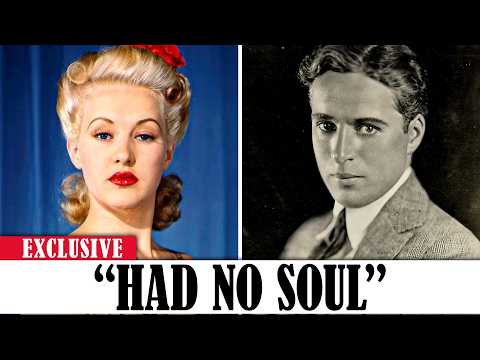
Take Betty Grable, the pin-up queen of World War II. Her legs were insured for a million dollars, but her career began with a forged birth certificate at age 12. When Fox discovered the fraud, they fired her—but she bounced back and became the highest-paid woman in America by 1946. Then there’s Rita Hayworth, whose entire identity was erased by Columbia Pictures. Born Margarita Carmen Cansino, she was given painful electrolysis to raise her hairline, her hair dyed auburn, and her ethnicity hidden behind a fabricated all-American backstory. The studio told the press she was from Washington, D.C., and nobody knew who she really was.
But the scams didn’t stop at identity. Burt Lancaster co-founded a production company that was, in reality, a sophisticated tax shelter. Mary Pickford, America’s Sweetheart, co-founded United Artists as a financial maneuver to minimize tax liability. And Joan Crawford? She lied about her birth year her entire career and orchestrated an Oscar scheme that was as ruthless as it was brilliant.
Then there’s the case of Hedy Lamarr—the brilliant inventor who helped lay the groundwork for Wi-Fi, yet was arrested twice for shoplifting. In 1966, she walked out of a department store with unpaid merchandise and $14,000 in checks. Twenty-five years later, at age 76, she was caught again. The woman who helped invent modern wireless communication was fighting her own publishers in court over a fabricated autobiography.
And who could forget Charlie Chaplin? The comedic genius was also a tax evader who hid money in Swiss bank accounts and shell companies. When the U.S. government tried to bar him from re-entering the country, he simply moved to Switzerland with his fortune. He returned only once, at age 83, to accept an honorary Oscar—and received a 12-minute standing ovation.
But perhaps the most shocking is the story of Merle Oberon, the first person of Asian descent nominated for an Academy Award. To avoid the Hays Code’s ban on interracial romance, she lied about her heritage, bleached her skin, and told the world her own mother was her maid. She kept that lie for decades, even threatening to sue her nephew when he tried to write a biography with the truth.
These stars weren’t just acting on screen—they were acting in real life, crafting elaborate personas to survive in a system that demanded perfection at any cost. And the biggest scam of all? The studio system itself, which controlled every aspect of its stars’ lives, from their names to their ethnicities to their weight, all while pocketing the profits.
As we delve deeper into these stories, you’ll discover that the line between performance and reality was often blurred beyond recognition. These were the scammers of the Golden Age—and their cons were as legendary as their films.
Consider Prince Michael Romanoff, a man who didn’t just reinvent himself—he invented an entirely new royal lineage. Born Hershel Gagusen, a Lithuanian orphan, he spent twenty years convincing Hollywood’s elite that he was a Russian prince, complete with a self-taught British accent and an unshakeable commitment to the bit. Humphrey Bogart called him the greatest con artist in the world—and meant it as a compliment. The State Department investigated him repeatedly, the real Romanovs denied any connection, and none of it mattered. In Hollywood, the performance was the only credential that counted.
Then there was Joseph Schenck, co-founder of 20th Century Fox, who was convicted of tax fraud and sent to federal prison—only to be pardoned by President Truman after serving four months. He walked out of prison and went right back to running the studio, eventually mentoring a young Marilyn Monroe. A convicted tax cheat with a presidential pardon was now shaping the career of Hollywood’s most famous face.
And the scandals kept coming. David Begelman, president of Columbia Pictures, forged checks in his actors’ names—including a $10,000 check he cashed himself from Cliff Robertson’s account. When Robertson reported it, the industry blacklisted him for years while Begelman paid a $5,000 fine and landed a job running MGM. The whistleblower was punished; the forger was promoted.
Errol Flynn, the swashbuckling star of Captain Blood, was a real-life thief before he ever picked up a sword on screen. He stole precious gems from a female acquaintance in New Guinea to fund his escape, then conned his way across 14,000 kilometers of the Pacific before talking his way into Hollywood with zero credentials. The man who played Robin Hood had been robbing people for real.
Sophia Loren, the face of Italian cinema, was convicted of tax evasion in 1980 and spent 17 days in a Naples prison while fans serenaded her outside the walls. It took Italy’s highest court 33 years to finally rule that she’d been right all along. She won—but the mugshot never went away.
What binds these stories together isn’t just the audacity of the scams—it’s the system that enabled them. The studios fabricated backgrounds, changed names, erased ethnicities, and fed actors drugs to control their weight and energy. MGM gave a teenage Judy Garland stimulants to keep her awake during 18-hour shoots and depressants to help her sleep afterward. She was a child, and the studio ran her body like a machine.
Betty Grable’s 42 films grossed over $100 million, yet even as the highest-paid woman in America, she never saw a proportional share of those profits. The studios got rich off faces that belonged to other people and called it the entertainment business. Every forged document, every suppressed scandal, every fabricated identity happened because the studio system created an environment where deception wasn’t just tolerated—it was required.
The Golden Age looked perfect on screen. Behind the camera, it was one big hustle—and the biggest scam of all wasn’t run by any single star. It was run by the studios, on all of them, every single day.
But the deeper you dig into the Golden Age, the more you realize that the line between victim and perpetrator was never clean. Some of these stars weren’t just surviving the system—they were gaming it right back. And a few of them took the skills they’d learned in front of the camera and turned them into full-blown criminal enterprises.
Take the case of Mack Sennett’s payroll, a scheme so brazen it ran for years before anyone noticed. The legendary comedy producer had a habit of writing checks to actors who had already left the studio—or in some cases, had never existed at all. An enterprising bookkeeper eventually discovered that a number of “ghost employees” were cashing paychecks for work that was never performed, with the money flowing into accounts controlled by a handful of studio insiders. The scam only collapsed when one of the fictitious names turned out to be a real person who had died years earlier—and the checks kept coming.
Then there was the curious case of Clifton Webb’s missing jewels. In 1948, the dapper star of Laura reported a string of expensive pieces stolen from his Beverly Hills home. The insurance payout was substantial. The only problem? A year later, a pawnbroker in downtown Los Angeles recognized several of the pieces—and the trail led back to a close associate of Webb’s who had been quietly fencing the jewelry on his behalf. The case was settled out of court, and Webb never spoke of it again.
And then there’s the story that Hollywood still doesn’t like to tell. In the early 1950s, a ring of contract players at one of the smaller studios was running a credit fraud operation so sophisticated that it took the FBI two years to untangle. The actors would open department store accounts under their stage names, make large purchases, and then default—knowing full well that the studios would quietly settle the debts to avoid bad press. The scheme worked for years because the studios were more terrified of scandal than they were of fraud. When the ring was finally busted, the names were kept out of the papers, the records were sealed, and the whole thing vanished like a bad review.
What makes these stories so unsettling isn’t the crimes themselves—it’s how completely the system absorbed them. The studios didn’t just tolerate deception; they built an infrastructure to contain it. Publicists scrubbed arrest records. Fixers paid off witnesses. Contracts included morality clauses that were enforced selectively, depending on how much money a star was making. The message was clear: if you were valuable enough, the rules simply didn’t apply to you.
And for a lucky few, that lesson became a business model. They learned that image was currency, that truth was negotiable, and that the public would believe whatever story was printed in the fan magazines. Some of them took that knowledge and walked away clean. Others kept pushing, kept scheming, kept testing just how much the system would forgive—until eventually, the answer came back: almost everything.
But there was one scam that no amount of studio protection could cover up. One that reached all the way to the top of the industry and threatened to bring the whole glittering edifice crashing down. And when it finally broke open, it would expose a truth about the Golden Age that made all the forged checks and stolen identities look like child’s play.
That scam was the blacklist itself—the industry-wide agreement to erase anyone deemed politically inconvenient, all while pretending it was patriotism. Studios quietly traded names at dinner parties, and careers vanished overnight. Some of the biggest stars in Hollywood were informing on their own colleagues just to keep their contracts.
The blacklist was the perfect crime because it required no forged documents, no stolen gems, no tax shelters. It just needed silence—and the studios had decades of practice at buying that. They’d already taught actors to lie about their names, their ages, their mothers. Now they simply asked them to lie about each other.
When the blacklist finally broke in the 1960s, the men who’d run it faced no consequences. They kept their offices, their fortunes, their reputations. The actors who’d been erased were told to be grateful the industry was willing to forgive them at all. The con wasn’t that Hollywood lied. The con was that it made everyone else lie too—and then charged admission to watch.
So which of these Golden Age scammers do you think was the most brazen—and which one would you have forgiven?
Report this article
Select a reason for reporting:






