The fog over Hastings in 1895 hid more than the sea. It hid a marriage that would end in a grave—and a mystery that would take a century to unravel. Mary Isabella Spink was thirty-seven, unmarried in all but name, and in possession of an inheritance that made her a target. She met a Polish barber named Severin Klosowski, and within two years she was dead.
But this is not just a story of a single murder. It is the story of how a man almost got away with the perfect crime—three times. And how one woman’s forgotten death became the key to catching a killer the press would later call Jack the Ripper.
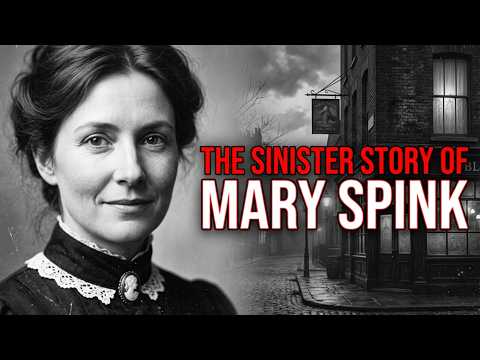
Mary Spink was not a woman of means, but she had something rarer: a few hundred pounds from her grandfather’s estate. In an era when married women had almost no legal identity, that money gave her a sliver of independence. Her first husband, Shadrach Spink, had abandoned her years earlier, leaving her in a legal limbo—married but alone. Divorce was expensive and scandalous, so she simply lived on, using his name but free of his presence.
When Klosowski entered her life, he offered what every abandoned woman of her class needed: respectability. They married in 1895. She believed it was legal. It was not. Klosowski already had a wife in Whitechapel—Lucy Baderski—and no intention of letting that stop him.
Together they opened a barber shop in Hastings, and locals soon noticed the strange arrangement: Mary played the piano while her husband shaved his customers. The newspapers called it “musical shaving.” It was charming. It was also the perfect cover for a man who was already planning his next move.
By 1897, they had moved to London, taking over the Prince of Wales pub in St. Luke’s. It was there, in the rooms above the bar, that Mary’s health began to fail. She vomited. She weakened. She wasted away. Klosowski nursed her personally, and a doctor diagnosed tuberculosis. No investigation was ordered. No one suspected a thing.
On Christmas Day, 1897, Mary Spink died. She was thirty-nine. Her death was recorded as natural, and she was buried without ceremony. The file was closed. The world moved on.
For five years, no one asked questions. But Klosowski had not stopped. Another woman would follow. And then another. And it would take a third death—and a mother’s suspicion—to finally expose the pattern that began in those quiet rooms above the pub.
Bessie Taylor came next. She had worked in domestic service before moving in with Klosowski, and like Mary before her, she was presented to neighbors and tradesmen as a wife. The couple settled into another licensed premises, and for a time, life appeared ordinary. Then the vomiting began. The wasting. The slow, relentless decline that had claimed Mary Spink two years earlier.
Bessie died in February 1901. No inquest was held. Her death was recorded in terms that suggested a natural intestinal ailment, and no relative or acquaintance raised a question about the circumstances. The pattern held. The silence held. Klosowski moved on.
Then came Maud Marsh. She joined his household first as a servant, then as a partner presented—once again—as a wife. But Maud’s family stayed close. Her mother watched the familiar decline with growing alarm, and when Maud’s condition worsened in the autumn of 1902, she did what no one had done for Mary Spink or Bessie Taylor: she brought in a doctor of her own choosing.
That doctor suspected poison. A second physician refused to certify death without further inquiry. Maud died on 22 October 1902, and this time, there was a post-mortem. The examination found antimony in her remains.
What had been a private family tragedy became a criminal investigation. Detectives from Scotland Yard began tracing the history of every house where Klosowski had lived, and the trail led them backward—to Bessie Taylor, and then to Mary Spink, both dead under identical circumstances, both buried without suspicion.
They tracked down the Hastings chemist William Davidson and recovered his sales ledger. There it was, in the record: April 1897, tartar emetic sold to Klosowski—months before Mary’s health began to fail. The amount was far beyond any reasonable household or barbering use.
The pattern was now undeniable: three women, three households, three slow deaths under the same man’s care, each preceded or accompanied by the acquisition of a poison capable of producing exactly those symptoms. The case against him rested on that pattern—and on the grim necessity of exhuming the two women who had been buried without question.
In the early months of 1903, the bodies of Bessie Taylor and Mary Spink were lifted from their graves. Both were found to contain antimony. In Mary’s case, the preservation of her remains after nearly five years was remarkable—the poison itself had slowed the decay, leaving the evidence intact for the analysts who would present it in court.
The courtroom at the Old Bailey was packed when the trial of Severin Klosowski—known to the court as George Chapman—opened on 16 March 1903. The charge was the murder of Maud Marsh. But from the opening statement, the prosecution made clear that this was not a case about a single death. It was a case about a system.
The Attorney General laid out the sequence: Mary Spink in Hastings and London in 1897, Bessie Taylor in 1901, and Maud Marsh in 1902. Three households. Three women. Three slow, wasting deaths. The earlier deaths would not be tried separately, he told the jury, but would be presented as evidence of a criminal pattern—proof that Maud’s death was no accident of disease.
The chemists who had analyzed the exhumed remains took the stand one by one. Each testified under oath to the antimony recovered from the tissues, and to the quantities that pointed not to a single fatal dose but to months of steady, deliberate administration. William Davidson, the Hastings pharmacist, produced his ledger and read aloud the entry from 3 April 1897: tartar emetic, sold to Klosowski. The date fell months before Mary Spink first fell ill.
Witnesses who had known each woman in her final illness described the same clinical picture—the vomiting, the wasting, the progressive weakness—repeated across three separate households and three separate years. The prosecution’s point was unmistakable: this was not coincidence. It was method.
The defense did not deny the presence of antimony. Instead, George Elliott argued that the Crown had failed to prove Klosowski himself had administered it. Antimony, he suggested, was present in many legitimate medicines of the period, and the poison could have entered the women’s bodies by some other means entirely.
It took the jury eleven minutes to reject that argument. Guilty of the willful murder of Maud Marsh. The verdict was recorded on 20 March 1903.
Mr. Justice Grantham addressed the prisoner before passing sentence. The penalty for murder was fixed by law—there was no discretion to exercise, no mitigating circumstance to weigh. Death by hanging. Klosowski was removed from the dock. No appeal was lodged. No reprieve came.
But the trial was not the end of the story. In the weeks that followed, Inspector Frederick Abberline—retired from Scotland Yard but still watching the case with keen interest—gave two interviews to the Pall Mall Gazette. He spoke of Klosowski’s years in Whitechapel. Of Lucy Baderski’s account of his long nocturnal absences in 1888. Of a man capable of sustained, deliberate violence against women.
“You have caught Jack the Ripper at last,” Abberline was reported to have said when told of the arrest. The line was repeated across the national press, and it stuck. By the time Klosowski mounted the scaffold at Wandsworth on 7 April 1903, the public had all but forgotten the three women he had actually been convicted of killing.
Mary Spink’s name appeared in no memorial. No plaque marked the rooms above the Prince of Wales where she died. Her grave, if it could be located at all, held no headstone. She survives in the record only as the first entry in a pattern—a woman whose death opened the door to a killer’s capture, and whose voice was never heard in any of it.
The legal machinery that ground Klosowski to dust was built on a principle from Makin v. Attorney General of New South Wales (1894): evidence of other acts could be admitted to disprove accident or coincidence. By 1903, the doctrine was settled. The defense raised no substantive objection to the admission of the Spink and Taylor deaths, because the law had already resolved the question. What remained was weight, not admissibility. The jury weighed it, and in eleven minutes, the pattern held.
Yet the case’s cultural afterlife took a different shape. The press, hungry for sensation, seized on Abberline’s Ripper claim. The poisoning of three women across six years—patient, domestic, almost invisible—was swallowed by a fifteen-year-old mystery of butchery in Whitechapel. The man hanged at Wandsworth became a Ripper suspect, not a poisoner.
Mary Spink left no letters, no diary, no portrait. She is known only through the circumstances of her death and the biography of the man who caused it. Her inheritance funded the barber shop, then the pub. Her piano playing charmed the customers. Her body, exhumed in 1903, preserved the antimony that convicted him. Even in death, she served the case against him.
She was reburied in London without ceremony. No headstone marks the spot. The Prince of Wales pub continued trading under new management, no plaque, no memorial. The rooms above the bar where she died on Christmas Day 1897 became, in time, just rooms again.
The archives at the National Archives hold the depositions, the exhibits, the trial transcript. The Times and the Pall Mall Gazette preserve the testimony and the interviews. But no document carries her voice. She is a gap in the record—a woman whose existence is proved only by the crime that erased her.
Was Mary Spink a victim of a forgotten killer, or the first clue in a case that still haunts us? Should history remember her name, or has the shadow of Jack the Ripper already buried her for good?
Report this article
Select a reason for reporting:






