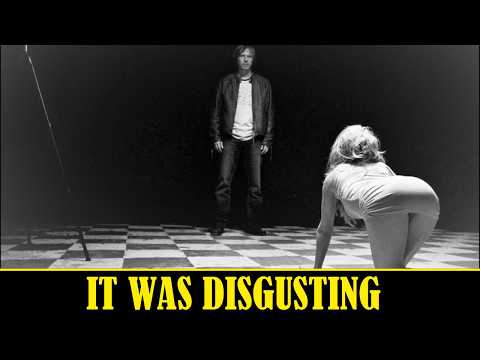
They were never meant to be seen. Locked in vaults, banned by studios, condemned by censors—these films were too dangerous, too raw, too honest for their time. Yet their defiance would echo through decades, reshaping an industry built on control.
This is the story of the rebels who dared to press ‘record’ when the world screamed ‘stop.’
In 1915, a single film ignited a firestorm that still burns today. D.W. Griffith’s The Birth of a Nation premiered to both awe and outrage. It pioneered cinematic techniques that would define the medium—sweeping battle scenes, dramatic close-ups, cross-cutting suspense—but its soul was rotten, glorifying the Ku Klux Klan and romanticizing a brutal past.
Audiences were mesmerized. Protesters were furious. The film became a weapon, used to recruit new Klan members and deepen racial divides. Griffith’s technical genius was undeniable, but his ideology left a scar that Hollywood still struggles to confront.
Scholars today call it a ‘historical artifact’—a masterpiece and a warning. It was the first film to show that cinema could shape minds, for better or worse.
Seventeen years later, another film pushed the boundaries of what audiences could stomach. Scarface (1932) brought the underworld into the light with shocking brutality. Paul Muni’s ruthless gangster blurred the line between crime and celebrity, and the public couldn’t look away.
But the backlash was immediate. Critics accused the film of corrupting youth, of turning murderers into idols. Hollywood, terrified of government intervention, rushed to create a censorship code. The Production Code would strangle creative freedom for decades.
Yet Scarface survived. It was re-evaluated as a bold commentary on the rise of organized crime, its influence visible in every gangster film that followed. The message was clear: art can disturb and inspire in equal measure.
And this was only the beginning. The battle lines were drawn, and the most controversial films were yet to come.
The same year, Tod Browning unleashed something even stranger. Freaks (1932) cast real circus performers—people with genuine physical differences—in a story of love, betrayal, and revenge. Browning, who had spent years traveling with carnivals, wanted to show their humanity. But audiences weren’t ready.
The film was banned in Britain for thirty years. MGM pulled it from circulation. One woman reportedly suffered a miscarriage after a test screening, and sued the studio. The message was clear: some truths were too uncomfortable to watch.
Yet Freaks found its audience slowly, in midnight screenings and film societies. Critics now call it a compassionate masterpiece—a film that asked what ‘normal’ even means. Its raw honesty made it dangerous, but that same honesty made it timeless.
Eight years later, Charlie Chaplin took on the most dangerous man in the world—and made him laughable. The Great Dictator (1940) was a direct assault on Hitler and fascism, released while Europe burned.
Chaplin played dual roles: a ruthless tyrant and a humble Jewish barber. The film’s famous final speech—a plea for humanity—was called naive by some, prophetic by others. But the message was unmistakable: laughter could be a weapon.
When the film premiered, Chaplin was warned it would destroy his career. It didn’t. Instead, it opened the door for political satire in cinema. Chaplin proved that comedy could confront tyranny when diplomacy failed.
And the rebels kept coming. Orson Welles, a twenty-five-year-old wunderkind, was about to make the most dangerous film in Hollywood history—one that would take aim at the very men who controlled the industry.
Citizen Kane (1941) arrived like a bomb disguised as a masterpiece. Welles built his story around a newspaper tycoon clearly modeled on William Randolph Hearst—and Hearst knew it. The mogul’s fury was immediate and absolute. He banned every mention of the film from his papers, threatened theaters that dared to screen it, and offered to buy the negative just to destroy it.
For a moment, it seemed Hearst would win. The film was pulled from most theaters, its advertising strangled, its reviews suppressed. But the silence only deepened the legend. When Citizen Kane finally reached audiences, they saw what Hearst feared: a portrait of power so empty it was terrifying.
The film’s techniques—deep focus, non-linear storytelling, the fractured puzzle of a man’s life—changed everything. Welles had proven that cinema could interrogate the powerful, not just entertain them. The price was high: his Hollywood career never fully recovered. But the film outlived its enemies, and Hearst’s attempts to bury it only made it immortal.
Two years later, Howard Hughes was already famous—billionaire, aviator, Hollywood outsider. He bought RKO Pictures and immediately decided to break every rule he could find. The Outlaw (1943) was his weapon of choice.
The film’s marketing was pure scandal: posters focused on Jane Russell’s cleavage, promising ‘the kind of woman men dream about.’ The censors were horrified. They demanded cuts, delays, and outright bans. The Production Code office refused to approve it, and Hughes was forced to wait.
But Hughes knew exactly what he was doing. By the time The Outlaw finally reached screens, the controversy had done his work for him. Audiences flooded theaters, not for the story, but for the spectacle of a forbidden film. Critics sneered, but the box office roared.
The message was unmistakable: censorship could be outmaneuvered, and scandal could be a marketing tool. Hollywood took notes. The old guard’s grip was loosening, one controversy at a time.
Then came Disney’s most uncomfortable legacy. Song of the South (1946) mixed live action with animation to tell the story of Uncle Remus, a cheerful former slave in the Reconstruction-era South. The songs were unforgettable—’Zip-a-Dee-Doo-Dah’ won an Oscar—but the film’s vision of the past was pure fantasy.
Critics and civil rights groups saw through it immediately. Here was a South where slavery’s wounds were bandaged with smiles and folk tales, where Black characters existed only to serve white children’s happiness. The NAACP condemned the film at its release, calling its portrayal ‘an insult to the Negro people.’
The backlash never faded. Disney itself has kept Song of the South locked away for decades, refusing to re-release it in the United States. It exists now as a ghost—a reminder that beloved classics can carry ugly truths. The film’s defenders call it a product of its time. Its critics call it propaganda dressed in animation. Both agree on one thing: it shows how cinema can hide history behind a smile.
By 1953, Hollywood was restless. Otto Preminger, a director known for his stubborn independence, was about to prove that the Production Code was weaker than everyone believed. The Moon Is Blue used words that were technically forbidden: ‘virgin,’ ‘mistress,’ ‘pregnant.’
The censors demanded changes. Preminger refused. He released the film without the Code’s seal of approval—a first for a major studio picture. The sky didn’t fall. Audiences came. Critics praised its wit. And the Code’s authority cracked.
Two years later, Preminger struck again with The Man with the Golden Arm (1955). This time, the subject was heroin addiction—a topic the Code forbade entirely. Frank Sinatra played a jazz drummer fighting to stay clean, and the film’s raw depiction of withdrawal and relapse horrified the censors.
Again, Preminger defied them. Again, the film succeeded. By the mid-1950s, the old rules were crumbling, and the rebels had found their blueprint. The next decade would tear the Code apart entirely.
The crack widened into a chasm in 1967. Bonnie and Clyde arrived with a bullet-riddled ballet that left audiences breathless and censors furious. Warren Beatty and Faye Dunaway played the doomed lovers as glamorous outlaws, and Arthur Penn’s direction turned violence into something disturbingly beautiful.
The final ambush—bodies twitching in slow motion, bullets tearing through flesh—was unlike anything Hollywood had shown. Critics split down the middle: some called it art, others called it obscenity. But the film’s shocking energy captured something real about America’s violent heart.
Two years later, Midnight Cowboy went even further. It was the first—and still only—X-rated film to win Best Picture. Jon Voight’s naive Texan and Dustin Hoffman’s sickly con man wandered a New York that offered no comfort, only survival.
The film’s unflinching look at male prostitution, loneliness, and broken dreams made studios nervous. But audiences saw themselves in its desperation. The Code was dead. The New Hollywood was born.
That same year, Sam Peckinpah unleashed The Wild Bunch—a Western that drowned its heroes in blood. The opening and closing shootouts, filmed in agonizing slow motion, showed violence as both thrilling and horrifying. Peckinpah wanted audiences to feel every bullet, every death.
Two years later, Clint Eastwood’s Dirty Harry gave the world a cop who tortured suspects and broke every rule. ‘Do you feel lucky, punk?’ became a cultural catchphrase—and a lightning rod for debate. Critics called it fascist. Audiences called it justice.
Meanwhile, Stanley Kubrick’s A Clockwork Orange (1971) painted a future where youth violence was both balletic and sickening. The film was banned in Britain for decades after copycat crimes were blamed on it. Kubrick himself received death threats and withdrew it from UK screens.
And Ken Russell’s The Devils (1971) pushed even further—nuns possessed, priests corrupted, faith turned into a frenzy of sex and torture. It was banned in Finland for over thirty years, and even today, the full version is nearly impossible to find. Russell’s assault on religious hypocrisy was too raw for any rating board to handle.
Then came Straw Dogs (1971), a film that made audiences question what they were watching. Dustin Hoffman’s quiet mathematician becomes a killer when his home is invaded—and the film refuses to tell us if we should cheer or recoil. The brutal rape scene and the climactic siege left critics divided and viewers shaken.
Peckinpah insisted he was exploring the limits of human endurance. But the line between critique and exploitation blurred with every frame. The film remains a flashpoint in discussions about violence on screen.
That same year, Wes Craven’s The Last House on the Left took revenge horror to its most disturbing extreme. A group of thugs brutalize two girls; their parents take bloody revenge. The film was banned in multiple countries, cut to ribbons in others, and condemned as exploitation.
But Craven’s point was darker: violence begets violence, and civilized people are only a few steps from savagery. The film’s legacy lives in every revenge thriller that followed.
John Waters didn’t care about respectability. Pink Flamingos (1972) was his love letter to filth—a celebration of bad taste so extreme it became a badge of honor for those who could stomach it. Divine, his larger-than-life muse, became an icon of rebellion.
Then came I Spit on Your Grave (1978)—a film so brutal in its depiction of rape and revenge that it was banned in dozens of countries and labeled ‘video nasty’ in the UK. Critics called it misogynistic. Defenders called it a survivor’s story. The debate still rages.
Monty Python’s Life of Brian (1979) took on religion with a wink and a smirk. ‘He’s not the Messiah, he’s a very naughty boy!’ became a rallying cry for blasphemy. Protests erupted. The film was banned in Ireland, Norway, and parts of the US.
But the Pythons had the last laugh. The film’s gentle mockery of blind faith made it a classic—and proved that comedy could challenge sacred cows without burning the world down.
By 1980, horror had found its most extreme voice. Cannibal Holocaust was so realistic that director Ruggero Deodato was put on trial for murder—accused of actually killing his actors on camera. He had to produce the actors alive in court to prove his innocence.
The film’s animal cruelty and graphic violence led to bans worldwide. Yet beneath the shock was a brutal critique of media exploitation—a theme more relevant than ever.
That same year, Maniac pushed slasher horror into uncomfortable territory. Its graphic scalpings and misogynistic violence led to decades of censorship in the UK. Even today, it remains a test case for what horror can get away with.
And then there was The Evil Dead (1981)—a low-budget shocker that became a legend. Sam Raimi’s relentless assault of gore and slapstick terror was banned in Finland and Ukraine, but it inspired a generation of filmmakers. The message: you don’t need money to break boundaries.
In 1986, Henry: Portrait of a Serial Killer offered something even darker—a cold, clinical look at a murderer’s mind, devoid of glamour or redemption. The film was banned in the UK and condemned by critics. But its unflinching honesty made it a touchstone for psychological horror.
Scorsese’s The Last Temptation of Christ (1988) imagined Jesus as a man torn by doubt and desire. Religious groups stormed theaters, firebombed cinemas in Paris, and demanded the film be destroyed. Scorsese stood firm. The film survived—and became a landmark of spiritual cinema.
Oliver Stone’s Natural Born Killers (1994) was a fever dream of media violence. Its rapid-fire editing, saturated colors, and savage satire divided critics and sparked debates about copycat crimes. Stone wanted to indict the media’s love affair with killers. Some thought he was celebrating it.
Larry Clark’s Kids (1995) showed teenagers having sex, doing drugs, and spreading HIV without a flicker of consequence. It was raw, unfiltered, and deeply uncomfortable. Critics called it exploitative; others called it honest. Either way, it couldn’t be ignored.
And then came the film that broke everything. Pier Paolo Pasolini’s Salò, or the 120 Days of Sodom (1975) remains the most extreme film ever made by a major artist. Set during Mussolini’s fascist regime, it depicted torture, sexual slavery, and human degradation with an unblinking camera.
Pasolini was murdered just weeks after the film’s release—a crime never fully solved. Some believe the film’s brutality was a factor. Others see it as a political assassination. Salò was banned in Italy, Australia, and countless other countries.
Even today, it’s a film few can watch. But those who do see its purpose: Pasolini was showing fascism’s true face—not as ideology, but as the absolute corruption of power. The film is a warning, not entertainment.
These thirty films share one thing: they refused to obey. They challenged our comfort, our morality, our sense of what art could be. Some were masterpieces. Some were disasters. But every one of them changed the conversation.
The censors are still out there, still trying to draw lines. But the rebels keep crossing them. Because cinema, at its best, was never meant to be safe. It was meant to provoke, to unsettle, to make us feel something we didn’t ask for.
So the next time you watch a film that shocks you, remember: someone fought for that shock. Someone risked their career, their reputation, their freedom to put it on screen.
And now it’s your turn. Which of these films do you think was truly dangerous—and which was just noise? Share your thoughts below. The debate is yours now.
Report this article
Select a reason for reporting:






