In the shadow-filled annals of World War II, where massive armies clashed on open plains and navies wrestled for control of the vast oceans, there existed a world of silence, shadows, and sudden, lethal strikes. At the heart of this hidden theater was the Z Special Unit, an elite, multinational reconnaissance and sabotage force that remains one of the most secretive chapters in Australian military history. While conventional soldiers marched under the weight of heavy packs and the pride of their national colors, the men of Z Unit operated in a realm where a uniform was a liability and a name was a death warrant.
Formed in 1942 under the umbrella of the Services Reconnaissance Department, Z Special Unit was an eclectic gathering of specialists—Australians, British, New Zealanders, and Dutch, as well as local volunteers from occupied territories. They were the ghosts without uniforms. Their training was as brutal as it was unconventional, taking place in isolated camps across the rugged Australian coast. They mastered the arts of silent killing, explosives, high-speed linguistics, and the ability to disappear into the landscape of Southeast Asia.
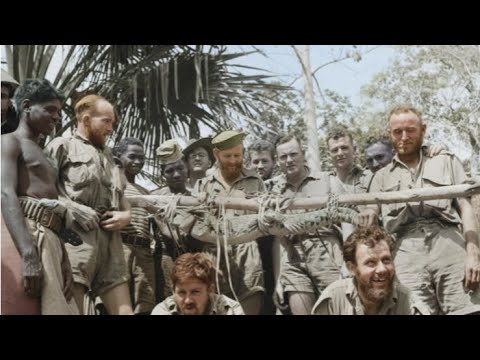
However, the true weight of their service lay in the terrifying legal limbo they inhabited. The members of Z Special Unit often operated deep behind Japanese lines without official uniforms or recognizable insignia. This was a deliberate choice for the sake of infiltration, but it stripped them of the protections of the Geneva Convention. If a regular soldier was captured, he became a prisoner of war. If a Z Unit operative was caught, he was classified as a spy and a saboteur. For these men, capture did not mean a camp. It meant interrogation, torture, and the swift stroke of an executioner’s blade. They carried L pills—cyanide capsules—not as a choice, but as a final mercy to protect their secrets.
Their mission was clear: to strike deep into the belly of the Japanese Empire. While the main Allied forces were regrouping, Z Unit was already active in the occupied territories of Singapore, Borneo, Timor, and the Indonesian Archipelago. They were the unseen hand that cut telephone lines, blew up fuel depots, and gathered the vital intelligence that allowed the Allied command to map the enemy’s weaknesses. They moved like smoke through the jungle and like ripples in the dark water of enemy harbors. They did not fight for medals or public acclaim. In fact, the very existence of their unit was so classified that many of their families believed they were performing mundane administrative tasks. They were the pioneers of unconventional warfare, engendering a new kind of fear among the Japanese occupiers. To the enemy, they were phantoms who could bypass any fortification. To the Allies, they were the ultimate insurance policy.
By 1943, Singapore had become the crown jewel of the Japanese occupation, a massive logistical hub and an impregnable naval fortress sitting at the heart of the emperor’s new empire. For the Allies, it was a painful symbol of defeat. For Z Special Unit, it was the ultimate target. To strike at the heart of Singapore’s harbor, they conceived Operation Jaywick, a plan so audacious it bordered on the suicidal. They would not attack with a fleet of warships or a swarm of bombers. Instead, they would infiltrate the stronghold using the ultimate Trojan horse.
The centerpiece of this impossible plan was the MV Krait, a former Japanese fishing boat that had been captured during the fall of Singapore. To the untrained eye, the Krait was nothing more than a rusted, filthy, and decrepit wooden vessel. It was slow, cramped, and smelled eternally of rotting fish and diesel. Yet, this primitive appearance was its greatest weapon. The commandos meticulously maintained its Japanese look, ensuring that from a distance, it looked like just another unremarkable fishing trawler plying the local waters.
The transformation went beyond the hull. The crew of 14—11 Australians and three British—had to become ghosts of the sea. To pass as local Malay or Japanese fishermen, the men used a dark chemical dye to stain their skin brown. They lived in squalor on the deck, wearing only sarongs or tattered shorts, intentionally avoiding the crisp appearance of Western soldiers. They smeared themselves with grease and grime to mask their Caucasian features. Any slip in their acting, any sighting of a white face through a telescope, would mean instant discovery and certain death.
In September 1943, the Krait began its harrowing 4,000-km journey from Exmouth, Western Australia. It was a voyage through a gauntlet of hostile waters. The ship moved at a crawling pace, vibrating with the rhythm of an engine that felt like it might fail at any moment. They sailed through the Lombok Strait, a narrow passage heavily patrolled by Japanese destroyers and aircraft. On multiple occasions, Japanese planes buzzed low over the Krait. The men stayed perfectly still on deck, mimicking the lethargic movements of fishermen, their hearts pounding against their ribs as they looked up at the rising sun insignia.
The contrast was staggering. A rickety, tattered wooden boat carrying a handful of men was sneaking into the lion’s den to challenge the might of the Imperial Japanese Navy. They were thousands of miles from any hope of rescue, sailing under a false flag in a vessel that felt like a floating coffin. But beneath the filth and the dye, these men were carrying the most advanced limpet mines of the era and a resolve that was harder than the steel ships they intended to sink. Operation Jaywick wasn’t just a mission—it was a 4,000-km walk on a tightrope over an abyss.
As the MV Krait reached the vicinity of the Riau Archipelago, just south of Singapore, the mission entered its most perilous phase. The Trojan horse had done its job, carrying the team through thousands of miles of enemy-controlled seas, but the Krait was too large to enter the heavily guarded harbor itself. To bridge the final gap, the commandos turned to a piece of equipment that seemed absurdly fragile against the backdrop of industrial warfare: the Hoehn folding boat.
These were not sturdy assault boats. They were collapsible canoes consisting of a skeletal wooden frame wrapped in a thin layer of rubberized canvas. In the hierarchy of naval power, they were the absolute lowest rung, yet they were the only vessels silent enough to bypass the Japanese sonar and visual lookouts. Six men divided into three canoes were dropped off at a hidden base on a small island. From there, they began a grueling three-night paddle toward the heart of the Japanese Empire.
The infiltration was a test of supreme physical and mental endurance. The commandos had to navigate the Singapore Strait, one of the most treacherous waterways in the world, characterized by unpredictable, ripping currents that threatened to sweep their flimsy craft out to sea. Under the cloak of a moonless night, they paddled through waters infested with sharks and sea snakes, their muscles screaming with fatigue. Every splash of an oar felt like a thunderclap in the oppressive silence. They moved only in the dark, hiding their canoes under mangrove roots during the day, sweating under the tropical sun while Japanese patrol boats passed mere meters away.
On the night of September 26th, 1943, the three canoes glided into Singapore Harbor. The scene was surreal. Massive Japanese cruisers and merchant ships loomed over them like steel cathedrals, their portholes glowing with light. The contrast was terrifying: six men in canvas and wood toys sitting in the shadow of tens of thousands of tons of lethal Japanese steel. They moved with absolute silence, utilizing the shadows of the hulls to avoid the sweep of searchlights.
The commandos reached their targets and slipped into the oily, dark water. Using magnetic limpet mines, they swam to the sterns of the ships. Working by touch in the murky depths, they scraped away barnacles to ensure a firm grip before attaching the explosives. Every metallic clink of the mine hitting the hull sent a jolt of adrenaline through their veins. One alert sentry, one well-placed spotlight, and they would be riddled with machine gun fire or crushed against the steel.
After attaching the mines to seven different vessels, the men slipped back into their folding boats. They didn’t celebrate. They crawled with everything they had left. They had to clear the harbor and reach their rendezvous point before the sun rose and the timers on the mines reached zero. They left as they had arrived—as ripples in the water, ghosts leaving a gift of fire for an enemy that didn’t even know they were there.
At approximately 5:00 a.m. on September 27th, 1943, the heavy morning silence of Singapore Harbor was obliterated. A series of thunderous detonations ripped through the humid air, sending plumes of fire and oily black smoke towering into the dawn sky. One by one, seven Japanese merchant ships and tankers—vital vessels for the emperor’s war machine—were torn open from below.
Nearly 37,000 tons of shipping were either resting on the harbor floor or burning fiercely. The Japanese command was plunged into absolute, paralyzed panic. Because they had seen no planes and no submarines, the Kempetai jumped to a terrifying conclusion: the attack had to be an inside job. They believed a massive ring of local insurgents had orchestrated the sabotage from within the city.
The aftermath was a reign of terror known as the Double Tenth Incident. Hundreds of civilians were arrested and tortured as the Japanese searched for a phantom resistance that didn’t exist. They were looking for spies in the streets of Singapore, never suspecting that the real perpetrators were already hundreds of miles away, chugging slowly southward on a tattered fishing boat.
While Singapore burned, the MV Krait was making its getaway. The crew watched the distant horizon glow with the fires they had started, a grim satisfaction masking their exhaustion. The return journey was no less perilous, navigating straits now teeming with destroyers on high alert. Yet the Krait’s disguise held. To the Japanese patrols, they were just another group of filthy fishermen in a rusted tub heading away from the chaos.
Operation Jaywick was a triumph of the highest order. Every single commando returned to Australia alive, having completed one of the most successful and daring special operations of the entire war. It provided a massive boost to Allied morale, proving that no Japanese stronghold was truly safe. However, this brilliant success carried a dark shadow. The victory would eventually tempt the Allied command to try again—a decision that would lead to a very different and much more tragic ending in the waters of Singapore.
Success in warfare is often a double-edged sword. In late 1944, a second, more ambitious mission was launched: Operation Rimau. This time the stakes were higher, the technology more advanced, and the group consisted of 23 elite commandos, including many veterans of the first raid. But while Jaywick had been bathed in the light of luck and perfect timing, Rimau was destined to descend into the deepest darkness.
The mission utilized a captured junk named the Mustika, but the element of surprise—the most vital weapon of the Z Special Unit—was shattered early. Near the Riau Archipelago, the Mustika was intercepted by a Japanese patrol boat. A tense standoff ended in a violent firefight. The commandos managed to sink the patrol boat, but the invisible nature of the mission was gone. The alarm was raised, and the Japanese, still stinging from the humiliation of the Jaywick raid, responded with a massive, vengeful dragnet.
The 23 men were forced to scuttle their ship and retreat to the surrounding islands. What followed was a weeks-long desperate struggle for survival against thousands of Japanese troops. One by one, the commandos were hunted down. Some died in fierce skirmishes, choosing to fight to their last bullet rather than be taken. Others were captured as they tried to island-hop back toward safety. Ultimately, 10 survivors were taken to the notorious Outram Road Jail in Singapore.
It was here, in the final chapters of Operation Rimau, that a profound, silent note of history occurred. The 10 captured commandos were subjected to brutal interrogations and eventually sentenced to death. However, unlike the typical treatment of spies, their conduct in captivity left an indelible mark on their captors. These men did not beg for mercy. They maintained a level of dignity and defiance that resonated with the Japanese code of Bushido—the way of the warrior.
On July 7th, 1945, just weeks before the war’s end, the 10 men were led to a field to be beheaded. Historical records and witness accounts from Japanese officers reveal a stunning scene. The executioners and high-ranking officials bowed in respect to the prisoners. The Japanese were so moved by the samurai spirit and the unwavering courage of these Australians that they treated the execution as a ceremony of honor rather than a common killing.
The tragedy of Operation Rimau serves as the dark mirror to Jaywick’s success. While Jaywick proved that the impossible could be achieved, Rimau reminded the world of the terrible price of such audacity. The 23 ghosts of Rimau vanished into the shadows of Singapore, but their sacrifice ensured that the legend of Z Special Unit was written not just in fire and explosions, but in a level of bravery so absolute that even their enemies had to bow before it.
While the daring raids on Singapore Harbor captured the rare headlines of the time, the true workload of Z Special Unit was spread across the vast, humid expanse of the entire Southeast Asian theater. From the oil-rich jungles of Borneo to the jagged limestone peaks of Timor, the ghosts without uniforms operated as the ultimate force multipliers. Their presence was often felt but rarely seen. They were the architects of a thousand small disasters that cumulatively paralyzed the Japanese occupation.
One of their most significant contributions took place during Operation Semut in Borneo. While the world watched the massive Allied landings on the coast, Z Unit operatives were already months ahead of the front lines. Dropped by parachute into the mountainous interior, these small teams made contact with the indigenous Dayak tribes—the legendary headhunters of Borneo. In a remarkable feat of cross-cultural diplomacy, the Z Unit commandos trained and armed thousands of Dayak warriors. Together, they launched a brutal guerrilla campaign that liberated vast tracts of the interior, cutting off Japanese retreat routes and providing the Allied command with a human radar that tracked every enemy movement through the dense canopy.
In Portuguese Timor, Z Special Unit took over the mantle of the earlier Sparrow Force, maintaining a persistent thorn in the side of the Japanese garrison. Their missions here were a masterclass in reconnaissance and sabotage. They operated in tiny cells, often living for months in the hills, surviving on meager rations provided by loyal locals. They monitored Japanese shipping lanes, sabotaged vital infrastructure like oil wells and bridges, and coordinated with local resistance movements to ensure the Japanese could never feel secure in their conquest.
The nature of these operations was characterized by a terrifying intimacy. Unlike a pilot who drops a bomb from 20,000 feet, a Z Unit operative had to see the whites of the enemy’s eyes. They specialized in the strike deep, strike silent philosophy, often sneaking into heavily guarded encampments to snatch high-ranking officers for interrogation or to plant explosives on essential machinery. Every mission was a gamble. They were operating in territories where the terrain was as much an enemy as the Japanese patrols. Malaria, tropical ulcers, and malnutrition were constant companions.
These campaigns across the archipelago were not about capturing territory. They were about eroding the enemy’s will and capability. The Z Unit became the hidden hand that supported local uprisings and prepared the ground for the eventual Allied return. Many of these missions were so secret that they remain partially redacted to this day. They were the pioneers of the small group, big impact theory, proving that a handful of men with the right training and enough grit could destabilize entire regional commands. Whether it was in the burning oil fields or the silent mountain passes, Z Special Unit ensured that for the Japanese, the rear area was never truly safe.
The operations of Z Special Unit were not merely heroic episodes of a bygone war. They were the laboratory where the DNA of modern special operations was spliced and perfected. The unit’s philosophy—strike deep, strike silent—represented a paradigm shift in military thinking. It moved away from the industrial era belief in massive frontal assaults and toward the surgical precision of the small group. This transition laid the foundational groundwork for the world’s most elite modern units, including the Australian SAS, the British SAS, and the US Navy SEALs.
The tactical innovations pioneered by Z Unit were decades ahead of their time. They were among the first to master multi-domain infiltration, proving that a mission could begin in the air, transition to the sea, and conclude on foot in the jungle or under the water. Their use of folding boats and the clandestine attachment of limpet mines created the very manual that modern combat divers and SEAL teams use today. They demonstrated that the most effective way to destroy a million-dollar battleship was not necessarily with a ten-million-dollar bomber, but with a twenty-dollar mine and a man with enough courage to swim into the mouth of the enemy.
Furthermore, Z Unit perfected the art of indigenous warfare. By embedding themselves within local populations, such as the Dayak people in Borneo or the Timorese in the mountains, they acted as force multipliers. They didn’t just fight; they trained, organized, and inspired. This Green Beret style of unconventional warfare—winning hearts and minds to create a guerrilla army from scratch—is now a core competency of modern special forces. They proved that a handful of men, if properly trained in linguistics and cultural diplomacy, could exert the strategic influence of an entire division.
The Z mindset also revolutionized military psychology. They cultivated a culture of radical autonomy where small teams were expected to operate for months without direct orders from a central command. This required a level of mental resilience and initiative that is now the benchmark for special forces selection processes worldwide. The Z Unit operative had to be a soldier, a spy, a linguist, and a technical engineer all at once. They proved that in the realm of special operations, the most lethal weapon is not the rifle in a soldier’s hand, but the creative intelligence in his mind.
Today, the legacy of Z Special Unit lives on every time a modern special forces team disappears into the shadows of a denied area. The modern SASR in Australia directly traces its lineage and quiet professional ethos back to these ghosts of the Pacific. They left behind a profound legacy: the realization that a few brave individuals acting at the right time and in the right place can alter the trajectory of global history. They taught the world that silence is a weapon, shadow is a shield, and that victory often belongs not to the loudest, but to those who strike unseen from the deep.
For many years after the guns fell silent in 1945, the story of Z Special Unit remained locked in the steel cabinets of military archives. Unlike the celebrated heroes of major battles, the ghosts without uniforms returned to a world that knew nothing of their sacrifice. Because their missions were so sensitive and their methods so unconventional, the unit was shrouded in a blanket of absolute secrecy. There were no victory parades for the crews of the Krait or the Mustika. There were no public medals for the men who had lived as fishermen in the mouth of the enemy. They were the forgotten warriors—ghosts even in their own homeland.
The secret status had a poignant and often painful cost. Many veterans went to their graves without ever telling their families the truth about where they had been or why they carried the invisible scars of torture and jungle fever. Wives and children were left to wonder why a father would wake up screaming in the night or why he possessed an intimate knowledge of a distant island he had supposedly never visited. For decades, the men of Z Unit honored their oath of silence, embodying the quiet professional long before the term became a modern military cliché.
It was only in the late 20th century that the veil began to lift. Through the persistent efforts of historians and surviving veterans, the extraordinary feats of Z Special Unit were finally brought into the light. The late recognition came in the form of memorials, books, and the eventual public acknowledgement of their strategic impact on the Pacific War. Today, the MV Krait sits as a hallowed relic at the Australian National Maritime Museum—a humble wooden witness to a courage that once shook an empire.
The spirit of Z Unit lives on, not just in museums, but in the marrow of today’s special operations commands. Every time a member of the Australian SASR or a commando unit departs on a mission without a name, they are walking in the footsteps of the Z ghosts. The legacy of those 23 men of Operation Rimau who stood tall before the executioner’s sword remains a sacred standard of bravery. They taught us that the highest form of service is not that which is performed for the camera or the history books, but that which is done in the darkness for a cause greater than oneself, with no promise of return or recognition.
As we remember those who went into the darkness, we honor a specific kind of courage: the courage to be forgotten. The men of Z Special Unit proved that the most powerful force in the world is the human spirit when it is fueled by an unbreakable resolve. They were the ones who volunteered for the missions that couldn’t be done, and in doing so, they left a light that still guides those who serve in the shadows today. Though they were once the forgotten, their legend is now eternal—a reminder that while ghosts may have no uniform, they possess a soul that can never be extinguished.
But in an age where secrecy is increasingly rare and heroes are measured by their visibility, what does it say about us that the bravest among us may still be the ones whose stories we will never fully know?
Report this article
Select a reason for reporting:






