In the glitzy world of old Hollywood, where spotlights shone brightest on the silver screen, a shadowy reality lurked behind the scenes. The Golden Age was an era of glamour and secrecy, especially when it came to the personal lives of its stars. Societal norms and stringent moral codes forced many actors who were gay or bisexual to conceal their true selves, leading double lives that could shatter their careers if exposed. Behind the dazzling smiles and perfect romances, a silent struggle for identity and acceptance played out.
Imagine the pressure: one wrong move, one whispered rumor, and everything could crumble. The studio system enforced a strict moral code, and being openly gay was a death sentence for a career. Actors like William Haines, a silent film heartthrob, defied the odds by living openly with his partner, but most others weren’t so lucky. They married, they dated, they performed—all to hide who they truly were. The fear of scandal, blacklisting, and public ostracization kept them in the closet, their stories buried for decades.
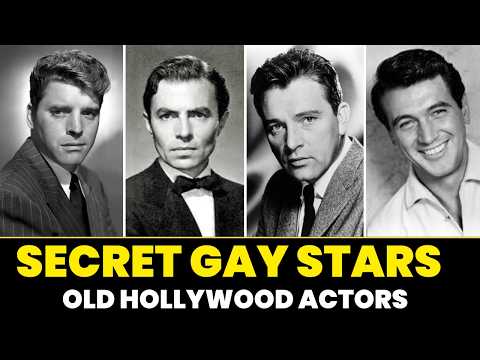
Take Rock Hudson, for instance. He was the ultimate leading man, adored by millions for his romantic roles. But his personal life was a carefully guarded secret. Hudson’s death from AIDS in 1985 shocked the world and forced a conversation about the gay community. He wasn’t alone. Tab Hunter, a 1950s teen idol, repressed his true self for years before coming out in his autobiography. Their stories are just the tip of the iceberg.
What drove these stars to hide? The answer lies in the era’s unforgiving attitudes. The Hollywood Blacklist and the Red Scare created an atmosphere of paranoia, where any deviation from the norm was suspect. Actors like John Garfield and Montgomery Clift faced scrutiny not just for their politics but for their private lives. The cost of honesty was simply too high.
As we peel back the layers of Tinseltown’s past, we uncover a tapestry of courage and tragedy. These actors gave us unforgettable performances while battling their own demons in silence. Their legacies are not just in the films they made but in the quiet defiance of living their truths, however hidden.
The revelations came slowly, often posthumously. William Haines was recognized decades after his death as one of Hollywood’s earliest openly gay actors. Rock Hudson’s openness about his illness humanized the AIDS crisis. Tab Hunter’s coming out inspired others to embrace authenticity. Each story is a piece of a larger puzzle, revealing the hidden lives of Golden Age stars.
But this is just the beginning. There are more names, more secrets, and more heartbreak to uncover. The Golden Age of Hollywood was a gilded cage for many, and their stories deserve to be told. Stay tuned as we delve deeper into the lives of these brave individuals who navigated a world that demanded silence.
Consider the case of Peter Lawford, the suave British actor who became a fixture of the Rat Pack. His charm and connections—including his marriage into the Kennedy family—made him a public figure of the highest order. Yet behind the glamorous parties and high-profile romances, rumors of his bisexuality swirled quietly. Lawford kept his private life under wraps, understanding that any deviation from his polished image could unravel his carefully constructed career.
Claude Rains, the legendary character actor of Casablanca and The Invisible Man, presents a different puzzle. Married twice, he left behind letters and friendships that hinted at a more complex truth. Some biographers have suggested that his closest male relationships may have been romantic, though definitive proof remains elusive. Rains never publicly addressed these speculations, leaving his personal life as mysterious as the characters he portrayed.
Then there’s David Niven, the quintessential English gentleman. With his impeccable manners and four marriages, Niven projected an image of heterosexual respectability. But his autobiography, Bring on the Empty Horses, alludes to a nuanced understanding of his own sexuality. Some biographers argue that his multiple marriages may have been a way to navigate his identity within the constraints of his public persona. Niven’s story reminds us that even the most polished exteriors can conceal hidden depths.
Montgomery Clift’s intense performances and turbulent personal life have long fascinated historians. His close friendships with men and his struggles with anxiety and substance abuse have led many to speculate that he was grappling with his sexuality. Clift’s short-lived relationships with women were highly publicized, but his emotional intensity with male colleagues suggested something deeper. He died at just 45, never having the chance to publicly address his true self.
George Sanders, with his distinctive voice and sophisticated demeanor, was married three times—yet persistent rumors about his sexuality followed him throughout his career. His tumultuous marriages and guarded private life only fueled speculation. Sanders never addressed these rumors, leaving behind a legacy of mystery that continues to intrigue biographers and fans alike.
And what of Fay Wray, the iconic scream queen of King Kong? While primarily known for her marriages to men, some historians have speculated about possible relationships with women. The era’s stringent expectations for women in the public eye made any deviation from heterosexuality particularly dangerous. Wray maintained a private personal life, rarely discussing her relationships beyond her marriages—a silence that speaks volumes about the pressures of the time.
These stars, and countless others, navigated a world where authenticity was a luxury few could afford. Their stories are not just about sexuality but about the universal human struggle for identity in a society that demanded conformity. Each revelation, whether during their lifetimes or after their deaths, chips away at the facade of old Hollywood’s glamour, revealing the very human costs of fame. The journey into their hidden lives is far from over.
Cary Grant remains one of the most fascinating figures in this hidden history. His five marriages to women painted a picture of the consummate ladies’ man, but his deep friendship with fellow actor Randolph Scott raised eyebrows across Hollywood. The two men shared a home for years, living together in a beach house in Santa Monica that the press dubbed “Bachelor Hall.” Their bond was so close that gossip columnists of the era couldn’t resist speculating.
Grant’s personal letters, later examined by biographers, hinted at romantic feelings he never publicly acknowledged. Some historians believe his relationship with Scott was the great love of his life, one he sacrificed to protect his career. Yet Grant remained tight-lipped until the end, taking his secrets with him when he died in 1986.
Errol Flynn presents another tantalizing case. The swashbuckling star of The Adventures of Robin Hood lived a life as adventurous off-screen as on. His flamboyant parties, extravagant spending, and close relationships with male crew members fueled persistent rumors of bisexuality. Flynn’s autobiography, My Wicked, Wicked Ways, hinted at experiences that went beyond the heterosexual image he projected.
Friends and biographers have suggested that Flynn’s larger-than-life persona was partly a shield. The more outrageous his public behavior, the easier it became to hide what lay beneath. His untimely death at fifty in 1959 meant he never faced the reckoning that would have forced him to address these questions directly.
Marlon Brando, arguably the greatest actor of his generation, left behind a labyrinth of speculation. His intense emotional connections with men, combined with his refusal to discuss his private life, have led many to believe he was bisexual. Brando’s own memoir, Songs My Mother Taught Me, danced around the subject with characteristic ambiguity.
Close associates described Brando as a man comfortable with fluidity in his relationships. He seemed to view sexuality as a spectrum long before such ideas entered mainstream conversation. Yet the era demanded labels, and Brando refused to provide them, choosing instead to keep the world guessing until his death in 2004.
Anthony Quinn, the Mexican-American star of Zorba the Greek, similarly navigated rumors with a mix of charm and deflection. His two marriages and numerous affairs with women were well-documented, but his intense friendships with men told a more complicated story. Quinn’s larger-than-life personality made him magnetic to both sexes, and those who knew him best whispered about relationships that never made the tabloids.
James Mason, the distinguished British actor, kept his private life so guarded that even his closest colleagues knew little about his true self. His two marriages provided cover, but his reluctance to discuss personal matters left biographers grasping at shadows. Mason’s meticulous privacy was itself a statement—a refusal to let the world own any part of him he didn’t choose to share.
Burt Lancaster, the athletic star of From Here to Eternity, embodied mid-century masculinity. Yet his close friendships with male actors and his reluctance to discuss his emotional life suggested depths beneath the macho surface. Lancaster’s three marriages did little to quiet speculation, and his death in 1994 left the questions unresolved.
These men were masters of reinvention, crafting public personas so convincing that even those closest to them sometimes questioned what was real. Their stories reveal that the most dazzling performances often happened off-screen, in the careful choreography of concealment. The full truth may never be known, but the fragments that remain invite us to look beyond the spotlight’s glare.
Richard Burton’s story adds another layer to this hidden history. The Welsh actor’s fiery talent and volcanic marriage to Elizabeth Taylor dominated headlines, yet his private writings revealed a man grappling with desires he could never publicly express. Burton’s close male friendships and his own diary entries hinted at a bisexuality he buried beneath layers of machismo and marriage.
George Reeves, television’s Superman, faced a unique burden. His wholesome image as the Man of Steel made any hint of nonconformity especially dangerous. Rumors about his sexuality swirled quietly, and his mysterious death in 1959 left questions that would never be answered. The hero who saved Metropolis weekly could not save himself from the era’s crushing expectations.
What binds these stories together is not scandal but survival. Each actor made impossible choices between authenticity and ambition, between love and livelihood. They gave us unforgettable performances while performing the most demanding role of all: the heterosexual leading man or lady, flawless and false.
Today, their secrets are finally being told. The closet that once protected them now serves as a mirror, reflecting both the cruelty of the past and the courage it demanded. Their legacies remind us that behind every glittering premiere and perfect smile, there beat human hearts wrestling with truths they could not speak.
As the credits roll on this hidden history, we are left with a haunting question: how many more stories remain untold, buried beneath the boulevards of Hollywood?
What do you think—should we judge these stars for their silence, or honor them for surviving in an industry that demanded their invisibility? Share your thoughts below.
Report this article
Select a reason for reporting:






