December 1944, Belgian town of Malmi. Sergeant Klaus Weber pressed his back against the cold stone wall of the old church, the scent of sulfur and snow filling his nostrils. He had survived Poland, Stalingrad, and five years of war, but nothing had prepared him for this. “Impossible,” he whispered, as another American mortar shell screamed overhead and exploded just yards away. The Germans had built their entire defense on one simple calculation: enemy mortars couldn’t reach beyond 600 meters. Yet here they were, taking fire from over 1,500 meters away. Every manual, every intelligence report—all lies.
Private Hans Mueller, barely 19, peered through a crack in the wall, his face pale. “Sergeant, they’re firing from the tree line across the valley. That’s over a thousand meters!” Weber didn’t answer. He was too busy counting the seconds between the distant thump of American mortars and the devastating explosions around them. The math was undeniable. The Americans had technology that German intelligence had never even imagined.
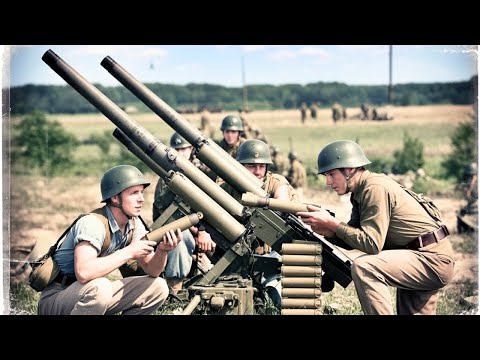
The church, once a safe haven, now crumbled under the relentless barrage. Stone fragments rained down, and the air grew thick with dust and fear. Weber grabbed his field glasses, focusing on the distant tree line where death kept coming from positions that should have been harmless. “They’re walking their fire toward us,” he muttered. “They can see exactly where we are.” The young radio operator, Friedrich, desperately tried to call headquarters, but the static-filled response was always the same: “Impossible. American mortars cannot reach your position.”
But the shells kept falling. Each one closer. Each one more accurate. Weber realized then that the Germans had been fighting with yesterday’s tools against an enemy from tomorrow. “They lied to us,” Mueller whispered, tears cutting through the dirt on his cheeks. “They told us Americans were weak.” Weber had no answer. For the first time in five years, he felt truly helpless.
As the sun set, the American mortars finally fell silent. Weber and three surviving soldiers crawled out of the ruined church like ghosts. The ancient building that had stood for 600 years was now just rubble. Weber pulled out his field notebook, his handwriting shaking as he wrote: “December 15th, 1944. Everything we were told about American capabilities was wrong. Their mortars can fire twice as far as ours. Their ammunition seems endless. Their accuracy is perfect.”
He looked back at the distant tree line one last time. The Americans had fired from over 1,500 meters away. German doctrine said it couldn’t be done. German intelligence said the enemy didn’t have such weapons. Both had been deadly wrong. “What do we do now, Sergeant?” Mueller asked. Weber stared at the valley, where death had rained from impossible distances. “We survive,” he said. “And we remember.”
The retreat through frozen forests and bombed-out villages took three days. Weber shared what he had learned with other sergeants around campfires. Most didn’t believe him at first. “Impossible,” they said—the same word command had used. But as more reports came in, the truth became undeniable. The Americans had technology that German intelligence had never even imagined. And that was just the beginning.
Weber met an artillery officer named Lieutenant Braun, who had been pulled back from the French front with a haunted look in his eyes. “They have something called radar,” Braun whispered over a cup of ersatz coffee. “They can see our guns from miles away and hit them perfectly. Our counterbattery fire is useless because we’re shooting blind while they can see everything.” Weber listened, his stomach tightening. The pattern was the same everywhere: German forces equipped with yesterday’s tools facing an enemy from tomorrow.
Braun pulled out a crumpled map and traced a line with his finger. “Look at this. Their artillery spots us before we even fire. They know our positions before we know theirs. It’s like they’re playing chess while we’re still learning the rules.” Weber thought of the mortar shells that had rained down on the church, each one perfectly aimed. The Americans weren’t just better equipped—they were better informed.
That night, Weber sat by a small fire, his notebook open on his knee. He wrote: “The enemy sees what we cannot. They hear what we cannot. We are fighting blind.” Mueller sat across from him, staring into the flames. “Sergeant, if they can see everything, why don’t they just finish us?” Weber closed his notebook. “Because they don’t need to,” he said. “They’re waiting for us to collapse on our own.”
Six months later, the war was over. Weber found himself in a prisoner camp in France, then finally on a train back to what was left of Germany. As the locomotive crossed the border, he pressed his face to the window and saw a landscape of rubble and ruin. Cities flattened, bridges destroyed, factories reduced to twisted metal. The contrast with what he had learned about American industrial power made his stomach sick.
At the prisoner camp, he had watched American soldiers casually throw away equipment that German forces would have treasured. Brand new radios discarded because newer models had arrived. Mortars abandoned simply because they were last year’s design. The waste was staggering, but it revealed something more frightening. The Americans had so much industrial capacity that they could afford to throw away weapons that Germany couldn’t even build.
His hometown of Bremen was barely recognizable. The house where he had grown up was gone, replaced by a pile of bricks with weeds growing through them. His mother, thin as a skeleton, wept when she saw him at the door. “Klaus,” she whispered, “what happened to us? How did we lose everything?” Weber pulled out his old field notebook that night and read his notes by candlelight. The measurements were still there, the truth written in his own shaking handwriting.
He thought about Mueller and Friedrich and all the young men who had died believing lies about German superiority. He thought about the American mortars that could fire farther than anyone thought possible. His mother brought him watery soup and black bread, the best food she had seen in months. As he ate, she told him about the final months of the war. How the radio had promised miracle weapons that never came. How officials had fled in the night, leaving ordinary people to face the Allied armies alone. How the great German war machine had simply collapsed like a house of cards.
Weber began working in a factory that made farm tools from melted-down tank parts. Every day he saw the reality of German defeat. Meanwhile, newspapers showed pictures of American cities untouched by war. Factories producing cars instead of weapons. Children who looked healthy and well-fed. The contrast was overwhelming.
Years passed. The factory where Weber worked grew quieter as the machinery aged and the orders slowed. He married a widow named Ilse, whose husband had died near Stalingrad, and together they raised her two sons in a cramped apartment above a bakery. On winter evenings, when the wind rattled the windowpanes, Weber would sometimes catch himself listening for the distant thump of mortars. But there was only the creak of the old building and the soft breathing of children asleep in the next room.
In 1956, a letter arrived that would change his life. The new German army—the Bundeswehr—was recruiting experienced men to train its first officers. Weber’s war record was unremarkable on paper, but a former comrade had recommended him. “They need men who understand what war really is,” the letter said. “Not men who believe in miracles.” Weber read it three times by the kitchen stove, then showed it to Ilse. She said nothing for a long moment, then touched his hand. “You’ve been carrying those lessons for twelve years, Klaus. Maybe it’s time you put them to use.”
He became an instructor at a training school in the hills of Bavaria, teaching young recruits about field tactics and—more importantly—about the dangers of believing your own propaganda. On the first day of each class, he would place his old notebook on the desk and open it to the page dated December 15th, 1944. The recruits would lean forward, curious about the yellowed paper and the faded ink.
“Gentlemen,” Weber would begin, “I am going to tell you about the most expensive lie in military history. It cost us the war, and it cost me three good men in a church in Belgium.” He would describe the mortars that came from 1,500 meters away, the endless ammunition, the enemy who could see everything while his own radios failed. The recruits listened in silence. Some looked skeptical. Others looked shaken.
One afternoon, a young lieutenant named Hartmann raised his hand. “Sergeant Weber, with respect—the Americans had industrial advantages. Surely that explains their range and supply. It wasn’t a matter of superior intelligence, only superior factories.” Weber nodded slowly, as though he had been waiting for exactly this question.
“You’re half right,” he said. “But consider this. We had factories too. We had engineers. What we lacked was the willingness to see what was in front of us. Our intelligence officers refused to believe reports of longer-range mortars because those reports contradicted what they already knew. They called it impossible, so the men in the field died believing a lie.” He tapped the notebook. “Technology changes. Arithmetic doesn’t. Neither does the danger of telling yourself comfortable stories.”
The lesson spread beyond the classroom. Weber was asked to give lectures at staff colleges and command academies across West Germany. He spoke to officers who would one day lead NATO units, and he always ended with the same warning. “The enemy is never as weak as your propaganda claims. And your own equipment is never as good as your pride insists. Measure everything. Question everything. The moment you stop doubting your own assumptions, you have already begun to lose.”
In 1962, a young American officer attended one of his lectures as an observer. Afterward, the man approached Weber and introduced himself as Captain Daniel Reeves, an artillery instructor from Fort Sill. “I’ve heard about your notebook, Sergeant,” Reeves said in careful German. “I’d like to see it, if you’d allow me.” Weber handed it over without hesitation. The American read the faded handwriting for a long time, his expression unreadable.
When he finally looked up, his eyes were troubled. “You know, Sergeant, we had our own version of this. In the Pacific, we underestimated the Japanese at first. In Korea, we underestimated the Chinese. Every army does it.” He handed the notebook back. “The question is whether we learn before the shells start falling.” Weber closed the notebook and placed it carefully in his coat pocket. “Then perhaps, Captain, your army and mine have something to teach each other after all.”
The American nodded, and for a moment the two men stood in the empty lecture hall, bound by a truth soldiers rarely speak aloud. “I’ll send you our after-action reports from the Pacific,” Reeves said. “Read them. Then tell your students that the Americans were wrong too—and that we paid for it.” Weber shook his hand. It was the first time since the war that he had touched an American without fear.
Years later, when Weber finally retired, he gave the notebook to his stepson—not as a relic, but as a warning. “Read it when you think you already know everything,” he said. “That is when you are most dangerous to yourself.”
He lived to see German and American soldiers training side by side, sharing ranges and radios and the hard lessons of the past. And on quiet evenings, he would look out at the Bavarian hills and remember the church in Malmi, where the truth had arrived from 1,500 meters away.
So here is the question, reader: when your own certainties come under fire, will you cling to the comfortable lie—or measure the distance and face the truth?
Report this article
Select a reason for reporting:






