On October 9, 1941, the Third Reich’s press chief, Otto Dietrich, stepped before a room packed with German and international journalists. His voice rang with confidence as he declared, “The last remnants of the Soviet armies facing Moscow are trapped in two rings of steel and are being destroyed by the Wehrmacht.” The German correspondents erupted in cheers, but the foreign reporters exchanged skeptical glances. Just days earlier, Hitler had proclaimed from the Sports Palace in Berlin that Russia was “practically destroyed” and that final victory was imminent. The German people, weary after three and a half months of brutal fighting in the East, clung to these words like a lifeline.
But even as Dietrich spoke, the first snowflakes of an early Russian winter began to fall on the Eastern Front. The roads that had carried German tanks so swiftly toward Moscow were turning into impassable mud flats. Soldiers stared at the skies in disbelief. One lieutenant of the 11th Panzer Division wrote, “For weeks they have been spreading the word in Germany that we had already won the war. They should come here and take a look for themselves.” The disconnect between the triumphant headlines at home and the grim reality at the front was about to explode.
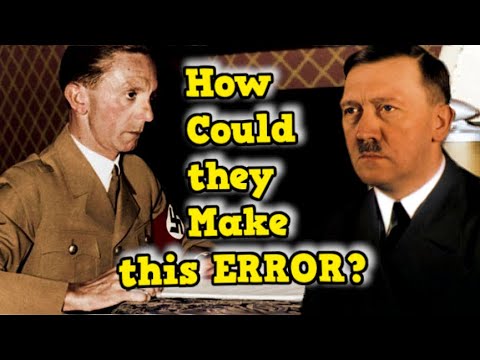
Joseph Goebbels, the master of propaganda, had orchestrated this moment with calculated precision. He believed that a decisive announcement would crush the pessimism that had begun to seep into the German public after months of mounting casualties. On October 5, he confided to his diary, “The Führer’s speech has worked wonderfully. All the criticism, all the pessimism, even all the anxiety have completely disappeared.” But his confidence was fragile. Deep down, he knew the stakes. If victory did not come soon, the entire credibility of the regime would crumble.
The next day, October 10, German newspapers blared triumphant headlines: “The Great Hour Has Arrived,” “The Campaign in the East Is Decided,” “The Entire Soviet Front Has Collapsed.” Even Francisco Franco sent a congratulatory telegram to Hitler, praising the “final victory of the glorious German Wehrmacht over the enemy of civilization.” The world watched with bated breath. In Washington and London, Allied leaders grew nervous—had the Soviets truly been defeated? The German Minister knew that this gamble would raise the stakes internationally, putting the prestige of the entire government on the line.
But on the front lines, the mood was far from triumphant. The men who had been fighting for months in the mud and snow could not believe what they were reading. “I put my hands to my head. How is this possible? Have our leaders gone crazy overnight?” wrote one soldier. Another simply asked, “Do these gentlemen have blindfolds?” The gap between propaganda and reality was becoming a chasm.
Goebbels, sensing the danger, noted on October 11, “We have gotten into serious trouble. Many people now think that the war in the East is already over and that the Soviet Union is just hours away from capitulating.” He ordered an immediate correction. The next day, the headlines changed: instead of claiming victory, they now spoke of military operations continuing “their course to obtain victory.” But the damage was done. The civilian population, who had celebrated prematurely, lost interest in the Eastern Front, believing the war was as good as won. And the soldiers, who knew the truth, felt betrayed.
As October wore on, the weather worsened. The muddy roads slowed the German advance to a crawl. The offensive on Moscow, which had begun with such promise, began to stall. Hitler remained optimistic, convinced that the cold would freeze the ground and allow one final push. But Goebbels grew increasingly pessimistic. He confided to his diary that the campaign in Russia would not end that year and would have to be resumed in 1942. His anxiety mounted—he knew that the Führer’s expectations could not be met, and his own prestige would suffer.
The news continued to paint a rosy picture, but the soldiers’ indignation grew. One lieutenant of the 11th Panzer Division fumed, “If they had an idea of the hardships we are experiencing on the front, they would not dare say such nonsense.” The trust between the army and its leaders was fraying.
By early December, all hopes were shattered. The Soviets, far from being defeated, launched massive offensives along the entire Eastern Front. It was the hardest blow Germany had suffered to date. The population and the army began to seriously doubt their leaders. As one official observed, the propaganda evolved from “We have won the war” to “We are going to win the war” to “We are fighting a war we cannot lose.” The credibility of Hitler and Goebbels had been irreparably damaged.
And yet, the lesson was not learned. The following year, during the Battle of Stalingrad, Hitler would repeat the same mistake, announcing victory prematurely. But that is a story for another time.
By mid-October, the mud had become the Germans’ most implacable enemy. Tanks that had once spearheaded lightning advances now sank axle-deep in the slush, and supply columns stretched for miles along roads that had turned to rivers of brown sludge. A report from the 47th Panzer Corps grimly noted that all movements were suffering severe delays and that the columns’ pace had been reduced to just two kilometers per hour. Soldiers cursed the skies, the roads, and increasingly, the men in Berlin who insisted everything was proceeding according to plan.
Goebbels, meanwhile, found himself trapped in his own web. On October 12, he had ordered the press to soften its tone, but the public had already tasted victory. Letters poured into the Propaganda Ministry from families asking why their sons had not yet returned home if the war was over. “Many people now thought that the war in the East was already over,” he wrote, his frustration barely concealed. He understood that the regime had made a promise it could not keep, and the reckoning would be swift.
At the front, the first frosts of late October hardened the ground just enough to renew hope. Hitler, sensing an opportunity, ordered the offensive to resume with all possible speed. But the troops were exhausted, their equipment worn, and their winter clothing still sitting in warehouses in Poland. One general noted with grim irony that “we are expected to conquer Moscow in summer uniforms.” The men advanced, but every kilometer cost them dearly.
On November 9, 1941, Hitler addressed a gathering of Nazi Party veterans in Munich. Though the anniversary of the 1923 putsch was meant to be a celebration, the Führer’s speech betrayed a new edge of desperation. He spoke of the coming victory with the same fervor as before, but this time the audience’s applause seemed thinner, more mechanical. In the corridors afterward, party officials whispered anxiously about the stalled advance and the rising casualty lists.
Goebbels, ever attuned to the public mood, recorded his private fears with brutal honesty. “The most sensible thing would be to assume that the campaign in Russia will not end this year,” he wrote, a confession he dared not share with the German people. He knew that Hitler’s expectations could not be met, and that his own reputation—like Göring’s before him—would crumble when the truth could no longer be hidden.
The soldiers, meanwhile, had lost all patience with the propaganda. A lieutenant of the 11th Panzer Division, shivering in a hastily dug foxhole, remarked to his comrades that “the gentlemen in Berlin should come here and take a look for themselves.” His words echoed the sentiments of thousands. The gap between the triumphant headlines and the freezing, mud-spattered reality had become too wide to bridge.
As November drew to a close, the German Army stood within sight of Moscow’s spires—but it could go no further. The men were frostbitten, the tanks immobilized, and the supply lines stretched to breaking point. And still, the newsreels in Berlin showed smiling soldiers and advancing columns. The lie had become a machine, and the machine was running on empty.
The first days of December brought no relief, only a deeper cold that seemed to seep into the soldiers’ bones. The thermometer plunged to minus thirty degrees, and men who had marched into Russia expecting a quick victory now huddled in frozen trenches, their rifles useless, their engines dead. The German High Command, still clinging to the belief that the Soviets were on the verge of collapse, ordered one final push toward Moscow. But the troops were spent, and the offensive sputtered out before it could even begin.
Then, on December 5, 1941, the unthinkable happened. The Red Army, which Berlin had declared annihilated, launched a massive counteroffensive along the entire front. Fresh Siberian divisions, trained for winter warfare and clad in white camouflage, poured out of the forests and struck the exhausted German lines. The Wehrmacht, caught completely off guard, reeled backward. Villages and towns that had been captured at such cost were abandoned in a matter of hours. “We have to hold,” came the frantic order from headquarters. But holding was impossible; the men were too weak, too cold, too few.
In Berlin, the news arrived like a thunderbolt. Goebbels, who had spent weeks trying to temper expectations, now faced a catastrophe of his own making. The German people, told for months that victory was imminent, were stunned. Letters poured into the Propaganda Ministry from anxious families demanding to know what was happening. The same newspapers that had proclaimed the collapse of the Soviet front now reported “strategic withdrawals” and “shortening of the lines.” The euphemisms fooled no one.
Paul Schmidt, the chief interpreter at the Foreign Ministry, later summarized the shift with devastating clarity. “Instead of having won the war, people began to say that we were going to win the war. Finally, the message continued to evolve until it was announced that we were fighting a war that we could not lose.” It was a masterclass in the art of retreating without admitting defeat—but the soldiers at the front saw through it. One lieutenant of the 11th Panzer Division, now fighting for his life in a snowy forest west of Moscow, wrote bitterly, “For weeks they have been spreading the word that we had already won. They should come here and take a look for themselves.”
Hitler, furious at the setback, blamed his generals for the failure. He dismissed several senior commanders, including Field Marshal von Bock, the man who had led Army Group Center to the gates of Moscow. But no amount of scapegoating could change the reality: the German Army had suffered its first major defeat of the war. The myth of invincibility, carefully cultivated by Goebbels’ propaganda machine, had been shattered.
As the winter deepened, the casualties mounted. Thousands of German soldiers froze to death in their positions, their bodies found weeks later, stiff and covered in snow. The hospitals behind the lines were overwhelmed with frostbite cases, and the supply system, already stretched to breaking point, collapsed entirely. The men who had marched east with such confidence now faced a nightmare from which there seemed no escape.
Goebbels, ever the realist, understood the gravity of the moment. In his diary, he confessed his fears with brutal honesty. “The crisis is severe,” he wrote. “We must prepare the people for hard times ahead.” But preparing them was easier said than done. The German public, fed on a steady diet of victory announcements, had little appetite for bad news. And the Führer, still convinced that the Soviets were on the brink of collapse, refused to authorize any retreat.
By the end of December, the situation had stabilized—but only barely. The German Army had been pushed back hundreds of kilometers, and the dream of capturing Moscow before the year’s end lay in ruins. The soldiers who survived the winter of 1941 would never forget it. And the German people, though they did not yet know it, had begun to lose faith in their leaders.
The following year, Hitler repeated the same fatal mistake. On November 9, 1942, during the anniversary of the Munich putsch, he announced that Stalingrad had fallen. “The battle has come to an end,” he declared, pressuring General Paulus for weeks to deliver the city. Just days later, Operation Uranus encircled the German Sixth Army. By February 1943, the news from Berlin turned to catastrophe: “The entire Sixth Army has been annihilated at Stalingrad.”
Once again, the people had been told the war was won, only to learn it was lost. The pattern was unmistakable—propaganda had become a machine that could only promise triumph, never admit failure. And each broken promise eroded the last remnants of trust. How could the propaganda services of the Third Reich make the same mistake twice?
What do you think—was this hubris, desperation, or simply the inevitable collapse of a regime built on lies? Share your thoughts in the comments below.
Report this article
Select a reason for reporting:






