The Arctic winter of 1944 was supposed to be a shield for the German Army. Instead, it became a tomb. As the first snows began to fall, Hitler’s forces in northern Finland were already teetering on the edge. The Führer, obsessed with holding every inch of ground, had ordered a retreat to defensive lines at Sturmbock and Schutzvall. But it was too little, too late.
On the other side of the border, Stalin had been watching. And waiting. On October 7, 1944, the silence of the tundra was shattered by the roar of over 100,000 Soviet soldiers. They poured across the frontier, their boots crunching over frozen ground, their breath misting in the frigid air. Their target: the Petsamo region, a vital nickel-mining area that had fueled the German war machine for years.
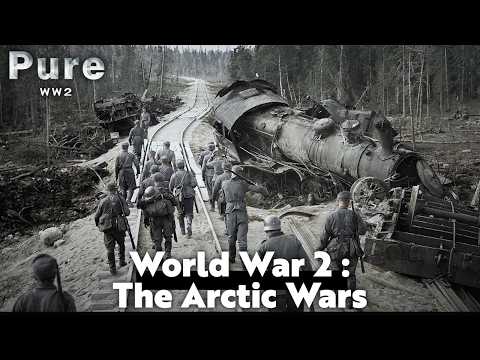
The Red Army advanced with terrifying speed, but they soon discovered what the Germans had learned three years earlier: the Arctic is a merciless adversary. There were no roads, only endless stretches of tundra and jagged rock. Vehicles broke down. Supply lines stretched to the breaking point. The Soviets had underestimated the frozen hell, just as Hitler had before them.
But the Germans were not waiting around to be caught. As the Soviet juggernaut approached, they torched the mining complex they had so carefully protected and fled toward Norway, the Red Army snapping at their heels.
In the chaos of retreat, Hitler issued a new order: construct a defensive line across the Lyngen Peninsula in Norway. They called it the Lyngen Line. It was to be a wall of concrete and steel, built into the mountains themselves, designed to hold back the Soviets, the British, or anyone else who dared approach. The land bridge was only 40 kilometers wide, and the Lyngen Alps rose like a natural fortress. But the line was far from finished, and winter was closing in.
As the Germans dug in, the skies above Norway became a hunting ground. British Prime Minister Winston Churchill had long sought to strike a decisive blow in the Arctic. On November 12, 1944, 32 Lancaster bombers took off from Scotland, their sights set on the German battleship Tirpitz. Hidden in a fjord near Tromsø, the Tirpitz was the pride of the Kriegsmarine—a floating fortress that had terrorized Allied convoys for years.
Guided by wireless signals from a Norwegian resistance agent, the Lancasters flew low and fast. The weather was clear, the Luftwaffe caught off guard. Each bomber carried a six-ton Tallboy bomb—earthquake bombs designed to shatter the earth itself. They found their target. Direct hits tore through the Tirpitz’s hull. She capsized and sank in minutes, taking over 1,000 German sailors to their graves.
The sinking of the Tirpitz was a triumph, but it was only one piece of a much larger tragedy unfolding across the Arctic. In Finland, the Lapland War had erupted between former allies. The Finns, under pressure from the Soviets, had turned on the Germans, and the Germans responded with scorched earth. They burned everything in their path—18,000 buildings in Finland alone. Villages, farms, schools—all reduced to ash.
In Norway, the retreating Germans forced nearly 50,000 civilians from their homes, burning towns like Hammerfest and Kirkenes to the ground. It was a deliberate policy of destruction, designed to leave nothing for the advancing enemy. But the worst horrors were yet to be uncovered.
In the remote mountains of northern Norway, near the village of Kitzbühl, the Germans had established a network of prisoner-of-war camps. One camp, Malnitz, was different. It was a death camp. Soviet prisoners, already weakened by starvation and forced labor, were sent there to die. When they fell ill, they were transferred to Malnitz; when they died, they were buried in mass graves.
As the war entered its final months, the Germans grew desperate. In April 1945, with Hitler dead and Berlin surrounded, the Allies closed in on Norway. The German garrison of 350,000 men surrendered—but not before the full scale of the atrocities in the Arctic came to light.
Allied investigators would later find evidence of prisoners shot, beaten, starved, and even injected with kerosene. In one camp, they discovered the bodies of prisoners who had been so hungry they had eaten stones to stave off the pain. The survivors were few. Of the 100,000 Soviet prisoners sent to Norway, 14,000 perished.
The war in the Arctic was over. But the scars—on the land, on the people, on the survivors—would never fully heal. And as the world celebrated peace, one last German unit remained in the field, unaware that the war had ended. They would surrender two days after Japan, on September 4, 1945, to a group of Norwegian seal hunters. The Arctic had been the first front to see combat in 1940, and the last to see surrender in 1945.
But the story of the Arctic war did not end with the surrender of the Haugen weather station. The men who had manned that remote outpost on Svalbard had been living in a world of their own, cut off from the collapse of the Reich, still transmitting weather reports that no one in Berlin would ever read. When the Norwegian seal hunters climbed aboard their ship, they found a group of soldiers who had been surviving on seal meat and canned goods for months, their uniforms patched with sealskin, their faces burned raw by wind and ice. They had no idea that Hitler was dead.
The surrender was awkward and quiet. The German commander, a young lieutenant named Wilhelm Dege, handed over his pistol with a formality that seemed almost absurd given the circumstances. The Norwegians, hardened hunters who had spent their lives navigating the ice, accepted the weapon with a shrug. There were no cameras, no generals, no flags. Just a handful of exhausted men on a frozen shore, ending a war that had already ended everywhere else.
But while the guns fell silent, the reckoning was only beginning. Across Norway, the process of disarmament and demobilization was staggering in its scale. Three hundred and fifty thousand German soldiers—many of them teenagers or middle-aged reservists—were now prisoners of the Allies. The task of feeding, housing, and controlling them fell to a Norwegian resistance that had spent five years operating in the shadows. They had trained for sabotage, not for managing a defeated army.
The minefields were the first priority. The Germans had sown thousands of mines along the coast and in the fjords, and the Allies ordered them to clear their own handiwork. It was a grim irony. German soldiers, many of them barely out of boyhood, were sent out with metal detectors and wooden probes to find the devices they had buried in the snow. Hundreds died in the first months of peace—blown apart by their own explosives, their bodies left in the frozen ground until spring.
In the camps, the survivors of Malnitz and Kitzbühl were finally liberated. Fewer than seventy prisoners were found alive at Malnitz. Most were too far gone to save. The medical teams who reached them described men who weighed less than eighty pounds, their skin stretched tight over bone, their eyes hollow with a hunger that no food could cure. Some died within days of being freed, their bodies unable to process the nourishment they had been denied for so long.
The Allied War Crimes Investigation Commission arrived in June 1945, their cameras and notebooks ready. They interviewed survivors, exhumed graves, and documented the evidence of atrocities that would later be used in trials across Europe. In the archives, investigators found testimony of prisoners being beaten to death for stealing food, shot for collapsing on the job, and injected with kerosene—a method of execution that left no bullet wounds. The men who had run the camps offered weak excuses: they were following orders, they had no choice, the prisoners were already dying.
But the most disturbing discovery came from the mass graves themselves. When the bodies were exhumed, pathologists found small stones in the stomachs of the dead. The prisoners had been so desperate to ease their hunger that they had eaten rocks, hoping to fool their bodies into feeling full. It was a detail that haunted even the most hardened investigators.
Back in Finland, the reckoning took a different form. The war responsibility trials, demanded by the Allied Monitoring Commission, put the nation’s wartime leaders on trial for siding with Germany. President Risto Ryti, who had signed the pact with Hitler in 1944, was sentenced to ten years in prison. He was released after serving only three, his health broken, his reputation forever stained. The Finns had fought to preserve their independence, but the price had been steep—and the peace, humiliating.
Sweden, which had supplied Germany with iron ore for years, emerged from the war with its neutrality intact but its conscience troubled. The trade that had fueled the German war machine had also lined Swedish pockets, and the moral arithmetic of that exchange would be debated for decades. The country had bent to German demands when it was weak, and now it would have to live with the consequences.
As the summer of 1945 wore on, the Arctic began to heal. The scorched ruins of Hammerfest and Kirkenes were cleared. The mines were detonated one by one, their explosions echoing across the fjords like the last shots of a war that refused to fully die. The 77,000 surviving Soviet prisoners were transported by train to Sweden, then shipped back to the Soviet Union—many of them to face a homeland that viewed captivity as betrayal. Their fate, like so much of what had happened in the Arctic, remained shrouded in silence.
But the land remembered. The tundra still bore the scars of tank tracks and artillery craters. The mountains still held the bones of soldiers who had frozen to death in the winter of 1944. And in the remote valleys of the Lyngen Alps, the unfinished bunkers of the Lyngen Line stood as a monument to a Führer’s delusion—a wall that was never finished, defending a coast that was never invaded, built by men who died for nothing.
The final act of the Arctic war was not a battle, but a slow unraveling. In the months after the surrender, Norwegian authorities faced a reckoning of their own. 46,000 Norwegians were tried for treason—collaboration with the German occupiers. The trials were swift, often messy, driven by a nation desperate to purge itself of shame. Twenty-five were executed, including Vidkun Quisling, the puppet prime minister whose name became a synonym for betrayal.
Quisling met his end on October 24, 1945, before a firing squad at Akershus Fortress. His last words were reportedly “I am innocent,” a claim that history has rejected with contempt. The man who had welcomed Hitler’s invasion now lay dead in the same soil he had tried to sell.
In Finland, the reckoning was quieter but no less painful. The nation had fought the Soviet Union to a standstill in the Winter War, then allied with Germany to reclaim lost territory. Now it was forced to cede Petsamo and Karelia, to pay reparations, and to publicly try its own leaders. Risto Ryti, the president who had signed the pact with Hitler, served three years of a ten-year sentence before being pardoned. He died in 1956, a broken man who had tried to save his country and lost everything.
Sweden, which had traded iron ore with Germany until late 1944, emerged with its neutrality intact but its reputation tarnished. The moral arithmetic of Swedish neutrality—selling steel to the Nazis while claiming to be neutral—would haunt the nation for decades. The war had shown that neutrality was not innocence; it was a choice, and every choice has a cost.
The Arctic itself bore the deepest scars. The tundra was littered with wreckage—tank tracks, spent shells, the bones of horses and men. In the Lyngen Alps, the unfinished bunkers of the Lyngen Line stood as silent monuments to Hitler’s delusion. They had been built by prisoners worked to death, for a defense that was never needed, against an invasion that never came.
The survivors of Malnitz and Kitzbühl returned to the Soviet Union, many to face suspicion and punishment. Stalin viewed prisoners of war as traitors, and thousands were sent to the gulag. Their suffering in Norway was only the beginning of their suffering at home. The men who had eaten stones to survive now faced a new kind of hunger—the hunger for justice that would never come.
And yet, in the silence of the Arctic, there was also healing. The Norwegian police troops, trained secretly in Sweden, returned to rebuild their shattered towns. The civilians who had hidden in caves and tunnels emerged to find their homes burned, their livestock slaughtered, their lives forever changed. But they rebuilt. They had no choice.
The last German soldier left Norway in the summer of 1945, but the last German unit in the Arctic—the weather station crew on Svalbard—had already surrendered. They handed over their weapons to Norwegian seal hunters, men who knew nothing of war but everything of survival. It was a fitting end: a war that began with grand ambitions ended with a whimper on a frozen shore.
History rarely offers clean endings. The Arctic war was a sideshow to the great battles of Europe, but it was no less brutal. The men who fought there—Germans, Soviets, Finns, Norwegians—were caught in a game of empires, their lives traded for territory, their deaths recorded in footnotes. The war left permanent marks on the land and the people, marks that would not heal for generations.
Today, the Lyngen Line is a tourist attraction, its bunkers overgrown with moss, its gun emplacements filled with snow. Visitors walk through the tunnels and wonder at the madness of it all. They read the plaques and shake their heads, grateful to live in a time when such things seem impossible. But the Arctic remembers. The tundra still holds the bones. The mountains still echo with the sound of bombers.
And the question remains: what do we owe the dead? The prisoners who ate stones, the soldiers who froze in their foxholes, the civilians who watched their homes burn—their stories are not just history. They are warnings. The Arctic war was a tragedy of ambition and indifference, a reminder that the great powers will always sacrifice the small.
So as the snow falls again on the Lyngen Alps, covering the bunkers and the graves, we are left to wonder: have we learned anything, or are we still building walls against enemies that may never come?
What do you think—does history teach us, or do we simply repeat it in new forms? Share your thoughts below.
Report this article
Select a reason for reporting:






