The cockpit of a fighter jet is a crucible where seconds stretch into eternity and a single lapse in focus can mean the difference between life and death. At 9 Gs, blood drains from the brain, vision narrows to a tunnel, and the body screams in protest. Yet elite pilots not only endure this—they thrive. What separates these aviators from ordinary humans? It’s not just physical prowess or reaction time; it’s a meticulously trained mind capable of filtering chaos into clarity, of making life-or-death decisions in the blink of an eye.
From the legendary Erich Hartmann, whose 352 kills over the Eastern Front remain unmatched, to modern naval aviators executing high-stakes missions at Mach 2, the psychology of the fighter pilot is a fascinating blend of focus, aggression, and rapid decision-making. These traits aren’t innate gifts—they’re measurable, trainable, and rooted in the brain’s ability to handle extreme stress. As warfare evolves with AI-driven threat detection and sixth-generation aircraft, understanding this mental architecture becomes not just a key to training better pilots, but to building smarter machines.
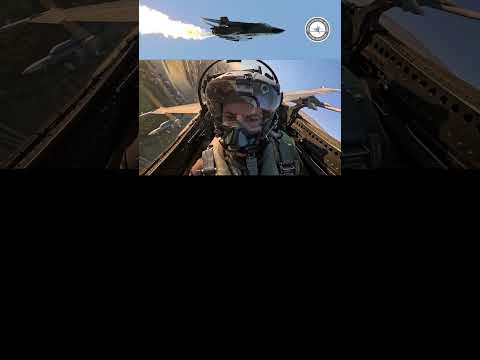
Focus is the bedrock of fighter pilot training. In the heat of a high-speed engagement, the cockpit—and in modern jets, the helmet-mounted display—floods the pilot with a torrent of information. The ability to filter this deluge into a single point of action is what keeps them alive. This skill ties directly to the parietal cortex, the brain region governing spatial awareness and attention allocation. Studies of elite performers reveal heightened activity in this area under load, allowing pilots to track a bogey while ignoring irrelevant chatter.
Hartmann exemplified this. Flying his Bf 109, he would climb, scan, and loiter patiently for the perfect shot. His kill count—352 confirmed—reflects a mind that didn’t flinch from distraction. Training builds this capacity, particularly in the posterior parietal cortex, a mental hub for processing spatial information and directing attention. The Navy’s Top Gun program, with its escalating scenarios from two-versus-two to four-versus-eight engagements, forces pilots to prioritize threats in real time. Simulator-based training has been shown to enhance target acquisition speed, with some studies indicating notable improvements over structured training periods—again tied to parietal cortex adaptation.
In combat, this focus scales up. Vietnam-era F-4 pilots reported entering a flow state during engagements, where the brain locks onto patterns and tunes out noise thanks to a well-practiced parietal cortex. These neural optimizations aren’t just useful for human pilots. Researchers are now studying them to help develop AI systems capable of similar prioritization and target discrimination in unmanned or semi-autonomous platforms. The fighter pilot’s mind, it turns out, is a blueprint for the future of warfare.
But focus alone isn’t enough. Aggression—controlled, calculated, and lethal—is the second pillar. It’s the willingness to close with the enemy, to press the attack despite the risks. This trait is deeply rooted in the brain’s reward system, where dopamine reinforces bold actions. Yet it must be balanced with discipline, lest it lead to recklessness. The best pilots harness aggression like a weapon, unleashing it only when the moment is right.
And then there’s rapid decision-making—the ability to choose the right course of action under extreme time pressure. This involves the prefrontal cortex, which orchestrates complex cognitive processes, and the amygdala, which tags emotional salience. In a dogfight, decisions must be made in milliseconds, often with incomplete information. Pilots train to make these calls instinctively, relying on pattern recognition and prior experience. It’s a dance between intuition and analysis, honed through countless hours of simulation and real-world flying.
As we delve deeper into the psychology of fighter pilots, we’ll explore how these traits are cultivated, how they manifest in the heat of battle, and how they might shape the future of aerial combat. The journey begins with understanding the brain under fire—and the extraordinary individuals who call the sky their battlefield.
To understand how aggression is cultivated, you have to look at what happens in the brain when a pilot commits to the fight. Dopamine doesn’t just reward boldness—it encodes the anticipation of reward, sharpening the urge to close distance and press the advantage. In the Luftwaffe’s experiential training, and later in the Navy’s TOPGUN syllabus, instructors deliberately engineer scenarios where hesitation gets you ‘killed.’ The lesson is visceral: aggression, properly channeled, is not recklessness—it’s a decision to impose your will on the engagement.
But raw aggression without discipline is a liability. The prefrontal cortex acts as the brake, weighing risk against reward, suppressing the impulse to chase a fleeing bandit into a trap. Hartmann understood this instinctively. He rarely engaged unless the odds favored him, preferring to stalk and strike rather than brawl. His aggression was surgical, not theatrical. Modern pilots train the same balance through debriefs and after-action reviews, where every decision is dissected and recalibrated.
Rapid decision-making is where the brain’s architecture truly shines under pressure. The prefrontal cortex orchestrates the analysis, but it’s slow—relatively speaking. In a close-range engagement, the pilot can’t afford conscious deliberation. Instead, the brain relies on pattern recognition stored in the basal ganglia and cerebellum, honed through thousands of repetitions. This is the essence of ‘muscle memory’ at the cognitive level: decisions made before conscious thought catches up.
The amygdala adds another layer, tagging threats with emotional urgency. In a dogfight, that surge of fear or excitement isn’t a weakness—it’s a signal, sharpening attention and priming the body for action. Elite pilots learn to ride that wave rather than be swamped by it. Studies of aviators under G-load show that those who maintain cognitive control exhibit distinct neural signatures—heightened connectivity between the prefrontal cortex and the amygdala, allowing emotion to inform rather than overwhelm.
This is what separates a good pilot from a great one. It’s not the absence of fear or aggression, but the ability to integrate them into a coherent response. The fighter pilot’s mind is a finely tuned instrument, where focus, aggression, and decision-making converge into a single, fluid act of will. And as we’ll see, that same convergence is now being mapped onto the machines that will fly beside—and perhaps one day instead of—human aviators.
The transition from human to machine is already underway. In cockpits like the F-35, the pilot no longer simply flies the aircraft—they command a fusion engine, a flying sensor network that collects, processes, and prioritizes threats before the human brain can even register them. The machine handles the filtering; the pilot handles the judgment. But that division of labor is shifting. With sixth-generation platforms and AI co-pilots on the horizon, the question becomes: which parts of the fighter pilot’s mind can be replicated, and which cannot?
Consider the parietal cortex again—the brain’s spatial awareness hub. AI systems already outperform humans at tracking multiple targets simultaneously, processing radar returns and infrared signatures at speeds no neuron can match. But what the machine lacks is the ability to weigh ambiguity. A radar blip might be a hostile fighter or a civilian airliner; a heat signature might be a missile launch or a decoy. The human pilot brings context, experience, and a moral framework that no algorithm has yet replicated.
That’s where the next frontier lies: training machines to think like pilots, not just calculate like computers. DARPA’s Air Combat Evolution program has already pitted AI against human pilots in simulated dogfights, with mixed results. The AI wins when the rules are clear and the data is clean. The human wins when the scenario is messy, the intel is incomplete, and the stakes are real.
Aggression, too, is being translated into code. An AI doesn’t feel dopamine surges or the thrill of the chase, but it can be programmed to prioritize offensive action under certain conditions—to press an advantage when the probability of success crosses a threshold. The risk is obvious: without the prefrontal cortex’s braking mechanism, an AI might pursue a tactical victory into a strategic disaster. Teaching a machine when not to shoot may be harder than teaching it when to shoot.
Rapid decision-making, meanwhile, is where AI already dominates. Milliseconds matter in aerial combat, and silicon beats carbon every time. But speed without wisdom is dangerous. The human pilot’s advantage isn’t raw processing power—it’s the ability to recognize when the rules don’t apply, when the pattern is a trap, when the instinct to hesitate is the right one.
So the future isn’t human versus machine—it’s human and machine, each covering the other’s blind spots. The pilot of tomorrow may sit in a cockpit or a command center, but they’ll still need the same core traits: focus to filter the noise, aggression to seize the moment, and decision-making to act when the stakes are highest. The brain under fire remains the gold standard—and the blueprint.
Yet for all the promise of autonomy, the most enduring lesson of the fighter pilot’s mind may be a human one. The same parietal cortex that locks onto a bogey also allows a parent to spot a child in a crowded street; the same prefrontal-amygdala balance that steadies a pilot under 9 Gs steadies a surgeon, a firefighter, a trader in a crashing market. The cockpit is simply a laboratory where the extremes of human cognition are made visible.
Hartmann, who survived the war and later rebuilt his life in a divided Germany, understood something the manuals never taught. “The best pilot is not the one who takes the most risks,” he once reflected, “but the one who comes home.” Focus, aggression, and decision-making were never ends in themselves—they served survival, mission, and the people waiting on the ground.
As sixth-generation aircraft take shape and AI co-pilots learn to weigh ambiguity, that lesson scales up. The goal was never to replace the human in the kill chain, but to free the human to do what machines still cannot: judge, hesitate wisely, and choose restraint when restraint is the harder call. Training machines to fly like pilots is really training ourselves to understand what we want them to become.
The sky, after all, has always been a mirror. What we build to conquer it reveals who we are—and what we fear losing. The fighter pilot’s brain, mapped and modeled and finally coded, may turn out to be the most human blueprint of all.
So here’s the question worth debating in the comments: if a machine could match a human pilot in focus, aggression, and decision-making—but never feel the fear of not coming home—should we ever let it fly alone?
Report this article
Select a reason for reporting:






