The radio crackled with desperation as Colonel General Paulus sent his final report to Hitler: the Sixth Army was shattered, out of ammunition, and facing annihilation. It was January 24, 1943, and the remnants of the once-mighty German force were trapped in the frozen ruins of Stalingrad. Paulus pleaded for permission to surrender, to save the lives of his starving, wounded men. Hitler’s reply was swift and merciless: “Capitulation out of the question. Sixth Army is fulfilling its historical role by fighting to the last round.” In that moment, the fate of over 90,000 soldiers was sealed—condemned to death or the living hell of Soviet captivity.
Wilhelm Adam, adjutant to Paulus, watched the drama unfold from the inner circle. As Soviet troops closed in, he witnessed the disintegration of order and the moral compromises of commanders. “I told Paulus many times that I regarded this order as criminal,” Adam later wrote. But Paulus, the obedient soldier, could not break his oath. The army’s headquarters was forced to flee the advancing Red Army, relocating from bunker to cellar in a desperate attempt to maintain control.
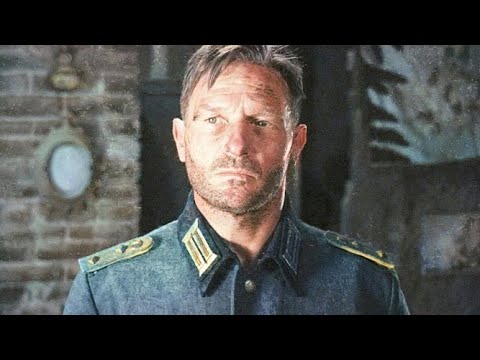
In the chaos, Lieutenant General Schmidt, the army’s chief of staff, clung to fantasies of escape. He ordered Adam to prepare a landing strip for Fieseler Stork aircraft, hoping to be flown out. “What nonsense,” Paulus muttered, but Schmidt persisted. That night, no plane arrived. Schmidt’s hope curdled into bitterness as the reality of their abandonment sank in.
Adam, meanwhile, moved through the shrinking cauldron, witnessing the collapse of morale. He visited General von Hartmann, who declared his intention to die in the front line rather than face captivity. “Captivity for a general is dishonorable,” Hartmann insisted. Adam argued otherwise: “We have long had to take this step. It is our duty to share the bitterness of captivity with our soldiers.” But Hartmann was unmoved. He would meet his end on the railway embankment, firing until a bullet found his head.
Colonel Ross, another commander, hatched a wild scheme to escape by mingling with Soviet troops in a captured truck. “Join us, Adam,” he urged. Adam refused, reminding Ross of his duty to his men. Shamed, Ross reconsidered. But such plans were futile. The noose was tightening.
On January 25, the 297th Infantry Division surrendered, and the collapse accelerated. Suicides spread like a disease. “An epidemic of suicides threatened to break out,” Adam recalled. Young officers and soldiers, unable to face the end, took their own lives. The army’s leadership, paralyzed by Hitler’s orders, offered no salvation.
Then, a letter arrived from Major General von Dreber, who had surrendered with his division. He described decent treatment by the Red Army and urged Paulus to capitulate. Schmidt exploded: “Dreber never wrote that willingly! He must have been forced!” But the truth was undeniable—the end was near.
As the Soviet flag rose over the department store that served as the final headquarters, Adam looked at the wreckage of the Sixth Army. “What had become of our proud Sixth Army? Why did it have to perish so cruelly on the Volga, two thousand kilometers from home?” The answer lay in the mad ambitions of a dictator and the blind obedience of his generals.
The cellar of the department store had become a tomb in waiting. Adam moved among the wounded, their groans echoing off the concrete walls, the stench of infection and unwashed bodies thick in the stale air. “Only a fraction of the wounded were getting medical treatment,” the divisional surgeon of the 71st Infantry Division confessed to Paulus, his voice hollow with exhaustion. Doctors worked by candlelight, their supplies long gone, their hands trembling from hunger and sleeplessness.
Outside, the Soviet artillery thundered without pause. The command post buildings that had been converted into hospitals took direct hits, one after another. “Hundreds were crushed in the crowds, engulfed by the flames, and buried under the collapsing rubble,” Adam wrote. There was no escape, no shelter deep enough to hide from the Red Army’s relentless advance.
And then came the typhus. It crept through the cellars like a specter, invisible and merciless. Soldiers who had survived the Soviet guns and the freezing cold began to shiver, their limbs aching, their minds slipping into delirium. “More than 90 percent of the remaining troops were infected,” Adam recorded. In the ice-cold holes and dark cellars, there was no way to hunt the lice that carried the deadly disease.
On the morning of January 27, Schmidt summoned Adam to the commander-in-chief’s makeshift quarters. Paulus sat slumped at a small table, his face pale, his hands trembling. The news was grim: the 71st Infantry Division had been split apart, its remnants fighting in isolated pockets. Colonel Ross, who had abandoned his escape plan, was now directing a desperate defense from a shattered factory.
“The army is no longer a coherent force,” Schmidt admitted, his voice flat. “It is a collection of dying men.” For once, Paulus did not argue. He simply nodded, his eyes fixed on the floor.
That afternoon, a Soviet envoy approached the department store under a white flag. He carried a message from General Rokossovsky: surrender now, and the wounded would receive food and medical care. Schmidt wanted to refuse outright, but Paulus raised a hand. “Let him speak,” he said quietly. The envoy was brought into the cellar, his boots crunching on broken glass. He looked at the German officers with something that might have been pity.
Adam watched as Paulus listened in silence. When the envoy finished, the commander-in-chief did not respond immediately. He looked at Schmidt, then at Adam, and finally at the ceiling, as if searching for an answer in the cracked concrete above. “I must consult with my staff,” he said at last. The envoy nodded and was led away.
When they were alone, Schmidt exploded. “You cannot seriously consider this! Hitler’s order is clear—we fight to the last!” Paulus did not meet his eyes. “And what of the wounded? The men who cannot fight?” Schmidt had no answer. He stormed out, leaving Paulus and Adam alone.
The commander-in-chief turned to Adam, his voice barely a whisper. “What would you do, Wilhelm?” Adam hesitated. He had argued for surrender before, but now the moment had come, and the weight of it pressed down on him. “I would save what can still be saved, General,” he said. Paulus closed his eyes and said nothing.
That night, the cellar fell into a restless silence broken only by the distant crump of artillery and the cries of the wounded. Adam could not sleep. He sat with his back against a damp wall, clutching his writing pad, the pencil stub worn down to a nub. Around him, officers dozed in fitful starts, their faces gray with exhaustion. The air was thick with the smell of blood and decay.
Before dawn, a runner stumbled in from the 71st Infantry Division’s sector, his uniform torn, his eyes wide. “Colonel Ross is dead,” he gasped. “A direct hit on his command post. There were no survivors.” Adam felt a cold knot tighten in his stomach. Ross, who had dreamed of escape, had instead died with his men—just as Adam had urged him to do.
Paulus received the news without expression. He had not slept either. His head was bandaged from the earlier shell splinter, and his hands shook as he lit a cigarette. “Another one gone,” he murmured. Schmidt, standing nearby, said nothing. The chief of staff had aged ten years in a week, his face gaunt, his eyes hollow.
At midday on January 28, the Soviet guns fell silent for the first time in days. The sudden quiet was more terrifying than the bombardment. Adam climbed the cellar stairs and peered through a shattered window. Across the street, he saw Red Army soldiers moving cautiously between the ruins, their winter coats blending with the snow. They were not attacking—they were waiting.
Word spread through the cellars: the Soviets had captured the last airfield at Gumrak. There would be no more supply drops, no more evacuation flights. The cauldron had become a sealed coffin. “We are completely on our own now,” Adam heard a young lieutenant whisper to his comrade. “No one is coming for us.”
That evening, a group of officers approached Paulus with a formal request. They were led by a colonel from the 295th Infantry Division, his arm in a crude sling. “General, we request permission to surrender the remnants of our units,” he said, his voice steady. “The men can no longer fight. They have no ammunition, no food, no hope.”
Schmidt stepped forward, his face flushed with anger. “You are cowards! All of you! The Führer has ordered us to hold!” But the colonel did not flinch. “The Führer is not here, General. He is not the one dying in these cellars.” For a moment, Adam thought Schmidt might strike him. Instead, Paulus raised his hand.
“Enough,” Paulus said. His voice was barely audible, but it cut through the tension like a blade. “I will decide by morning. Return to your units.” The officers saluted and filed out, their footsteps echoing on the stairs. Schmidt turned on Paulus, his eyes blazing. “You cannot be serious! This is treason!” Paulus looked at him with a strange calm. “Perhaps. But I am tired of sending men to their deaths for nothing.”
Adam watched Schmidt storm out, then turned to Paulus. The commander-in-chief was staring at the letter from General von Dreber, still clutched in his hand. “He was right, you know,” Paulus said quietly. “Dreber. He was right all along.” Adam nodded, not trusting himself to speak.
Outside, the snow began to fall again, covering the ruins in a soft, white shroud. In the cellars, the wounded coughed and moaned, and the lice crept through the seams of their clothing, carrying the seeds of a new and terrible plague. The end was coming, one way or another.
Morning came gray and cold, the silence broken only by the distant rumble of Soviet tanks. Paulus summoned his remaining officers to the cellar one last time. His voice was steady now, almost peaceful. “I have decided. We will not surrender the army, but I will not order further resistance.” Schmidt stared at him, speechless. The commander-in-chief had finally found his line.
On January 31, 1943, Paulus was captured in the cellar of the department store. Adam stood beside him as Soviet officers entered, their pistols drawn. “You will come with us, General.” Paulus nodded and picked up his cap. Schmidt, arrested moments later, was led away cursing. Adam followed his commander into captivity, carrying nothing but his writing pad and a dozen Iron Crosses meant for men who no longer lived.
Two days later, the last German resistance in Stalingrad collapsed. Over 90,000 starving, frostbitten soldiers stumbled into Soviet captivity. Of those, fewer than 6,000 would ever see Germany again. Typhus, hunger, and despair finished what the Red Army had begun.
Adam survived. In the prisoner-of-war camps, he wrote his memoirs by candlelight, recording the lies, the suicides, the blind obedience that had destroyed an army. “The blame was borne by the same forces that chased the Sixth Army to the Volga,” he wrote, “and kept them there in inhuman conditions until only wreckage remained.”
He returned home years later, a broken man with a notebook full of ghosts. The Sixth Army had perished on the Volga, two thousand kilometers from home—not for Germany, but for the vanity of one man and the obedience of his generals.
What would you have done, standing in that cellar, when the order came to fight to the last round?
Report this article
Select a reason for reporting:






