In an industry often painted as ruthless and self-absorbed, the Golden Age of Hollywood harbored a secret: some of its brightest stars were also its kindest souls. While the media spun tales of ego and rivalry, the truth behind the velvet curtain was far more heartwarming. From humble heroes to gracious leading ladies, these actors proved that true greatness lies not just in talent, but in how you treat others.
Imagine the set of a 1940s film: lights, cameras, and a crew working tirelessly. Among them, a superstar who knows every technician by name, who brings treats for the weary, who mentors the nervous newcomer. This wasn’t a rarity—it was the norm for a select group of Hollywood royalty. Their kindness wasn’t a performance; it was their essence.
Take James Stewart, the everyman hero. Off-screen, he was exactly as he appeared: humble, polite, and deeply compassionate. He treated everyone equally, from fellow leads to bit players, and his quiet generosity touched countless lives. Stewart’s service as a World War II pilot underscored his sense of duty, and his anonymous donations to those in need revealed a heart of gold.
Then there was Gregory Peck, the epitome of moral integrity. Known for his dignified roles, Peck’s off-screen persona was no act. He championed civil rights, mentored young actors, and treated every crew member with courtesy. His grace under pressure and unwavering kindness set a standard that few could match.
Audrey Hepburn embodied elegance and compassion. Her later humanitarian work with UNICEF was legendary, but even on set, she fostered a nurturing environment. She patiently guided a struggling co-star, her humility shining through despite her immense fame. Hepburn’s legacy of kindness continues to inspire generations.
Danny Kaye, the beloved comedian, was a ray of sunshine. His humor lifted spirits, but his generosity was equally profound. He supported UNICEF, organized charity events, and was always ready with a kind word. Colleagues remembered how he could turn a tough day into a joyous one.
Fred Astaire, the perfectionist dancer, was also the consummate gentleman. He respected every contributor to a production, from lighting technicians to costume designers. His quiet modesty and thoughtful gestures, like personally thanking the crew, earned him a reputation as a true class act.
These stars, and many others like Mary Pickford, Cary Grant, and Carole Lombard, shattered the stereotype of the rude celebrity. They were beacons of kindness in a world that often rewarded arrogance. Their stories remind us that behind the glitz and glamour, real humanity shone through.
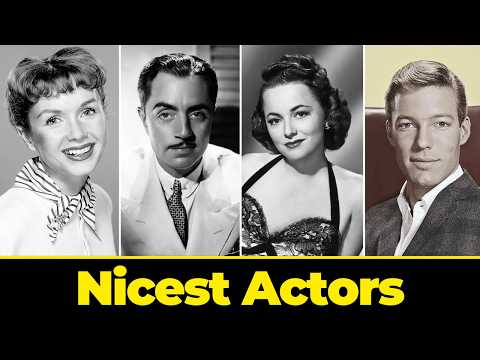
But the list doesn’t end here. From Irene Dunne‘s soothing presence to David Niven‘s effortless charm, each actor brought their own brand of warmth. Jack Lemmon‘s approachability, Debbie Reynolds‘s downto-earth sincerity, and Olivia de Havilland‘s dignified courtesy further prove that kindness was a common thread among these legends.
As we delve deeper into the lives of these extraordinary individuals, we’ll uncover more heartwarming anecdotes and explore how their kindness left an indelible mark on Hollywood. Stay tuned for the untold stories of the nicest actors of the Golden Age.
Consider William Powell, whose sophisticated screen presence never translated into snobbery. Each morning, he greeted cast and crew with genuine warmth, and during long breaks, he shared anecdotes that kept morale high. When an inexperienced extra once froze with nerves and faced replacement, Powell quietly took them aside, reassured them, and ran through the blocking until confidence returned. His kindness was never loud—it was subtle, constant, and deeply felt.
Then there was Jack Benny, whose radio fame spilled into film sets with the same good-natured humor. He teased himself as often as anyone else, dissolving tension with laughter. Crew members admired his willingness to chat with everyone from camera operators to makeup artists, and colleagues were pleasantly surprised by his attentiveness—asking about families, congratulating successes, offering quiet reassurance.
Julie Andrews bridged the classic and modern eras with effortless grace. During the grueling shoot of The Sound of Music, she personally thanked crew members at the end of long, cold days in the Austrian hills. She sent handwritten notes of gratitude, mentored younger singers, and met fans with sincere attentiveness rather than perfunctory greetings.
But perhaps the most unexpected story belongs to Richard Chamberlain. On the set of the Australian film The Last Wave, a young caterer’s daughter accidentally witnessed a dangerous electrical mishap that could have ended in tragedy. Chamberlain immediately stepped in, gently comforting the distressed child and providing reassurance until medical help arrived. His composure under pressure and instinct to nurture revealed a deeply caring nature.
Dean Martin, often dismissed as the carefree crooner of the Rat Pack, was anything but. Contrary to his indulgent public image, Martin maintained a disciplined lifestyle and sharp business acumen. During the filming of Rio Bravo, he took time to encourage and guide younger actors, fostering a collaborative environment. He quietly supported charities for veterans and children, never seeking recognition.
And then there was John Gielgud, the epitome of British theatrical excellence—refined, disciplined, sometimes perceived as stern. Yet those who knew him discovered profound warmth. One admirer recalled meeting him at just fifteen, expecting intimidation, only to have Gielgud sit and chat for hours, listening intently and offering thoughtful advice without ever making the young person feel out of place.
Peter Finch possessed a self-deprecating humor that made him incredibly relatable. Amid the chaos of filming, he would chat with crew, share laughs, and ensure everyone felt valued. He brought homemade treats to set and offered a listening ear to anyone in need, leaving a lasting impression as both a brilliant actor and a beloved friend.
Finally, Ricardo Montalbán embodied chivalry. During the filming of Star Trek II: The Wrath of Khan, despite his demanding schedule, he mentored younger actors and encouraged their passions. His courteous demeanor extended to fans and colleagues alike, and his charitable work supported education and healthcare for underprivileged communities.
These stories reveal a pattern: the media’s portrayal of Hollywood egos often obscured a quieter truth. Behind the glamour, genuine kindness thrived—unassuming, consistent, and transformative. The Golden Age wasn’t just about unforgettable performances; it was about unforgettable people who understood that how you treat others is the truest measure of character.
Yet even as these legends faded from the spotlight, their kindness didn’t vanish—it echoed forward. Consider the ripple effect of a single thoughtful gesture. When Gregory Peck quietly championed a young writer’s script, that writer went on to mentor others. When Audrey Hepburn held a frightened child in a refugee camp, she planted seeds of compassion that grew into lifetimes of service. Kindness, it turns out, is the one legacy that never fades from the credits.
But Hollywood was not done producing such souls. As the studio system crumbled and a new generation rose, the torch of decency passed to fresh hands. Henry Fonda, the laconic everyman, was known to arrive on set early and stay late, not for glory but to help the grips strike the lights. He treated a nervous stagehand with the same respect he showed to directors—a trait he passed to his daughter Jane, who would carry that fierce compassion into a new era.
Barbara Stanwyck commanded tough roles on screen, but off-screen she was a den mother to young actresses. She kept a drawer of spare stockings and gloves for any girl who arrived underdressed for an audition, and she never once let a struggling newcomer leave her dressing room without a pep talk and a sandwich.
Perhaps the most surprising kindness came from Buster Keaton, the stone-faced genius of silent comedy. Known for death-defying stunts that broke his body, he was famously gentle with the crews who caught him. When a young prop boy accidentally destroyed a priceless gag setup, Keaton looked at the wreckage, shrugged, and said, “Well, now we get to build it better.” He then spent the afternoon teaching the boy how to construct it himself.
And what of the women who ruled the screen with fire? Katharine Hepburn, often painted as imperious, was in truth a fiercely loyal friend. She scrubbed floors alongside the cleaning staff at her family home, refused to let anyone carry her bags, and once spent an entire evening sitting with a terrified young actor before his Broadway debut, feeding him lines and crackers until his hands stopped shaking.
These stories share a common thread: the smallest gestures often carried the greatest weight. A note of thanks. A shared umbrella in the rain. A name remembered. The Golden Age’s nicest actors understood that stardom was fleeting, but how you made people feel was permanent.
As the studio lights dimmed on that era, the kindness didn’t fade—it adapted. James Stewart quietly visited veterans’ hospitals long after his own service ended, never calling the press. Gregory Peck once stood in line at a diner, unrecognized, and paid for a stranger’s meal simply because the man looked tired. These weren’t performances; they were habits of the heart.
The torch passed to those who watched and learned. Julie Andrews still writes letters by hand. Richard Chamberlain still checks in on that caterer’s daughter, now grown, who never forgot the day a star knelt beside her. Kindness, once planted, becomes a garden that outlives the gardener.
So the next time a headline screams about a celebrity tantrum, remember the quiet truth: for every ego the media magnifies, there are a dozen legends who held doors, learned names, and shared their sandwiches. The Golden Age wasn’t golden because of the awards—it was golden because of the people who understood that decency costs nothing and means everything.
Now, it’s your turn. Which actor—past or present—do you believe deserves a place on this list? Share their name and a story below, and let’s keep the kindness rolling.
Report this article
Select a reason for reporting:






