The tent in Nui Dat was suffocating—heat, flies, and the stench of canvas and diesel. Colonel Crosby tapped the green map with a ruler, his voice like a judge’s verdict: “Nobody comes out of Hat Dich.” Five Australian SAS soldiers stood before him, their faces unreadable. Corporal Magbie pressed his bandaged left thumb against his arm sling. He didn’t look at the map. He looked at Crosby—late thirties, sunburned nose, map ink on his sleeves. An American infantry colonel who owned the air, the guns, and the secrecy waiting outside.
“Then you won’t miss us, sir,” Magbie said, his voice flat. His thumb kept tapping. What could five Australians bring back from a jungle that had swallowed entire battalions? And why send them at all?
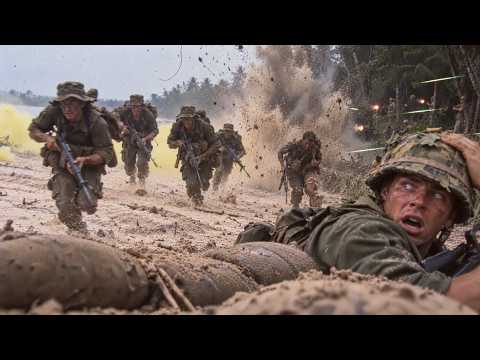
Crosby wanted a clear answer for that contaminated zone where Phuoc Tuy, Binh Hoa, and Long Khanh meet. He had led battalions into that green and bled on trails lined with punji pits. He believed in the block you could see, the steel that shielded it, and the line that moved forward on a map. Magbie wanted the opposite. He led a five-man SAS patrol—signaler, medic, two riflemen—and wanted permission to go east, far from any track, stay silent for days, and steal the camp’s routine instead of fighting for it.
The stakes sat on the stand between them. Go unseen and learn how the camp breathes, or go loud and lose men for nothing. Crosby laid down his condition without raising his voice. No American rescue force would enter the heart of Hat Dich for any patrol. No trucks, no line of helmets advancing on a trail. He would provide distant air support on call and a far sandbar in the southwest for extraction—nothing more.
Magbie felt trapped. Accept, and they’d be alone under the dense canopy. Refuse, and the patrol would sit idle. “We’ll take the air support, sir,” Magbie said. The medic adjusted his bag. The signaler checked the PRC radio strap and the spare battery wrapped in a shirt. Crosby nodded once, as if he’d proven his point about the cost of silence.
The patrol launched that same afternoon on two RAAF Iroquois. The air over the rubber turned white with heat, then green as Hat Dich rose to meet them. The rotor wash pushed grass in a clearing west of the area and scattered water from broad leaves in a cold cover. Magbie was third out. He gripped his rifle, thumb on the grip, and knelt in grass that swallowed his boot. The helicopters lifted and faded, and the jungle closed over the five men like a tight lid.
Black mud sucked at their souls. Thorn vines tangled with sleeves and packs, demanding thorn-by-thorn cuts. Dense forest blocked the light and turned noon into dusk. They had planned a quick circuit and a quiet move east. Reality differed within an hour.
A column of enemy mine sweepers appeared suddenly on a side trail, speaking softly, rifles on shoulders, eyes scanning fallen leaves. Magbie flattened his hand, and the patrol went prone. Sweat ran into their eyes. Mosquitoes bit the backs of their hands. One sweeper stopped a few steps away to tie his sandal, then spat in the mud. The patrol did not breathe loud enough to move a leaf. The column passed and its sound faded east.
Magbie tapped his magazine twice with his thumb. The quick circuit plan was over. The slow crawl began. They needed water without using a stream that left a trace for every cup taken. They found a dry creek bed 1,200 meters east of the clearing. Cracked mud and roots, with dark damp pockets under leaves. Magbie wanted a sip that made no noise and left no bent grass.
Black mud impeded knees and elbows. Vines prevented crawling in a straight line. The signaler lay on his side and made a silent drip by wrapping green leaves into a funnel, collecting condensation and rainwater drop by drop into a bottle. It took an hour to gather one dose. “Patience is the bloody tap,” Magbie said. The men passed the bottle hand to hand without a clink.
Magbie tied the first marker at that observation point—a short cord with cloth strip stuffed low between roots, where only a hand could find it. No obvious signs, no cut trees. Nothing the eye would notice. It pointed to the dry creek for return if the jungle stole their direction.
The patrol settled between roots and listened to the side trail. Their human radar never slept. They breathed through their feet. The first clue came before dark. A Viet Cong courier hurried along the side trail. He was alone, bag swinging at his hip. One sandal slapped the ground with a loose sound because its strap had broken. He didn’t look right or left. He moved like a man late for an appointment he dared not miss.
Magbie watched his uneven step and the dust raised by the loose sole. Same weight, same hour, same trail meant a schedule. “He’ll be back,” Magbie said. The patrol let him go. Taking him then would mean trading a week of secrets for a minute of noise.
The night kept them flat while the jungle pulsed with life. Leeches found their wrists and necks. The air stayed hot and wet, reeking of rot and distant cooking smoke. The patrol stretched in a shallow arc. Weapons under coats to prevent reflection. Somewhere north, a dog barked once and fell silent.
Magbie held the position after the watch change, because stealth for him was something proven by endurance. That was his weakness, and he carried it as a second weapon. Staying on watch too long was proof to the jungle of who owned it.
On the third evening, he reached for more than the ground gave, and the whole patrol paid for that greed. Sounds came from the low hill east, faint through bamboo. Guards talking around rice and fire. The observation point was good. The cord marker was placed. The courier had given them a knoll. Magbie kept looking east beyond all that.
He explained the plan in a whisper. Claymores near those voices, tripwires among roots at the entrance, enough to break contact if the cordon tightened. He took the forward scout and crept past the stop point with two claymores wrapped in cloth. The patrol froze when a guard from Battalion 440 stopped to listen. He came down from the knoll without a light. A heavy man with a scarred cheek reflecting gray light. His rifle low, head tilted. He had heard something. A wire click or a boot on dry wood. And he knew enough to stop and let the jungle settle.
Magbie lay face down in leaf mud and felt an ant cross his wrist. The guard took two steps closer and stood still. Every second doubled. The guard spat, said a short word over his shoulder, and moved on up the hill. But the damage was done. The patrol stayed flat for half a day while extra feet crossed the knoll above them back and forth, and the wires stayed half-laid. They lost time they couldn’t recover.
Water ran out, muscles cramped from stillness. Crosby’s warning about numbers sat in Magbie’s throat like a stone. The colonel was partly right. Thirty to forty men controlled the near camp, hundreds controlled the wider base, and five men couldn’t fight that weight. They could only slip through it.
“We’ll crawl from here,” Magbie said. He pressed his tape-wrapped thumb into the mud to make a foothold for the scout behind him. The patrol moved again by inches, and the bush closed over their trail.
In Nui Dat, Crosby studied the blank radio schedule and wiped ink from his sleeve with his thumb. He had sent five Australians into a Viet Cong secret zone where larger units had failed since December, and Operation Goodwood needed eyes, not another sweep. He told his staff the patrol would either learn silence or learn why battalions bled. He kept his company out of the center and his aircraft on standby, waiting for clicks in the static that never seemed to come.
He believed Magbie would still have to finish the job. The patrol lay where the half-laid wire had left them, flat in leaf rot east of the dry creek. Magbie kept his hand spread on the mud and counted feet through the roots. Extra feet crossed the knoll in twos and threes, unhurried, pausing to listen. Heat pressed through the canopy like a wet blanket. A leech slipped into the forward rifleman’s sleeve, swollen and dark. No one moved to pull it. Any movement now would trade five quiet men for one loud minute.
They wanted to count the bunkers without standing up to get them. The low rise carried voices, smoke, and the clatter of rice pots, but the dense canopy blocked light and hid every hill behind bamboo and vines. Magbie needed to raise his eyes six inches without making a silhouette. There was a fallen tree trunk ten steps to his left, slick with rot and ants. Its root crown rose as a shield. He chose it because dead wood draws no attention.
He moved to it using his elbows through black mud, one body length with each shift of the watch. His L1A1 was pulled on a short sling. The trunk smelled of fungus and old rain. Magbie rested his chin behind the root plate and looked east through a gap in the plants. The camp revealed itself in pieces, not as a whole picture. A bunker door of cut wood, half-buried, with moss on the threshold. A second door to the right, newer wood, and a sandbag shoulder. Cooking pits sent thin smoke that flattened under the canopy and drifted south. A line of turned earth marked a drainage slit. Guards sat near the central pit with bowls, arguing about rice, who took more, and a cousin in the north. Their noise bought Magbie time.
He pulled a damp notebook from his shirt and drew with his hand, door by door, pit by pit. “Patience buys maps, boys,” Magbie said. His pencil moved only when the voices rose. Each laugh covered a line. Each argument covered a door. He marked twelve doors across the low hill, three large pits, and two narrow openings that could only be ventilation slits. He marked the knoll the courier had crossed and the side trail the guard with the scarred cheek had come down. The drawing took shape, crooked and honest. No lens could have done it in that scrub. Only a man who lay still long enough to be forgotten could count the battalions that passed.
Night fell without cooling the air. The patrol crept back to the dry creek and lay in leech mud with their weapons covered in cloth. The jungle breathed feet again. Before dawn, the first courier came down from the knoll from the north, bag high on his hip, stepping fast and uneven because his sandal strap had broken. The same halting step Magbie had seen days ago. An hour later, a second man came up empty-handed. The pattern held. Magbie tapped his magazine twice, and the signaler nodded in the dark. The schedule was real.
The midday heat brought part two. Guards changed as the sun stood overhead and the air turned white between tree trunks. Two men came down the hill wiping sweat. Two went up carrying rifles and water bowls, talking during the handover without lowering their voices. Magbie lay with mud in his mouth and knew the minute they became careless. The heat made them loud. The noise made them regular. Regularity could be written down.
On the second night, the low hill filled with soft voices that were not arguing about rice. Men arrived from three trails and sat close together under the center of the hill, speaking in turn, one voice lasting longer than the rest. Runners came and went without lights. No cooking smoke rose during that time. Magbie couldn’t see faces through the bamboo, but he could count arrivals by sound and departures by silence. A battalion conference held where aircraft couldn’t see and patrols couldn’t reach. He fixed its place on his drawing with an X and a time. The bag made the seizure certain.
The courier with the broken strap returned before dawn alone again, hurrying to meet his schedule. This time the patrol didn’t let him pass. They took him in the dark away from the knoll with hands and knees. Silent, no shot, no shout. His bag held rice paper wrapped in oilcloth, a sheet bearing arrows and hours, points for positions, and a square for the meeting place under the hill. Magbie laid his hand-drawn doors beside those arrows in the mud and saw them match. He copied his two nights onto the seized sheet with pencil. Courier arrivals before dawn. Guard changes in the midday heat. The conference under the low hill. Five silent men had taken what a battalion had failed to find.
That was the routine of the hat, stolen from leech mud and carried in a dead man’s bag. The tax came before they could feel good about it. At first light, a guard from Battalion D44 with a battered face was combing the slope with a stick. He examined the mud where the struggle had left its mark. He stopped at the fallen trunk and crouched. A fresh knee print showed in the wet rot where Magbie had braced to draw. The edges were too sharp to be a day old.
The guard ran his thumb over it and looked east toward the rise, then west toward the creek. He gave a short order over his shoulder. By midday, night sentry points had doubled. Dogs came from the camp on ropes. Thin village dogs with ribs showing. Their noses pointed at the ground. Barking started and stopped in the bamboo. The loose ring around the five ghosts tightened into a hunt.
Magbie read the change in sound before he saw it. The eastern exit he had planned died with that knee print. Going east now meant walking into doubled guards, dogs, and open ground beyond. He turned the patrol in the mud and pointed southwest toward the far sandbar Crosby had named and toward the dry creek that might hide a crawl.
The medic loosened his bag straps. “We’ll go wet and low,” Magbie said. The signaler checked the PRC and the spare battery in his bag, dry and sealed. They gave up east and slipped southwest, hunted inside the camp ring they had just mapped.
That night Magbie said it aloud without a speech. The patrol lay in a shallow hole with the map in the bag between them. Dogs worked somewhere north. He had pushed them past the mine tripwire station and boxed them for half a day. That lost time forced two nights, which led to the knee print. “My push cost us the eastern route,” Magbie said. He carried the heaviest loads himself, the spare radio and one claymore wrapped in cloth, and prepared the answer with his hands.
He went back alone to the dry creek and lifted the cord and cloth marker from the roots where he had left it as a guide. He carried it east and placed it low on a false trail with a boot print and a bent sapling to draw noses. The true marker became a false sign to pull the dogs east while the five men went south.
The short report reached Nui Dat over the static, and Crosby listened without wiping any ink this time. He heard doubled guards, dogs, and a patrol moving southwest with a stolen schedule, and he found no safe route. His staff wanted to push a company through the corridor to break the cordon and open a gap. Crosby refused flatly. No American force would enter that ground for any patrol, and he held that position because the company would confirm exactly what the doubled guards were waiting to hear.
What he launched instead was more precise and louder. A distant air strike window to the east. Aircraft ready in a minute to pull eyes and dogs toward the noise. “You’ll get thunder, not helmets,” Crosby said. The staff officer wrote down the time. Thunder would help, and thunder would warn the whole base at once.
The patrol heard the decision the next morning in a burst of voice before the radio returned to silence. Magbie folded the bag map in oilcloth and placed it on his chest. The route southwest ran through tangled roots, black water, and doubled guards with dogs. The east held thunder that would pull men the wrong way and wake every guard. He checked the spare battery again where it was kept dry in cloth. Safe for now. The only voice they had left. “We walk when the sky speaks,” Magbie said.
The sky spoke at 4:20. A muffled, rolling boom pushed the canopy down and knocked water from the leaves. Magbie lay in the hole with the oilcloth bundle on his chest and listened to the dogs’ noise change. They had been sweeping the ground north of the creek in broken barks. Now they pulled toward the thunder. Trainers’ shouts rose over each other, and leash sounds slapped through the bamboo. He had one job before the sound died again. Get five men out of a closing ring without firing a shot.
Mist rose from the mud with the cooling air, high to the waist and moving slowly. Magbie sent the medic along the line, both hands full of creek mud. The medic rubbed black mud on the bag cloth, over the buckles, into the straps, then on the back of each man’s neck. “Mud on everything, including that handsome face,” Magbie said. “Wet mud hides shine and traps human scent on the skin instead of letting it rise.” The medic smeared his own cheeks last and said nothing.
They entered the creek bed feet first. Magbie set the order and the patrol crawled backward down the bank so their drag marks pointed east toward the thunder, not south toward the sand. Water pooled in the hollows, cold enough to ache the wrists, heavy with rotted bamboo. Roots crossed the creek like ladder rungs, and they had to pass under them, not over. Forty steps took most of an hour. The signaler held the radio high on his chest to keep the speaker above water, his elbows doing what his hands couldn’t.
Behind them, the cord and cloth did its work. A D440 guard found it on the false trail east of the creek, low at a root, where a man would place a marker the eye wouldn’t notice. He lifted it with two fingers and felt the frayed end where a knife had cut it. A boot print, a bent sapling, a cord. The Australians marked their trails, and these men had left it carelessly, telling him they were hurrying east. He sent two dog teams and six men down the false trail toward the jet noise. Then he took the rest and moved north along the knoll to cut the creek from above. That choice put him far behind five men heading the other way.
The patrol came out of the creek where it shallowed into a pile of palm leaves and a side trail eroded to mud. Magbie wanted to cross it in two bounds and no talk. He put the signaler on the edge to watch the mud while the rest came up. That was the moment Hat Dich stopped being something they listened to.
Two couriers came from behind the bamboo seven meters away, walking fast, bags on their chests, one eating from his palm. The signaler was on one knee in the open with the radio on his chest. The first courier saw him and opened his mouth before his rifle came off his shoulder. The forward soldier hit him from the side, put his left hand over the mouth, slid the knife under his ribs, and dropped him into the leaves without a sound. The second man got his AK halfway up. The medic wrapped a coat around the muzzle, pressed it to the man’s chest, and fired a short burst; the cloth swallowed the sound into something like a cough.
It took five or six seconds. The second courier fell hard over the radio bag, his knee sinking into the cloth, and Magbie heard the crack through the struggle. A short, dry snap like a foot on a plate. The patrol stayed still until the bamboo quieted. Insects returned first, then a bird, then nothing.
The soldiers pulled the second bag off its belt, and the medic dragged the two men down the bank and pushed them under a root shelf covered by water. The signaler was already on his back with his bag open. He pulled out the spare battery wrapped in a shirt, and the shirt came out heavy and wet. The casing had split at one seam, and cell material had leaked into the cloth. He put the main battery to his cheek to feel the warmth left in it and shook his head twice in the mist. No voice. Short windows, clicks only, and no one could say how many.
“Two bags and half a radio,” Magbie said. “Fair trade, boys.” The haul was better than the last. The sheet in the second bag carried the same arrows and a new column of hours against three position numbers written that week in light pencil. Under the oilcloth was a photograph, a young man in a white shirt standing stiffly beside an old woman. The corners were worn from carrying. The signaler looked at it for a moment, then put it inside his shirt against his ribs and closed the bag.
Magbie turned the patrol south before the mist lifted. Their route to the sandbar passed the opening with the tunnel door, and daylight was no time to be there. Going around meant cutting two sides of a square and crossing a stream in the open. Magbie chose the opening. It had burned in the dry season, ash covering the ground under palm remains, with a wooden hatch half-buried near the center and swept clear by use. Debris piles where no one walks, and flattening it in a burned area means thorns beneath. He went first with a bamboo probe cut long enough to work while lying on his belly. The stick found the first pit six steps in, a shallow square of sharpened wood smeared black and covered with woven palm.
Magbie didn’t remove the pits. He found the hard ground between them and pressed his tape-wrapped left thumb into the mud at each safe step, so the man behind put his boot where the thumb had been and nowhere else. “Put your boot where I put my thumb or we carry you,” Magbie said. They crossed the field one by one, twenty steps in half an hour, the signaler at the rear hugging the radio like a child. Four men were across, and one still in the debris, when voices came from the northern edge.
Magbie went flat and the patrol went flat with him. In the open, inside a field of thorns, they couldn’t move. The officer who came out of the bamboo wore polished boots under the mud and stopped at the ash edge without stepping on it. He had come down to open the hatch and check the cache below, and he didn’t like what the yard told him. The debris near the swept door was placed wrong, pressed into a line running southwest, and a runner who should have reached the knoll before noon hadn’t arrived at all. Two explanations stood before him. Thieves in his base or a careless man with a broken sandal strap who stopped to sleep. He had spent enough time in the hot trench to know what happens to officers who open caches in daylight on a guess.
He put two men at the northern edge to catch the night runner when he came, told the rest to return to the knoll, and said he would open the pit after dark with proper hands. Then he walked away from the yard with five Australians lying in it. The patrol stayed still through the afternoon on bare ash with red ants crossing their hands and the sun leaking through the burned gap above. The two men assigned to watch sat under the bamboo twelve steps from the southern pit line and talked about a river in the north. Magbie kept his cheek on his sleeve and let them talk. His instinct told him to wait until the ants finished, and this time the ground agreed.
Moving in a minefield with eyes on the edge would cost him a leg and then the patrol. Dusk gave him the gap the officer had bought. The two watchers turned north to watch for the runner they expected, because the man coming was one you watch on the trail he uses. Magbie moved his patrol across the rest of the field in the fading light, step by step, the signaler lifting the probe stick from the ash behind him so nothing remained to find. They entered the tangle of roots on the southwest trail with 1,800 meters between them and the sandbar.
Magbie stopped them among the roots because sand could wait but the schedule couldn’t. Five men carrying two bags through a hunting area were five men who might not arrive. The time and place of the battalion conference should be somewhere other than inside his shirt. He propped the radio against a root and spread the rest in a tight arc facing the trail they had come from. He repaired the radio with tape from the medic’s bag, tucked it under his arm to warm what was left in the battery, and connected it long enough to send the signal without the full hum of operation. He got twenty seconds. He didn’t spend one on himself.
He clicked the meeting time and coordinate intersection under the hill, then the early runner’s movement hour, then the midday change, then the single group for the sandbar. Time and place, nothing else, Magbie said. The code clicked under the raincoat, 200 meters from a corridor with doubled sentry points, and the radio’s cold in the signaler’s hands and the last group half-sent.
In Nui Dat, the duty radio operator had been listening to static for two days and had written nothing. The clicks came thin and regular, and he wrote them in pencil as they arrived. Crosby crossed the tent with his sleeves down and read the pad over the man’s shoulder. An hour, a coordinate, two time groups, and a place name shortened to a letter and a number. He had been waiting for a voice because a voice is something he could question. What he had instead was a patrol clicking a battalion’s work hours from the middle of a hot zone on a failing battery.
He put the pad on the map table beside his marked sheet and put his finger on the low hill. Battalions had walked within a thousand meters of that intersection since December and come out with punji wounds and nothing written down. His staff had the survey plan ready and asked him to set a start line. Crosby said the survey would wait for the clicks. “We hold at the sand and keep the green empty,” he said. No helmets go, and no helmets go. He moved the company that night to the edge of the sandbar, dug their trenches facing the tree line, and put the support aircraft on alert with fuel to fly. It cost him his timetable, and he knew it. A company sitting on sand in the southwest is a company not standing on anyone’s start line, and the hours he sacrificed were hours the base could use to move the meeting somewhere else.
Before that, he told the staff officer to log the clicks as intelligence rather than a situation report. Then he went out and looked at the tree line in the dark, which told him nothing at all.
Among the roots, the patrol received one returning group, and the radio didn’t answer again. The signaler held the handset and tapped the key twice out of habit, listening to a dead circuit. Magbie carried the second bag on his chest beside the first and began moving the arc southwest using his hands. Behind them, far above the knoll, barking started again, and this time it came from the north. The barking came from the north in two separate lines, and Magbie knew what that sound was. One line was combing the hill where boots had cut into the mud. The other was combing the creek bed itself, smelling the water, moving slowly toward the place where five men had crawled backward.
He wanted the sandbar while the mist still covered the ground, and the dogs wanted the same ground for the opposite reason. What stood between them was 1,800 meters of tangled roots and a radio that couldn’t speak. He arranged the patrol in order and kept them low. The medic first with the probe stick, then the riflemen with the bags, then the signaler with the radio strapped high, then him at the end with the single claymore wrapped in cloth and the wire spool in his fist. The order mattered because the last man could stop and cut while the others kept walking.
Black water pooled at ankle depth among the roots. Each step made a soft sound that carried very far in the cold air. Magbie tapped a root twice with his knuckle, and the line froze, then moved again on his hand signal alone. They needed silence more than speed, and the radio gave them neither. The signaler tried the handset once under his coat and heard a weak buzz that faded in three heartbeats. He shook his head at Magbie and held up two fingers, then folded them. Two short groups at most, clicks only, no voice to call the guards or warn those on the sand.
Magbie understood the price at once. Crosby could keep a company on the sand by clicks or pull them for lack of voice, and five men among the roots couldn’t object. “The clicks will have to do, mate,” Magbie said. The signaler nodded and tied the transmit key to his wrist so he could tap without lifting the radio.
In Nui Dat, Crosby stood at the map table with the night log under his palm. He wanted a voice report with coordinates he could check twice. What he got instead was a pattern of clicks the duty operator wrote as dashes and dots, then as an hour and a crossing mark under the low hill and one group for the sandbar. His staff officer wanted the company back at the start line for the survey, because a company sitting on wet sand in the southwest was a company wasted while the base changed its meeting. Crosby kept his finger on the low hill and shook his head. He refused to call the center because a voice report would tell the doubled centers exactly what they were waiting to hear. He would hold to the clicks because the clicks were all the patrol had left to give. “Hold at the sand and keep the green empty,” Crosby said. The ink stayed dark on his sleeve where he wiped it.
He sent the word to the company commander by landline, not by air, so no listening point in the net would hear the company stir. The company pushed deeper into the tree line toward the northeast and stopped cutting. The men lay behind roots with rifles over sandbags, watching the mist move over the open sand. The two aircraft were on alert with enough fuel to fly, crews in seats, rotors pinned. Crosby stayed in the tent staring at the static as if staring might pull another group through it. He believed Magbie would finish the hard job. Now Magbie sat still because five men had clicked.
Among the roots, they picked up the sound of the combers with their ears. Feet coming from the north in a wide sweep, sticks tapping bamboo. A dog’s howl when the leash pulled it off the line. The guard with the scarred cheek turned that sweep the way he turned everything. No hurry, stopping to listen after every twelve steps. He had sent the dogs east toward the false marker and men north to cut the water. Both moves had found only old tracks. Now he brought the rest south and west across the high ground above the trail. Because men who can’t go east and can’t stay north have only one way left. His decision ended in a short order to spread wider.
Magbie felt the order clearly on both sides. He wanted to cross the trail in one dash, while the combers wanted that never to happen. He pushed the patrol off the high shoulder into a runoff where water ran knee-deep over stones. The runoff hid foot sound and scent together. Leeches climbed the legs again, active after the night. The medic went first and found the far bank with his hands, then signaled each man across in turn without a splash. The signaler crossed holding the radio high, biting down, trembling from his elbows. Magbie was last with wire trailing behind him in the water.
The squad cut the southwest trail ahead of them while the last man was still in the runoff. Six shadows moved through the mist with rifles low. The guard with the scarred cheek walked second, head up, listening to the water sound. He stopped where the trail dipped and raised his hand. He had heard something. A stone turned under a boot or a buckle touching metal. He signaled two men down toward the runoff and kept the rest on the trail. The trap closed from both sides at once.
Magbie had only one answer left, and he used it where he stood. He wanted to break the hunt, not win a battle; five men couldn’t beat a force that had called reinforcements. The roots gave him a narrow corridor where the track pinched between two massive trunks. He placed the claymore low among the roots facing north, aimed south across the mouth of the corridor, and ran the wire ten steps into the water where it was covered. His hands worked fast and steady. One sentence explains this weapon’s trick. The plate throws its charge forward in a fan, so everything in front falls and everything behind survives.
He lay behind the southern trunk and held the wire in his fist. The two men reached the water first, rifles up, eyes on the far bank where the medic had left a wet handprint on stone. Magbie let them reach the mouth of the corridor. He waited until the guard himself entered the gap to signal the rest forward. Then he pulled the wire hard and fired the claymore.
The blast surface slapped the mist aside and threw leaves and water in a white spray. The sound bounced off the trees with a hard crack. The two men in the front rank fell to the fan of fragments. The guard was hit at the edge of the blast, spun around the trunk, and his rifle flew away. Screams rose along the track. A dog barked and thrashed in its rope.
Magbie was moving before the echo died, but the blast’s edge caught him where he lay near the southern root. Fragments and wood splinters tore his lower leg, and his boot filled with hot blood. He rose on one knee and fell, rose again leaning on his rifle as a crutch, and signaled the patrol to pass him toward the sand. “Keep going south. I’m behind you,” Magbie said. Blood ran over his bootlace into the creek, turning pale pink in the current.
The patrol wanted to extract him first, but he refused flatly. The signaler reached his free hand to take the bag off Magbie’s chest, and Magbie pushed it away. The medic bent to cut his trousers and bind the wound, and Magbie shoved him off by the shoulder to move. Any evacuation now meant a helicopter hovering over the roots while the cordon closed, and a helicopter meant every rifle in the base turning toward one spot in the sky. He would bleed while walking and keep the patrol together; because a patrol that stops to carry in daylight inside the cordon’s range never moves again. “You carry the bags, and I carry myself,” Magbie said.
He tied a strip of shirt tight above the wound with his teeth and carried the heaviest loads, the spare wire spool and the second bag on his chest beside the first. The medic went ahead to scout the route. The rifleman leaned on his elbows only on the steep slopes. They moved southwest while the dogs barked madly behind them and the guard shouted orders, covered in blood.
The guard rose with his cheek cut open beside an old scar, deaf in one ear. He wanted to stop the five men before they reached the open ground, and he wanted it with his own squad, not with a camp alarm that would bring officers and questions. He left the two fallen where they were and took the four still able to walk straight down the creek, following the blood trail. His decision was fast and wrong in one point. He followed blood and thinning water instead of turning toward the sand where every track ends. That choice put him minutes behind men who couldn’t run.
The mist faded as the ground fell toward the river. Black mud gave way to pale sand mixed with leaves, then to open sand with grass clumps and driftwood. The sandbar lay long and low beside dark water. Eighteen hundred meters of roots by Magbie’s estimate. It looked too open to approach. The patrol lay at the last tree line and watched it. Wind moved the grass. Water moved slowly. No boots appeared. No dogs barked from the far end. Magbie raised his hand, and the signaler tapped twice in the still air out of habit, though there was no one to answer.
The answer came from the tree line itself. A hand rose from a shallow pit forty steps to the left and waved once, flat and low. American helmets appeared in a line facing northeast. Rifles steady on sandbags. A company dug in and silent along the forest edge. They had held all night on the clicks alone. Crosby had put them there and kept them while his staff demanded their return.
The patrol walked toward a line of friends they couldn’t see until the last moment. Magbie wanted smoke on the sand before any rotor sound was heard. He sent the medic forward on his belly holding a smoke grenade in his fist. The medic crawled to a pile of driftwood in the middle of the bar, pulled the pin under his chest, and rolled away as yellow smoke rose and spread flat in the wet air. The wind pushed the smoke south along the bar in a thick line. That line was the only map the pilot needed.
“Yellow smoke at the south end?” Magbie said, though his voice reached no one but his men. The signaler pressed the key three times under his raincoat, short and even. It was the last group they had. A pair of Iroquois came low through the fading mist from the southwest, skimming the water surface, beating the smoke down with their rotors. The lead aircraft rose over the yellow line and settled with one skid on sand and one over water. The ramp came down, and a crewman leaned out with his hand raised. The second aircraft stayed higher while its door gunner watched the tree line. Sound filled the bar and shook the grass. Dogs began barking again somewhere far back on the trail. Closer now, barking in bursts.
The patrol loaded the stolen goods before the men. Magbie pushed the two oilcloth bags into the crewman’s hands first, staining the cloth with blood from his leg. The signaler climbed next, lifted by his body with the radio hanging on his chest. The riflemen followed, turning at the ramp to cover the tree line. The medic stayed with Magbie until the last step. Magbie waved him up and climbed behind him on his good leg, dragging the wounded one, and fell inside beside the bags. “Bags first, then soldiers,” Magbie said. The crewman slapped the airframe twice.
Fire opened from the northern roots as the second aircraft settled. Muzzle flashes glowed in the tree line. The guard with the scarred cheek had reached there with his four men. Bullets cracked over the sand and kicked up pale spray. The American company fired from the forest edge in a long continuous line, rifles and one machine gun sweeping the root line to keep heads down for the last half minute. Brass flew. Smoke mixed with rotor wash. The guard fired until his ammunition ran out, then ran forward twelve steps for a clear shot at the ramp, but the line of fire tore the ground at his feet and forced him flat behind a fallen trunk. He watched the skids lift while his squad was pinned around him.
The safety belt closed over the bare mud behind them. Over blood thinned by running water and a claymore wire lying cold among the roots. The aircraft turned southwest low over the water as the sandbar fell away. Magbie lay on the floor with his leg bandaged and the bags under his hand. No one spoke over the engine noise. The signaler held the radio between his knees and looked at the cracked spare battery still wrapped in its cover. Useless now, carried all the way for nothing and everything at once. The medic pressed a new dressing and tied it. It soaked through with blood and stayed in place.
The patrol had entered with five men and came out with five. One wounded, and two bags heavier.
In Nui Dat, the tent smelled of canvas, diesel, and fresh blood. Crosby laid the bloodstained bag map over his battalion map on the table and flattened the oilcloth with his palm. The seized sheet showed arrows and hours, points for positions, and a square for the meeting place under the low hill. Beside it was Magbie’s drawing in his wet notebook, twelve doors and a pit drawn by hand in the dark. The two sheets matched the green block that had held no roads. Staff stood around the table waiting for the sweep order with the start line ready. Instead, Crosby changed the order. He put his finger on the low hill mark and moved it to three position numbers with new times written that week. No sweep would walk blind into the dense forest to bleed in punji pits. Silent five-man teams would go first to observe and confirm, then ambushes would work the schedule the patrol had stolen—courier arrivals before dawn, the midday change, and the meeting hour under the hill. The sweep would wait for what silence revealed. “We move quiet before we move loud,” Crosby said. The staff officer wrote it down.
The company that had held the sand returned to the wire with empty magazines and full water bottles. The patrol sat on camp cots while the medic finished treating the leg. Magbie lay back with his boot cut away and his face gray under the mud. He had stayed on watch too long at the start and paid for it with a wound at the end. He knew both ends of that line. He said nothing about it twice.
The radio signaler sat on the next cot with the second bag open on his knees. Under the oilcloth, below the arrows, lay a photograph from that week. A young man in a white shirt standing stiffly beside an old woman, the corners worn from always being carried against his ribs. The signaler looked at the face for a long time. He had taken the bag from a man on a bamboo stretcher in five seconds of silence. He had carried that weight south through water, ash, and roots. He asked the interpreter about the name written on the back in pencil, and the interpreter read it aloud once. The signaler spoke the name aloud after him to remember it. He folded the photograph inside his shirt and closed the empty bag. No form requested it. No list recorded it. He kept it.
Months later, in the same tent, Crosby slid a fresh map across the table. The low hill was marked with a red circle, the meeting square crossed out. “Your clicks bought that,” he said. Magbie, cane beside his cot, said nothing. He only tapped his thumb twice against the handle—the old signal, the old habit.
The signaler still carried the photograph against his ribs. Some names you learn to remember without a form. Some weights you choose to keep.
Outside, the jungle breathed. Five men had walked into Hat Dich and five had walked out—one limping, two bags heavier, and a schedule stolen from the mud.
But the green never really lets go, does it? What would you have done with that photograph—kept it, or burned it?
Report this article
Select a reason for reporting:






