The roar of the Merlin engine was not just a sound—it was a promise. A promise that the P-51 Mustang, a plane born from a British plea and an American gamble, could escort bombers all the way to Berlin and back. But this legendary marriage of airframe and powerplant almost never happened. National pride, bureaucratic delays, and a German fighter called the Focke-Wulf 190 nearly kept the Mustang from becoming the war-winner it was destined to be.
In the skies over Europe, the Fw 190 was a terror. Its radial engine and sleek design gave it an edge that left Allied pilots scrambling. The British and Americans, once rivals in aircraft design, were forced to unite. The result? A machine that would change the course of the air war. But the story of how we got there begins decades earlier, with two brothers and a twelve-horsepower engine that barely stayed aloft.
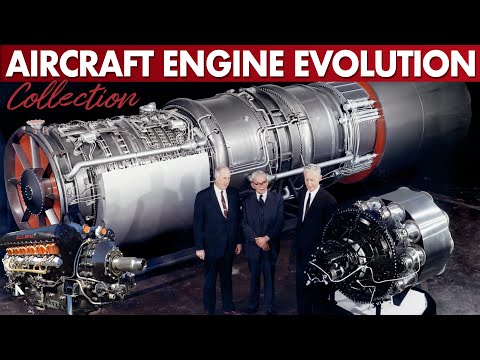
December 17, 1903. Kitty Hawk, North Carolina. The Wright Flyer lifts off, and the world changes forever. Their engine was crude—just twelve horsepower—but it was the first to power a manned flight. It used a lightweight aluminum crankcase, a innovation that saved precious pounds. Every ounce mattered then, and it still does.
As war loomed in Europe, aircraft engines evolved rapidly. The rotary engine, with its spinning cylinders, gave pilots agility but also a deadly torque that could kill in a tight turn. The inline engine, sleeker and more powerful, became the European favorite. And the radial engine, rugged and compact, found its home on American carriers. Each design had its strengths, but the war would demand more.
By the late 1930s, the British were desperate for fast, heavily armed fighters. The Spitfire and Hurricane, powered by Rolls-Royce Merlin inline engines, were magnificent. But across the Channel, Germany was developing a new fighter that would outclass them both. The Focke-Wulf 190, with its BMW radial engine, was a masterpiece of engineering. When it first appeared over France in 1941, it shocked the RAF. “It was like nothing we had,” recalled one Spitfire pilot. “We lost four planes that day. We didn’t even know what hit us.”
The British needed an answer, and fast. Rolls-Royce was already working on a more powerful Merlin, the two-stage supercharged version. But the real breakthrough came from an unlikely source: North American Aviation. They had designed the P-51 Mustang, a sleek fighter with an Allison engine. It was fast at low altitude but sluggish up high. Then someone had an idea: what if we put a Merlin in it?
The result was astonishing. The Mustang, now with the Merlin’s power, could outrun and outclimb almost anything in the sky. It had the range to escort bombers to Berlin and back. “It was a revelation,” said one pilot. “We finally had a fighter that could go the distance.” The P-51B and C models entered service in 1943, and the tide of the air war began to turn.
But the Germans were not idle. Kurt Tank, the designer of the Fw 190, was working on a high-altitude version with an inline engine, the Dora. The race for air superiority was far from over. And in Britain, a young RAF officer named Frank Whittle was developing something even more revolutionary: a jet engine.
As the war raged, the seeds of a new era were being sown. The propeller-driven fighters were reaching their limits. The future belonged to the jet. But that is a story for another chapter.
Whittle’s story began not in the halls of power, but in the libraries of Leamington Spa. Born in 1907 to a working-class family, he devoured books on astronomy, engineering, and flight. “I was always drawn to aviation,” he later recalled. “When I was four, my favorite toy was a tin model of a Blériot monoplane.” He tried to join the RAF as a boy apprentice, but was rejected for being too small. Undeterred, he followed a strict diet and exercise regimen, grew three inches, and applied again. This time, he was accepted.
At RAF Cranwell, Whittle’s brilliance shone. He wrote a thesis on future aircraft design that predicted speeds of 500 mph at 50,000 feet—figures that seemed absurd in 1928. “The piston engine and propeller won’t work up there,” he argued. “We need a new type of powerplant.” His solution was a gas turbine driving a compressor, with the exhaust providing thrust. The jet engine was born on paper.
The Air Ministry was unimpressed. “Dr. Griffith pointed out an error in my calculations,” Whittle said. “It was rather discouraging.” But Whittle patented the idea anyway, and the patent was soon published—and read with great interest in Germany. There, a young engineer named Hans von Ohain was developing a similar concept. “I was inspired by the smoke rising from chimneys,” von Ohain said. “If a turbine could be driven by gas, why not use it for flight?”
While Germany poured resources into von Ohain’s work, Britain let Whittle’s patent lapse. It wasn’t until 1935, when a former RAF officer named Rolf Dudley-Williams helped Whittle secure private funding, that Power Jets Ltd. was formed. “We have a one-in-thirty chance of success,” Whittle told his backers. They took the gamble.
The first engine ran in April 1937. It was a crude, dangerous machine, but it worked. “We were terrified it would explode,” said one technician. “But it didn’t. It just kept running.” The Air Ministry, which had ignored Whittle for years, suddenly took notice. But progress was slow, hampered by bureaucracy and lack of funds.
Meanwhile, in Germany, the Heinkel He 178 became the world’s first jet-powered aircraft to fly, on August 27, 1939—just days before the outbreak of World War II. “I called General Udet to tell him,” Ernst Heinkel recalled. “He said, ‘Congratulations, but let me sleep. It’s a bad time.'” The Luftwaffe was focused on winning a conventional war, not on revolutionary technology.
In Britain, Whittle’s engine finally flew in the Gloster E.28/39 on May 15, 1941. “It’s flying!” shouted Whittle’s colleague, W.E.P. Johnson. Whittle, ever the engineer, replied, “Well, that’s what it was designed to do, isn’t it?” But the flight proved the concept. The jet age had begun.
The British government, realizing the potential, ordered the Gloster Meteor into production. But the Meteor was not ready for combat until 1944, and by then, Germany had fielded the Messerschmitt Me 262. “We were ahead, but we didn’t know it,” said one RAF officer. “We could have had jets years earlier if we’d listened to Whittle.”
The Me 262 was a formidable fighter, with swept wings and two axial-flow turbojets. But Hitler insisted it be used as a bomber, wasting its potential. “The Führer wanted a wonder weapon,” said Adolf Galland, the Luftwaffe’s fighter general. “But he didn’t understand what he had.” By the time the Me 262 entered service in large numbers, the war was nearly over.
In the Pacific, the P-51 Mustang continued to prove its worth. But even its incredible range couldn’t cover the vast distances to Japan. The solution was the F-82 Twin Mustang—two Mustangs fused together. “It was a strange-looking beast,” said one pilot. “But it had legs.” The F-82 was too late for World War II, but it saw combat in Korea.
After the war, Whittle’s contributions were largely forgotten. He was knighted in 1948, but the government refused to compensate him fairly for his invention. “I paid a high price for the work I did,” he said. “I suffered several nervous breakdowns.” Meanwhile, the Americans, who had received Whittle’s engine in 1941, developed their own jet fighters, like the P-80 Shooting Star.
The Cold War spurred rapid advancements in jet technology. The swept wing, the afterburner, and the axial-flow compressor became standard. The Boeing B-47 Stratojet, with its six jet engines, revolutionized strategic bombing. The North American F-86 Sabre, with its swept wings, dominated the skies over Korea.
But the Soviet Union was not far behind. The MiG-15, powered by a copy of the British Rolls-Royce Nene engine, was a nasty surprise for American pilots. “We were evenly matched,” said one F-86 pilot. “It came down to the man in the cockpit.”
The jet engine also transformed civil aviation. The de Havilland Comet, the world’s first jet airliner, entered service in 1952. But its square windows led to catastrophic metal fatigue, and the Comet was grounded after a series of crashes. “It was a harsh lesson,” said one engineer. “But we learned from it.”
The Boeing 707, introduced in 1958, brought jet travel to the masses. With its four Pratt & Whitney JT3D turbofan engines, it was fast, reliable, and efficient. “The 707 changed the world,” said one airline executive. “It made international travel affordable.”
Whittle, meanwhile, watched from the sidelines. He had left Power Jets in 1948, disillusioned by the government’s decision to nationalize the company and hand over its technology to established manufacturers. “I felt betrayed,” he said. “We were the pioneers, and we were pushed aside.”
He moved to the United States in 1976, where he was treated as a hero. “In America, they appreciated what I had done,” he said. “In Britain, they seemed to forget.” He became friends with Hans von Ohain, and the two men often discussed the early days of jet propulsion.
By the 1980s, Britain had rediscovered Whittle. He was awarded the Order of Merit in 1986, and his contribution to aviation was finally recognized. “It’s better late than never,” he said with a smile.
Today, the jet engine is ubiquitous. It powers everything from commercial airliners to military fighters. And it all began with a young RAF officer who refused to accept that the propeller was the final word in flight. “Frank Whittle was a genius,” said one historian. “He saw the future, and he made it happen.”
But the story of aviation is far from over. The jet engine, like the piston engine before it, is reaching its limits. New technologies—from supersonic flight to electric propulsion—are on the horizon. And the spirit of innovation that drove Whittle and the Wright brothers lives on.
As the 1950s dawned, the jet engine had already rewritten the rules of war and peace. But it was the marriage of swept wings and afterburners that pushed fighters past the sound barrier. The North American F-100 Super Sabre, the first operational fighter capable of supersonic speed in level flight, became a symbol of American airpower. “It was a handful,” admitted one test pilot. “But it taught us how to fly fast.”
Across the Atlantic, the British were not idle. The English Electric Lightning, with its stacked twin engines and phenomenal climb rate, was a point-defense interceptor like no other. “It could outclimb anything,” said an RAF pilot. “You’d light the burners and just go straight up.” It served for nearly three decades.
But the most iconic jet of the Cold War was the Boeing B-52 Stratofortress. With eight turbojet engines and a range of over 8,000 miles, it became the backbone of America’s nuclear deterrent. “The BUFF,” as crews called it—Big Ugly Fat Fellow—“just kept flying.” It remains in service today, a testament to robust design.
Meanwhile, the Soviet Union responded with the MiG-21, a lightweight, agile fighter that became the most produced supersonic aircraft in history. “It was simple, rugged, and deadly,” said one Western analyst. “And there were thousands of them.” The air war over Vietnam pitted these machines against American F-4 Phantoms in a deadly dance.
Back in Britain, Frank Whittle’s legacy lived on, but the man himself had grown weary. He had watched his invention transform the world, yet he felt little joy. “I gave everything to the jet,” he said. “It gave me nothing but heartache.” His health declined, and he retreated from public life.
In 1996, Whittle passed away at the age of 89. His ashes were interred at Cranwell, the place where his journey began. “He was a genius who was never fully appreciated,” said his son, Ian. “But history will remember him.”
And it does. Every time a jet airliner takes off, every time a fighter breaks the sound barrier, the ghost of Frank Whittle rides along. The jet engine he invented changed the world—and it all started with a young man’s refusal to accept the limits of the possible.
But the story of aviation never ends. New challenges await—hypersonic flight, electric propulsion, and journeys to Mars. The spirit of Whittle and the Wright brothers lives on in every engineer who dares to dream. What frontier will we conquer next?
Report this article
Select a reason for reporting:






