Berlin, May 1, 1939. The city is adorned with swastikas as Nazi officials proudly display their power, but beneath the surface of celebration, dark clouds are gathering. Adolf Hitler, rarely seen in public, is already plotting his next move from his mountain retreat at Obersalzberg. The world is on the brink, and no one knows it yet.
The National Socialists have tightened their grip on Germany, but their ambitions stretch far beyond their borders. Hitler’s eyes are fixed on Poland, a nation he once courted as a junior partner but now views as an obstacle to his grand vision of Aryan dominance. The demand for Danzig is just the beginning—a pretext for something far more sinister.
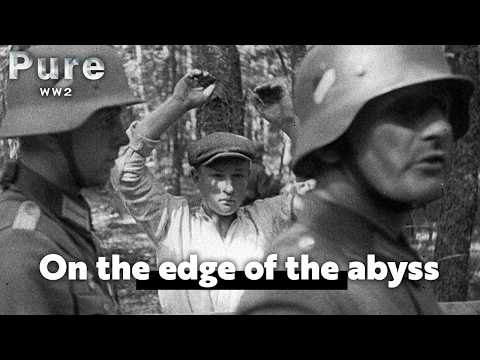
In the corridors of power, whispers of war grow louder. Hitler’s generals are briefed on plans for an early invasion, while propaganda minister Joseph Goebbels orchestrates a campaign of fear and misinformation. The German people are fed a steady diet of fabricated atrocities against ethnic Germans in Poland, whipping up a frenzy of righteous indignation. “We must present a convincing level of distress,” a Nazi official notes, “so that the long-planned military intervention can be credibly presented as an act of national defense.”
The tension escalates. Poland, aware of the threat, modernizes its army and stages public demonstrations of strength. In response, German troops conduct maneuvers on the eastern border, honing their skills for the coming storm. Among them is the 6th Tank Regiment, part of the newly formed 3rd Tank Division, capturing every moment on film for propaganda purposes.
But Hitler has a problem: the Soviet Union. He fears Stalin might side with the Western powers. So, on August 23, 1939, Foreign Minister Joachim von Ribbentrop flies to Moscow and signs a non-aggression pact with Vyacheslav Molotov. The secret protocol divides Poland between the two dictatorships. “The pact paves the way for Hitler to go to war,” a historian explains. Stalin is delighted, and Hitler is relieved. The path is clear.
In Germany, ration cards are issued, and the older generation remembers the hunger of the First World War. The public mood is somber; unlike in 1914, there is little enthusiasm for conflict. Yet the regime presses on. The battleship Schleswig-Holstein anchors in Danzig, a show of force. On August 25, Hitler orders the attack for the next day, but it is postponed when Britain signs a mutual assistance pact with Poland and Mussolini declares Italy unprepared.
Diplomats scramble to avert catastrophe, but Hitler is resolute. He needs a pretext. “I will provide a propagandistic casus belli,” he declares. “Its credibility doesn’t matter. The victor will not be asked whether he told the truth.” The SS stages a fake attack on a radio station in Gleiwitz, leaving behind the body of a murdered farmer. The world is deceived.
On September 1, 1939, at 4:45 AM, the Schleswig-Holstein opens fire on the Westerplatte peninsula. World War II has begun. The Luftwaffe bombs the town of Wieluń, claiming over a thousand lives. German troops pour into Poland from three sides, overwhelming the defenders. “It was a war of annihilation from the outset,” a witness recalls. The brutality is immediate: civilians are targeted, and SS death squads follow behind the army, murdering intellectuals and Jews.
As the Wehrmacht advances, Hitler visits the front for propaganda, while the home front receives news of victories and casualties. The Polish army fights bravely but is outmatched. The Battle of Bzura sees initial Polish success before the Germans surround them. By September 17, the Red Army invades from the east, sealing Poland’s fate. The capital, Warsaw, holds out until September 25, when the Luftwaffe launches a massive bombing campaign, reducing much of the city to rubble. “The first blanket bombing was carried out by the German Luftwaffe,” a historian notes. Warsaw surrenders, and 120,000 soldiers are taken prisoner.
By October 6, all resistance ceases. The campaign has cost Poland dearly: 70,000 soldiers killed, 130,000 wounded, and thousands of civilians murdered. The Wehrmacht, despite its victory, is ill-prepared for a longer war, with supply shortages and logistical chaos. Hitler, however, is already planning his next move: an attack on France. The world holds its breath as the conflict expands.
In the weeks that follow the Polish surrender, the Reich’s attention turns to the grim business of reorganization. On October 26, Hans Frank takes up his post as Governor General of the occupied territories, settling into Wawel Castle in Krakow with the air of a colonial viceroy. “We are the new master race,” he tells his assembled officials, “and what we say here goes. You are our slaves, here to work for us.”
The General Government becomes a laboratory for brutality. Jews are herded into overcrowded ghettos in Warsaw, Lodz, and Krakow, their property seized, their movements restricted. Forced labor squads round up Polish civilians and ship them west to work in German factories and farms. The food rations allotted to Poles are deliberately set below subsistence level.
In Berlin, the propaganda machine churns out a different story entirely. Newsreels show smiling settlers arriving in the newly annexed Warthegau, receiving keys to farms that until days ago belonged to Polish families. “Ethnic Germans are returning to the soil of their ancestors,” the narrator intones, as cameras pan across tidy farmhouses and freshly painted signs bearing German names.
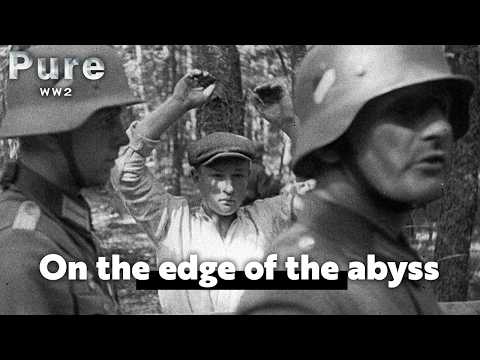
But the reality behind the newsreels is far darker. Hundreds of thousands of Poles are expelled from their homes at gunpoint, given minutes to gather their belongings before being loaded onto unheated trains bound for the General Government. In the winter of 1939–40, thousands die of exposure and hunger in makeshift transit camps.
Meanwhile, in the west, the strange quiet of the Phoney War drags on. French soldiers man the Maginot Line, exchanging occasional insults with German troops across no-man’s-land. British troops drill and wait. The expected German offensive against France does not come—not yet.
Hitler, frustrated by his generals’ caution, summons them to the Reich Chancellery in late November. He rails against the army’s hesitance, demanding an immediate strike in the west. “The enemy is weakest now,” he insists. “Every day we wait, the French grow stronger.” But Brauchitsch and Halder warn of winter weather, fuel shortages, and the munitions crisis still plaguing the Wehrmacht.
The Führer relents—for now. He orders the attack postponed until spring. The winter months become a period of feverish preparation. Factories run around the clock under Fritz Todt’s new armaments ministry. Aircraft production is prioritized, and the Luftwaffe expands its bomber fleet.
On the home front, the regime tightens its grip on daily life. The Reich Radio broadcasts a steady stream of patriotic programming, while the Gestapo intensifies surveillance of dissenting voices. Yet the mood remains subdued. Letters from soldiers at the front describe the brutality of the Polish campaign, and rumors of atrocities circulate in whispers.
In January 1940, a new threat emerges from an unexpected quarter. British bombers appear over the German coast for the first time, targeting naval installations at Wilhelmshaven. The raids cause little damage, but they shatter the illusion of invulnerability. “The war has come to German soil,” a shaken official writes in his diary. “What will the people think when the bombs fall on their cities?”
Hitler dismisses the raids as a minor nuisance, but the Luftwaffe is ordered to prepare retaliatory strikes. Göring boasts that no enemy bomb will ever touch Berlin. The boast will not age well.
As winter gives way to spring, the Wehrmacht massed along the western frontier grows restless. New divisions arrive from the east, fresh from the Polish campaign. Among them are veterans of the 6th Tank Regiment, their tanks repainted and rearmed, their crews hardened by combat.
In the quiet villages of the Rhineland, soldiers write letters home and wonder when the waiting will end. The answer comes on the morning of May 10, 1940, when the skies over Belgium and the Netherlands fill with the drone of engines. The real war in the west is about to begin.
The attack begins before dawn. German paratroopers descend on the Belgian fortress of Eben-Emael, gliders slipping silently through the darkness to land atop the supposedly impregnable bunkers. Within hours, the fort’s guns fall silent, and the gateway to Belgium swings open.
To the north, the Dutch army is caught off guard. The Hague and Rotterdam are threatened from the air, and within five days the Netherlands capitulates. “The speed of the advance stunned even the German commanders,” a staff officer later recalls. “We had planned for weeks; the Dutch lasted days.”
But the true blow falls further south. The main German armored thrust slices through the Ardennes, a region the French high command had dismissed as impassable for tanks. Through the dense forests and winding roads, the panzer divisions press on, their columns stretching for miles, their engines echoing through the hills.
At Sedan, the Meuse River crossing is forced in a single day. Stukas scream overhead, clearing the way, and pontoon bridges are thrown across the water under fire. By nightfall, German tanks are rolling onto the plains beyond, and the French defenses are broken wide open.
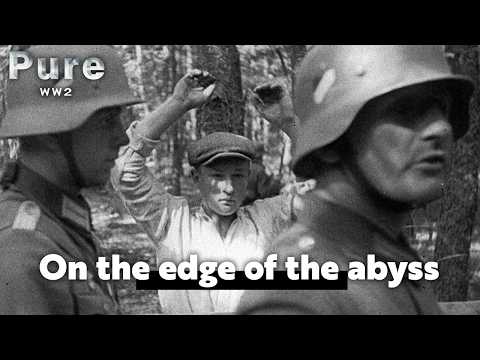
In Paris, panic spreads. The government debates whether to flee, while millions of civilians take to the roads, joining a vast exodus southward. “The roads were choked with families, carts, and abandoned cars,” a refugee later remembers. “We were fleeing an army we could not see.”
Winston Churchill flies to Paris on May 16, hoping to stiffen French resolve. He asks General Gamelin where the strategic reserve is. Gamelin’s reply is chilling: “There is none.” Churchill returns to London shaken, convinced that France may soon fall.
On May 20, German tanks reach the English Channel near Abbeville, cutting the Allied armies in two. The British Expeditionary Force, along with the French First Army, is trapped in a pocket around Dunkirk. The noose tightens.
Yet Hitler hesitates. On May 24, he issues the infamous halt order, forbidding the panzers from advancing on Dunkirk. The reasons remain debated: perhaps he hopes to spare the British a humiliating defeat and negotiate peace, perhaps he fears the marshy terrain, perhaps Göring has promised the Luftwaffe can finish the job alone.
Whatever the cause, the pause gives the British a precious gift. Operation Dynamo begins, and for nine days a ragtag fleet of warships, fishing boats, and pleasure craft ferries more than 338,000 soldiers across the Channel to England. “We shall fight on the beaches,” Churchill tells Parliament, and the words become a rallying cry.
In Berlin, the Führer’s headquarters is triumphant but uneasy. The army has won a victory beyond all expectations, yet the British army has escaped. Hitler shrugs off the concern. “The war in the west is won,” he declares. “England will come to terms once she sees reason.”
On June 14, German troops march into Paris. The city, declared open to spare it from destruction, falls without a shot. Columns of infantry parade down the Champs-Élysées, and newsreel cameras capture every moment for the German public. The humiliation of 1918 is avenged.
Ten days later, in the same railway carriage at Compiègne where the armistice of 1918 was signed, Hitler stages his revenge. The French delegation is forced to sign an armistice on the very spot where German defeat was once sealed. The Führer sits in the same chair as Marshal Foch, a look of cold satisfaction on his face.
France is divided: the north and west under German occupation, the south governed by the collaborationist regime at Vichy under Marshal Pétain. The once-proud nation is humbled, and the map of Europe is redrawn.
Back in Poland, the occupation grinds on. Hans Frank’s regime continues its brutal work, and the ghettos swell with Jews deported from the newly conquered territories. The machinery of persecution is expanding, its full horror still unimaginable.
In the summer of 1940, Hitler stands at the pinnacle of his power. Yet across the Channel, Britain refuses to surrender. The Führer turns his gaze westward once more, and the Luftwaffe begins its preparations for the battle to come.
The war is far from over.
Throughout that summer, the Luftwaffe dueled the Royal Air Force over the English Channel, and by September the bombing of London had begun. Göring’s boast that no enemy bomb would touch Berlin was broken within weeks, and the Blitz would rage until the following spring. “The war has come to German soil,” the shaken official had written. Now the sirens proved him right.
In Poland, Hans Frank’s General Government sank deeper into terror, ghettos sealed and forced labor roundups continuing without pause. The Reich that had promised its people glory now rationed their bread and buried their sons.
And still, in his mountain retreat, the Führer studied maps of the East.
Was there ever a moment when the German people could have stopped him?
Report this article
Select a reason for reporting:






