The frozen ground of Stalingrad refused to yield. Temperatures plunged to forty below zero, turning the earth into iron and the dead into statues. Thousands of German soldiers lay where they fell, their bodies stiff, their stories unfinished. The battle that raged from August 1942 to February 1943 was not just a clash of armies—it was a slaughter that consumed over a million lives and left behind a landscape of horror that would haunt generations.
In the midst of this apocalypse, the living had little time for the dead. Mass graves were hastily dug, often by Soviet soldiers who stripped the bodies of documents and valuables before incinerating them in pits. Others were marked with rubble crosses or German helmets, symbols of a army that had once believed in victory. But as the tide turned and the Sixth Army was encircled, the dead became a problem too vast to solve. The frozen earth became a tomb, and the secrets of Stalingrad lay buried for decades.
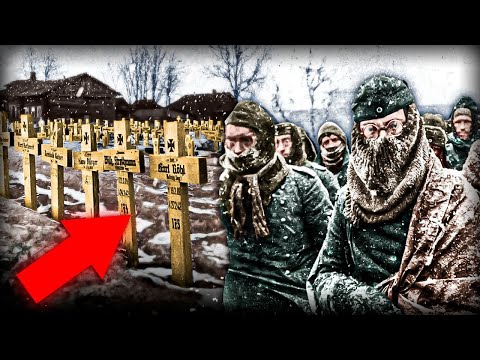
The Battle of Stalingrad was a turning point in World War II, a confrontation so brutal that it redefined the meaning of urban warfare. The city on the Volga River was reduced to rubble, yet the fighting continued street by street, house by house. Soldiers called it the Rat War, a labyrinth of basements and sewers where death lurked at every corner. By the time the German Sixth Army surrendered on February 2, 1943, approximately 91,000 soldiers were taken prisoner, but most would perish in Soviet camps. The dead, however, remained—a silent testament to the scale of the tragedy.
For the families back home, the uncertainty was agonizing. Thousands of German soldiers were simply reported missing, their fates unknown. Some were buried in unmarked graves, their identities lost to the chaos of war. Others were never found at all. The Soviet authorities did little to document the German dead, and the mass graves that dotted the landscape became forgotten monuments to a forgotten enemy.
In the decades that followed, the city was rebuilt, and the graves were paved over or built upon. But the past has a way of resurfacing. In 2018, construction workers in Volgograd unearthed a mass grave 130 meters long and nearly three meters deep. Inside were the remains of 1,837 German soldiers, along with horses used in the battle. For the first time in over seventy years, some of these men would be identified and given a proper burial.
The discovery was not an isolated event. Every year, three to four mass graves are found in the former Stalingrad, each one revealing fragments of the brutality that characterized the battle. Archaeologists and forensic experts work tirelessly to excavate, identify, and document the remains. Dog tags, personal effects, and DNA analysis have allowed some families to finally learn the fate of their loved ones. But many bodies remain unidentified, their stories lost to the frozen earth.
The work is painstaking and emotionally draining. Each body is a reminder of the human cost of war, a life cut short in the most brutal of circumstances. The German Cemetery in Rossoshka, about 37 kilometers northwest of Volgograd, serves as a final resting place for many of these soldiers. Here, they are buried with dignity, their graves marked and maintained. But the cemetery is also a symbol of reconciliation, a place where former enemies can come together to honor the dead.
Yet the scale of the tragedy is staggering. It is estimated that around two million people died in the Battle of Stalingrad and its surroundings. Many of them—Soviet and German alike—remain buried in mass graves that have yet to be found. The frozen fields of Stalingrad still hold secrets, and each excavation brings us a little closer to understanding the full horror of what happened there.
As archaeologists continue their work, they are not just uncovering bodies; they are uncovering history. The personal objects found with the remains—watches, letters, photographs—offer glimpses into the lives of the soldiers who fought and died. These artifacts are carefully preserved and studied, providing a window into the past that textbooks cannot offer. The stories they tell are not just of battle, but of humanity—of fear, hope, and the will to survive.
But the work is far from over. Thousands of soldiers are still missing, their graves undiscovered, their families still waiting for answers. The search continues, driven by a commitment to honor the dead and to ensure that their sacrifice is not forgotten. The mass graves of Stalingrad are more than just burial sites; they are reminders of the cost of war and the importance of remembrance.
The frozen fields of Stalingrad have given up some of their secrets, but many remain. Each discovery is a step toward closure, a chance to give names to the nameless and to bring peace to the restless. But as long as there are graves to be found, the story of Stalingrad will continue to unfold, a testament to the resilience of the human spirit and the enduring legacy of one of history’s darkest chapters.
The excavation itself is a delicate operation, often carried out in harsh conditions that mirror the battle’s brutality. Archaeologists work in frozen soil, using trowels and brushes to carefully expose remains that have lain undisturbed for over seven decades. Each body is photographed, mapped, and catalogued before being removed. The process is slow, sometimes taking weeks to clear a single grave, but the commitment to dignity demands nothing less.
Among the artifacts recovered are items that tell silent stories. A pocket watch stopped at the moment of death. A letter never sent. A photograph of a young woman, its edges worn from handling. These objects are not mere relics; they are fragments of lives interrupted, messages from the past that speak to us across the decades. Historians and forensic anthropologists collaborate to piece together these narratives, cross-referencing dog tags with German military records and Soviet archives.
The identification process is painstaking. Dog tags, when legible, offer the most direct link to a soldier’s identity. But many tags were lost or destroyed, and the passage of time has eroded others beyond recognition. DNA analysis, introduced in the 2000s, has revolutionized the field, allowing scientists to match remains with living relatives who provide samples in the hope of finding closure. For some families, the wait ends with a name and a grave; for others, the mystery persists.
Volunteers play a crucial role in this work. Organizations like the German War Graves Commission (Volksbund) coordinate with Russian authorities and local archaeologists to ensure that excavations are conducted respectfully and that remains are treated with dignity. International teams, often comprising Germans and Russians, work side by side—a poignant symbol of reconciliation in a place that once epitomized enmity. Their collaboration is not without challenges, but it reflects a shared commitment to honoring the dead and confronting the past.
The reburial ceremonies at Rossoshka are solemn affairs. Coffins draped in German flags are lowered into the ground as relatives and officials look on, some weeping, others standing in silent reflection. Each grave is marked with a simple cross, and the names of the identified are inscribed on a central memorial. For the unidentified, a collective grave serves as their final resting place, a recognition that even in death, they are not forgotten.
Yet the work is far from complete. Estimates suggest that tens of thousands of soldiers remain buried in undiscovered graves across the former Stalingrad battlefield. Urban development, agricultural expansion, and the passage of time threaten these sites, making the race to find and document them ever more urgent. Archaeologists use ground-penetrating radar and historical aerial photographs to locate potential burial sites, but the search is often guided by chance discoveries and local knowledge.
Local residents sometimes lead the way. Farmers plowing fields, construction crews breaking ground for new buildings, even children playing in vacant lots—all have stumbled upon bones or artifacts that point to a forgotten grave. In one case, a shepherd noticed fragments of uniform buttons eroding from a riverbank, leading archaeologists to a site containing the remains of over two hundred soldiers. Such discoveries underscore how deeply the past is embedded in the landscape, waiting to be disturbed.
The ethical dimensions of this work are complex. Should every grave be excavated, or should some remain undisturbed as sacred ground? The question divides experts. Some argue that identification and reburial offer closure to families and preserve history; others contend that mass graves are themselves monuments, and that disturbing them violates the dead’s rest. In practice, decisions are made case by case, often influenced by the threat of development or looting.
Looting remains a persistent problem. Black market dealers covet Nazi relics—medals, weapons, even identification tags—and unscrupulous scavengers have desecrated graves in search of profit. Local authorities struggle to patrol the vast former battlefield, and the remoteness of many sites makes them easy targets. The Volksbund and other organizations advocate for stricter penalties and greater public awareness, but the illicit trade continues.
For the families, the emotional stakes are immense. Some travel from Germany to Volgograd, clutching photographs of grandfathers or great-uncles they never met, hoping for a grave to visit. Others receive a phone call or letter years after submitting DNA samples, learning at last where their relative lies. The reunions are bittersweet—joy at finding a name, grief at the decades lost to uncertainty.
One such story belongs to a woman named Ingrid, whose uncle disappeared in January 1943. For seventy years, her family knew only that he had been sent to Stalingrad and never returned. Then a DNA match came through—his remains had been found in a grave outside the city, identified by a fragment of jawbone and a corroded tag. Ingrid traveled to Rossoshka for the reburial, placing a single white rose on his coffin. “We waited so long,” she said. “Now he is home.”
Not all stories end so neatly. Many graves contain the remains of soldiers whose names will never be known—men whose tags were lost, whose families died out, whose records were destroyed in the chaos of war. For them, the collective graves at Rossoshka serve as a mute acknowledgment: they existed, they fought, they died, and they are not forgotten. The memorial there bears the inscription: “Here rest the unknown dead of Stalingrad.”
The work of excavation and identification continues, funded by a mix of government grants, private donations, and volunteer labor. Each season brings new discoveries and new heartbreaks. The frozen fields of Stalingrad have given up thousands of secrets, but countless more remain locked beneath the soil, waiting for the careful hands that will one day bring them to light.
As the sun sets over the Volga, casting long shadows across the former battlefield, the silence is broken only by the wind. Somewhere beneath the earth, a soldier still waits—nameless, faceless, but not entirely lost. His story, like so many others, is written in the soil of Stalingrad, a testament to the enduring power of memory and the long reach of history.
The seasons turn, and the work goes on. Volunteers return each spring, trowels in hand, as the thaw softens the ground that once refused every spade. They come from Germany and Russia alike, bound by a promise older than their nations’ divisions.
At Rossoshka, the white crosses multiply. Each new name carved into the memorial is a small victory against oblivion. Families who once knew only silence now have a place to kneel, a stone to touch.
But the earth still holds its counsel. Somewhere beneath the rebuilt streets of Volgograd, beneath wheat fields and parking lots, the missing remain. Their stories wait, patient as frost, for hands willing to dig.
Perhaps that is the truest monument Stalingrad can offer: not a statue, but a promise. That no soldier, however forgotten, is ever truly lost while someone still searches.
What would you want remembered of you, if the earth closed over your name?
Report this article
Select a reason for reporting:






