Summer 1943. The Eastern Front. Hitler’s armies are in full retreat. Huge Soviet artillery barrages and tank assaults are shredding the German lines. The exhausted German soldiers are up against the enormous reserves of the huge Soviet military machine. The Soviet leader Josef Stalin now seizes this opportunity to wreak his revenge and move onto the offensive.
By early August 1943, the Red Army had driven the Germans from the cities of Orel and Belgorod. To celebrate the victory, Stalin ordered 124 gun salvos and a barrage of fireworks in Moscow’s Red Square. He proclaimed eternal glory to the heroes who fell in the struggle for freedom, death to the German invaders.
In Germany, Hitler’s response was to take greater personal control of all important military decisions. The effects were felt almost immediately by Axis troops occupying the strategically important city of Kharkov. The Soviet forces approached the city from three sides. The German commander, Erich von Manstein, ordered a tactical withdrawal. Hitler immediately countermanded it. Kharkov should be held at all costs. Hitler would not accept anything that would reduce what he called Lebensraum, the land he believed Germany needed to ensure its greatness. Just as importantly, he also believed Germany would win the war, if not by numbers, then by the sheer will to win.
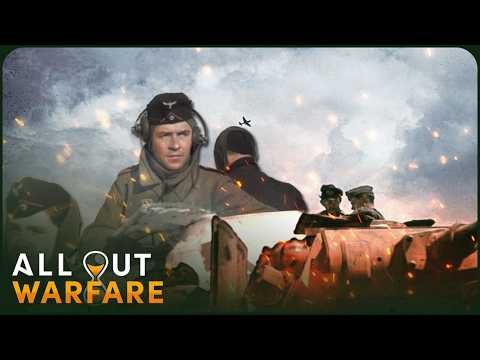
The Germans dug in. At first, it seemed to work. For several days, repeated Soviet assaults were repulsed. More than 300 Russian T-34 tanks were destroyed. But by the end of August 1943, the German positions had been overrun. Eventually, Manstein went against his Führer. He ordered his men to get out. The Red Army drove into the ruins of Kharkov the next day.
It marked the beginning of a massive Soviet offensive along a 1,500-mile front. It stretched from Rostov in the south to Smolensk in the north. At the southern end of the front near Rostov, a Russian breakthrough threatened to trap pockets of German soldiers in the Crimea. Once again, Manstein asked permission to withdraw. All he got was a message from Hitler: “Don’t do anything. I am coming myself.” But he never did.
The German military was forced into another last-minute chaotic retreat. The withdrawal was made worse by bands of battle-hardened partisans. Many were former Red Army soldiers who had been cut off behind enemy lines. They now ambushed the retreating Germans, cutting their communication and supply lines. The Germans responded with predictable ferocity. There were savage reprisals against the civilian population. The Germans also launched a scorched earth policy. Factories, power plants, railways, and bridges were all blown up. A massive hydroelectric dam which provided electricity for the whole of the Ukraine was wrecked.
Meanwhile, in the center of the front, the Germans fell back across the river Dnieper. As they fled, they blew up yet more bridges, turning the river into a formidable defensive line. They then dug in along the west bank. Stalin’s response was to offer the Soviet Union’s highest award to the first Red Army soldier to cross the river. By early autumn 1943, a number of small Soviet bridgeheads had been established on the German-controlled west bank. But they met determined German resistance. Fighting raged along the Dnieper throughout October 1943.
Finally, at the beginning of November, Soviet troops captured Kiev. All along the river, the Germans were pushed out of their defensive positions and forced to retreat still further west. By the end of 1943, the Red Army had virtually cleared the Germans out of Russia’s historic homeland. They were now moving west across the Ukraine. The countries of Europe were in their sights.
By spring 1944, Hitler’s armies were in full retreat. The Soviet leadership now poured in ever greater quantities of men and equipment. The Germans had two excellent tanks, the Tiger I and the Panzer Mark V Panther. Both were well suited to the sort of mobile defensive warfare which was the only remaining hope for the German armies on the Eastern Front. But the Red Army had at least twice as many tanks, mostly the battle-tested T-34, and armament factories in Siberia were turning out more at a rate of 2,000 a month. While Hitler was forced to divide his forces between a war on two fronts, Stalin’s war machine was working flat out. Six million Soviet troops faced less than three million Germans.
In early January 1944, the forces of the First Ukrainian Front moved in from the north on the German-held town of Korsun. It was the last German town holding on what they’d hoped would be their defensive line along the river Dnieper. Twelve days later, the forces of the Second Ukrainian Front drove forward on the southern side. The attack followed a by-now well-established Soviet pattern. First, there was a buildup of an overwhelming number of troops. The Germans were never quite sure where the first assault would come from. Then there was a devastating artillery bombardment. Next, the mass tanks of the Red Army would punch a hole through the German defenses. Finally, the infantry poured in.
In Korsun, it quickly became obvious to the Germans they were about to be overwhelmed. The German commander, Field Marshal Erich von Manstein, flew to Hitler’s headquarters in East Prussia to beg yet again for permission to pull out. But Hitler once more refused. After a week of fierce fighting, about 60,000 men were trapped in what became known as the Korsun pocket. The Soviets called it Little Stalingrad.
The German forces now attempted to break out, but the Russians were ready for it. T-34 tanks and Cossack horsemen harried the Germans as they tried to escape. The fighting lasted two days. By the time Korsun fell, the Germans had lost some 30,000 men.
The Red Army forces were now moving forward at speed. Their advance was made possible by fleets of trucks, mostly provided by the United States, that kept their forces supplied. It was a much faster process than for the Germans, who still relied heavily on horses. The Russians were also dominating the skies. The Luftwaffe had always been a key part of the German war machine, but Hitler had been forced to divert many of his aircraft to defend the homeland from a US and British bomber offensive. As a result, Russian planes outnumbered the Luftwaffe five to one. The Red Air Force’s Sturmovik fighter-bombers took a heavy toll on German armor and supply columns.
Yet Hitler refused to contemplate defeat and now announced a new version of his no-retreat policy. He ordered the German troops to create what he called fortified areas or local strongholds. These were to be defended to the bitter end. Only with his personal approval could any of these fortresses be abandoned. It was a desperate ploy and would come to cost the Germans dearly.
One of the first tests of the new strategy was near the Ukrainian town of Kamenets-Podolsky. Here, 20 divisions of panzers were threatened with being cut off, but Hitler declared it a fortified area and refused to allow a retreat. In the face of bitter fighting, there was a vitriolic argument between Hitler and Manstein, who could see the writing on the wall. Finally, Manstein got his way and the panzers were given permission to break out. Ten days later, some 200,000 men of the First Panzer Army safely reached the German lines over a hundred miles to the west. But they had lost most of their heavy equipment and weapons. By now, Manstein’s requests to retreat had become too much for Hitler. The field marshal was sacked.
Further south, the Germans attempted to hold back the Soviet torrent on the Yuzhny Bug River. They failed and a large force of Germans was caught behind Russian lines in the Black Sea port of Odessa. They too faced being cut off. In early April 1944, Hitler declared it a fortress, but the German troops ignored him and slipped out of the city. Several days later, on April 10, Odessa was liberated.
Stalin was winning on all fronts. He could now turn his attention to the northern Russian city that had suffered under Nazi assault for years. By the beginning of 1944, the Russian city of Leningrad had been under siege from German forces for nearly two and a half years. During the first winter, almost half a million people had starved to death. Volunteers struggled to put out fires and construct defenses. But by 1944, life in the city had become almost unbearable.
Several attempts to relieve it had failed. One effort in 1942 led to the capture of more than 50,000 troops of the Soviet Second Shock Army. Another in 1943 had enabled a trickle of supplies to get into the city. But even so, throughout 1943, up to 20,000 people continued to die of cold, disease, and starvation every month.
By January 1944, however, with the Germans in headlong retreat, Stalin now turned his attention to the plight of the city. That month, Soviet forces secretly infiltrated the neighboring peninsula around Oranienbaum. The attack on the German positions started with a savage 65-minute bombardment. Then Russian troops ripped into the startled German lines. At the same time, another Soviet force attacked from the northeast around the city. They too burst onto the German lines. For three days, the German commander, Field Marshal Georg von Küchler, held out. Finally, he asked Hitler for permission to fall back. Hitler refused. Küchler argued back, telling the Führer that only a swift withdrawal would save his army from a massacre. Hitler sacked him.
He was replaced by General Walter Model. He was known as Hitler’s fireman for his fierce loyalty and avid Nazi outlook. But even to Model, the danger was obvious. He now disobeyed Hitler and pulled out. After two and a half years, the siege of Leningrad was finally lifted. Nearly a million Russian civilians had died. Relief in the city was overwhelming.
The first fallout was in neighboring pro-German Finland, which now feared a Soviet invasion. So in March 1944, a secret Finnish delegation arrived in Moscow to discuss peace. Stalin’s terms were harsh. He demanded the Petsamo region in the far north of Finland, an area rich in nickel, an important ingredient in the manufacture of metal alloys. He also demanded reparations of $600 million. The Finns refused and prepared for a Soviet invasion. But Finland could wait. The Soviet high command, or Stavka as it was known, had more pressing business further south.
The Red Army offensives in the Ukraine in late 1943 had trapped 120,000 German troops in the Crimea. Hitler, as ever, had refused to allow them to withdraw. They now waited helplessly for the Soviet onslaught. In early April, two months after the lifting of the siege on Leningrad, it came. The troops of the Fourth Ukrainian Front crashed into the Crimea from the north. At the same time, a diversionary attack landed on the eastern end of the peninsula. In less than a day, the Axis troops in the west had given way. They fell back on the port of Sevastopol and Hitler ordered Fortress Sevastopol to hold out to the last man.
They didn’t stand a chance. Within two weeks of the siege, German troops were being evacuated by sea. 40,000 men escaped, but some 30,000 defenders were still trapped in the port. They retreated to the beaches south of the city, hoping to be rescued by more German ships. It didn’t happen. The evacuation was interrupted by a Soviet artillery bombardment. Three days later, the Germans surrendered.
Meanwhile, back in the northwest of the country, the Germans still occupied much of what is Belarus today. But the Red Army had grabbed a vast bulge of land stretching into Poland and Romania. It meant the Germans had to defend a 1,400-mile front. They were hugely overextended. Military logic suggested it was time for the Germans to withdraw to more manageable defensive positions. But Hitler, still obsessed with territorial gain, refused to allow any further retreat. The German military would continue to pay a high price for Hitler’s constant meddling and unrealistic ambitions.
By the spring of 1944, Hitler’s forces were stretched to their limit. All along the Eastern Front, there was a desperate need for reinforcements. The problem for the German high command was where to place the few resources it had to maximum advantage. German intelligence reports suggested the next big Red Army offensive would be into Belarus. But Hitler disagreed. He was convinced Stalin would strike south and seize the Romanian oil fields. Both were wrong, at least to begin with.
In the early summer, the Red Army command finally turned its attention to Finland. Russian troops attacked across the Karelian Isthmus. After two days fighting, the Finns were forced to retreat. Slowly over the next month, the Red Army advanced north into Finland. By August 1944, it was all over and the Finns sued for peace. It was now that Stalin showed the first signs of a pattern that would be repeated across Europe. He seized land, in this case areas of Finnish Karelia and the nickel-rich Petsamo region.
Next, Stalin’s attention turned to central Europe. In the summer of 1944, he launched what he called Operation Bagration, named after a Russian hero of the Napoleonic Wars. At 5:00 a.m. on June 22, three years to the day after Hitler’s invasion of the Soviet Union, the guns of the Red Army began a ferocious bombardment of German forces in what today is Belarus. It was exactly where months earlier German intelligence reports had suggested a Soviet attack would come. But because Hitler had ignored them, the area was poorly defended. It was another of his mistakes.
The Germans were now being pounded along a 350-mile front. In some places, the Russians used over 400 guns for every mile. The barrage was followed, as always, by a torrent of Soviet tanks and infantry crashing into the German defenses. To make matters worse for the Germans, they had almost no air support. Much of the Luftwaffe was still tied up defending the German homeland. It was now that Hitler’s folly of fighting a war on two fronts became all too apparent. The Red Air Force could operate almost unopposed. Russian planes struck deep behind German lines, cutting communications and harassing reinforcements.
Within 36 hours, the German panzers had been swept aside. About 50,000 men faced encirclement in the German-held town of Vitebsk. Hitler, as had become routine, initially refused to let it retreat. Then when on the following day he relented, it was too late for many of his troops. Four days later, Vitebsk fell. 20,000 Axis troops were killed and 10,000 taken prisoner.
Further south along the Belarus front, the pattern was repeated. Hitler, now furious, sacked his general, Field Marshal Ernst Busch. Once again, he brought in his favorite, the now promoted Field Marshal Walter Model. But it made no difference. Town after town fell. The regional capital of Minsk was now within reach. Two days later, the Red Army encircled it. Over 100,000 German troops were trapped. Soviet forces bombarded. Within a week, the German survivors surrendered.
The unstoppable Russian advance now pushed on to the Baltic states. First of all was the Lithuanian capital of Vilnius. Across the entire Eastern Front, the Germans were in retreat. But they left behind them towns and countryside laid waste. They committed widespread atrocities against local inhabitants. Nothing, however, could have prepared the Red Army for what it was about to discover.
On July 23, 1944, Soviet forces reached the small Polish village of Majdanek near Lublin. Here they came across their first evidence of Hitler’s Final Solution, the Majdanek extermination camp. It was a camp designed for the murder of Jews on an industrial scale. But as the first Soviet reports of what they’d found leaked out, the Western Allies simply dismissed them.
Three days after seizing Majdanek, the Russians were approaching Warsaw. But here the Red Army paused. Stalin now stood ready to do what Hitler had done before: grab land not in the name of Lebensraum, but of communism.
By the summer of 1944, Operation Bagration had ripped the heart out of the German army in the east. More than 300,000 Axis soldiers had died. 150,000 had been taken prisoner. The Red Army now paused and dug in along the river Vistula south of Warsaw.
Stalin was in no hurry to bring the war to an end. With Europe in turmoil, conditions were ideal for the spread of communism. The first victims of Stalin’s political calculations were the Poles. On August 1, 1944, the Polish Home Army rose up in Warsaw against its Nazi occupiers, but it desperately needed help. The Red Army, camped just to the south, was perfectly placed to provide it. But Stalin regarded the Polish Home Army as close to the Polish government in exile in London and hostile to communism. So he turned a blind eye to the plight of the Polish fighters. They were crushed with terrible brutality.
What price would the people of Eastern Europe pay for Stalin’s ambitions? Share your thoughts below.
Report this article
Select a reason for reporting:






