Most monster movies are harmless fun—popcorn entertainment designed to thrill, not traumatize. But in the 1980s, a wave of creature features pushed boundaries so far that governments seized tapes, theaters refused to screen them, and entire scenes were cut to protect audiences from what they were about to witness. These weren’t just scary movies; they were cinematic nightmares that left censors scrambling and viewers shaken.
What made these films so dangerous? It wasn’t just the monsters—it was the raw, unflinching brutality, the grotesque transformations, and the psychological terror that lingered long after the credits rolled. From subterranean predators to alien parasites, these creatures didn’t just stalk their victims; they invaded the screen with a visceral intensity that felt all too real. And one of them became infamous for a scene so grotesque that audiences reportedly walked out before it even finished.
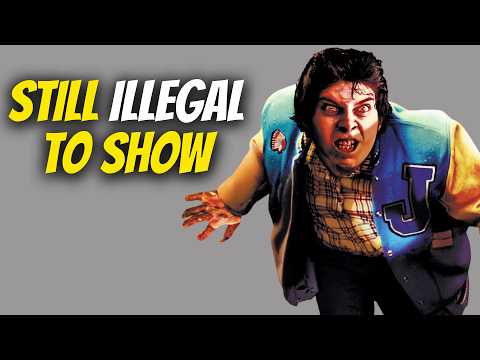
Take The Boogens (1981). On the surface, it’s a simple story about miners reopening an abandoned silver mine. But what lurks inside the tunnels is far more unsettling—carnivorous creatures that drag victims screaming into the darkness, their attacks filmed with a claustrophobic intensity that left little to the imagination. International releases demanded cuts, but the damage was done: the film proved that sometimes the most disturbing monsters are the ones you barely see.
Then there’s Alligator (1980), which turned a urban legend into a brutal thriller. A baby alligator flushed down a toilet grows into a massive predator thanks to hormone-contaminated lab animals. When it crashes through a suburban celebration and devours victims in seconds, the camera doesn’t look away. Several distributors requested edits, fearing the graphic tone would provoke outrage. Instead, the controversy cemented its cult status.
But the real shock came with The Beast Within (1982). A teenage boy begins transforming into something insect-like, and the film doesn’t shy away from the details. Skin tears, bones reshape, and a monstrous creature struggles to emerge from human flesh—all shown in prolonged, excruciating close-up. Censorship boards in multiple countries demanded edits, but the transformation climax remains one of the most disturbing sequences ever put on film.
And then there’s Humanoids from the Deep (1980), a Roger Corman production that sparked outrage for its grotesque amphibian creatures and their violent assaults during a town festival. Additional scenes of brutality were reportedly inserted after filming, intensifying the graphic content beyond what audiences expected. Some territories banned it outright, while others demanded heavy cuts. It remains one of the most debated creature features of the VHS era.
These are just a few of the films that pushed the limits—and paid the price. But the question remains: what made these movies so dangerous that entire governments tried to erase them? And which one featured a scene so grotesque that audiences fled the theater?
The answer lies in the darkest corners of 1980s horror, where filmmakers dared to show what others only hinted at. And once you see these creatures, you’ll understand why they were never meant to be unleashed.
Consider Xtro (1982), a film that seemed determined to break every rule at once. A father vanishes in the countryside, and years later something returns—but not as himself. In one of the most grotesque sequences of the decade, an alien creature gives birth to the man’s adult form, the camera refusing to blink as the human body emerges from a horrifying biological transformation.
The film only escalates from there. Reality warps around the young boy at the center of the story—people transform, creatures appear without warning, and dream-logic blurs the line between nightmare and waking life. During Britain’s video nasties panic, authorities seized Xtro from shelves and banned it outright. It wasn’t just the gore that alarmed them—it was the film’s sheer unpredictability.
Then came Rawhead Rex (1986), Clive Barker’s own adaptation of his short story. When construction workers awaken an ancient demon beneath the Irish countryside, the result is a monster that doesn’t lurk in shadows—it stalks victims across farmland and villages in broad daylight, ripping them apart in sudden bursts of savagery. The creature is no mere animal; it’s an ancient pagan force, almost ritualistic in its cruelty. Several regions demanded edits, but the film’s strange blend of folklore and carnage earned it a devoted cult following.
The Kindred (1987) took a different path entirely. A dying geneticist warns her son to destroy her research—but by the time he reaches the isolated coastal house, something has already survived. What follows is a parade of grotesque hybrids, twisted mixtures of human and marine DNA, their distorted limbs and slimy textures filling the screen in prolonged close-ups. The climax reveals a massive mutant organism hidden beneath the house itself. International distributors trimmed the creature sequences, but for horror fans, the film’s disturbing biological imagination became its greatest strength.
And then there’s The Deadly Spawn (1983), a low-budget shocker that proved passion could outmatch polish. When a meteorite crashes in the woods, it unleashes worm-like aliens with enormous fanged mouths and an insatiable hunger. They burst from ventilation shafts and basements, devouring victims in chaotic bursts of violence. One infamous moment—a creature suddenly biting off a character’s head—left audiences reeling. During the early VHS era, censorship groups closely monitored films like this, and The Deadly Spawn drew heavy criticism for its relentless gore.
But the decade wasn’t done raising the stakes. In 1988, Hollywood remade a beloved 1950s monster movie and turned it into something far more disturbing. The original The Blob was campy fun—a slow-moving mass that trapped its victims. The remake made the creature a living biological organism that dissolves people alive, and director Chuck Russell leaned hard into practical effects to show every horrifying second of it.
Victims aren’t simply attacked—they’re swallowed and slowly melted inside the translucent mass. Hands press against the surface. Faces distort in panic. Bodies begin to dissolve as the creature consumes them. One early sequence in particular stunned viewers because it involved a young character, something monster movies of earlier decades rarely dared to do. The film made it clear that no one was safe.
Several television broadcasts and international releases trimmed the most disturbing scenes, but even with those edits, the 1988 The Blob developed a reputation for pushing creature horror violence further than audiences expected. It became a cult favorite not because of its shocks alone, but because it turned a familiar monster into something terrifyingly unpredictable—a creature that doesn’t stalk or chase, it simply absorbs.
Beneath the crowded streets of New York City, C.H.U.D. (1984) found its own kind of horror. The title says it all: cannibalistic humanoid underground dwellers. These creatures were once ordinary people, transformed by years of exposure to illegally dumped toxic waste in the sewer system. Now they lurk below Manhattan, pale and distorted, with glowing eyes and animalistic hunger.
Director Douglas Cheek exploited a powerful urban fear—the idea that beneath every manhole cover lies an unseen world. Victims disappear in alleyways and empty subway corridors, dragged into darkness before anyone realizes what’s happened. Some international releases requested minor edits to tone down the creature attacks, but the concept proved powerful. The monsters didn’t arrive from another world—they were created here, and they may still be waiting beneath the city streets.
Then came David Cronenberg’s The Fly (1986), which redefined body horror by turning the monster inward. Scientist Seth Brundle tests his teleportation device on himself, but a housefly slips into the chamber, and the computer merges their genetic structures. At first, he believes the accident has improved him—stronger, faster, filled with unusual energy. For a brief moment, the change feels like evolution.
But the improvement doesn’t last. Fingernails loosen and fall away. Strange lesions spread across his skin. His teeth deteriorate. Cronenberg presents each stage in haunting detail, using groundbreaking practical effects to show Brundle’s body deteriorating piece by piece. The gradual decay forces the audience to witness every horrifying step as the human form collapses into a grotesque insect-like hybrid. Several international distributors trimmed the most graphic sequences, yet The Fly remains one of the most respected creature horrors ever made—because beneath the grotesque imagery lies the slow, tragic destruction of a man who realizes he is becoming something else entirely.
And then there was The Thing (1982). John Carpenter’s Antarctic nightmare arrived when creature features were expected to deliver suspense and the occasional shock. Instead, it pushed those expectations into far darker territory. At an isolated research station, a small team of scientists discovers that something has invaded their outpost—a creature with no single form that can imitate any living organism it touches.
That ability changes everything. Suddenly, every man in the room becomes a potential threat. A colleague you spoke to minutes ago could already be something else. Carpenter lets suspicion spread through the station like a disease—conversations grow shorter, weapons appear in nervous hands, and the brutal Antarctic environment deepens the isolation. Then the creature finally reveals itself.
What follows are some of the most disturbing transformation scenes ever filmed. Human bodies split open into impossible shapes. Limbs twist and stretch as something alien struggles to escape from beneath the skin. In one unforgettable moment, a severed head sprouts spider-like legs and crawls across the floor, shocking both the characters and the audience. Much of this imagery came from Rob Bottin’s groundbreaking practical effects—elaborate animatronics, prosthetics, and mechanical rigs that looked grotesquely organic.
Some international releases trimmed a few moments of the most intense transformations. But the film’s greatest strength wasn’t just its gore—it was the paranoia. Because in The Thing, the monster isn’t simply outside the door. It could already be standing beside you.
Across the 1980s, these creature features did something far more dangerous than scare audiences—they terrified the people in charge of censorship. Governments seized tapes, theaters refused screenings, and entire scenes were cut because the imagery was simply too disturbing. Yet decades later, these same movies have become legendary among horror fans, their reputations growing with every banned frame and every whispered rumor of the scene that was never meant to be seen.
What united these films wasn’t just gore—it was the sense that the horror couldn’t be contained. The creatures didn’t stay in the shadows; they invaded living rooms, sewers, and even human bodies. Censors could seize tapes, but they couldn’t erase the images from the minds of those who saw them.
And one film pushed further than all the rest. The Thing didn’t just shock audiences—it broke them. The kennel scene, where the creature absorbs and mutates sled dogs in a writhing mass of flesh and limbs, reportedly caused walkouts. Audiences weren’t prepared for a monster that could become anything—including the person sitting next to them.
Decades later, these banned and butchered films have become legend. The very scenes that once sparked outrage are now celebrated as practical-effects masterpieces. What governments tried to erase, horror fans preserved. The VHS era may be gone, but its nightmares endure.
So which creature still haunts you—the shapeshifter, the melted victim, or the thing that was once human? And more importantly: how many of these banned films have you actually dared to watch?
Report this article
Select a reason for reporting:






