The sun rose over Darwin Harbor on February 19, 1942, painting the water in hues of gold and calm. Sailors sipped their morning tea on the decks of Allied warships, dockworkers unloaded supplies destined for the front lines, and civilians went about their routines in the sleepy tropical outpost. No one suspected that in less than two hours, this serene picture would be torn apart by the roar of nearly 200 Japanese aircraft.
But the tragedy that unfolded was not just a story of enemy aggression—it was a story of ignored warnings, strategic blunders, and a nation’s illusion of invulnerability. For years, Australia had relied on its vast oceans and the British naval base in Singapore as a shield. That morning, the shield shattered forever.
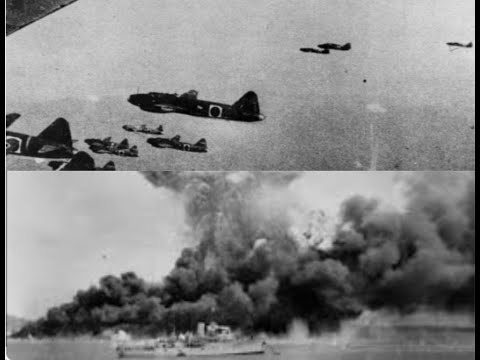
The air raid on Darwin was the single deadliest foreign attack on Australian soil, a day of infamy that many argue was deliberately downplayed. The force descending upon the harbor was led by Vice Admiral Chuichi Nagumo, the same commander who had orchestrated Pearl Harbor just ten weeks earlier. The same pilots, flying Zeros and Kates, now brought their coordinated destruction to Australia’s northern doorstep.
At 9:58 a.m., the first bombs fell. The harbor, filled with ships and supplies, became a cauldron of fire and twisted metal. The USS Peary sank rapidly, taking 88 sailors with her. The Neptuna, loaded with depth charges, exploded with such force that windows shattered across town. Burning oil spread across the water, turning the sea into a literal inferno for those who jumped to escape the flames.
But the horror was compounded by a catastrophic failure in the chain of command. Twenty-three minutes before the attack, Father John McGrath on Bathurst Island radioed a warning: “An unusually large air formation of aircraft is flying south bound for Darwin.” The report was dismissed—mistaken for a group of returning American fighters. No sirens sounded. No one was warned.
The first wave lasted nearly 40 minutes, leaving nine ships sunk and 23 crippled. Just as survivors began to crawl from the wreckage, believing the nightmare was over, the second wave arrived at 11:58 a.m. This time, 54 land-based heavy bombers targeted the RAAF airfield and military installations, carpet bombing the town into a moonscape of craters. The post office was hit, killing nine including the postmaster and his family. The hospital was struck, doctors and nurses struggling to treat the wounded as ceilings collapsed around them.
When the last Japanese bomber turned north, over 250 people were dead. The harbor was a graveyard of masts poking through oily tides, and the sky was choked with soot. Darwin was neutralized—its front door shattered, the myth of Australian continental safety buried under rubble.
In the wake of the attack, panic swept through the ruins. Rumors of an imminent amphibious invasion sparked the Adelaide River Stakes—a chaotic exodus of thousands fleeing south. At the RAAF base, an ambiguous order led to 278 servicemen later accused of desertion, a stain that would take decades to vindicate. Prime Minister John Curtin’s government, fearing a morale collapse, drastically downplayed the casualties, initially claiming only 17 dead. The gap between the official story and the survivors’ reality created a divide that would haunt the nation.
Yet from the ashes, a new Australia emerged. The attack forced a radical pivot in foreign policy. “Australia looks to America, free of any pangs as to our traditional links or kinship with the United Kingdom,” Curtin declared. Darwin was rebuilt into a massive Allied military hub, a fortress that would launch counteroffensives across the Pacific. The Japanese had intended to paralyze Darwin, but their attack awakened a sleeping giant.
The echoes of that February morning still resonate. Every year on February 19th, a siren wails across Darwin at exactly 9:58 a.m. The city stops, remembering the 250 men, women, and children who perished. The lesson is clear: geography is no longer a shield, and vigilance is the price of survival.
But the story of Darwin is not just one of loss. It is a testament to resilience—a community that rebuilt from the ashes, a nation that found its strength, and a warning that even the farthest shores are never beyond the reach of war.
Yet the story of that morning cannot be fully understood without descending into the harbor itself, into the water where the fire met the sea and where ordinary men performed extraordinary acts. For while the bombs fell from above, a quieter, more desperate battle was being fought at eye level—in the oily, burning tide that swallowed the wounded and the brave alike.
Among the ships caught in the first wave was the USS Peary, an old four-stack destroyer that had seen better days but whose crew fought with a ferocity that belied her age. As the bombs walked across the harbor, the Peary was struck by a direct hit that tore through her deck and detonated her forward magazine. In seconds, the ship was transformed from a fighting vessel into a funeral pyre. Men were thrown into the water, many of them badly burned, their uniforms in tatters, their skin blistered by the flash of exploding ordnance.
It was there, in that churning, flaming water, that the true horror of the attack revealed itself. The oil that had spilled from ruptured tankers and sinking ships had ignited, creating a surface of fire that moved with the tide, indifferent to the men struggling to stay afloat. To swim was to burn. To stay still was to drown. Some sailors, seeing the flames closing in, chose to dive deep and hold their breath until their lungs screamed, surfacing only when the fire had drifted past—if it had drifted past at all.
But even in this cauldron, there were those who refused to abandon their mates. Aboard the Peary, as the ship listed and the order to abandon ship was given, a young gunner’s mate named John Smith—a name so ordinary it could belong to any of the thousands of young men who had sailed to the Pacific—remained at his post. He had been manning a .50-caliber machine gun, and even as the ship sank beneath him, he kept firing at the Japanese planes overhead, his tracers arcing into the smoke-choked sky until the water closed over his gun mount. He was later awarded the Navy Cross for his actions, but the men who survived that morning would say no medal could capture what they had witnessed.
The harbor was not the only place where courage asserted itself. On the wharf, where dockworkers had been laboring just moments before, the scene was one of utter chaos. Crates of supplies meant for the front lines were now shattered and burning. The air was thick with the stench of cordite, diesel, and charred flesh. Yet amid the destruction, ordinary civilians—clerks, laborers, cooks—did what they could. They dragged the wounded from the water, wrapped burns in whatever cloth they could find, and carried men to the few buildings still standing.
One such man was a wharf laborer named Thomas Kellow, who had been unloading ammunition when the first bombs fell. Instead of fleeing, he and a handful of others commandeered a small rowboat and began pulling survivors from the water, dodging the strafing runs of Japanese fighters that swooped low over the harbor. In the span of an hour, they rescued more than a dozen men, many of whom would have otherwise drowned or burned. Kellow never received a medal. He went back to work the next day, as soon as the fires had been contained. But his story, like so many others, became part of the quiet legend of Darwin—a legend of ordinary people doing extraordinary things when the world around them collapsed.
As the second wave receded and the skies finally fell silent, the full scale of the destruction began to sink in. The harbor was a charred graveyard. The town was a shell. And yet, even as the smoke still rose, something else was stirring—a grim determination that would come to define the Australian character in the years that followed.
But before that determination could take root, there was the matter of the dead. The bodies had to be collected, identified where possible, and buried. It was work that fell to the survivors, many of whom were themselves injured or in shock. The Darwin Town Hall, one of the few buildings still standing, was converted into a makeshift morgue. The living worked alongside the dead, and in that grim task, the true cost of the raid became undeniable.
Among the dead were not just servicemen but civilians—men, women, and children who had been going about their morning routines when the bombs fell. A schoolteacher named Margaret Lewis had been walking to the post office when the first bomb struck. She was killed instantly, her body found later beneath the rubble of a collapsed wall. Her story, like so many others, would be buried in the official reports, the true toll hidden from a public deemed too fragile to handle the truth.
And yet, even as the government in Canberra sought to control the narrative, the people of Darwin began to write their own. They wrote it in the way they cared for the wounded, in the way they rebuilt their homes, and in the way they refused to abandon the town that had been their home. The Adelaide River Stakes, that panicked exodus south, was not the end of the story—it was merely the first chapter of a long and difficult recovery.
Within days, the first supply convoys began to arrive from the south. Soldiers and civilians alike returned to the ruined town, not because they had to, but because they refused to let the Japanese win. The harbor was cleared, the wrecks salvaged or scuttled, and the airfield repaired. The USS Peary was later raised from the mud and sent to a scrapyard, but her flag—torn and stained with oil—was preserved and sent to the United States, a symbol of the bond forged in blood and fire.
And so Darwin began to rise again. It would take years, and the scars would never fully heal. But the city that emerged from the ashes was not the same city that had been so rudely awakened on that February morning. It was a city that knew, with a certainty born of experience, that the world was a dangerous place and that vigilance was not a choice but a necessity.
But the most enduring legacy of the Darwin raids was not written in the harbor or the town hall morgue. It was written in the minds of a generation of Australians who had believed, until that morning, that the war would never reach them. The bombs of February 19th shattered more than buildings—they shattered the comfortable assumption that distance meant safety. That realization would echo through Australian defense planning for decades to come.
Darwin itself became a symbol of that shift. The remote colonial outpost that had been caught sleeping was transformed into a fortress. Radar stations sprouted along the coastline. Anti-aircraft batteries ringed the harbor. American and Australian pilots flew patrols together, their aircraft droning through the tropical nights, a constant reminder that the war was now on Australia’s doorstep.
And yet, even as the city rebuilt, the government in Canberra continued to obscure the truth. The official casualty figures remained low, the story of the raid sanitized for public consumption. It would take years—decades—before the full extent of the tragedy was acknowledged. By then, many of the survivors had passed away, their stories buried with them, their sacrifices unrecorded in the history books.
Today, Darwin is a vibrant city. Its harbor sparkles in the tropical sun. Cruise ships dock where warships once burned. But beneath the surface, the memory remains. The annual siren at 9:58 a.m. is more than a ritual—it is a warning. Geography is no longer a shield. Vigilance is the price of survival. And the story of February 19th, 1942, is a reminder that even the farthest shores are never beyond the reach of war.
What do you think—has Australia truly learned the lessons of Darwin, or does the tyranny of distance still lull us into complacency today?
Report this article
Select a reason for reporting:






