January 1941. The Libyan desert is a frozen hell by night, a scorching furnace by day. Inside the supposedly impregnable fortress of Bardia, 40,000 Italian troops under General Annibale ‘Electric Whiskers’ Bergonzoli wait behind 29 kilometers of anti-tank ditches, barbed wire, and concrete bunkers. They have artillery, tanks, and orders from Mussolini himself to hold at all costs. Outside, 16,000 Australians of the 6th Division—shearers, clerks, and farmhands turned soldiers—receive orders that defy every military textbook: attack immediately, no long siege, no gentleman’s war.
The British High Command in Cairo had planned a slow, methodical siege. Major General Iven Mackay, a schoolteacher in civilian life, took one look at the plan and did the exact opposite. His men were outnumbered nearly three to one, but they had something the Italians didn’t: a refusal to follow the rules. “No long siege, no softening up, just a knife to the throat of the fortress,” the order came down. What happened next would become one of the most absurd and astonishing victories in military history.
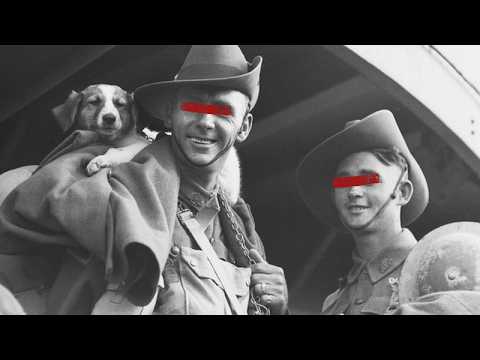
The assault began before dawn on January 3rd. The first obstacle was the wire—thick belts of barbed wire that could stop a charging bull. The Australians called for Bangalore torpedoes: long metal pipes stuffed with explosives, shoved under the wire by engineers crawling on their bellies under Italian fire. One by one, they lit the fuses and rolled away. When the dust settled, there was a path. But the anti-tank ditch—wide enough to swallow a house—still yawned open. No explosive could fill it. So the infantry did it the hard way: with picks and shovels, the same tools their fathers had used on dairy farms and wheat paddocks back home. They hacked at the walls until their hands bled, collapsing the sides through sheer stubborn effort, creating rough ramps out of dirt and rubble.
Through those ramps, the Australians poured into the fortress like water through a broken dam. Inside, the fighting was savage: grenades tossed through firing slits, bayonets in trenches, Thompson submachine guns at point-blank range in pitch-black bunkers. The Italians, told they faced half-starved colonial amateurs, found themselves facing men who fought like they had nothing to lose. The psychological collapse was instant, spreading from bunker to bunker like a bushfire in a dry summer.
And then came the song. As the Australians advanced through the trenches, clearing bunkers yard by yard, they were singing at the top of their lungs—a tune from a film released in Australian cinemas just months before: “We’re Off to See the Wizard” from The Wizard of Oz. Imagine being a 19-year-old Italian conscript shivering in a concrete bunker, hearing a chorus of Australian voices bellowing a children’s song through the smoke and screaming. You would probably surrender, too. And you would probably do it quickly.
The Italian defense did not so much break as evaporate. Bergonzoli fled westward along the coast road, abandoning his men and his guns. The rest of the garrison began to throw down their weapons in groups of a hundred, then a thousand, then ten thousand. By the time the dust settled on January 5th, the Australians had captured 36,000 to 40,000 prisoners—more than twice their own number—along with 400 artillery pieces, 130 tanks, and an entire fortified town. The men of the 6th Division stood in the Libyan sun, scratching their heads, and asking the only question that mattered: Where on earth were they supposed to put all these prisoners?
That question would become the real crisis of the battle. There were not enough guards, not enough trucks, not enough water or food for a captive population the size of a small city. Single diggers were handed columns of 2,000 Italians each and told to march them east towards Egypt. The ratio sometimes worked out to one Australian guard for every several hundred prisoners. If the Italians had wanted to rise up, they could have overpowered their captors in seconds. But they didn’t want to rise up. They wanted sandwiches and water and a long nap. Most of all, they wanted to get as far away from those singing lunatics in slouch hats as humanly possible.
The victory at Bardia was immediately absorbed into the British narrative of Operation Compass, with newsreels showing British tanks and commanders shaking hands for the cameras. The Australians, who had actually done the fighting, were mentioned in passing as colonial troops. But the men who were there knew exactly what had happened. And for them, that was enough.
The British staff officers in Cairo, still digesting the news, sent a flurry of messages demanding details. How had a force of 16,000 captured 40,000 in three days? The Australians, when asked, offered explanations that ranged from the unhelpful to the openly mocking. One report simply stated that the Italians had “come quietly, like.” Another suggested the enemy had been “a bit shy on the whole.” The British, expecting neat tactical analyses, were left with nothing but a headache and a growing suspicion that the colonials were not taking the war seriously.
But the war was about to take them seriously. Even as the diggers sorted through the chaos of Bardia, the next objective was already being marked on maps in Cairo. Tobruk, another fortress, another port, another Italian garrison. The 6th Division, still dusty and short on sleep, was told to prepare for a repeat performance. This time, however, the Italians would not be caught quite so flat-footed. Reinforcements had been rushed in. The defenses at Tobruk were deeper, the minefields thicker, and the defenders had heard the rumors—the Australians sang, they came at you with shovels, they did not stop.
Mackay’s men, for their part, were less concerned with the enemy’s preparations than with their own supplies. The capture of Bardia had yielded mountains of Italian equipment, and the Australians, ever practical, had helped themselves. Italian boots replaced their worn-out issue. Italian tinned cheese and wine appeared in their rations. Some even swapped their slouch hats for Italian sun helmets, purely for the novelty. A British liaison officer, arriving to assess the spoils, was horrified to find Australian soldiers driving captured Italian trucks around the perimeter, honking the horns and shouting cheerful insults in broken Italian at their prisoners.
“You can’t just take enemy vehicles for a joyride,” the officer protested.
“Why not?” a digger replied. “They’re not using them.”
There was, however, a darker side to the aftermath. The prisoners had to be fed, and the Australian supply lines were stretched to breaking point. For a few days, the Italians received the same rations as their captors—bully beef, hard biscuits, and tea—but the sheer numbers meant that even that meager fare was soon running short. The Australians, never ones to let a mate go hungry, cut their own portions without a word of complaint. “They’re beaten,” one sergeant said. “No need to starve them.” It was a sentiment that would have puzzled the propaganda writers back in Rome, who had painted the Australians as savages.
The Italians, for their part, were bewildered by the treatment they received. Many had expected execution or torture. Instead, they got cigarettes, water, and a guard who mostly ignored them. One Italian officer, a man who had served in Ethiopia and considered himself a judge of soldiers, later wrote in his diary that the Australians were “the strangest enemy I have ever faced. They fight like demons and then offer you their last biscuit.” He concluded, with a note of grudging admiration, that they were “not soldiers at all, but a species of armed larrikin.”
That larrikin spirit was already looking ahead. The men of the 6th Division knew that Tobruk would be harder. They knew that the Italians would fight better behind deeper concrete, and they knew that the British generals would be watching even more closely, ready to claim credit if things went well and to blame the colonials if they didn’t. But none of that mattered much to the diggers. What mattered was the next fight, the next mate beside them, and the next cup of tea. As one private put it, scratching the sand from his hair, “Bardia was a bit of a lark. Tobruk might be a proper stoush. Let’s get it over with.”
The song, of course, had spread. By the time the division moved west, it was no longer just a tune from a film. It had become a marching cadence, a badge of identity, a two-fingered salute to every staff officer who had ever doubted them. They sang it as they loaded trucks and cleaned rifles and wrote letters home. They sang it as they prepared to do it all again. And somewhere in the desert ahead, the Italian garrison of Tobruk listened to the wind and wondered what fresh madness was coming for them.
Tobruk would indeed be harder. The wire was thicker, the concrete deeper, and the Italians had learned to fear the singing. But the 6th Division had learned something too—that they could do the impossible with a shovel, a song, and a mate beside them. When the assault came on January 21st, it took them just over a day to crack the perimeter. Another 25,000 prisoners, another fortress fallen, another British dispatch that barely mentioned their name.
By the time the division was pulled out for Greece, the legend had already outrun them. Back in Australia, newspapers ran stories of the singing soldiers, the ditch-diggers, the men who took 40,000 prisoners and then apologised for the lack of sandwiches. The diggers themselves, when they heard, just shrugged. “We were just doing our job,” one wrote home. “And we were a bit bored.”
Bergonzoli, the man with the electric whiskers, spent the rest of the war in a prison camp in India, writing memoirs that blamed everyone but himself. He never quite understood what had hit him. The Australians never bothered to explain. They had moved on to the next fight, the next ditch, the next impossible thing.
Years later, an old digger was asked by a schoolteacher what Bardia had taught him. He thought for a long moment, then said, “That you don’t need to be a proper soldier to win a war. You just need to be too stubborn to lose.” The teacher waited for more, but the old man had already turned away, reaching for his tea. Some things, after all, don’t need explaining.
What do you think—was Bardia a stroke of genius, or just the luckiest bunch of larrikins in history?
Report this article
Select a reason for reporting:






