The monsoon rain hammered the corrugated metal roof of the Australian task force headquarters at Nui Dat with such violence that conversation inside was almost impossible. It was May 1966, and Major Harry Smith sat across a battered wooden table from an American adviser—a lieutenant colonel from the 173rd Airborne Brigade who had come to observe Australian operations and offer suggestions for improvement.
The American had served two tours in Vietnam already and carried himself with the confidence of a man who understood jungle warfare. He spread a map across the table, pointing to an area northwest of the base that intelligence indicated was heavy with Viet Cong activity. The colonel explained his recommended approach with the certainty of established doctrine: insert a company-sized element by helicopter at first light, conduct aggressive sweeps through the suspected area, establish fire support bases for artillery coverage, maintain constant radio communication with headquarters, and extract by nightfall.
It was textbook American tactical planning—refined through two years of combat operations, proven effective in dozens of similar missions. Harry Smith listened politely, nodding at appropriate moments, his weathered face revealing nothing. When the colonel finished, Smith thanked him for the advice, then quietly explained what the Australians would actually do.
They would insert a single patrol of four men on foot three days before the main operation. Those four men would move no more than two kilometers in 72 hours. They would not establish radio contact unless absolutely necessary. They would observe enemy patterns without engaging. They would sleep in shifts of 20 minutes, never more than two men resting simultaneously. They would not cook food, would not smoke, would not make any sound louder than breathing. And when the main force inserted, those four men would guide them to enemy positions that had been watched for three days straight—positions where the enemy’s routine was understood down to the minute, where weak points had been identified, where the fight could be won before it started.
The American colonel stared at Smith like he had suggested flying to the moon. Three days for four men to move two kilometers. That was not warfare. That was paralysis. That was the kind of overcautious planning that let the enemy slip away, that surrendered the initiative, that violated every principle of aggressive combat operations.
Smith saw the skepticism and was not offended. He had seen this reaction before—from American advisers, from British observers, from anyone who had not learned to fight the way Australians had learned to fight. He simply said something that the colonel would remember for the rest of his life.
“We do not fear the jungle, Colonel. We live in it. The Americans fear it, so they try to dominate it with firepower and speed. The Vietnamese grew up in it, so they use it for cover and concealment. But we Australians—we become part of it. We do not fight the jungle. We join it. And once you join it, once you truly become part of the environment, the enemy cannot find you because you are not foreign anymore. You are just another tree, another shadow, another sound that belongs.”
The colonel left Nui Dat unconvinced, filed a report noting that Australian methods appeared excessively cautious, and recommended against adopting their techniques for American forces. Three weeks later, that same colonel watched from a helicopter as four Australian SAS soldiers walked an entire infantry company through a Viet Cong battalion headquarters, placed them in perfect ambush positions, and destroyed an enemy force ten times their size without the Australians firing a single shot until the trap was sprung. The colonel never filed another report criticizing Australian methods.
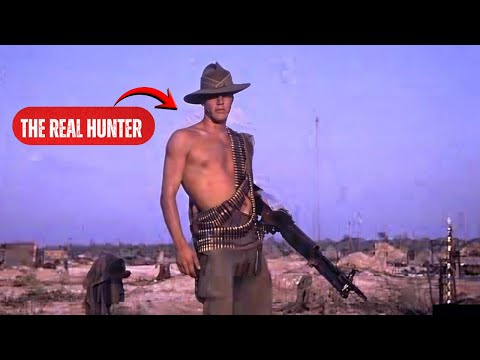
To understand why Australians fought differently in Vietnam, you have to go back further than Vietnam. You have to go back to the jungles of Malaya, where from 1948 to 1960, Australian soldiers learned lessons that would shape their doctrine for generations.
The Malayan Emergency was a counterinsurgency war against communist guerrillas who had mastered jungle warfare after fighting the Japanese during World War II. These were not farmers with rifles. These were professional soldiers who could move through triple-canopy rainforest without leaving traces, who could survive for months without resupply, who had informant networks in every village and ambush positions prepared on every trail.
The British initially tried to defeat them with conventional military force—large-unit sweeps, aggressive patrolling, overwhelming firepower. It failed completely. The communists simply melted into the jungle when British forces approached, then returned when they left. For three years, the British lost soldiers without making progress, bleeding casualties in ambushes they never saw coming, chasing an enemy they could not find.
The Australians arrived in Malaya in 1950 and took a different approach. Instead of trying to dominate the jungle with force, they studied it. They learned from indigenous trackers who could read signs in the forest that Western soldiers did not even know existed. They observed how communist guerrillas moved, where they camped, how they foraged for food, what patterns they followed. And most importantly, they learned patience.
An Australian patrol in Malaya might spend six weeks in the jungle tracking a single communist cell. Six weeks of moving so slowly that they covered less ground than a conventional patrol covered in six hours. Six weeks of sleeping on the ground in monsoon rain, eating cold rations, never bathing, never changing clothes, becoming so filthy and covered in jungle rot that they smelled like the decomposing vegetation around them.
But at the end of those six weeks, when they finally located the communist camp and called in the ambush, the operation succeeded because the enemy had no idea they were being hunted. The Australians had learned something fundamental that would define their approach to warfare for the next fifty years.
In jungle warfare, patience is more lethal than firepower. Silence is more powerful than aggression. Understanding the environment is more valuable than dominating it.
When the Malayan Emergency finally ended in 1960 with a decisive victory for government forces, Australian soldiers had accumulated twelve years of continuous jungle warfare experience. They had refined techniques for long-range patrolling, developed doctrine for small-unit operations, and created training programs that broke soldiers down and rebuilt them as jungle specialists. They had become experts in a type of warfare that most Western militaries did not even recognize as a distinct discipline.
So when Australia committed forces to Vietnam in 1965, they did not arrive as students learning a new environment. They arrived as masters, bringing expertise that had been purchased with blood in a very similar jungle against a very similar enemy. The Americans were fighting their first jungle war. The Australians were fighting their second. The difference showed immediately.
The first major engagement that revealed the Australian approach was the Battle of Long Tan, fought on August 18, 1966. A single company of 108 Australian soldiers—D Company, 6th Battalion, Royal Australian Regiment—encountered a Viet Cong force estimated at over 2,000 fighters in a rubber plantation during a monsoon storm so violent that artillery support was nearly impossible and air support was completely grounded.
American doctrine in this situation was clear: when encountering a vastly superior force, you called for immediate extraction, pulled back to defensible positions, and waited for reinforcements and overwhelming fire support before engaging. The Australians did the opposite. They attacked—not with a suicidal charge, but with a calculated aggression that exploited every advantage their training had given them.
D Company’s commander, Major Harry Smith—the same officer who had explained Australian philosophy to the skeptical American colonel weeks earlier—made a tactical decision that American officers considered insane. Instead of withdrawing when they realized they were outnumbered twenty to one, instead of calling for extraction and waiting for reinforcements, Smith ordered his company to hold position in the open rubber plantation and engage the enemy force head-on.
His reasoning was coldly logical and based on principles that Australian training had drilled into every soldier. The Viet Cong had superior numbers, but they expected the Australians to retreat. They expected panic, confusion, the kind of desperate fighting withdrawal that American forces often executed when encountering superior numbers. Smith knew that if D Company broke and ran, they would be hunted down and slaughtered in the jungle. The Viet Cong were faster in the dense vegetation, knew the terrain better, and had positioned blocking forces to intercept any retreat. But if D Company held their ground and fought, they could use their superior training, their better weapons, and their experience with fire discipline to create a kill zone that numbers could not overcome.
The battle lasted four hours in driving rain that reduced visibility to meters. The Australians fought with a discipline that was almost mechanical—conserving ammunition, calling fire missions with precision that defied the chaotic nature of the engagement, refusing to panic even as Viet Cong human-wave attacks came within grenade-throwing distance of their positions. At one point, an Australian platoon was nearly overrun and called for artillery fire on their own position—danger close. Trusting their training and their fire support coordination more than they feared the explosions that would land meters away, the artillery came in with accuracy that saved the platoon and shattered the Viet Cong assault.
When the monsoon finally cleared enough for air support to arrive, the Viet Cong broke contact and withdrew, leaving behind 245 confirmed dead and unknown additional casualties. D Company had suffered 18 killed and 24 wounded—casualty rates that were significant, but nowhere near the slaughter that should have occurred when 108 men engaged 2,000. The mathematics of the battle defied conventional military wisdom. The Australians should have been destroyed. Instead, they had won decisively.
American observers studying the battle were baffled. How had an under-strength company survived against those odds? The answer was not luck. It was training that had created soldiers who did not panic, who trusted their doctrine even when surrounded, who understood that jungle warfare was not about who had more men, but who made better decisions under pressure.
But Long Tan was just the beginning. It was a conventional engagement, a stand-up fight where the Australians had demonstrated superior discipline and training. The real difference in Australian methodology showed in the hundreds of small operations that never made headlines—the reconnaissance patrols and ambush operations that were the daily reality of the war.
Australian SAS patrols in Phuoc Tuy province operated on a completely different timeline than American forces. A typical American long-range reconnaissance patrol lasted five to seven days. The patrol would insert by helicopter, move rapidly to assigned objectives, gather intelligence, and extract. Speed and coverage were the priorities. An Australian SAS patrol doing similar work would stay in the jungle for three to four weeks. They would move at speeds that made American planning officers think there had been a reporting error—100 to 200 meters per hour was standard. In thick terrain, they might cover only 50 meters in 60 minutes. They would spend entire days in a single observation position, watching a trail junction or a suspected enemy base camp, documenting every detail of enemy movement patterns.
The contrast was so extreme that American and Australian units measuring success by different standards created confusion in joint operations planning. An American commander would look at an Australian patrol report showing ten kilometers covered in three weeks and assume the patrol had accomplished nothing. Then he would read the intelligence those ten kilometers had produced—detailed documentation of enemy supply routes, identification of unit types, schedules of movement, locations of base camps, patterns of behavior—and realize that the slow Australian patrol had gathered more actionable intelligence than five fast American patrols combined.
The secret was in what Australian soldiers called hard routine—a set of patrol procedures so strict they seemed obsessive to outsiders, yet created operational security that was nearly impenetrable. No smoking, no cooking, no unnecessary movement, no talking above a whisper. Soldiers would spend hours in the same position, controlling their bladders, ignoring insects crawling over their skin, resisting the urge to shift weight or stretch cramping muscles.
American soldiers who accompanied Australian patrols often found hard routine almost unbearable. The discipline required was psychological torture—hour after hour of absolute stillness, of silence so complete that even breathing had to be controlled. But the results were undeniable. Australian patrols could be positioned within meters of enemy forces and remain undetected for days.
In November 1966, a four-man SAS patrol with the call sign 32 Alpha inserted west of Nui Dat to locate a suspected Viet Cong logistics hub. On day four, they found it. Instead of reporting the find and calling for an immediate strike, the patrol commander decided to watch.
For eleven days, those four men observed the supply depot from less than 100 meters away. They counted every porter, mapped every bunker, noted every guard rotation. They lay in the same position, eating cold rations, urinating into bottles they carefully buried, never breaking discipline. When they finally extracted on day fifteen, the report read like an engineering blueprint of the enemy facility.
The strike force inserted three days later. The operation lasted twelve minutes. The supply depot was destroyed completely—over fifty enemy killed, massive stores eliminated, and zero Australian casualties.
The Viet Cong survivors genuinely believed they had been betrayed by an informant. They could not comprehend that four foreign soldiers had watched them for eleven days from 100 meters away without being detected. The concept was outside their understanding of what was possible.
From 1966 to 1971, Australian forces in Phuoc Tuy province engaged in hundreds of operations. Confirmed enemy killed numbered well over 2,000. Australian killed in action during the same period totaled 521 across all units. The difference was not courage. American soldiers were just as brave. The difference was doctrine—a fundamental approach to what jungle warfare meant.
Americans saw the jungle as an obstacle to overcome through force and technology. Australians saw it as an environment to join and use as a weapon against the enemy. Americans measured success through body counts. Australians measured success through intelligence gathered and missions completed. Americans believed speed and aggression were the keys to victory. Australians believed patience and invisibility were the ultimate advantages.
These were not small tactical differences. They were entirely different philosophies of warfare applied to the same conflict, in the same terrain. And in the jungles of Vietnam, where visibility was measured in meters and the enemy had been fighting in that terrain for generations, the Australian philosophy was proving devastatingly effective.
The cultural roots went deeper than military doctrine. Australia is a continent where nature kills the unprepared—where the outback can claim lives within days if you do not respect it. Australians grew up learning that you do not conquer nature; you learn to live within it. This was not military strategy. This was cultural DNA that translated directly into how Australian soldiers approached warfare in hostile environments.
Australian soldiers collected and studied local plants, learning which were edible, which were poisonous, which could be used for medicine or camouflage. They paid attention to animal behavior—birds falling silent meant human presence nearby, certain insect sounds indicated time of day. They adapted their clothing and equipment based on what actually worked, cutting trousers short to prevent leeches, modifying boots for ventilation, throwing away unnecessary gear. American military culture viewed this improvisation with suspicion. Australian military culture encouraged it. Results mattered more than regulations.
The psychological dimension was equally important. Australian soldiers were trained to think of themselves as hunters, not fighters. A fighter engages the enemy and defeats him through superior violence. A hunter studies the prey, understands its behavior, positions himself perfectly, and kills efficiently when the moment is right.
This hunting mentality pervaded Australian tactical thinking. When planning an ambush, they would spend hours discussing the enemy’s likely behavior. What time would they move? What formation would they use? Where would the point man be looking? The ambush site was selected not for terrain advantages, but for psychological ones—where would the enemy feel safe? Where would they relax their guard?
The actual ambush was executed with a patience that bordered on cruelty. Australian soldiers would let enemy forces walk past their positions if conditions were not perfect. They would watch targets they could easily kill and choose not to fire because the tactical situation was not optimal. They would endure hours of tension, waiting for the perfect moment, refusing to take shots that were merely good when they could wait for shots that were perfect.
This discipline came from training designed to break soldiers down and rebuild them with different instincts. Australian SAS selection had a failure rate exceeding 90 percent. It was deliberately designed to push candidates past the point where normal human instincts functioned—to find the small percentage of men who could operate effectively when exhausted, stressed, frightened, and pushed beyond normal human endurance.
One exercise became notorious for its psychological brutality. Candidates would be placed in a simulated patrol base and told to maintain absolute silence and stillness for twelve hours while instructors attempted to detect them. The instructors would walk within meters, make noise to provoke reactions, create situations designed to make candidates move or respond. Candidates who flinched, who shifted position, who made any sound or movement, were failed immediately. The exercise was not testing physical ability. It was testing psychological control.
The men who passed were not necessarily the strongest or the fastest. They were the ones who could control their minds and bodies to a degree that most people could not comprehend. These men—forged in selection courses that tested psychological limits more than physical ones—became the soldiers who could lie in ambush for days, who could remain motionless while enemy soldiers walked past, who could watch targets without engaging and feel no frustration at the missed opportunity because they understood that patience was the ultimate weapon.
The tactical results were documented in hundreds of small operations that never received the attention of major battles, but which cumulatively shaped the war in Phuoc Tuy. Night after night, Australian patrols slipped into the jungle and waited—silent, motionless, patient—while the enemy walked into kill zones they never saw coming.
And when the war finally ended, when the last Australian soldiers boarded their flights home, they carried with them a legacy that would influence military thinking for generations. The Americans would study Long Tan and shake their heads at the mathematics. The British would analyze the Malayan Emergency and credit the Australians with rewriting the book on jungle warfare. And the Viet Cong, who had fought the French and the Americans and the South Vietnamese, would remember the Australians differently—not as an enemy they could outlast, but as a predator they could never quite see.
In the end, the jungle did not belong to the side with the most firepower. It belonged to the side that learned to disappear into it.
What do you think—does modern warfare still have room for this kind of patience, or has technology made the hunter obsolete?
Report this article
Select a reason for reporting:






