He was the man Joseph Stalin himself compared to Heinrich Himmler—the architect of Soviet terror, the overseer of gulags, and the executor of Stalin’s darkest commands. Lavrenti Beria was feared by millions, yet his own downfall would be as brutal and dramatic as the purges he orchestrated.
For decades, Beria controlled the Soviet secret police, leaving a trail of executions, deportations, and unspeakable crimes. But when Stalin died, the hunter became the hunted. In a single, shocking moment, the most powerful man in the USSR would be dragged from his seat, begging for mercy.
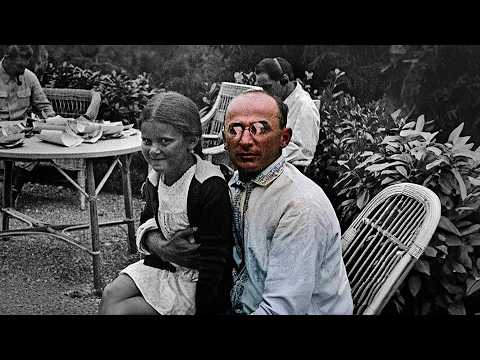
His story begins far from the halls of power. Born into a modest family, Beria’s early life was marked by adaptability and a chilling lack of scruples. In 1917, as the Russian Empire crumbled, he claimed allegiance to the Bolsheviks. Yet just three years later, he was working for the anti-Bolshevik Musavatists in Azerbaijan. When the Red Army seized the region, Beria was captured and sentenced to death. His execution seemed certain, but fate intervened—the chaos of the moment saved his life.
Instead of vanishing into a prison cell, Beria turned his captivity into a career opportunity. By 1922, he had become deputy chief of the Georgian OGPU, the precursor to the NKVD. His rise was swift and bloody. In 1924, he helped crush a nationalist uprising in Georgia, resulting in the execution of around 10,000 people. That massacre cemented his reputation as a man who carried out orders with ruthless efficiency.
Beria’s loyalty to Stalin was absolute, and his methods were brutal. He fabricated a plot to assassinate Stalin, “thwarting” it personally to win the dictator’s trust. From then on, he became the central figure in the Great Purges, coordinating arrests, interrogations, and executions on an industrial scale. Intellectuals, scientists, Red Army officers, and ordinary peasants were dragged to prisons or shot without trial. Fear became a way of life—the knock at midnight, the disappearance, the silence.
In 1938, Beria took control of the NKVD, and his first act was to purge the organization itself. Any agent suspected of loyalty to his predecessor was removed or executed. State terror was now his exclusive domain. He expanded the gulag system, turning forced labor camps into a cornerstone of the Soviet economy. More than 500 camps were established or expanded, where human lives were disposable resources.
During World War II, Beria’s role only grew. He proposed the Katyn massacre, resulting in the murder of nearly 22,000 Polish officers and intellectuals. He also ordered a purge of the Red Army, executing approximately 30,000 military personnel, including experienced officers. This decision would cripple Soviet defenses when Nazi Germany invaded. Despite his lack of military training, Beria was made a Marshal of the Soviet Union and put in charge of the nuclear program, using gulag labor in uranium mines where mortality rates were staggering.
But Stalin’s death in 1953 changed everything. Beria seemed poised to seize power, but his rivals, led by Nikita Khrushchev, moved against him. In a carefully orchestrated meeting, Beria was accused of treason and arrested on the spot. He was dragged from the room, screaming and begging for his life. The man who had commanded decades of terror suffered a complete emotional collapse.
The trial was swift and secret. Beria was sentenced to death, and on December 23, 1953, he was executed by a single shot to the head. His body was cremated immediately. But even in death, mysteries remained—some claimed he had been executed months earlier, and a double had been used at the trial. His legacy of fear, however, could not be erased.
Yet the most disturbing revelations were still to come. In the years following his execution, Soviet investigators and later historians began piecing together a portrait far darker than even his political crimes suggested. Beria, it seemed, had been not only a mass murderer in the service of the state—he had also been a predator operating on his own, private terms.
Testimonies from former bodyguards and drivers painted a chilling picture. Beria reportedly prowled the streets of Moscow at night in an official limousine, his guards scanning the sidewalks for young women. They were seized at random, pulled into the car, and taken to his mansion on Malaya Nikitskaya Street. Few were ever seen again.
Inside that residence, according to accounts that emerged decades later, lay a hidden world of horror. Investigators who examined the property after his arrest described a basement chamber connected to underground passages—a space outfitted with restraints and soundproofing. Some testimonies claimed that human remains were later unearthed in the garden, buried beneath the soil where Beria had once walked undisturbed.
Whether every detail of these accounts is true remains debated among historians. Some were extracted under duress from men eager to distance themselves from a fallen master. Others, however, were corroborated by multiple independent witnesses, including women who survived the abductions and lived in silence for years, terrified that speaking would cost them their lives.
What is certain is that Beria’s crimes extended far beyond the ideological purges that made him infamous. He was a man who treated human beings—whether political prisoners, Polish officers, or young women on the street—as objects to be used and discarded. The system he built did not merely enable his cruelty; it shielded him from any consequence.
Foreign intelligence services, too, were not entirely blind. Declassified files suggest that British and American agencies had gathered fragments of information about Beria’s personal atrocities during the war years. But in the cold calculus of geopolitics, such knowledge was set aside. Beria was useful, and useful men were left undisturbed.
His fall, when it came, was not the result of moral reckoning. It was a reconfiguration of power after Stalin’s death—a desperate alliance of rivals who understood that if they did not strike first, Beria would destroy them one by one. Khrushchev, Malenkov, and Marshal Zhukov acted not as judges but as survivors.
And yet, the manner of his end carried a strange, almost poetic cruelty. The man who had ordered thousands to their knees, who had signed death warrants without a flicker of hesitation, died on his own knees, weeping, begging, clutching at the boots of his executioners. It was a final humiliation that even his worst enemies could not have scripted more perfectly.
But the story does not end with the bullet. After the cremation, the Soviet state moved quickly to erase Beria from memory. His name vanished from official histories. His image was airbrushed from photographs. Officials who had served under him were quietly reassigned or arrested. The system he had helped build simply swallowed him whole, as it had swallowed so many others.
For decades, the full truth of Lavrenti Beria remained locked in classified archives. Only after the collapse of the Soviet Union did researchers gain access to files that revealed the scale of his crimes—and the unsettling fact that the machinery of terror he perfected did not die with him. It was inherited, reformed, and in some ways continued.
The archives revealed something else, too—something that troubled even the hardened investigators who had spent years cataloguing Beria’s crimes. His personal files were not merely records of state business. They contained photographs, private ledgers, and lists of names written in his own hand—women, mostly, with dates and addresses noted beside them. Some names had checkmarks. Others had crosses. The meaning was never officially confirmed, but those who studied the documents drew their own grim conclusions.
Among the files were also letters. Some were from terrified relatives of the disappeared, begging for information. Others were correspondence between Beria and his subordinates, written in the cold, bureaucratic language of quotas and transport schedules. One memo, dated 1940, calmly requested an increase in the ‘throughput’ of a Siberian camp, citing labor shortages in the timber industry. The word ‘throughput’ referred to human beings.
What unsettled researchers most was the sheer ordinariness of the paperwork. There were no dramatic confessions, no moments of doubt. The documents read like the records of any large enterprise—efficient, methodical, and utterly devoid of conscience. Beria had not been a monster in the shadows; he had been a manager, and the Soviet state had been his factory floor.
His family, meanwhile, faded into obscurity. His wife and son were arrested shortly after his execution, accused of complicity in his crimes. His son, Sergo, spent years in prison before being released during the Khrushchev thaw. He would later spend decades trying to clear his father’s name—an effort that ultimately failed. The state had decided what Beria would be remembered as, and no amount of legal maneuvering would change that verdict.
Yet the memory of Beria did not disappear entirely. It survived in whispers, in the stories passed down by gulag survivors, in the songs and poems of those who had lost everything. In the camps, his name was spoken with a particular kind of dread—not the fear of a distant bureaucrat, but the fear of a man who might appear at any moment, unannounced, to inspect his handiwork.
And in the corridors of power, his methods endured. The men who brought him down did not dismantle the system he had built. They simply took control of it. Khrushchev, who had orchestrated Beria’s fall, would himself be ousted a decade later, accused of erratic behavior and abuse of power. The machinery of fear, once assembled, proved remarkably difficult to switch off.
By the time the Soviet Union collapsed in 1991, the files had been opened, the archives unsealed, and the full scope of Beria’s crimes laid bare for the world to see. Yet even then, the story felt incomplete. Too many documents had been destroyed. Too many witnesses had died. Too many graves had never been found.
What remained was a portrait painted in fragments—a man who had risen from nothing, seized absolute power, and then lost everything in a single, humiliating moment. A man who had commanded millions and died alone, on his knees. A man whose name would forever be spoken alongside Himmler’s, as a warning of what happens when absolute power is placed in the hands of someone who feels nothing at all.
And yet, one question still lingers in the corridors of history. If Beria had outmaneuvered Khrushchev in those tense days of 1953, would the Soviet Union have become something even darker? Some historians argue he was preparing reforms—releasing prisoners, loosening control—not out of mercy, but to secure his own throne. Others insist he would have turned the USSR into a personal fiefdom, with the secret police answering only to him.
We will never know. What we do know is that the system he perfected outlived him. The gulags were slowly dismantled, but the surveillance state, the political prisons, the quiet disappearances—these did not vanish. They simply changed their names.
Today, Lavrenti Beria remains a chilling case study in how absolute power corrupts absolutely. His story is a reminder that the most dangerous men are not always the loudest, but the ones who operate in the shadows, signing death warrants with a steady hand.
What do you think—was Beria a product of his system, or did he make it worse? And could a man like him rise again in today’s world? Share your thoughts in the comments below.
Report this article
Select a reason for reporting:






