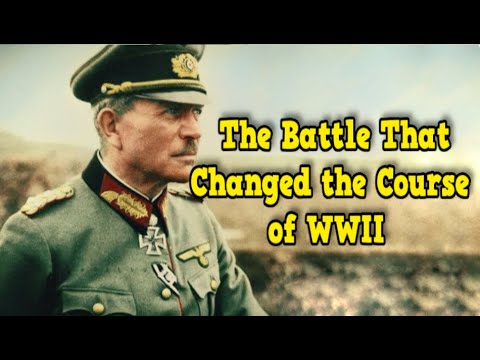
On July 3, 1941, just ten days after the largest military operation in history had begun, General Halder, Chief of Staff of the German Army High Command, wrote in his diary with unwavering confidence: “It is no exaggeration to say that the Red Army has already been largely defeated… Soviet surrender in the next few days is to be expected.” The German war machine had sliced through Soviet defenses with terrifying speed, and the fall of Moscow seemed imminent. Yet barely a month later, on August 11, Halder’s tone had turned to stunned disbelief: “It is increasingly clear that we have underestimated the Russian Colossus… When we destroy a dozen divisions, another twelve instantly appear in their place.” What happened in that single month of July 1941 that shattered the myth of German invincibility? The answer lies in a city that would become a graveyard for the Blitzkrieg: Smolensk.
The German plan was as audacious as it was predictable. Army Group Center, having already captured Minsk and inflicted over 300,000 Soviet casualties, set its sights on Smolensk—a vital communications hub and the last major obstacle before Moscow, just 350 kilometers away. The strategy called for a massive pincer movement: General Hoth’s Third Panzer Army would strike from the north, while Guderian’s Second Panzer Army would thrust from the south, trapping the Soviet defenders in a giant cauldron. With over 400,000 men and 1,000 tanks, the Germans expected a swift, decisive blow.
But the Soviets were not idle. Despite catastrophic losses, the Red Army was reorganizing at breakneck speed. Marshal Timoshenko scraped together 13 armies—some retreating from Minsk, others rushed from the rear—totaling 550,000 soldiers and 1,500 tanks. The battle began on July 10 with simultaneous German attacks that tore through weak Soviet defenses. The panzers advanced at breakneck speed, but the infantry, marching on foot and with horses, fell far behind. “We marched between 30 and 35 kilometers a day,” recalled one German officer, “and the horses have great difficulty on the sandy roads.” The gap between the fast-moving tanks and the struggling infantry would prove costly.
By mid-July, the panzers had created two massive penetrations, leaving four Soviet armies trapped in a salient west of Smolensk. Yet the city itself remained just out of reach. The infantry’s delay meant the encirclement was incomplete—a narrow corridor in the northeast allowed Soviet reinforcements to pour in. “Yesterday one regiment marched 54 kilometers on foot,” wrote Heinrich Haape, a German soldier, “and another 47. Doing it once is possible, but after numerous marches of 30 to 40 kilometers, it is a tremendous thing. No one sleeps at night.” The Germans were winning ground, but at a crippling pace.
On July 16, Hitler issued Directive 31, a decision that would haunt the Wehrmacht. Instead of driving on to Moscow, Hoth’s panzers were ordered north to support the attack on Leningrad, and Guderian’s forces were sent south for the coming battle of Kiev. “These were undoubtedly very tense moments,” as the generals fumed, forced to divert their eyes from the ultimate prize. Meanwhile, the Soviets launched furious counterattacks along the entire front, throwing newly mobilized troops—many with little combat value—into the meat grinder. The German advance slowed to a crawl.
Not until July 27 did the Germans finally complete the encirclement of Smolensk, and the city’s garrison held out until August 5. The cost was staggering: nearly 450,000 Soviet casualties, and 100,000 German. But more than numbers, the battle exposed a terrifying truth. The Red Army could absorb punishment and still come back swinging. “When enemy units are destroyed, the Soviets send new troops to the front and attack again,” Haape wrote in despair. “How the Russians get it is beyond my knowledge… We will most certainly have to remain here in Russia… What a wonderful prospect.” The blitzkrieg had met its match—and the road to Moscow would only grow darker.
The immediate aftermath of Smolensk forced a reckoning inside the German high command that no one had anticipated. The panzer generals—Guderian, Hoth, and Hoeppner—had watched their divisions bleed through July, their tanks worn down by dust, mines, and relentless Soviet counterattacks. “Our armored divisions are at roughly fifty percent of their original strength,” Guderian warned in a memorandum to the OKH, “and the men are exhausted beyond measure.” The dash to Moscow, once a matter of weeks, now looked like a gamble with no margin for error.
Yet the Führer saw things differently. On August 4, Hitler summoned the commanders to his headquarters at Rastenburg, where he delivered a rambling monologue that left his generals cold. The priority, he insisted, was not Moscow but the industrial heartland of the Ukraine and the coal and steel of the Donbas. “Moscow is nothing more than a geographical expression,” he reportedly snapped. Army Group Center was to stand on the defensive, hand over its panzers, and wait. The generals exchanged glances—they had been given a reprieve from a race they could no longer win, but the prize they wanted most was being taken from them.
What the Germans did not fully grasp was how close the Smolensk fighting had come to breaking the Red Army’s back—or how quickly the Soviets were learning. The counterattacks around Yelnya, though costly and poorly coordinated, revealed a new pattern: Soviet commanders were no longer simply throwing men forward. They were massing artillery, coordinating with Katyusha rocket batteries, and probing for weak points. The Germans, dug in along the Desna and the Ugra, began to notice something unsettling. “The enemy is no longer the same enemy we met in June,” one divisional commander reported. “He is cautious, he is patient, and he is learning.”
By mid-August, the front around Smolensk had settled into a brutal stalemate. German infantry, now finally in position, dug trenches and strung barbed wire—the very sort of positional warfare the Wehrmacht had sworn to avoid. Supply lines stretched thin across hundreds of kilometers of scorched earth, and partisan raids in the rear grew bolder by the day. “We have won a great victory,” Halder confided to his diary on August 11, “and yet I cannot shake the feeling that we have already lost the war.” The words of a man who had once predicted Soviet collapse in days now read like a confession of doubt.
The battle for Smolensk did not end the war—far from it. But it marked the moment when the German timetable began to slip beyond recovery. The window for a decisive blow before winter had narrowed to a sliver, and the Red Army, battered but unbowed, was already planning its next move. In the forests and hills around Yelnya, a new and even more terrible struggle was about to unfold—one that would test the limits of both armies and leave the road to Moscow stained with blood.
The men of Army Group Center sensed the shift before their generals did. In the soggy August heat, infantrymen who had marched across half of Russia now found themselves digging in—not advancing. “We are told to hold,” wrote one bewildered corporal, “but hold what? The land here is endless. You take a hill, and there is always another hill behind it.” The blitzkrieg spirit that had carried them through Minsk and Smolensk had curdled into something grimmer: survival.
Behind the lines, the logistical nightmare that had been building since June finally caught up with the Wehrmacht. Railway gauges had to be converted from Russian to German standards, roads dissolved into mud under the weight of supply columns, and spare parts for worn-out panzers were arriving in a trickle rather than a flood. “We captured a Soviet depot last week,” a quartermaster noted with bitter irony, “and found more fuel and ammunition than our own corps had received in a month.” The implications were not lost on the officers who read his report.
Meanwhile, fresh Soviet formations kept materializing out of the vastness of the interior. The Germans had calculated 200 enemy divisions before the invasion; by mid-August they had identified more than 360, and new ones appeared weekly. “Every time we smash a pocket, another pocket forms behind it,” complained a panzer commander near Yartsevo. “It is like fighting a hydra whose heads grow back faster than we can cut them.” The arithmetic of attrition, once favorable to the attackers, was quietly reversing itself.
What the rank and file could not see—but their commanders were beginning to dread—was the strategic trap closing around them. Hitler’s diversion of Guderian’s panzers to the south for the Kiev operation stripped Army Group Center of its sharpest weapon at the very moment the Soviets were massing for a counterstroke around Yelnya. The salient, a bulge in the German line some fifty kilometers wide, invited exactly the kind of pincer attack the Germans themselves had perfected. Now it was the Red Army’s turn to try.
On August 30, the Soviets struck. General Zhukov, newly appointed to oversee the sector, hurled two armies—supported by massed artillery and the terrifying salvoes of Katyusha rockets—against the exposed Yelnya salient. The German defenders, mostly infantry divisions with little armored support, reeled under the bombardment. “The earth shook for hours,” recalled a survivor of the 137th Infantry Division. “Trees were torn out by the roots. Men simply disappeared.” For the first time in the war, the Wehrmacht faced a deliberate, well-prepared Soviet offensive rather than a chaotic counterattack.
The fighting raged for over a week. The Germans gave ground grudgingly, trading villages and hills for time, but the pressure never relented. By September 8, the salient had been evacuated—a retreat that Hitler’s headquarters refused to call by its name. “We speak of a ‘straightening of the line,’” a staff officer wrote acidly, “as if the dead could be straightened out too.” The myth of German invincibility, already cracked at Smolensk, now lay in fragments on the bloody slopes of Yelnya.
And still, the road to Moscow stretched ahead—closer than ever, yet somehow further away than it had been in July. The autumn rains were coming. Beyond them, the snow.
The victory at Yelnya, small as it was, rippled through the Red Army like an electric current. For the first time, Soviet troops had forced a German withdrawal and held the ground afterward. “We have learned to attack,” Zhukov reported to Stavka, “and more importantly, we have learned that the German is not invincible.” The psychological shift was incalculable—a seed of confidence planted in soil that had known only disaster.
On the German side, the autumn brought no relief. “The infantry is exhausted, the panzers are worn out, and the supply situation is catastrophic,” Halder admitted to his diary in late September. “We are standing at the edge of a precipice, and the winter is coming.” The men of Army Group Center, who had once expected to be in Moscow by August, now faced the prospect of a winter campaign in a land that seemed to swallow armies whole.
When Operation Typhoon finally began on October 2, the drive on Moscow would be launched with forces already bled white—and against a Red Army that had learned, at Smolensk and Yelnya, how to trade space for time. The blitzkrieg, that lightning war designed to end in weeks, had become a grinding contest of endurance. “The Russians have taught us a terrible lesson,” a German colonel wrote home. “They have shown us that we are not supermen—only men far from home, fighting a war that has no end in sight.”
Smolensk and Yelnya did not win the war for the Soviets. But they bought something far more precious than territory: time. Time for factories to be dismantled and rebuilt beyond the Urals, time for fresh divisions to be raised and trained, time for the Russian winter to become an ally rather than a season. The road to Moscow remained open—but it would be paved with the bones of the Wehrmacht.
Do you believe Yelnya deserves to be remembered alongside Stalingrad and Kursk as a true turning point of the Eastern Front—or was it merely a rehearsal for the greater battles to come?
Report this article
Select a reason for reporting:






