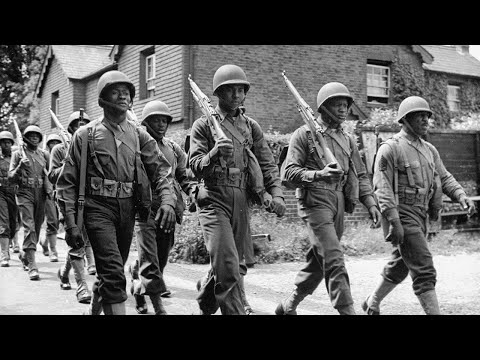
September 1939. London. The air raid sirens had not yet become a daily terror, but inside the War Office on Whitehall, panic had already set in. Britain had just declared war on Nazi Germany, and the men in uniform gathering around mahogany tables knew a terrible truth: they needed 158,000 soldiers immediately. Not next year. Not in six months. Now. Without them, military planners gave Britain eighteen months before total defeat—maybe less.
The math was brutal and simple. Germany had been preparing for years, building an army that now stood at over three million men. They had tanks, planes, and soldiers who had already conquered Poland in just twenty-seven days. Britain’s army was smaller, older, and desperately short on bodies.
The generals had their recruitment posters ready. “Join up. Fight for King and Country. Defend your homes.” The same messages that had worked in the Great War twenty years earlier. Young men would see the posters, feel the patriotic fire, and march to the recruitment centers.
That was the plan. Except it was not working.
By October, the numbers came back from recruitment stations across England, Scotland, and Wales. They were 40% short. Four out of every ten soldiers they needed simply were not showing up. The recruitment officers tried everything—more posters, radio speeches, public rallies with military bands and flags. Nothing changed the numbers. Traditional methods, the ones that had filled the trenches of World War I, were failing completely.
Across the English Channel in Berlin, German military intelligence was watching Britain’s recruitment crisis with satisfaction. Their reports to the high command were clear and confident. One intelligence brief stated plainly: “African and Caribbean populations show no martial spirit. They are suited for labor, not combat.” This assessment was taught in every German military academy, repeated in every briefing, accepted as scientific fact. The Nazi racial theories that underpinned their entire ideology depended on it being true.
Back in the wood-paneled meeting rooms where Britain’s military future was decided, senior officers ironically shared similar views. They had rules, old rules from the days when the British Empire stretched across the globe. Those rules said that men from the colonies, men with black and brown skin, could serve Britain, but only in certain ways. They could carry supplies. They could dig trenches. They could cook meals and repair roads, but they could not fight. They could not fly planes or command troops or fire the big guns.
The official reason, written in careful language in dusty policy books, was that colored troops lacked discipline, that they could not handle the stress of modern warfare, that white soldiers would refuse to serve alongside them. One general reviewing the desperate recruitment numbers actually said out loud in a meeting, “We simply cannot put colored men in combat roles. They lack the temperament for modern mechanized warfare.” Other officers nodded. This was accepted wisdom. This was how things had always been done.
Never mind that the empire was built on the backs of millions of these same people. Never mind that in the last war over one million Indian soldiers had fought and died for Britain. The rules were the rules.
But someone was about to challenge those rules. His name was Harold Moody, and he was a man who should not have existed according to the empire’s own logic. Born in Jamaica in 1882, he had come to London to study medicine. White medical schools tried to keep him out. White hospitals refused to hire him, so he opened his own practice and became one of the most respected physicians in London. He treated patients of every color. He raised a family. He founded the League of Colored Peoples to fight for equal rights. And when war came, he had already served as a medical officer, wearing a British uniform, saving British lives.
Now, in late 1939, Dr. Moody sat in his office reading the newspapers—stories about recruitment shortages, stories about the desperate need for soldiers. And he knew something the generals did not know or refused to believe. He knew that right now, at this very moment, there were thousands of men across the Caribbean and Africa who wanted to fight. Not wanted in some vague future sense—wanted right now. They had already written letters. 60,000 letters. 60,000 men from the West Indies alone asking how they could volunteer, how they could serve, how they could help defend the empire that ruled their islands.
This number was staggering, unprecedented. It represented more volunteers than Britain could even transport or train at once. And German intelligence had predicted exactly zero. They had bet their entire strategy on colonial populations staying passive, uninvolved—proof of their supposed inferiority.
They were about to be catastrophically wrong.
Dr. Moody gathered these letters. He counted them. He documented where they came from—Jamaica, Trinidad, Barbados, British Ghana—islands that most British people could barely find on a map. He prepared his case like the doctor he was, with facts and numbers and evidence. Then he requested meetings with officials at the War Office.
The first meetings went exactly as you might expect—polite smiles, careful words. “Thank you for your concern, Dr. Moody. We will take it under advisement. We have procedures, you understand—policies, traditions.” One official actually told him that colored troops might be fine for labor, but Britain needed fighters, not workers. As if carrying a rifle required some special quality that only white skin could provide.
Dr. Moody kept pushing. He brought his evidence to every meeting. 60,000 volunteers—men ready to fight, men offering their lives. And the War Office kept saying no, kept citing their rules, kept insisting that this was not how things were done. Even as the recruitment numbers stayed terrible, even as Germany grew stronger, even as the math of survival became more desperate with each passing week.
Then Dr. Moody changed his approach. He stopped being polite. In one meeting, he put the stack of letters on the table in front of the generals—60,000 letters. He looked at them directly and said something they would not forget. “These men are offering to die for Britain. Will you let pride kill the empire?”
The room went silent. Because everyone in that room knew the truth. Britain was losing a war. It had barely started fighting. And sitting on islands across the ocean were 60,000 men ready to help.
What kind of nation turns away soldiers when invasion threatens? What kind of generals let their own prejudice write the strategy for defeat?
Dr. Moody’s challenge hung in the air like smoke after a gunshot, and slowly, reluctantly, the War Office began to move.
The solution he proposed was deliberately simple. So simple that no one could claim it was too complicated or experimental. West Indian volunteers would come to Britain and train at the exact same facilities as white British recruits. They would follow the same sixteen-week program—wake at the same time, run the same obstacle courses, learn to fire the same rifles, study the same navigation charts, pass the same tests. If they could not meet the standards, they would be sent home. If they could meet the standards, they would serve. No special treatment, no lower expectations—just a chance to prove themselves equal.
The technical details were worked out through the winter of 1939 and spring of 1940. Transport ships would carry volunteers from Kingston, Port of Spain, and Bridgetown to Liverpool. From there, trains would take them to training centers scattered across England and Scotland. The Royal Air Force needed pilots, navigators, bombardiers, gunners, and mechanics. The Army needed infantry, artillery crews, and tank operators. The Navy needed sailors for destroyers and supply ships. Every role would be open, every position available to those who qualified.
In June 1940, the first test began. The War Office, still cautious and skeptical, approved transport for only 250 volunteers as an initial trial. Despite the 60,000 letters sitting in their files, they wanted to prove these men would fail before committing more resources.
250 volunteers from Jamaica, Trinidad, and Barbados stepped off a transport ship in Liverpool. They had spent three weeks crossing the Atlantic, sleeping in cramped bunks below deck, many of them seasick for days. Now they stood on English soil for the first time, carrying small bags with their few possessions, looking up at a gray sky so different from the Caribbean sun they had left behind. Some had never seen a building taller than three stories. Most had never felt cold like this, even in summer. They pulled their thin jackets tighter and climbed onto military trucks that took them to RAF training centers.
The training was brutal. Up at five in the morning, still dark outside, frost on the windows even in summer. Physical conditioning that left muscles screaming. Classes on aerodynamics, engine mechanics, weather patterns, navigation by stars, learning to read instruments in cockpits packed with dials and switches. For those training as pilots, hours in the air practicing takeoffs and landings, fighting the controls of planes that wanted to drop from the sky if you made one wrong move.
The instructors watched closely, clipboards in hand, making notes. Some clearly hoped these men would fail. Some seemed genuinely curious. A few veterans who had seen combat themselves just watched the performance and kept their thoughts private.
Eight weeks later, the results came in. Out of 250 volunteers, 180 had qualified for their positions. That was a 72% success rate. The training officers checked the numbers against white British recruits who had gone through the same program. 72%—exactly the same.
Not worse. Not better. The same. Men who had grown up on small islands, many who had never seen snow or flown in a plane or fired a gun before arriving in England, had performed identically to men who had grown up in industrial British cities.
The report went up the chain of command, and that is when the real resistance began.
Officials at the Air Ministry looked at the numbers and made a decision. Fine. These men had passed training, but they could not actually fly combat missions. They could work as mechanics, ground crew, support positions. The official reason was never written down clearly, but everyone knew what it was. White pilots might refuse to fly with them. White ground crews might not follow orders from black officers. It would hurt morale, they said. It would cause problems.
Documents from that time, now yellowed and filed in archives, show the careful language officials used. One memo talks about “potential difficulties with integration.” Another mentions “concerns about unit cohesion.” They never said the actual words, the ugly truth underneath the polite phrases. They just kept finding reasons why these qualified men could not do the jobs they had trained for.
Then Winston Churchill got involved.
The prime minister was many things, complicated things, but he understood mathematics. Britain was losing the Battle of the Atlantic. German U-boats were sinking supply ships faster than they could be replaced. The Luftwaffe was preparing to bomb London into submission. France had already fallen. Churchill needed every pilot, every gunner, every sailor he could get. He did not care what color they were.
He wrote a direct order to the Air Ministry. The language was simple and clear: “If these men are willing to fight for Britain, Britain must be willing to treat them as equals in uniform.”
That broke the dam.
By December 1940, 1,200 West Indian volunteers were serving in active combat roles. German intelligence officers monitoring British radio transmissions began filing confused reports. Black colonial troops were appearing in combat units, flying aircraft, manning gun positions. Some dismissed the reports as propaganda. Others marked them as anomalies. None considered that their fundamental assumptions might be completely wrong.
The Royal Air Force formed Squadron 139, assigned to protect Atlantic convoys. Forty of the crew members were black. The first real test came on a frozen morning in January 1941, when Focke-Wulf bombers appeared from the clouds. When the fight was over, three German planes were going down in smoke and the convoy ships were safe.
Over the next three months, Squadron 139 flew 112 missions and completed 106 successfully—a 94% completion rate. They shot down twelve confirmed enemy aircraft. They lost three planes and eleven crew members, the same casualty rate as white squadrons flying similar missions.
The numbers did not lie. Black servicemen were performing at exactly the same level as their white counterparts. Not sort of the same. Exactly the same.
By 1943, 10,000 men from the West Indies wore British uniforms in combat roles. From Africa, another 372,000 volunteers had joined the fight. Caribbean pilots alone had flown more than 3,400 combat sorties. Their casualty rate stood at 17%—the exact same number as white British units flying the same missions.
The Nazi propaganda ministry saw an opportunity and dropped leaflets over British positions: “Why are you fighting for Britain? What has Britain ever given you?” The British command worried about mass defection. It never came. Out of 10,000 West Indian servicemen, only three defected. A rate of 0.03%. Essentially none.
Meanwhile, America kept its soldiers strictly segregated, assigning black troops primarily to supply roles. British analysts compared the performance of integrated units against segregated American ones. The integrated British forces showed 31% higher combat effectiveness ratings. The reasons were not complicated. When you train together, eat together, and fight together, you work together better.
On a freezing night in February 1944, Flight Sergeant Johnny Smythe from Sierra Leone sat in the pilot seat of his Lancaster bomber, preparing for a mission over Berlin. His crew of seven included three black men and four white men. They had flown together for eight months. They knew each other’s voices in the dark.
As they approached the target, the sky erupted. Flak shells exploded in black puffs all around them. His navigator, a white kid from Manchester barely twenty years old, called out course corrections in a voice that stayed steady even as the plane shook from near misses. His bombardier, a Jamaican who had worked in his father’s shop before the war, released the bombs at exactly the right moment. Every member of that crew did their job perfectly. They came home with holes in the fuselage, but everyone still breathing.
When German soldiers became prisoners of war, something interesting happened. They met their black British guards and could not hide their shock. One Luftwaffe pilot refused to believe his captors were actually British military until he saw their identification papers. Another Wehrmacht officer kept asking where the real soldiers were, assuming the black troops who had taken him prisoner were colonial auxiliaries waiting for white officers to arrive.
One German officer kept a diary, later discovered in archives. “I was told these people were incapable of military discipline. Everything we were taught was lies.” He described watching black British sergeants give orders to white British privates, seeing those orders followed without question. Every observation contradicted his training.
When the war ended in 1945, the men who had crossed oceans to fight for Britain began the long journey home. They returned as veterans, carrying medals some had earned, carrying memories all wished they could forget. They came home to colonies where nothing had changed. The same laws that existed before the war still existed after. The color line that had bent slightly during the emergency of war snapped right back into place during peace.
But you cannot go through that experience and then return to being treated as less than human. The psychological change was permanent. In Jamaica, Trinidad, and across the British Caribbean, these returning veterans became the core of independence movements. They organized political parties. They gave speeches demanding self-government. Within twenty years, almost every British Caribbean colony had gained independence. The men who had fought for the empire came home and dismantled it.
In Africa, the pattern repeated on a larger scale. The wave of African independence movements in the 1950s and 1960s drew much of its leadership from men who had worn British uniforms in World War II.
The British military itself changed slowly, reluctantly, but permanently. By the 1960s, it was fully integrated, decades ahead of many other institutions in British society. The model of integration forced by desperate necessity in 1940 became standard practice across dozens of nations.
Yet for the man who had started this transformation, recognition came far too late. Dr. Harold Moody died in 1947 at the age of 64. He did not live to see the Caribbean independence movements he had helped inspire. He did not see Britain’s military become fully integrated. For most of his life, he was just a doctor who had fought for civil rights, ignored by the establishment he had challenged. It was not until 2014, sixty-seven years after his death, that London unveiled a memorial recognizing his role in opening British military service to black volunteers.
Many of the black pilots, soldiers, and sailors who had served with distinction received no special honors after the war. The official history told a story of British courage that was overwhelmingly white. The 10,000 West Indian servicemen and hundreds of thousands of African troops became footnotes, mentioned briefly if at all.
But here is what their service actually proved. When Britain was dying, the empire’s colonial subjects volunteered in massive numbers to save it. They did not wait to be asked nicely. They wrote letters—60,000 from the Caribbean alone—offering their lives. And when they were finally allowed to serve, they performed exactly as well as anyone else. Every argument about racial differences in courage, intelligence, or capability was destroyed by simple facts. The casualty rates were the same. The success rates were the same. Not similar. The same.
The question is never whether lies will eventually meet reality. The question is how much damage the lies do before reality arrives.
So ask yourself: what comfortable lie is being defended in your world today—and how many people will it take, showing up and doing the work, before it finally collapses?
Report this article
Select a reason for reporting:






