In the summer of 1944, behind the American front in Normandy, a captured German soldier sat in a canvas tent and volunteered something his interrogator hadn’t asked for. He wanted to talk about the artillery—not the tanks, not the fighter bombers, but the guns. “How do the Americans fire so fast that the fire seems continuous?” he asked, his voice a mix of exhaustion and disbelief. It was a question that would echo in interrogation tents across the theater, from men who had no way to compare notes, yet reported the same fixation.
These were not amateurs. The German army was one of the finest practitioners of artillery in history, heirs to a tradition that had nearly won the First World War. Yet it was these men—the professionals—who came out of the line unable to stop talking about the enemy’s guns. The answer, as it turned out, had almost nothing to do with the guns themselves.
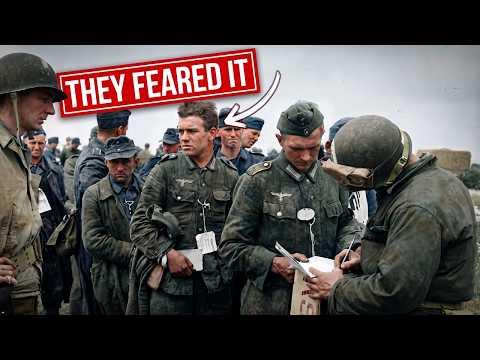
The puzzle deepened because the German soldier was not describing being outnumbered or outflanked. He was describing a specific weapon that seemed to break a rule he had believed was fixed. “It felt less like a battery of separate cannon than like some single automatic weapon of impossible size,” one prisoner said. Interrogators far apart recorded the same testimony independently. When witnesses who never met converge like that, it stops being anecdote and starts becoming evidence.
What the German soldier experienced was the output of a system so invisible from where he crouched that he could only reach for imagined explanations. The real cause lay not on the battlefield but in a nearly bankrupt little schoolhouse on the plains of Oklahoma, where a handful of officers between the wars had quietly asked a different question: not how to build a better gun, but how to make every gun within reach speak at once, on command, in minutes, at the word of a single man with a radio.
To understand why that landed so hard, you first have to take German artillery seriously. In the First World War, a German officer named Georg Bruchmüller had raised the orchestration of bombardment to an art form, choreographing enormous barrages that fell without warning and shattered defending lines. His methods were studied for a generation. The tradition ran deep, and the individual pieces were formidable—the German 88 became one of the most feared weapons of the war. When a German gunner registered a target, walking his shells onto a precise point through patient observation, he was as good as anyone alive.
So the reputation was earned. This was not a second-rate arm being humbled by a first-rate one. For men from this tradition to come out of the fighting obsessed with the enemy’s guns, the enemy must have been doing something their own excellent doctrine had no category for.
Picture a German infantry company dug into good ground in the Normandy hedgerows. The men are experienced; they have been shelled before. Artillery, in their experience, announces itself. There is ranging fire first, a shell or two as the enemy finds the range, giving a soldier a few seconds of warning. Bombardment has a pattern—it builds, it peaks, and eventually it lifts. A veteran learns to read that pattern, to know when it becomes survivable to lift his head and move.
What fell on them from the American lines refused to follow those rules. There was often no ranging fire, no polite warning shot. Instead, the entire weight of the bombardment arrived in the same instant—dozens of shells from many separate batteries detonating together across the position in a single crash, as though the sky had simply decided to fall all at once. The Americans called it time on target.
The idea was elegant and cruel in equal measure. Every gun assigned to the mission, however many batteries, however far apart, would calculate the time its shells needed to fly, then fire at its own separate moment so that all the shells converged and burst on the same spot in the same second. The opening instants of any bombardment are the deadliest—the moments before men have reached cover—and time on target crammed the greatest possible number of those first lethal instants into one simultaneous blow.
Outside Saint-Lô, in the fight for Hill 192, a single American division fired as many as 20 of these time on target concentrations in a single night against one narrow sector. It did so deliberately, hour after hour, to deny the German defenders any chance to settle, to keep them from ever developing the veteran’s sense of when the shelling would pause. It was not only killing; it was the systematic destruction of the enemy’s composure.
The commander of the elite Panzer Lehr division, Lieutenant General Fritz Bayerlein, left one of the most vivid German descriptions of what saturation American firepower did to a first-rate unit. During the American breakout at the end of July 1944, he described “innumerable guns of American artillery pounding drumfire into his positions,” his signal communications cut, command made impossible, his forward companies flattened. By midday, he said, the entire area resembled a moonscape, the craters touching rim to rim. Over 70% of his troops were dead, wounded, or too stunned to keep fighting.
Later historians have questioned whether his losses ran quite so high, but none seriously dispute that the bombardment shattered his division as a fighting force. This was the commander of one of the best-equipped armored divisions in the German army describing his formation ground down not primarily by tanks or infantry, but by fire falling out of nowhere in quantities he had no answer for.
There was a cost that casualty lists never fully captured. Fire of that weight and relentlessness did not only kill and wound—it hollowed men out. Prisoners spoke of nerves worn down to nothing, of the peculiar exhaustion of never knowing when the next concentration would fall, of veteran soldiers who had endured years on other fronts and simply came apart under it. An army can replace its dead and wounded with fresh drafts. It is far harder to replace the confidence of soldiers who have learned that no position is safe, that no cover is proof, and that the enemy can reach out and strike any patch of ground he chooses at the moment he chooses.
The statistics behind these impressions are not impressionistic at all. After the war, American military doctors found that shell and mortar fragments, not bullets, were the great killers. Among wounded men, artillery and mortar fragments accounted for a majority of injuries; among those who died of their wounds, fragments accounted for well over half—something above 60%. Taken together, on the order of 55% of all casualties came from shell and mortar fire. In some of the fiercest infantry fighting, the proportion ran higher still. The battlefield of the Second World War was, above all else, a place where you were far more likely to be struck by a flying splinter of steel than by an aimed bullet.
And it was not only the ordinary soldier who reached this conclusion. Field Marshal Erwin Rommel, assessing the fighting in Normandy, pointed not to Allied tanks or numbers but to what he called “their great superiority in artillery and their outstandingly large supply of ammunition.” When a field marshal and a frightened prisoner arrive at the same conclusion independently from opposite ends of the chain of command, the point deserves to be taken seriously.
So the German soldier’s fixation was rational. He was afraid of the correct thing. What he could not understand was the mechanism, because the mechanism contradicted everything his own excellent artillery arm had taught him about how guns are supposed to behave.
German artillery, for all its craft, was built around a deliberate way of doing business. A battery commander expected to fire on targets he had prepared for in advance or could see and adjust onto through observation, walking his shells onto the aim point one correction at a time. This produced accurate fire. It also produced slow fire against anything unexpected. When a threat appeared suddenly, the German system had to grind through its whole process: survey, calculation, registration, correction. German maps were often poor, making firing blind by map coordinate unreliable. Authority was scattered, with decisions pushed down to individual batteries—admirable for initiative, but it worked against massing many batteries fast onto one point because there was no central brain built to gather them and fire them together in a hurry.
And German fire discipline was constrained by something more basic: they did not have enough shells. By many accounts, Germany produced less ammunition of all kinds across the whole of the Second World War than it had in the first. Higher commands frequently rationed batteries to only a few rounds. A German battery told to fire one or two shots and stop could not saturate anything. In Normandy, by one careful estimate, the German artillery supporting the Fifth Panzer Army could put out only around a tenth of the volume the British opposite them were throwing.
The guns were superb. The system feeding them was starved, decentralized, and against surprise, ponderous. The irony is that German doctrine itself demanded better. Their own field manual insisted that artillery be handled with great mobility and flexibility. German theorists understood perfectly well, in the abstract, the value of massing fire quickly. The gap was not one of understanding—it was one of means and of habit. The communications were not there to knit the batteries together in real time. The central computing organization was not there to fire them as one. The horses could not move the guns fast enough to keep the doctrine honest. And the shells were not there to let commanders act on the doctrine even when everything else aligned.
The starvation went deeper still. Much of the German artillery moved by horse, as it had a generation before—teams of animals that could haul the guns perhaps 25 miles in a day before they had to rest. In fast-moving operations, German firepower could simply be left behind, unable to keep pace with the very front it was meant to support. The quality of ammunition was uneven as well. In plants where German munitions were made, slave and forced laborers sometimes sabotaged the work, and Allied troops reported recovering German shells that had been quietly built to fail—duds that struck the ground and never burst. It was a desperate and dangerous form of resistance, and while it never crippled German firepower, it meant a German gunner could not always be certain the round he fired would do its work.
Set against an American system that never seemed to run short and never seemed to be caught out of position, these were not marginal handicaps. They compounded one upon another into a gulf.
Now, set beside all of that, the emblematic case—the one engagement that shows what the American system could do in the hands of a single man. In early August 1944, the Germans launched a desperate armored counterattack near Mortain, throwing several Panzer divisions westward to reach the sea and cut off the American breakout. In the path of that attack, on a bare piece of high ground known as Hill 314, a single American infantry battalion found itself surrounded and cut off. Several hundred men holding a hilltop with German armor all around them. Among them was a young field artillery forward observer, Lieutenant Robert Weiss, attached from the 230th Field Artillery Battalion.
From that surrounded hilltop with a radio, Weiss could see the German formations moving in the fields and lanes below him. And with that radio, he did something no German lieutenant in a comparable spot could have done. He called down the massed fire of American battalions again and again, walking it across the slopes as the Panzers tried to move, breaking up attack after attack from a position he never left and could not leave. The surrounded battalion held for days on that hill, resupplied from the air, its perimeter kept intact largely by the storm of artillery one observer was orchestrating from inside the encirclement.
The German counterattack at Mortain failed, and it failed in significant part because American artillery, directed by men like Weiss, made the movement of armor in the open a lethal proposition in daylight. The American division holding that sector took heavy casualties—well over a thousand men. The Panzer divisions attacking it lost more than a hundred tanks, a large fraction of everything they had committed to the blow. One man with a radio, able to summon the concentrated fire of guns he did not command and in most cases could not even see, changed the outcome of a battle that might have unraveled the entire Allied position in France.
That capability, resting in the hands of a junior officer on a hilltop, is the thing the German army could not match. It is the thing we now have to explain.
To explain it, you have to leave the battlefield entirely and travel backward almost two decades to a place and an institution about as far from the fighting in France as it is possible to imagine. In the 1920s and 1930s, the United States Army was a marginal thing—small, poorly funded, low in prestige, ranked in size below the armies of minor powers. Through the worst of the Depression, its budgets were cut to the bone, its equipment aged, its officers promoted so slowly that a man might spend 17 years as a lieutenant. Its field artillery school sat at Fort Sill in Oklahoma on the dry southern plains, a cluster of buildings on a wind-swept reservation far from anywhere. The nation had little interest in its army and less in the arcane mathematics of gunnery.
And it was precisely there, in that unglamorous and overlooked place, that a few officers with time on their hands and little to distract them began working through a problem the rest of the world’s artillery establishments had never seriously bothered to pose.
There was a particular reason this backwater bred such an idea, and it had to do with temperament as much as with circumstance. The American army of those years had absorbed a hard lesson from its brief and bloody experience in the First World War, where its infantry had been fed into battles it was not ready for and had paid a terrible price against an enemy it often could not even see. In the quiet decades that followed, while much of the world’s military thought turned toward reliving old glories, a handful of American officers spent their idle years studying their own casualties and asking uncomfortable questions about them. They read, they argued in their professional journals, they ran their small exercises on threadbare budgets, and they took seriously the unglamorous proposition that the next war would be won less by dash and courage than by the patient engineering of overwhelming firepower. Poverty and obscurity, as it turned out, gave them the freedom to think without the distraction of grand ambitions. Nobody was watching closely enough to stop them.
The problem was one of coordination. Everyone already knew that massing many guns on one target was devastating. The open question was how to do it quickly, flexibly, and against targets that had not been planned for in advance. The traditional method was cumbersome: each battery worked largely on its own, laying its guns from its own calculations, and bringing many scattered together onto a single fleeting point of opportunity fast was something no army had really solved.
At Fort Sill, a gunnery instructor named Major Carlos Brewer led the effort to take the old method apart and rebuild it from the ground up. Brewer and his colleagues developed a new way of organizing fire around a central firing chart. Battery positions were fixed precisely by survey and plotted on the chart. Targets were designated by their relationship to known reference points rather than by vague description of terrain, and crucially, the computation of firing data was pulled together into one place instead of being scattered among the individual batteries. In the spring of 1931, the school demonstrated that a whole battalion could mass the fire of all its guns rapidly using this method.
Brewer’s successor as head of the gunnery department, Major Orlando Ward, carried the idea further and gave it its enduring form. He created what became known as the fire direction center—a single command post where the calculations for many guns were performed together and from which their fire could be controlled as one instrument. Another officer, Lieutenant Colonel H. L. C. Jones, refined the center further and pushed it toward acceptance across the whole branch against the natural skepticism of career gunners who did not see why the old ways needed changing.
The essential invention was not a machine and not a new gun. It was an organization. It was the idea that one coordinating brain, receiving a single request, could instantly compute firing solutions for every battery within range and order them all to fire together on one spot as if a dozen scattered batteries were the fingers of a single hand.
It is worth being fair about what was and was not uniquely American here, because the Americans did not conjure the whole of it out of nothing. The British Army fighting in the North African desert had by late 1942 developed its own techniques for bringing many guns down together onto one point at a chosen instant, timing the firing by the wireless pips of a broadcast clock. The raw idea of simultaneous massed fire was in the air, and more than one army reached for it. What set the American version apart was not the concept of arrival together but everything wrapped around it: the pre-computed data that made the fire both fast and accurate at once; the fire direction center that could swing the whole weight of it in moments; the radios that reached down to the lowest levels; the aircraft overhead; and above all, the ammunition to feed the guns without stint. Others had pieces of the machine. The Americans assembled all of them into one and pushed the controls into the hands of the man at the front.
The consequence of that idea was the very thing the German prisoners could not comprehend. Because the computation was centralized and because the data was worked out in advance and kept ready, an American observer at the front did not need to command the guns or see them or perform the mathematics himself. He needed only to identify where he wanted the fire to fall and speak. A single forward observer—a lieutenant, sometimes even an enlisted man, talked through the procedure by radio after his officers had been killed—could transmit a map reference to the fire direction center and have the massed fire of an entire battalion, and then with practice, the massed fire of every battalion within range, brought crashing down on that point within a very few minutes.
The whole American system was built so that the man at the sharp end, the one who could actually see the enemy or at least suspect where he lay, held the power to unleash enormous concentrated firepower almost instantly. Where the German system pushed authority down to the battery but kept the response slow and the ammunition scarce, the American system pushed the trigger of massed fire outward to the lowest levels while keeping the brains of it centralized, fast, and richly supplied.
In practice, the procedure had a rhythm and a language all its own, clipped and unhurried and almost calm. The observer pressed his handset and spoke the words that began it—a call for fire—and gave his own location relative to a known point, the direction to the target, and a brief description of what he wanted destroyed. Back at the fire direction center, the men bent over their charts, turned his words into numbers—the deflection and the elevation each battery would need—and passed them down to the gun crews. Within moments, a voice came back to the observer telling him the shells were on the way, and he watched. And if the first rounds fell short or long or wide, he corrected them with a few more clipped words, and the correction rippled back through the center to the guns. Then came the command that mattered: the order to fire for effect, and the full weight of every gun in the mission fell where he had asked.
To the observer, it was a conversation. To the men at the far end of it, it was the sky coming apart.
The first time this system truly announced itself against the Germans was in the mountains of Tunisia early in 1943, and the story of it reads almost like a demonstration staged to prove a point. American forces had been badly mauled at the Kasserine Pass, and the Germans were pressing hard to exploit the breakthrough. To blunt them, the artillery of an American infantry division was ordered up from far to the rear. It made a forced march of miles over four days, arriving near the town of Thala and digging its guns in through the night. When the German armor attacked the following day, it ran headlong into the massed, centrally directed fire of those guns, brought down fast and in concentration. So sudden and so heavy was the fire that the German commander opposite became convinced an entire fresh American division had arrived to bar his path, when in truth it was very largely the guns alone that had stopped him. Rommel, surveying the situation, chose to break off the offensive. Writing home about the fighting, he noted with something like professional respect how an enemy observation plane had directed the fire of numerous batteries onto every worthwhile target across the zone. All the pieces of the system were already visible in that single vignette: the centralized fire direction, the rapid massing of many guns, the watchful eye in the air. It was 1943, and the shape of what would break the German army in France the following year was already taking form in the Tunisian hills.
Consider what this meant in raw time, because time is very nearly the whole story. By the reckoning of artillery analysts, an American call for impromptu fire could put shells on a target in only a few minutes from the moment the observer first spoke into his handset. Bringing in the additional guns of the division added a little more, and the heavier pieces controlled at corps level a little more beyond that, so that in theory—and often enough in brutal practice—a concentrated fire of an entire corps of artillery, many dozens of guns, could be brought down onto one grid reference in a matter of minutes at the word of one man. The German system, by contrast, could seldom answer an unexpected target anywhere near so fast. It was built to mass fire at the level of the single battery, not to gather many battalions in a hurry, and against a sudden threat it was slower by a wide margin. That gap was not a small disadvantage. It was the difference between an answer that arrived while it still mattered and an answer that arrived after the moment and the men had already gone.
And the American answer, when it came, came all at once in that shattering simultaneous crash rather than building politely from a ranging shot. To a German soldier trained to read the rhythm of bombardment and to survive by it, fire that arrived without warning everywhere at once in seconds at the apparent whim of the enemy did not feel like ordinary artillery at all. It felt like something that should not have been possible.
The guns that answered came in a whole graduated family, all of them feeding the same network. The workhorse was the 105 mm howitzer, three battalions of them in every infantry division, throwing its shells to a range of some seven or eight miles. Behind it stood the heavier 155 mm howitzer for general support and the long-barreled 155 mm gun the troops nicknamed the Long Tom, which could reach out well past 13 miles. Heavier still were the 8-inch howitzer, prized for an accuracy remarkable in so large a weapon, and the enormous 240 mm howitzer, whose single shells weighed hundreds of pounds each. In the armored divisions, that same 105 mm firepower rode on tracked mounts so it could keep pace with the tanks it supported. What mattered was not any one of these pieces on its own. It was that a forward observer, calling the fire direction center, could reach into this entire arsenal at once and pull down whatever weight of metal the target deserved—from the light guns of his own battalion to the heavy pieces held far back at corps, all of them computed and coordinated through the same procedures and arriving, when the mission demanded it, together in a single blow.
The volume that made this so relentless rested on a further American advantage: the near limitless supply of shells. American industry produced artillery ammunition on a scale that dwarfed anything Germany could dream of sustaining. Over the course of the war, by the reckoning of the army’s own chief of ordnance, American factories turned out something on the order of 11 million tons of artillery ammunition—roughly a billion rounds—alongside tens of billions of rounds of small arms ammunition. Individual American batteries fired counts that would have been unthinkable in the shell-starved German service. One American battery, part of the 337th Field Artillery Battalion, was reported to have fired its 300,000th round in the spring of 1945, after roughly a year of combat in Italy.
This abundance changed the entire logic of how the guns were used. An American observer did not have to be certain the enemy was at a given spot before he fired. He could fire on a place merely because the enemy might be there, spending shells to buy certainty, combing a suspected hedgerow or tree line as a matter of routine, rather than hoarding rounds for confirmed targets alone. The German gunner, counting out his handful of shells, could never fire so freely. So the American fire was not only faster and more concentrated, it was also more willing, more constant, and more ready to fall on the mere possibility of a target. For the man underneath it, that meant there was rarely any safe interval, any lull that could be trusted, any silence that meant he had truly been missed.
None of this speed and volume would have counted for much without a way to see and a way to talk. And here the Americans held two more advantages that fed straight into the system. The first was radio. American forces were equipped with frequency-modulated radios—sets that delivered a clear, strong, static-resistant signal—and these radios reached down to the forward observers and the small units at the very front. One of the American officers who had championed this kind of vehicle radio before the war, then a major named Anthony McAuliffe, would later become famous for the one-word refusal to surrender he gave the Germans at Bastogne. But his quieter, earlier contribution to the reliability of American communications mattered enormously to the artillery. Clear, dependable radio was the nervous system that connected the observer’s eyes to the fire direction center’s brain to the muzzles of the guns. Without it, the whole scheme of instant massed fire would have collapsed into noise and confusion. With it, the request flowed cleanly and the shells followed.
The second advantage was the eye in the sky. The Americans mounted their forward observers not only on the ground but in the air, in small, slow, unarmed light aircraft—militarized versions of the civilian Piper Cub, two of them attached to each artillery battalion. These little planes, sometimes called grasshoppers, puttered over the battlefield at low altitude and gave the artillery a view no ground observer could ever match. From a few hundred feet up, an air observer could see behind the German forward positions, spot movement on the roads, locate the flash of hidden batteries, and direct fire onto targets the men on the ground could not even glimpse. In some operations, air observers directed the great majority of the fire delivered.
And there was a further, subtler effect that the Germans felt keenly. German artillery learned to fear these circling planes so much that batteries would fall silent whenever one droned overhead, refusing to fire and betray their positions, because to fire was to invite a devastating concentration onto their own heads within minutes. The mere presence of one slow little aircraft could suppress the guns of an entire sector. The German soldier looking up at that plane understood, correctly, that it was not the plane itself that would kill him. It was everything the plane could summon down.
For the forward observer, this was a lonely and dangerous trade. He lived at the very front, among the infantry, often ahead of them, exposed to everything the enemy could throw, carrying in his radio and his training the power to call down more destruction than a whole battalion of riflemen could muster. He was hunted deliberately because the Germans understood as well as anyone that killing the observer blinded the guns. And yet the system was robust enough that when one observer fell, another took up the handset—or an infantry officer or a sergeant—and the fire went on. The knowledge that any of these men, anywhere along the line, could reach back and pull down the storm was itself a weapon. It meant a German commander could never be sure which patch of ground was safe to move across, because he could never be sure which piece of hedgerow or which shattered farmhouse concealed a pair of American eyes and a radio.
Now layer on to all of this the one American development that arrived late and changed the very nature of the fire itself. For most of the war, a soldier caught in the open under shell fire still had one ancient piece of geometry working in his favor: shells that struck the ground threw most of their fragments outward and upward. So a man who flung himself flat, who pressed into a shallow hole or a fold in the earth, could let much of that lethal steel hiss past above him. Getting down and staying down had kept soldiers alive under bombardment since the trenches of the First World War.
The Americans broke that geometry with a device called the proximity fuse. Instead of detonating on impact with the ground or after a fixed time set by a nervous gunner guessing at the range, this fuse detonated the shell automatically in the air at just the right height above the target—a few dozen feet up. And an airburst overhead undid the old protection entirely. Now the fragments came down onto the men from above, raining into the very holes and folds of ground that had always meant safety. Lying flat no longer helped. A shallow foxhole without overhead cover no longer helped. No posture, no crease in the earth, changed the physics of steel falling from directly overhead.
The engineering behind that simple description was staggering. The tiny bundle of electronics packed into the nose of the shell had to survive being fired from a cannon—an acceleration many thousands of times the force of gravity—while spinning at tens of thousands of turns a minute, and then keep working reliably through the whole arc of its flight. It was, in effect, a miniature radio transmitter and receiver, broadcasting a signal as it flew and listening for the echo bouncing back from the ground rushing up to meet it, triggering the burst at the calculated moment. German laboratories had examined the same challenge earlier in the war and concluded that a reliable fuse of this kind lay beyond what their components could withstand. They were wrong about the engineering, but their conclusion was not unreasonable given what they had managed to test, and it meant the German army went into the last winter of the war with no such weapon of its own and no defense against the one now aimed at it.
The American effort, run in deep secrecy under a section of the wartime scientific establishment led by the physicist Merle Tuve, had solved the problem the Germans thought unsolvable. The device went to sea first, where it was safest to use because a dud falling into the ocean could not be recovered and copied. It proved itself early in 1943 when the guns of an American cruiser used it to knock a Japanese aircraft out of the sky. Later, it helped defend England against the flying bombs, the V1s, arcing in over the channel coast. But over ground held by either side, it was held back for years under the strictest secrecy, for fear that a single unexploded round, recovered and taken apart, would hand the whole secret to an enemy who might turn it against Allied bombers.
Production meanwhile climbed to a scale that tells its own story of American industry. By the end of the war, more than 20 million of the fuses had been made, and the cost of a single one had fallen from well over $700 in the early days to around $18—the kind of price collapse that only mass production on an enormous scale can explain.
Then in December 1944, when the Germans launched their last great surprise offensive through the forests of the Ardennes, the restriction was lifted at last. The airburst shells were released for use against troops on the ground, and they arrived in the middle of the largest defensive artillery battle the American army had yet fought. On the northern shoulder of that offensive, at a place called Elsenborn Ridge, the effect was decisive. There, American infantry divisions held a line against the full weight of the German 6th Panzer Army, and behind them the Americans had massed the guns of an entire corps—hundreds of pieces, all tied into the fire direction network that could bring them down together on command. It was the one part of the whole Ardennes front where the German offensive failed to advance at all. Wave after wave of German attacks broke against that ridge, shattered by concentrated fire that now burst overhead with the new fuses, so that neither the frozen ground nor the winter woods offered any shelter. One German attack, mounted by a fresh division late in the fighting, was cut down by artillery, in the words of those who studied it afterward, almost at the very moment it began, destroyed before it could gather any momentum at all. The vast concentrated fire of an American corps made that position, in the judgment of the historians, effectively unassailable.
General Patton, whose army first used the new fuses against German troops that same December, wrote to the ordnance chief that the shell was devastating, describing a single concentration that caught a German battalion trying to cross a river and killed hundreds of them by actual count. He predicted, with his usual flourish, that once every army possessed such a weapon, the old methods of taking cover from artillery would have to be reinvented from the ground up. Patton was a man given to overstatement, and the fuse did not by itself win the campaign, whatever some later claimed for it. Its use in those weeks was still limited, and the battle was won by many things together. But his instinct about what it meant for the future was sound. The last refuge from artillery—the earth itself—had been quietly taken away.
Here, then, is the verdict the evidence points to, and it is not the verdict the German soldier in that interrogation tent could ever have reached, because he was looking in the wrong place for it. He assumed, naturally enough, that if the enemy’s guns were so terrible, the enemy must have possessed better guns. He was wrong. The individual American gun was not the marvel. This is exactly why he reached, in his bafflement, for imagined explanations like automatic cannon, searching for a superior weapon and never quite finding one, because the superior weapon did not exist. What had actually beaten him was not a weapon at all. It was a system, and the system was very nearly invisible from where he crouched. He experienced only its output—the sudden simultaneous crash of massed fire arriving in minutes on a spot the enemy had no business being able to reach so fast. He never saw its cause, which lay in the wiring, in the network that ran from an observer’s radio to a central calculating post to every gun within range, a web of coordination built to turn the request of one frightened man into the fire of a hundred guns.
That is the real reason the prisoners kept talking about it. It was not merely that the fire was heavy, though it was. It was that the fire behaved in a way their own expert understanding insisted it should not. In the German model of war, artillery was a deliberate instrument. It rewarded preparation, patient observation, and professional craft at the level of the battery. Response to the unexpected was necessarily slow because the process was necessarily careful, and shells were far too precious to spend on mere guesses. The American fire violated every clause of that understanding at once. It was instant against the unexpected. It was lavish against the merely suspected. It answered to a lieutenant with a radio rather than to a carefully laid plan drawn up days before. To a professional steeped in the German tradition, this was not simply more of a familiar thing. It was a different thing wearing the same name, and to meet it was to feel that the enemy had somehow changed the rules of a game everyone had agreed on how to play.
It would be too neat, though, to say the American system had no flaws, and honest history should not pretend otherwise. Some scholars, the historian Russell Weigley chief among them, have argued that American commanders leaned so heavily on their artillery that their infantry grew cautious, reluctant to move until the guns had done the work for them, and that this dependence slowed the advance and cost opportunities that a bolder army might have seized. Others answer that the criticism is overdrawn, that spending shells to spare the lives of citizen soldiers was a sound and humane bargain for a democracy at war, and that the ammunition shortages sometimes blamed for holding the guns back were real but rarely decisive. That is a genuine debate, and it deserves acknowledging rather than smoothing over, but it does not touch the central fact the prisoners kept reporting. Whatever its costs at the level of grand strategy, the American fire, when it came, came in a way the German army could not equal and could not withstand.
It is also true that not every German pointed to the guns first. Ask the question at the very top of the German command, and the answer sometimes shifted. Field Marshal Gerd von Rundstedt, questioned after the war about why the Western Front had collapsed, put Allied air power ahead of everything—the fighter-bombers that made movement by daylight a form of suicide and cut the roads and railways behind the front. Even he, though, reached for the language of artillery to describe what the bombing felt like, calling the carpet bombing a kind of intensified barrage. The distinction is real and worth keeping. Air power and artillery together, not either one alone, ground the German army down in the west. But it is telling that when the ordinary infantryman in his hole tried to name the thing that had broken him, again and again it was not the aircraft high above that he fixed upon. It was the guns he never saw, whose shells arrived before he understood that he had even been found.
And the deepest root of the whole difference was not technical at all. It was cultural—a matter of how two armies chose to arrange the relationship between the individual soldier and the larger machine he served in. The German army prized the initiative and judgment of the man on the spot, a philosophy that produced superb leadership in small units throughout the war and made German soldiers formidable out of all proportion to their numbers. But that same philosophy tended to keep capability local, lodged in the skill of the individual commander and his own guns. The American army made a different bargain. It treated the individual soldier and his immediate leader less as independent craftsmen and more as trusted nodes plugged into a larger network—a network whose real intelligence lived not in any one man at the front but in the design of the whole, worked out years before in a schoolhouse on the Oklahoma plains. No genius was demanded of the lieutenant on Hill 314. The genius had already been built into the system he was plugged into, so that an ordinary man with a radio could wield extraordinary power simply by asking for it in the right words. Both bargains produced excellent soldiers. Only one of them produced an artillery arm that could drop the fire of a corps onto a single point in minutes at the request of whichever junior officer happened to be holding the handset that day.
This was why American commanders came to build their attacks around the guns from the very outset, rather than treating fire support as an afterthought called upon when things went wrong. In the American way of battle that matured in Europe, the artillery was not a servant summoned once the infantry had run into trouble. It was the foundation the whole plan rested upon. The infantry advanced behind it, leaned on it, and expected it to be there within minutes whenever the advance stalled or the enemy massed to counterattack. Commanders spoke of it as the thing that saved their soldiers, the great equalizer that let American troops close with a skilled and stubborn enemy without being bled white in the process. That confidence—the quiet certainty that the guns would answer and answer fast—shaped the way the American soldier fought. And it rested entirely on the invisible machinery this story has traced back to a poor schoolhouse on the plains.
There is a quiet irony in where each side’s excellence finally led. The German mastery of artillery was real and hard-won, but it was mastery of a particular kind of fight—the deliberate, prepared, closely observed engagement that the tradition of Bruchmüller had been built to win. The American investment looked unglamorous beside it, a matter of charts and radios and calculating procedures rather than heroic gunnery under fire. Yet it was the unglamorous American approach that proved decisive in the mobile, unpredictable, fast-breaking warfare of 1944 and 1945, where targets appeared and vanished in minutes, and the side that could answer fastest and heaviest was the side that won.
The quiet methods worked out at Fort Sill in the poverty of the interwar years became the foundation of American artillery for generations to come. The Americans themselves grasped what they had built, even if they said so more plainly than modestly, and their commanders credited the guns above almost everything else in their victories. The field artillery had long called itself the king of battle. By the end of the war in Europe, that old nickname no longer sounded like a boast. It sounded like a plain description of the facts, confirmed by the men who fought beside it and, most tellingly of all, by the men who had to endure it from the other side.
The German prisoner in that canvas tent never had the vantage point to understand any of this. He had felt the effect and could not name the cause, and so he described the effect over and over, reaching for the only explanations his own fine training had ever given him and finding, to his evident distress, that not one of them fit. He spoke of impossible speed, of fire that seemed automatic, of shells that found him without the warning that shells were always to give. He was, in his confusion, an unusually honest witness. Without ever meaning to, he was telling his captors that they had built something his own formidable tradition had no answer for and no words to describe. The thing he kept circling back to was never really that the enemy’s guns were louder or larger. It was that the enemy had solved a problem the German army had never even fully recognized as a problem—and had solved it so completely that the solution felt to the men on the receiving end of it less like a better weapon than like the ground itself being rewritten beneath their bodies. That is why they kept talking about the artillery in tent after tent, on front after front, long after the fighting for them was over. It was the one thing they had met on that battlefield that they could not explain, could not answer, and could not forget.
That is the story the prisoners were telling without knowing it. Not a secret weapon, but a secret organization—a network of radios, charts, and men trained to think of many guns as one instrument.
The German soldier in the canvas tent had felt the system’s power in his bones but could never see its shape. He went home carrying a question he could not answer, and the answer was never a gun at all.
So here is the question worth sitting with, long after the guns have cooled: if the deadliest weapon of the war was invisible—not steel, but a way of organizing men and machines—what invisible systems shape the battlefields of our own century? Tell us what you think in the comments below.
Report this article
Select a reason for reporting:






