When the world was plunged into the chaos of World War II, not even Hollywood’s brightest stars could ignore the call to serve. Legends like Clark Gable, adored by millions, swapped their scripts for uniforms and joined the fight. Nations like the United States enlisted celebrities to boost morale and rally support for the war effort. But for many actors, their service was far more than a publicity stunt—it was a harrowing journey into the heart of darkness.
Behind the glamour of the silver screen, these men faced the brutal realities of combat, espionage, and sacrifice. Some flew perilous bombing missions over enemy territory, others stormed beaches on D-Day, and a few undertook clandestine operations that remained secret for decades. Their experiences would shape their performances and their lives forever.
Take Charles Bronson, for instance. Widely known for his tough-guy roles, Bronson enlisted in the US Army Air Forces in 1943 and served as an aerial gunner on B-29 Superfortress bombers in the Pacific Theater. He flew 25 perilous combat missions over Japan. On one such mission, his aircraft was severely damaged, and he was wounded by shrapnel from enemy fire. For his injuries, he was awarded the Purple Heart. The constant threat of death and the trauma of witnessing fellow airmen perish left a profound impact on him. After the war, he struggled to adjust to civilian life, grappling with the psychological scars of combat. Acting became an outlet for him to channel his inner turmoil and connect with audiences on a visceral level.
Jimmy Stewart was already a Hollywood icon when he decided to enlist in the US Army Air Forces in 1941. Coming from a family with deep military roots—both his grandfathers had fought in the Civil War, and his father served in World War I—he felt a strong duty to serve. Initially, Stewart was turned away because he was underweight for his height of 6’3″. Determined, he bulked up by eating lots of spaghetti, steak, and milkshakes, eventually passing the physical exam. Stewart started as a private but quickly rose through the ranks. He became a flight instructor for B-17 Flying Fortresses and later commanded a squadron of B-24 Liberators in England. He flew numerous combat missions over Germany, earning several medals including the Distinguished Flying Cross. After the war, he continued his acting career but remained in the Air Force Reserve, eventually reaching the rank of Brigadier General.
Christopher Lee had a remarkable and largely secretive military career before his acting fame. Born in 1922, Lee volunteered to fight for Finland during the Winter War against the Soviet Union in 1939, demonstrating his early willingness to confront looming threats. In 1941, he enlisted in the Royal Air Force but was initially grounded due to a vision problem. Undeterred, he resolved his medical issues and joined RAF Intelligence. Lee was attached to the Long Range Desert Group in North Africa, a unit known for deep penetration missions behind enemy lines. His roles included reconnaissance, intelligence gathering, and aiding in planning covert operations against Axis forces. Fluent in multiple languages, he became an invaluable asset in missions across North Africa and later in Italy. There are accounts suggesting that Lee was involved with the Special Operations Executive, a clandestine organization tasked with espionage, sabotage, and assisting resistance movements in occupied Europe. However, he rarely discussed these experiences, often citing the Official Secrets Act that bound him to secrecy. Lee once hinted at the gravity of his service by remarking, “I’ve seen many men die right in front of me—so many in fact that I’ve become almost hardened to it.”
Kirk Douglas, born Issur Danielovitch in 1916, became a Hollywood legend through iconic roles in films like Spartacus and Paths of Glory. Before his rise to stardom, Douglas served in the US Navy during World War II. Enlisting in 1941 after the attack on Pearl Harbor, he was commissioned as an ensign and trained as a communications officer. Douglas was assigned to anti-submarine warfare duties and served aboard the USS PC-1139, a patrol craft responsible for coastal defense and escorting convoys across the Atlantic. His role involved maintaining crucial communications and coordination during missions fraught with the danger of German U-boat attacks. The constant threat and demanding conditions required vigilance and resilience. In 1944, he was honorably discharged due to injuries sustained during his service, though details about the incident are limited. These wartime experiences exposed him to the harsh realities of conflict and the complexities of leadership under pressure.
Mel Brooks, the famous comedian and filmmaker, served in the US Army during World War II. He was drafted when he was just 17 years old. In the Army, he became a combat engineer, his job was to defuse landmines—a perilous task. He served in Europe and took part in the Battle of the Bulge. Mel often joked about his military service, saying, “I was a combat engineer. Isn’t that ridiculous? The two things I hate most in the world are combat and engineering.” Despite his humor, his work was serious and saved many lives. Defusing landmines required bravery and steady hands. Mel faced danger every day to protect his fellow soldiers. His experiences in the war were intense and life-changing. After the war, Mel Brooks used his experiences to make people laugh, but he never forgot his time in the Army. His service showed his courage and dedication at a young age—before making the world laugh, he served his country in a very important way.
Clark Gable, known as the King of Hollywood, was devastated when his wife, actress Carole Lombard, died in a plane crash in 1942 while returning from a war bond tour. To honor her memory, he enlisted in the US Army Air Forces at the age of 41. Despite being older than most recruits, Gable trained as an aerial gunner and flew combat missions over Europe. He helped produce the film Combat America to support the war effort. Interestingly, Adolf Hitler reportedly offered a reward for Gable’s capture, showing just how significant his involvement was.
Charlton Heston, the powerful performer in epic films like Ben-Hur and The Ten Commandments, served his country before achieving Hollywood fame. In 1944, at the age of 21, he enlisted in the US Army Air Forces amid the global conflict. Heston trained as a radio operator and aerial gunner on B-25 Mitchell bombers. He was assigned to the 77th Bombardment Squadron, stationed in the Aleutian Islands—a remote chain of volcanic islands in Alaska. The Aleutian campaign was known for its harsh weather conditions, including extreme cold, fog, and winds, making flying particularly treacherous. These conditions tested the skills and endurance of the aircrews tasked with patrolling the North Pacific and guarding against potential Japanese advancements.
Serving in this isolated and demanding environment, Heston participated in missions involving reconnaissance and anti-submarine patrols. The role of radio operator and gunner required technical proficiency and the ability to remain calm under pressure, as they were responsible for maintaining vital communications and defending the aircraft against enemy fighters. After the war concluded, he was honorably discharged in 1946 and took advantage of the GI Bill to enroll at Northwestern University to study drama—a decision that paved the way for his future acting career.
We know James Garner as Maverick and the star of The Rockford Files, but his real-life military service is a compelling chapter that shows his resilience and character. At just 16 years old, Garner lied about his age to enlist in the US Merchant Marine during the final years of World War II. The Merchant Marine played a crucial role in transporting troops, supplies, and equipment across the Atlantic and Pacific Oceans, often facing threats from enemy submarines and aircraft. Garner’s time at sea was arduous; he endured grueling work conditions and suffered from chronic seasickness, which exposed him early on to the harsh realities of military life.
After World War II, Garner returned to the United States and later joined the California National Guard. With the outbreak of the Korean War, he was called into active duty and served with the US Army’s 24th Infantry Division, deployed to the front lines in Korea. Garner served as a rifleman, where he experienced intense combat and the severe conditions of war. He was wounded twice during his service—the first injury occurred when he was hit by friendly fire from US fighter jets that mistakenly strafed his unit, and the second was from stepping on a land mine or being hit by shrapnel, accounts vary. For his bravery and the injuries sustained, he was awarded two Purple Hearts, although bureaucratic oversights delayed the recognition of his second award until 1983.
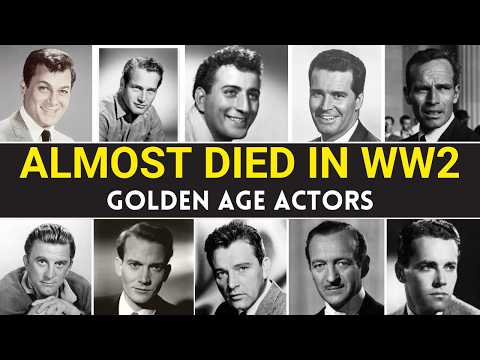
Tony Curtis became one of Hollywood’s most charismatic and enduring stars, known for his roles in films like Some Like It Hot, Spartacus, and The Defiant Ones. Before his rise to fame, Curtis’s life took a dramatic turn when he joined the US Navy during World War II. In 1943, at the age of 17, driven by patriotism following the attack on Pearl Harbor, Curtis enlisted. He was assigned to the USS Proteus, a submarine tender tasked with supplying and repairing submarines in the Pacific Theater. Serving as a signalman, Curtis’s responsibilities included managing ship-to-ship communications using signal flags, lights, and Morse code.
A defining moment of his military service occurred on September 2, 1945, from the deck of the USS Proteus anchored in Tokyo Bay. Curtis witnessed the formal Japanese surrender aboard the USS Missouri. After the war, Curtis was honorably discharged in 1945. Taking advantage of the GI Bill, he pursued acting studies at the Dramatic Workshop of the New School in New York City. Curtis moved to Hollywood, where his talent and striking looks quickly caught the attention of major studios, leading to a contract with Universal Pictures.
Paul Newman was renowned for his roles in Cool Hand Luke and Butch Cassidy and the Sundance Kid, but he also served in the US Navy during World War II. Enlisting in 1943 with hopes of becoming a pilot through the Navy’s V-12 program, he was disqualified after discovering he was colorblind. Undeterred, he became a radio man and rear gunner on torpedo bombers in the Pacific Theater, stationed aboard the USS Bunker Hill. Newman faced the dangers of war firsthand. In a remarkable twist of fate, his pilot developed an ear infection just before their unit was set to join the Okinawa campaign, grounding them. This unexpected event spared them from disaster. On May 11, 1945, while they remained ashore, the USS Bunker Hill was struck by two kamikaze planes, resulting in catastrophic damage and the loss of 393 sailors. Had Newman and his pilot been on board, they would have likely been among the casualties.
Discharged in 1946, Newman received the American Area Campaign Medal, the Good Conduct Medal, and the World War II Victory Medal. This close brush with death profoundly affected him, instilling a deep appreciation for life that influenced his future career and philanthropic efforts.
Tony Bennett was drafted into the US Army in 1944 at age 18, assigned to the 63rd Infantry Division. He faced intense combat in France and Germany during the final brutal months of the war, witnessing firsthand the devastating impacts of battle. A pivotal moment occurred when Bennett defended an African-American friend against racial slurs, defying the segregationist policies of the military at that time. As a result, he was demoted and reassigned to grave-digging duties. This unjust treatment and the horrors he witnessed solidified his stance as a lifelong pacifist and advocate for civil rights.
Henry Fonda, already a prominent actor in 1942, enlisted in the US Navy at age 37. He served as a quartermaster third class on the destroyer USS Satterlee, participating in missions in the Atlantic. Fonda later became an intelligence officer in the Pacific Theater and was awarded the Bronze Star for meritorious actions against the enemy. His commitment added depth to his later portrayals of military roles.
Lee Marvin enlisted in the US Marine Corps in 1942 at 18, assigned to the 4th Marine Division. He saw intense combat in the Pacific, including the brutal Battle of Saipan in 1944, where he was wounded by machine-gun fire, suffering injuries to his sciatic nerve and lower back. These wounds were severe enough to end his military service, leading to a medical discharge and a Purple Heart.
These actors, and countless unnamed others, returned from war forever changed. Their harrowing experiences behind the camera gave their on-screen performances an authenticity and depth that audiences could feel. They had faced the ultimate reality, and it informed every role they played thereafter.
Which of these incredible stories surprised you the most, and are there other actor-veterans you’d like us to cover in a part two? Let us know in the comments below!
Report this article
Select a reason for reporting:






