The night sky glowed orange and red from the fires below. Inside his Messerschmitt Bf 110 night fighter, Lieutenant Franz Becker scanned the darkness through the cockpit window. Behind him, his radar operator screamed over the engine noise. The screen showed something impossible. Dozens of targets. Hundreds. All moving together like some massive creature crawling across the sky.
Becker grabbed the radio. His voice trembled as he spoke to his ground controller. A massive formation was coming. Flying low. Flying fast. He paused, a lump forming in his throat. They weren’t Americans. They were Canadians.
Every German pilot knew what that meant. They could handle the American bombers. The big silver B-17s came by day at 25,000 feet. You could see them coming from miles away. They flew in neat box formations, slow and steady. Their patterns were predictable. German fighters learned their habits. They knew where to attack, when to break off, and when to re-engage. Against the Americans, seven out of every 100 German pilots who took off never came back. Those were bad odds, but the pilots got used to them.
But the Canadians were different. The Canadians owned the night.
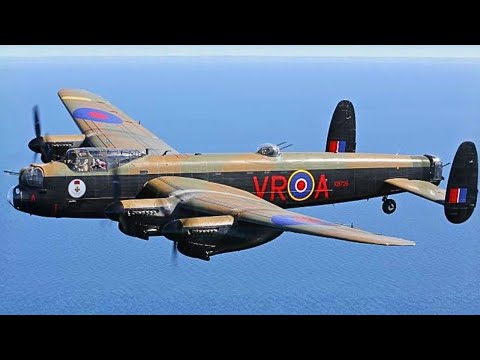
They flew Lancaster Mk X bombers built in Canadian factories with different, more powerful engines. These aircraft carried 22,000 pounds of bombs. That was three times what a B-17 could carry. The Lancaster flew at 18,000 feet, lower than the Americans, and at 275 miles per hour. That made it faster than many German night fighters at the same altitude. When the Canadians came, 12 out of every 100 German pilots didn’t make it home. The numbers told the story. Facing the Canadians was nearly twice as deadly.
Becker had been flying night missions for two years. He had shot down 11 Allied bombers. Eight were British. Two were American B-24s that got lost and wandered into his area. One was a Canadian Lancaster. He remembered that night in January. The Lancaster was damaged and flying alone, separated from its group. Even wounded, it took him three attacks to bring it down. The rear gunner kept firing until the aircraft hit the ground. Becker had nightmares about it. He never wanted to face an intact Lancaster with a full crew again.
The formation Becker saw on his radar that March night wasn’t just stray aircraft. This was a bomber stream, a new tactic the Canadians had perfected. They flew so close together that German radar couldn’t tell where one plane ended and another began. They came in waves that lasted 45 minutes or more. By the time a German fighter shot down one Lancaster and turned to find another target, the sky was full of falling bombs and rising fire. Smoke made visibility impossible. Fires blinded German searchlights. This chaos provided cover for the bombers.
In England, at Royal Canadian Air Force bases scattered across Yorkshire, the men who flew these missions were young. Most were 22 years old. They came from small towns in Saskatchewan, Manitoba, and Alberta. They grew up driving tractors on dark roads, flying small planes over empty prairies, hunting in forests where you had to see in dim light or go home empty-handed. The Canadian Air Force chose these men because they could see better at night than city boys. They could fly by instinct when instruments failed. They weren’t fancy. They weren’t famous, but they were deadly.
Their commander was Air Vice-Marshal Clifford McEwen. Everyone called him “Black Mike” because of his dark hair and sharp temper. He didn’t smile much. He didn’t care about making friends with British generals. McEwen had one mission: to destroy German factories and cities so completely that Germany couldn’t continue fighting. British commanders thought he was too harsh, too willing to risk his men. They whispered that the Canadians were brave but reckless. They gave the Canadians the hardest jobs, the ones no one else wanted, thinking the colonials might fail and learn some respect.
McEwen didn’t fail. He studied the numbers. American bombers flew high because they believed altitude meant safety. But German fighters could climb higher. American bombs dropped from such heights that winds scattered them for miles. Half missed their targets. British bombers flew at night but they spread out, each crew finding its own way to the target. German night fighters hunted them one by one like wolves chasing scattered sheep.
McEwen saw a different path. The Lancaster Mk X used Packard Merlin engines made in Canada. These engines were slightly different from British versions. They could lift 4,000 more pounds while cruising at the same speed. That meant his bombers could carry more bombs than anyone else. More bombs meant more destruction. More destruction meant fewer missions. Fewer missions meant more crews survived. But the bigger idea was the bomber stream. Instead of spreading out, McEwen wanted his Lancasters to fly close together in a continuous formation. They would overwhelm German defenses by arriving at once. German radar would see a solid wall. German searchlights wouldn’t know which aircraft to track. German fighters would dive into a sky full of bombers and gunners. Danger would surround them from every direction.
British commanders said it would never work. Too many aircraft in a tight space meant collisions. It meant friendly fire from gunners shooting at shadows. It meant if one plane was hit and exploded, it might take others with it. American generals said night bombing was a waste of effort. You couldn’t see your targets. You couldn’t prove what you destroyed. Daylight precision bombing was the only scientific way to win a war.
McEwen listened to them all. Then he ignored them. He had flown combat missions himself. He knew what worked in staff meetings often died in the sky. He trusted his young crews from the Canadian countryside. He trusted the Lancaster Mk X built by Canadian workers with their own hands. And he trusted that the German Air Force, which had learned to counter every other Allied tactic, had no answer to hundreds of heavy bombers arriving in one unstoppable wave through the darkness.
In March 1944, as Lieutenant Becker steered his night fighter toward the stream of Canadian bombers, he knew he was heading into something new. Something German pilots didn’t yet have tactics to fight. His hands trembled on the control stick. Below him, the factories of the Ruhr Valley glowed with smelting furnaces producing steel for German tanks. In minutes, those factories would be buried under fire. And Becker had to fly straight into that fire to do his duty. The Canadians were coming, and nothing had prepared him for what that meant.
The Lancaster Mk X looked like any other British bomber from a distance. Four engines, two tail fins, a long fuselage painted black for night raids. But the Canadian factory workers in Malton, Ontario, had built something special. Its wingspan stretched 102 feet. Under each wing hung two Packard Merlin engines. Each engine produced 1,640 horsepower. American car companies built these engines using British designs, but they made them stronger, tougher, and capable of running harder for longer.
The real magic was in the bomb bay. British Lancasters could carry 14,000 pounds of bombs on a good night. The Canadian version could carry 22,000 pounds. That extra weight came from better engines and precise engineering. Every pound mattered. More bombs meant more destruction. More destruction meant winning faster. A single Lancaster Mk X could carry what three American B-17s carried combined. The B-17’s maximum load was 8,000 pounds and required three crews, three aircraft, and three times the fuel to match what one Canadian Lancaster delivered.
Speed mattered too. At 18,000 feet, a fully loaded Lancaster Mk X cruised at 275 miles per hour. German night fighters, the Messerschmitt Bf 110s, flew at about the same speed at that altitude, perhaps a little slower when climbing. That meant German pilots couldn’t easily chase Lancasters from behind. They had to attack from the sides or below, positions where Lancaster gunners had clear shots. The bomber also had long range. With a full bomb load, it could fly 2,530 miles. That meant taking off from England, flying deep into Germany toward Berlin or Munich, dropping tons of explosives, and returning home. Few bombers in the world could do that.
In June 1943, McEwen prepared his first major test. The target was Cologne, a city on the Rhine full of factories and railway yards. He gathered 97 Lancaster Mk Xs from six different Canadian squadrons. The crews trained for months on flying in night formations. They practiced staying close without colliding. They learned to trust their instruments when they couldn’t see the plane flying 50 feet away in clouds and darkness.
On the night of the raid, the weather was terrible. Thick clouds covered the German sky. Rain pounded the windscreens. British commanders suggested canceling the operation. McEwen refused. His bombers had new technology called G-H, a radio navigation system that let them find targets even without seeing the ground. Two radio stations in England sent signals. Equipment on the bombers measured the time difference between the signals. Mathematics turned those measurements into precise locations. Crews could bomb through clouds and hit targets they never saw with their eyes.
The 97 Lancasters flew in a stream 45 miles long. They arrived over Cologne within 45 minutes of each other. The first aircraft dropped flares that glowed red and green to mark the target. Later aircraft aimed their fire at those lights. During those 45 minutes, they dropped 1,500 tons of bombs. The ground shook. Buildings collapsed. Fires spread from one city block to another. German anti-aircraft guns fired wildly into the clouds. Night fighters swarmed in confusion, trying to find targets in a sky full of bombers. By the time German commanders knew where to send their fighters, most of the Canadians had already begun their return journey.
German reports from that night showed their frustration. One commander wrote that it was impossible to direct fighters effectively. Targets were everywhere at once. Another wrote that by the time a fighter reached one bomber, 10 others had already dropped their loads. The old tactics of hunting scattered bombers one by one didn’t work against a concentrated stream. But success brought skepticism from unexpected places.
Royal Air Force leaders in London looked at the results and shrugged. They assigned the Canadians to fly diversionary raids, missions meant to draw German attention away from British bombers hitting other targets. The British admitted the Canadians were good, but they still saw them as colonials. Let them do the dangerous work, while British crews got the glory missions. American generals were worse. They believed daylight precision bombing was the only smart strategy. Their Flying Fortresses flew in broad daylight with fighter escorts. They targeted specific factories and bridges. Night bombing seemed primitive to them, almost medieval. You couldn’t see what you were bombing. How could you measure success? The Americans published studies showing daylight raids were more efficient. They politely suggested the Canadians were wasting resources and lives.
Even Winston Churchill had doubts. In private meetings, he wondered if Canadian aircrews were mentally qualified to handle the strain of bombing missions night after night. The comment wasn’t meant to be cruel. Churchill worried about all his bomber crews, but his question revealed how even allies underestimated the Canadians.
One man saw the truth clearly. Air Chief Marshal Arthur Harris commanded RAF Bomber Command. Other officers called him “Bomber Harris” behind his back. Some thought he was obsessed with destroying German cities, but Harris understood war. He knew wars are won by breaking the enemy’s ability to fight. Factories made that ability. Workers in those factories kept the machines running. Destroy enough factories, kill enough production, and Germany would collapse.
In March 1944, Harris flew to Yorkshire to watch a Canadian raid on Stuttgart. He stood in the control room as radio reports came in. The Canadians hit their target with devastating accuracy. Fires raged across 15 square miles. German industrial production in Stuttgart dropped by 60 percent overnight. Harris made his decision that night. He assigned the Canadians to lead Operation Hurricane, the largest concentrated bombing campaign the war had seen. If anyone could break the German war machine, it was these tough young men from the Canadian prairies.
Proof came in September 1944 at Bochum. This city in the Ruhr Valley produced steel and coal, the backbone of German tank production. McEwen sent 371 Lancasters. They flew in a bomber stream that stretched across the night sky like a river of metal and fire. The raid lasted 52 minutes. When it ended, 83 percent of Bochum’s industrial buildings were destroyed or damaged beyond use. Blast furnaces melted into twisted metal. Coal mines collapsed. Railway yards became fields of broken rails and overturned train cars. The German interception rate that night was 4.2 percent. Out of every 100 German fighters that took off, fewer than five managed to shoot down a Canadian bomber. The rest flew through walls of defensive fire, dodged falling bombs, and landed with damaged aircraft and shattered nerves.
German pilots began requesting transfers. Some claimed illness. Others simply refused to fly against the Canadian formations. The numbers told a story no propaganda could hide. The Canadians were winning, and the German Air Force was running out of pilots willing to face them.
The Lancaster Mk X wasn’t a miracle weapon. It was just a good bomber with powerful engines and smart tactics. But in the hands of determined crews led by a commander who refused to accept limits, it became the weapon German pilots feared most. The Black Stream had arrived. And there was nothing in the German arsenal that could stop it.
Between August 1944 and April 1945, No. 6 Group flew 40,822 sorties. They dropped 126,122 tons of bombs—the weight of a thousand blue whales. Where those bombs fell, Germany’s ability to make war simply dissolved.
The cost to the Luftwaffe was staggering. German night fighter units lost 1,344 aircraft trying to stop the Canadian raids. Most carried two men. Nearly 3,000 trained German airmen died fighting the Canadians in those nine months. Germany could not replace them. Training a night fighter pilot took a year. Germany didn’t have a year.
Lieutenant Wilhelm Johnen, who survived the war and shot down 34 Allied bombers, wrote of the Canadians with respect bordering on terror. “We called them the Black Stream,” he wrote. “You could see them on radar as a solid wall moving across Germany. Shoot one down and his comrade filled the gap instantly. We were just trying to survive in their sky.”
Another pilot, Hans Joachim Jabs, put it differently. “The Americans, you could predict. The Canadians came in waves. Any weather, any moon. Always lower than we expected. Always faster. And always so many that even if you shot one down, there were 50 more behind him ready to kill you.”
By December 1944, the Canadians had 428 Lancasters in the air. Other RAF groups began copying their tactics. The bomber stream became standard doctrine. Everyone wanted to fly the way the Canadians flew because everyone saw it worked. But the Canadians remained the most deadly because they had practiced it longer. They knew the tricks. They knew how to adjust formations in bad weather. They knew which altitudes confused German radar. They knew how to support each other when fighters attacked.
The contrast with American bombers became impossible to ignore. B-17 Flying Fortresses flew at 25,000 to 30,000 feet during daylight. They were predictable. They were slower. They carried lighter bomb loads. The B-24 Liberator carried slightly more than the B-17, but still half of what a Lancaster could carry. American bombers needed fighter escort to survive. Without P-51 Mustang protection, German fighters tore through B-17 formations like sharks through fish. Lancasters flew at 18,000 to 20,000 feet in pitch darkness carrying massive bomb loads, and they didn’t need escorts because German night fighters could barely find them in the chaos of the bomber stream.
The German Air Force tried to adapt. They developed a tactic called Wilde Sau, which meant “wild boar” in German. Instead of using radar to guide night fighters to targets, they sent fighters to fly over cities being bombed. The fighters used the light of fires and searchlights to spot bombers. It was desperate and extremely dangerous. Fighters sometimes collided with each other in the darkness or were shot down by their own anti-aircraft guns. The tactic killed nearly as many German pilots as Canadian bombers it destroyed.
German engineers installed upward-firing guns in night fighters. They called the system Schräge Musik, a German term for jazz music meaning “slanted music.” The idea was simple. Fly underneath a bomber where gunners couldn’t see you. Fire upward into the bomb bay or fuel tanks. Watch it explode. In theory, it was brilliant. In practice, flying under a stream of Lancasters meant you were in the middle of a bomber formation surrounded by targets with nowhere to hide. Many German pilots who successfully used Schräge Musik died minutes later when another Lancaster’s gunner spotted them.
Despite all these innovations and desperate tactics, German success rates kept falling. By March 1945, fewer than six out of every 100 German fighters that engaged Canadian formations managed to shoot down a single bomber. The German Air Force wasn’t just losing. It was being destroyed.
The bombing had consequences no one had anticipated. Because Canadian raids made factories unusable, Germany began moving production underground. They dug tunnels into mountains. They built assembly lines inside caves. Slave laborers worked in darkness to assemble jet engines and rockets. But moving underground slowed production. It caused more workers to get sick from bad air and no sunlight. It made transportation nearly impossible because parts and materials couldn’t easily be moved to caves and tunnels. Canadian bombing achieved what American daylight raids couldn’t. It didn’t just destroy factories. It disrupted the entire system that kept German war production running.
The numbers showed the impact clearly. In the final year of the war, 26 percent of all bombs dropped by RAF Bomber Command came from No. 6 Group. The Canadians made up only one-eighth of the total bomber force, but they dropped more than one-quarter of the bombs. They flew more missions. They hit harder. And they came back to do it again the next night and the next.
German civilians began calling the Canadian raids Terror Angriff—terror attacks. The name was propaganda, but it revealed real fear. When the Canadians came, you couldn’t predict what would survive. Entire neighborhoods disappeared in firestorms. Water mains burst. Gas lines exploded. Hospitals collapsed. The raids broke something in the German people’s will. They stopped believing their government’s promises that Germany would win. They stopped believing the German Air Force could protect them. They were just trying to survive another night.
The Black Stream continued night after night, month after month, until there was almost nothing left to bomb. When the war ended in May 1945, No. 6 Group had flown over 40,000 combat sorties. 814 Lancaster Mk Xs had been shot down or crashed. Each aircraft carried seven crew members. That meant nearly 6,000 young Canadians died in the night skies over Germany. But those numbers only told part of the story. No. 6 Group’s loss rate was 9.8 percent. That meant fewer than 10 out of every 100 missions ended with an aircraft lost. Compare that to the RAF Bomber Command average of 12.3 percent. The Canadians, who flew the most dangerous missions against the most heavily defended targets, had a better survival rate than anyone else. Their tactics worked. Their training worked. Their courage worked.
Air Vice-Marshal Clifford McEwen survived the war but didn’t talk about it much afterward. He retired from the Air Force in 1946 and moved to a quiet farm in Ontario. When journalists asked him about his leadership, he always said the same thing. “I just told them where to go. They did the hard part.” He refused to take credit for the bomber stream tactics that changed aerial warfare. He died in 1967 at age 61. Few people outside military circles knew his name. No statues were built for him. No movies were made about him. He was just another officer who did his job and went home.
But his ideas lived on in ways he never saw. When the Cold War began and America and the Soviet Union built massive bomber forces with nuclear weapons, they studied what worked in World War II. The concentrated formation tactics McEwen perfected became the foundation of strategic air command doctrine. The idea was simple and brutal. If you ever have to bomb someone, send everything at once in one overwhelming wave. Don’t spread out. Don’t send a few aircraft at a time. Hit hard. Hit fast. Hit with such force that the enemy can’t respond. That was McEwen’s pure strategy adapted for the atomic age.
The Lancaster Mk X itself became a predecessor to new aircraft. British designers took lessons from its powerful engines, large payload capacity, and built the Avro Lincoln in 1945. When that became obsolete, they built the Avro Shackleton for submarine hunting and patrol missions. These aircraft served until the 1990s, nearly 50 years after the last Lancaster combat mission. The legacy of that Canadian bomber lived on in the aircraft that protected NATO from Soviet submarines throughout the Cold War.
Despite all this effectiveness and impact, the Canadians received little recognition after the war. American history books focused on the Eighth Air Force and its daylight raids. Hollywood produced films about B-17 crews flying in broad daylight with fighter protection. The Memphis Belle became famous. The Enola Gay, which dropped the atomic bomb, was a B-29, but it came from the same American tradition of daylight precision bombing. The Canadian contribution was mentioned in a paragraph or two, then forgotten. British history books did the same. RAF Bomber Command as a whole was controversial. Many British people felt uncomfortable about destroying German cities. Focusing on the fighter pilots who defended Britain during its battle was easier than talking about bombers that burned Hamburg and Dresden.
The Canadians went home to small towns and farms. They got jobs. They raised families. They didn’t talk much about what they did. Canada in the post-war period didn’t want to hear war stories. People wanted to move on, build new lives, and forget the darkness. So the stories stayed locked inside the men who flew those missions. Their children and grandchildren grew up not knowing that their quiet fathers and grandfathers had flown through hell night after night and somehow survived.
The truth began to emerge slowly in the 1980s. German veterans started publishing memoirs and giving interviews. They were old men by then, in their sixties and seventies, looking back at their youth. Many carried guilt and shame for fighting for Nazi Germany. But when they talked about the Canadians, their tone changed. They spoke with a kind of respect, even admiration, for an enemy who had defeated them honorably through better tactics and greater courage. Wilhelm Johnen’s book became famous in Germany and was translated into English. Hans Joachim Jabs gave interviews admitting that Canadian bombers terrified him more than any other aircraft he faced. These confessions from former enemies helped people understand what the Canadians had actually accomplished.
The story raises uncomfortable questions that remain important today. Was the bombing of German cities justified? The Canadians dropped 126,000 tons of bombs. Those bombs killed German factory workers. It killed their families. It killed children in schools and elderly people in hospitals. The moral weight of that destruction cannot be ignored. The Canadians were following orders. They were trying to end a war started by a regime that murdered millions. But does that make the bombing right? History hasn’t settled this question. Perhaps it never will. What we can say is that the Canadians executed their orders with devastating efficiency. They shortened the war. They saved lives by ending the fighting sooner. But they also took lives in numbers that are hard to comprehend.
Modern wars still use the principles McEwen and his aircrews proved. When America bombed Iraq in 1991 during the Gulf War, it used overwhelming concentrated force delivered in waves. When NATO bombed Serbia in 1999, it followed the same pattern. Hit everything at once, overwhelm the defenses, and make resistance impossible. The technology changed from heavy bombers to cruise missiles and stealth fighters, but the strategy remained the same. This is the long shadow cast by those young Canadians who flew Lancasters through the darkness over Germany.
At a reunion of former Luftwaffe veterans in the 1970s, one of them recorded a conversation between former night fighter pilots. They were drinking beer and exchanging old war stories. One pilot said something that captured the unique horror of facing the Canadians. “We always knew when the Canadians were coming. The radar looked like a moving mountain range, a solid wall of metal, and we knew most of us wouldn’t be coming back.”
You could fight the Americans and have a chance of surviving. You could fight British bombers and have a chance, but the Canadians, they were different. They came in such numbers and with such determination that trying to stop them was like trying to stop a storm with your bare hands.
The Lancaster Mk X wasn’t a revolutionary aircraft. It wasn’t faster than jets. It wasn’t more advanced than other bombers. It used technology and ideas that already existed, but it was flown by people who refused to accept the idea that they couldn’t win. That is what made all the difference. The Canadians took an existing bomber, improved it slightly, and then flew it with tactical brilliance and overwhelming courage until it became the most feared weapon in the night skies. Sometimes the most dangerous weapon isn’t the newest invention or the most expensive technology. Sometimes it’s just a good tool used by determined people who won’t give up. The Canadians proved that in the dark skies over Germany. They proved it night after night for two years. They proved it by losing 814 aircraft and sacrificing 6,000 souls. They proved it so completely that former German warriors still remember them after 70 years with fear and respect. That Black Stream flew through the pages of history and changed the way wars are fought. Yet most people never knew it happened.
So here is the question that lingers: if the world forgot the Canadians who owned the night, what other quiet sacrifices have we buried beneath the noise of louder stories?
Report this article
Select a reason for reporting:






