October 1944. The Scheldt Estuary, Holland. North Sea winds howled across the flat Dutch coast, carrying the smell of salt and gunpowder. Major Jack Morrison stood in a muddy trench, staring at the concrete bunker 200 yards away. Rain hammered his helmet and ran down his neck in cold streams. Behind him, 34 wooden crosses stood in neat rows, marking fresh graves. 34 Canadian soldiers had died in three days trying to take that bunker. 34 families back home would receive telegrams telling them their sons and husbands would never return.
The bunker rose from the sea wall like a giant tooth made of gray concrete. Reinforced walls twelve feet thick surrounded it on all sides. Nazi engineers had built it in 1942 as part of the Atlantic Wall defenses. Small openings in the concrete allowed German machine guns to sweep every approach. Inside those walls, Major Klaus Richter commanded 180 Wehrmacht soldiers. They had enough food for six weeks. Their ammunition was stacked from floor to ceiling. They had three artillery pieces that could hit ships 15 miles away.
Major Richter had sent one message to the Canadians three days earlier that made his position perfectly clear. A Canadian lieutenant had walked to the bunker under a white flag carrying a message. The message was simple: Surrender now and your men will be treated well as prisoners of war. Resist and we will destroy you. An hour later, the German reply came written in perfect English on fine paper. Major Richter’s words were cold and direct: I am a German officer. I do not negotiate with liberators who are in fact invaders. My men will fight to the last bullet. You can waste your soldiers trying to take this bunker. We will still be here when you surrender and leave.
This single bunker was stopping the entire Allied war effort. Thirty miles away lay the port of Antwerp. Antwerp was the second largest port in Europe. Through this port, the Allies could bring in 4,000 tons of supplies every day. Fuel for tanks, ammunition for guns, food for soldiers, medicine for field hospitals—everything the armies needed to push into Germany and end the war. But none of those supplies could reach Antwerp. While Major Richter controlled the Scheldt estuary, his bunker’s guns controlled the waterway. Any Allied ship attempting to pass would be blown apart.
The Germans knew this. Richter knew this. And this knowledge made him confident he could hold his bunker forever. Allied commanders had thrown everything they had at this problem. British destroyers had sailed close to shore and fired 500 shells at the concrete walls. The shells exploded in huge fountains of fire and smoke. When the smoke cleared, no damage showed on the walls. The concrete was too thick. Shells bounced off or exploded on the surface without causing harm. American generals wanted to use heavy bombers to drop 1,000-pound bombs on the bunker, but Dutch civilian families were still living in houses only 30 yards away. Bombing would kill innocents. The commanders refused to give that order, so the Canadians tried infantry attacks.
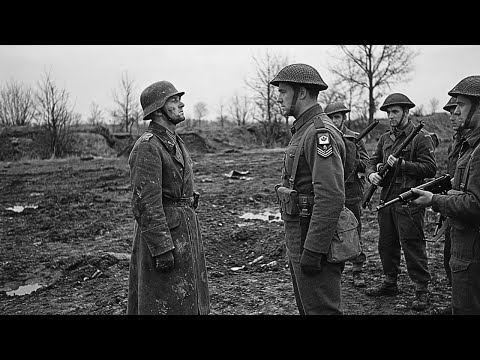
The first attack came at dawn two days ago. Eighty men rushed across open ground toward the bunker. German machine guns opened fire when the Canadians were 150 yards out. Twenty-three men were killed in the first 90 seconds. Nineteen more fell wounded. The survivors crawled back to the trenches, dragging their injured comrades with them. The second attack came that evening using smoke grenades and covering fire. Sixty Canadians advanced through the smoke. The Germans waited silently until the Canadians were 50 feet away. Then they opened fire, using the sound of footsteps to aim through the smoke. Twenty-four more Canadians fell. The third attack came the next morning with different tactics and heavier artillery support. The result was the same. More wooden crosses, more letters to families, more failure.
A British admiral visited the Canadian positions that rainy morning. He wore a clean uniform and polished boots that had never seen mud. He pointed at the bunker with his swagger stick and spoke with absolute certainty. “We will continue the naval bombardment,” he said. “Bigger guns are on their way. We will pound them day and night until the concrete cracks.” An American general stood beside him, nodding. “Acceptable losses,” the American said. “Send another infantry wave with better support. Eventually, their defenses will collapse.” The Canadian officers listened to this advice and felt sick in their guts. More bombardment had already failed 500 times. More soldiers rushing across open ground meant only more graves.
But winter storms were coming. In 48 hours, bad weather would make any naval operations impossible. If they didn’t take the bunker before the storms arrived, they would have to wait until spring. Every day of delay meant 4,000 tons of supplies stuck in warehouses instead of reaching the front lines. Major Jack Morrison studied the map spread over a wooden ammunition crate and said nothing during the meeting. He was 29 years old, with weather-beaten skin and strong hands scarred from years of hard work. Before the war, Morrison had been a deep-sea fisherman in Newfoundland. He knew boats and nets and the moods of the ocean. He understood how to read weather from the color of clouds and the smell of wind. When ice blocks clogged fishing ports in winter, Morrison was the man villages called. He would drill precise holes in the ice and place dynamite charges in exactly the right spots. A single explosion could break the blockage so ice flowed out to sea with the current.
The Canadian Army made him a combat engineer because he was an explosives expert who never panicked under pressure. Now, Morrison ignored the generals arguing about artillery and looked at something they had completely overlooked. Tide tables. The Scheldt estuary had the second highest tidal range in all of Europe. At high tide, the water rose 23 feet above mean sea level. At low tide, it dropped 22 feet below mean level. A total difference of 45 feet between tides twice every day. Morrison studied the bunker blueprints they had captured from a German engineering officer. The bunker sat directly on top of the sea wall—not behind it, not dug into the ground, but on the wall itself. The foundations were built at mean sea level, at zero feet elevation. Morrison could see drainage pumps marked on the blueprints. Those pumps were designed to handle normal rainfall and normal tides. But what would happen if the water wasn’t normal?
Morrison stared at the gray North Sea stretching to the horizon. He thought about the fish that swim through currents and tides. Fish never fight the ocean. They use the water’s power to get where they want to go. They let the current carry them. Morrison had spent 15 years on fishing boats learning the same lesson. You don’t fight the sea. You work with it. He looked again at the tide tables, then at the sea wall, then at the bunker. His finger traced the path water would take if the sea wall were breached in the right place at the right time. For the first time in three days, Major Jack Morrison smiled. He whispered to himself in the cold rain: “Fish don’t fight the current. They use it. And I know exactly how to use it.”
Morrison requested an urgent meeting with his engineering team that evening. Six men gathered in a supply tent away from the rain. Morrison spread his maps and tide tables on a table made from stacked ammunition crates. The engineers crowded around him, looking at the papers covered with Morrison’s notes and handwritten calculations. Morrison pointed to a spot on the map 200 yards west of the bunker. “Here,” he said. “The British naval bombardment three weeks ago damaged this section of the sea wall. I’ve seen it through binoculars. The concrete is cracked and broken. This is our weak point.” Young Lieutenant Davies leaned in to study the map. “What are you thinking, sir?” Morrison traced the path from the damaged wall section to the bunker. “If we breach the wall here at low tide, the North Sea will flow through the gap. Water will spread across this entire area. When high tide comes six hours later, millions of gallons will flood the bunker’s basement and lower levels. Their ammunition will be underwater. Their supplies will be ruined. They’ll be standing in six feet of seawater with no way to pump it out fast enough.”
Davies stared at the map, trying to understand. “You want to drown them?” Morrison shook his head. “I want to make their bunker uninhabitable. I want to give them a choice between surrender and drowning. They’ll choose surrender.” A sergeant named Mackenzie asked the practical question. “How much explosives do we need to open a hole in that wall?” Morrison had already done the calculations on paper. “The damaged section is 30 feet wide, the wall is 8 feet thick. At that point, we need 400 pounds of explosives placed deep in the cracks. Shaped charges to direct the blast inward toward the land side. We’ll detonate at the exact moment of low tide when water pressure is lowest. The wall will blow, and the sea will do the rest of our work for us.” Mackenzie let out a low whistle. “400 pounds is a lot of explosives, sir. Where will we get that much?” Morrison smiled. “We’ll borrow it. 10 pounds from this engineer company. 20 from that one. 15 pounds from another. No one will notice until we’re done, and by then it won’t matter.”
But first, Morrison had to make sure his plan would actually work. That night, he chose six engineers who were strong swimmers. They wore dark clothing and smeared mud on their faces. The moon was hidden behind thick clouds—perfect conditions for covert work. At 11:00 PM, they slipped into the freezing waters of the North Sea and swam toward the damaged wall section. Morrison felt the water like icy knives stabbing his skin. His breathing came in ragged gasps. The tide was receding. In three hours, it would reach its lowest point of the day.
The six men reached the sea wall and climbed over the exposed rocks and concrete. Shells cut their hands. Seaweed made the surface slippery and dangerous. Morrison took out a small flashlight from his waterproof bag and shielded it with his hand. He examined the cracks in the concrete wall. The damage was better than he had hoped. British shells had torn the wall deep into its structure. He could fit his entire fist into some of the gaps. These cracks would be perfect places to plant the explosive charges.
Morrison took precise measurements with a cloth tape. The damaged section was 32 feet wide. The wall thickness at this point was 8 feet. The foundation extended 12 feet below the current water level. He recorded everything on waterproof paper with a grease pencil. The other engineers explored the wall 200 yards in both directions. They found the best approach route without being seen by German guards. After 90 minutes of cold work, they slipped back into the black water and swam toward shore. Morrison’s whole body was shaking from the cold. His teeth chattered so hard he bit his tongue. But he had the information he needed. The plan would work.
The next morning, Morrison presented his plan to the Allied command. The meeting was held in a farmhouse that smelled of wet wool and tobacco smoke. The British admiral stood with his arms crossed over his chest. His face was contemptuous as Morrison explained the flooding operation. “You want to flood a Dutch town?” he barked. “Absolutely unacceptable. We cannot destroy civilian property.” Morrison kept his voice calm and respectful. “Sir, the Dutch government evacuated all civilians from this area two weeks ago. The town is completely empty. The buildings are already destroyed by artillery fire. We won’t be flooding anyone’s home. We’ll be flooding an abandoned battlefield.”
The American general interrupted with his own objection. “What if this plan fails? What if you blow the wall and the water doesn’t reach the bunker? What then?” Morrison was ready for this question. “Then we’ll be in exactly the same position we are now, sir. The bunker will still stand, and we’ll try a different approach. But if the plan succeeds, we’ll take that position without losing a single additional soldier.” The British admiral shook his head firmly. “This is madness. Sound military doctrine says we continue the bombardment. We bring in heavier naval guns. We pound them until they collapse.” The American general nodded in agreement. “We should launch another infantry attack with better artillery preparation. That’s how wars are won—through superior firepower and determination.”
Morrison felt frustration rising in his chest, but he kept his face neutral and professional. The so-called sound method had already killed 34 of his friends. The sound method was failing. But Morrison was only a major. These men were an admiral and a general. He couldn’t force them to listen to a Newfoundland fisherman who thought he knew better than professional military commanders. Then a voice came from the doorway. “I think the Major’s plan is excellent.” Everyone in the room turned to look. Lieutenant-General Guy Simonds entered the farmhouse. He commanded the entire II Canadian Corps. He was the highest-ranking Canadian officer in Holland. Simonds looked directly at the British admiral and the American general with cold gray eyes. “The British want to continue the bombardment,” Simonds said quietly. “The Americans want to keep pushing men across open ground. I want my soldiers to come home to their families alive.” He turned to face Morrison. “Major, you have 24 hours to make this work. Use whatever resources you need. I’ll handle anyone who objects.”
Morrison and his engineering team worked through the night gathering supplies. They visited three different Canadian engineer companies spread across five miles of front lines, collecting 10 pounds of explosives from one unit, 15 pounds from another, 25 pounds from a third. The engineers who handed over their explosives asked no questions. They understood that engineers help each other. By dawn, Morrison had collected 400 pounds of assorted explosives in a barn. Now came the hardest part. The charges had to stay completely dry, even when placed underwater at the base of the wall. Morrison and his men wrapped each explosive package in rubberized canvas covers normally used to protect military vehicles. They sealed every edge with waterproof tape. Morrison prepared the detonators using modified artillery fuses connected to a waterproof clock mechanism. If the primary detonator failed for any reason, backup fuses would automatically trigger after 15 minutes. Nothing could be left to chance. The lives of many depended entirely on this operation’s success.
For transport to the sea wall, Morrison contacted the Dutch resistance through Canadian intelligence officers. The resistance provided a fishing boat with a quiet motor that wouldn’t alert German guards. Morrison knew boats intimately. He had spent 15 years aboard fishing vessels in the dangerous North Atlantic waters off Newfoundland. He understood currents and tides and how to navigate in total darkness using only the feel of the wind and the sound of waves. The boat was carefully loaded with the waterproofed explosives. Morrison reviewed the tide tables one last time. Low tide would occur at exactly 3:47 AM on October 28. His team would have a window of only 20 minutes. Twenty minutes to reach the wall. Twenty minutes to place 400 pounds of explosives in the cracks. Twenty minutes to connect all detonators properly. Twenty minutes to get back to safety before the tide turned and the water began rising again.
Morrison looked at his watch, then at his six engineers. Their faces were grim but determined. They climbed into the fishing boat as the sun set over the cold gray North Sea. The engine started with a quiet hum. Morrison steered the boat toward the darkness and the waiting sea wall. The fishing boat cut through the black water in complete silence. Morrison stood at the helm, staring with intuition and memory. No lights, no engine noise above a whisper. The North Sea stretched around them like liquid darkness. Morrison checked his waterproof watch. 3:15 AM. Thirty-two minutes until low tide. Thirty-two minutes until the moment when everything had to be perfect.
The damaged section of the sea wall appeared before them as a darker shadow against the night sky. Morrison steered the boat close, and his engineers jumped onto the slippery rocks. They worked in absolute silence, passing the waterproof explosive packages from hand to hand. Each man knew his task. They had practiced the movements 20 times on dry land. Now they executed the plan in freezing darkness with numb fingers and racing hearts. Morrison climbed the wall and found the largest crack. He pushed a 40-pound explosive package deep into the gap. The concrete edges cut his knuckles. He didn’t notice the pain. Lieutenant Davies worked three feet away, placing another charge. Sergeant Mackenzie jammed explosives into a vertical crack that ran eight feet down into the wall’s foundation.
Eighteen minutes until low tide. Morrison connected the detonator wires with fingers that had nearly lost all feeling. The waterproof clock mechanism ticked quietly in his hands. He set it for exactly 3:47 AM. If he was off by even one minute, the plan could fail. Too early and the water pressure would be too high. Too late and the rising tide would already be pressing against the opening. Morrison’s hands moved with the precision of 15 years of tying fishing nets in storms. Every connection had to be perfect. Every wire had to be secure. Mackenzie finished placing the last explosive package and signaled Morrison with a thumbs-up in the darkness. Eleven minutes until low tide.
The engineers hurried back to the fishing boat. Morrison made a final check of the detonator connections. Everything looked correct. He jumped into the boat and pushed away from the wall. The quiet motor carried them 800 yards to a position behind a rocky outcrop. They would be safe there from the explosion and the initial water surge. Morrison and his men crouched in the boat and waited. The wind picked up, carrying stinging spray across their faces. The North Sea made soft slapping sounds against the boat’s hull. Morrison watched his watch. Five minutes, four minutes, three minutes. His heart pounded hard in his chest. Two minutes, one minute. He muttered a prayer under his breath.
At exactly 3:47 AM on October 28, 1944, 400 pounds of explosives detonated inside the sea wall. The sound wasn’t a sharp bang like artillery. It was a deep roar that seemed to come from the earth itself. Morrison felt the shockwave travel through the water and shake the boat. The sea wall erupted in a fountain of concrete blocks and white spray. Chunks of broken wall flew 50 feet into the air and scattered 100 yards out to sea. When the spray cleared, Morrison saw a gap 30 feet wide where solid concrete had stood moments before. For one second, nothing happened. Then the North Sea realized there was an opening and rushed through it with the force of a water avalanche. The sound was like Niagara Falls compressed into 30 feet. Fifty thousand gallons of seawater were pouring through the gap every minute.
The flow created a current so strong that fish and debris spun in circles at the edges. Morrison watched the wall of white water surge across the flat ground toward the bunker 200 yards away. The water spread and slowed as it crossed the distance, but it kept advancing. The North Sea had found a new path, and nothing could stop it now. Morrison checked his watch again. High tide would come at 9:47 AM, six hours from now. The bunker had six hours before the real flood began.
Morrison and his men returned to the Canadian lines and reported success to General Simonds. Morrison then positioned himself at an observation point with powerful binoculars. He had to see if his plan had actually worked or if he had wasted 400 pounds of explosives in a spectacular failure. The hours passed slowly. Morrison watched the water creep across the battlefield. At first, it was just a thin sheet spreading over the mud and rocks. Then it began to pool in low spots. By 8:00 AM, the water was a foot deep across a hundred-yard area around the bunker. By 9:00 AM, the depth was two feet, and it was rising faster as the tide came in.
Inside the bunker, Major Richter realized something terrible had happened. Water was seeping through the floor drains in the basement. At first, his men tried to pump it out using the bunker’s drainage system. The pumps were designed to handle 5,000 gallons per hour, but water was flowing in at 50,000 gallons per minute. The pumps couldn’t keep up. They choked and sputtered and then stopped working entirely. Richter ordered his men to place sandbags in front of the interior doors to prevent the water from spreading through the bunker. But water pressure doesn’t care about sandbags. It pushed through cracks and gaps with unstoppable force.
By 9:30 AM, seawater had reached the main ammunition storage room in the bunker’s basement. The room filled with 18 feet of water within 20 minutes. Artillery shells and rifle ammunition floated and then sank. Salt water poured into wooden and cardboard crates. Every explosive and every bullet in the magazine was now useless. Even if the Germans could dry them out later, the salt water had already ruined the gunpowder. The bunker had just lost all its ammunition reserves.
Richter tried to call for help on the radio from German command. But the radio room was flooding. The equipment sparked and then died. His last transmission cut off in mid-sentence. “The Canadians have turned the sea itself into a weapon. We are drowning inside our own bunker. This is not war.” That’s how the broadcast ended. Morrison listened to the recording later and heard the panic in Richter’s voice. At 9:47 AM, high tide arrived. The water level jumped dramatically. Morrison watched through his binoculars as the bunker disappeared behind a spray of waves. When the view cleared, water surrounded the entire structure. It poured through the main entrance doors. It flooded the corridors through ventilation openings. It rose up the exterior walls as if the bunker were sinking into the ocean.
Inside, the German soldiers abandoned the lower floors and climbed the stairs to the upper levels. But the water kept rising. It reached six feet deep in some corridors, four feet in the main command room. At 10:15 AM, Morrison saw movement on the bunker roof. German soldiers were climbing out through a roof hatch. They stood on the wet concrete, looking down at the water that covered their bunker. More soldiers appeared, then more. Within five minutes, 80 German soldiers stood on the roof.
At 10:30 AM, a white flag appeared. It was a bedsheet tied to a broken radio antenna. The white cloth flapped and struggled in the wind. Morrison felt relief flood through his entire body. It had worked. The plan had actually worked. At 10:45 AM, the bunker’s main door opened. German soldiers began wading through chest-deep water. Their hands were raised above their heads. Their uniforms were soaked. Their faces showed shock and confusion. They had expected to fight bullets and bombs. Instead, the ocean itself had defeated them.
One hundred eighty German soldiers surrendered in groups of 10 and 20. They waded through the water toward the Canadian lines. Some of them were crying. Some looked angry. Most just looked exhausted and defeated. Major Klaus Richter finally appeared at 11:00 AM. He waded through the water, still wearing his officer’s cap. Water dripped from his uniform. He carried nothing but his dignity. A Canadian officer met him and accepted his formal surrender. Richter looked at his flooded bunker in six feet of seawater. His voice was calm when he spoke in English. “You didn’t fight us with guns. You fought us with the sea. I have been a soldier for 20 years and I have never seen anything like this.” The Canadian officer nodded. “War changes, sir. We either adapt or we die.” Richter handed over his pistol and became a prisoner of war.
Morrison stood at the observation point, watching the surrender of the last German soldier. Not a single Canadian soldier had died in the operation. Not even one. The comparison to the conventional attack made his chest tight with emotion. Military analysts later estimated that a direct assault would have cost 200 to 300 Canadian casualties. The actual cost was 400 pounds of explosives and one breached sea wall.
The Scheldt estuary was now open to Allied shipping. Within 72 hours, the first supply ships arrived in Antwerp. Four thousand tons of supplies began flowing daily to the Allied armies. The war would continue for seven more months, but this moment marked a turning point. And it had been won not by superior firepower, but by superior thinking. Morrison had thought like a fisherman, not like a soldier. And that made all the difference.
Morrison’s flooding of Major Richter’s bunker changed how the Allies fought for the rest of the war. Within a week, every Canadian engineer unit requested copies of Morrison’s plans. They wanted to know the exact math, how much explosives for different wall thicknesses, how to calculate tidal flows, how to time detonations for maximum effect. Morrison sat in a country house for three straight days, writing detailed reports. He drew diagrams showing where to place charges in wall cracks. He explained how to read tide tables and calculate water volumes. He wrote instructions on waterproofing explosives and building reliable timers. Every page was copied and distributed to Allied engineering units across Europe.
By December 1944, British commandos used a similar flooding technique against German coastal bunkers on the French coast. They breached a river dam at low water and flooded three enemy positions simultaneously. The Germans surrendered without firing a shot. In January 1945, Soviet engineers in Poland used controlled river flooding to force Germans out of fortified towns along the Vistula River. The tactic spread because it was effective and because it saved lives on both sides.
Military planners began teaching environmental warfare in engineering schools. Use the terrain. Use the weather. Use the water. Don’t fight nature. Make nature fight for you. General Simonds promoted Morrison to lieutenant colonel. Two weeks after Operation Breskens, Morrison took command of an entire Canadian engineer brigade. He led them across Holland and into Germany during the final months of the war. His engineers built bridges under enemy fire. They cleared minefields. They used explosives to breach defensive walls. Morrison’s reputation grew. Other officers called him “The Fisherman” because he always found ways to use water and terrain to solve problems that bullets couldn’t.
When the war ended in May 1945, Morrison had received the Distinguished Service Order and been mentioned in dispatches three times. He was 30 years old, and he was exhausted to the bone. Morrison returned to Newfoundland in August 1946. He stepped off the ship onto the familiar docks and breathed the salt air that smelled like home. The war already felt like a dream that was beginning to fade. Morrison returned to fishing for two years, but the ocean had changed for him. He had seen too much and used too much. The water no longer seemed peaceful.
In 1948, Morrison became harbor master for his town’s port. He managed boat traffic and tide schedules and repairs. He also started a small fishing fleet company. By 1960, he owned 12 boats and employed 40 men. Morrison never talked about the war unless someone asked him directly. And even then, his answers were brief. What he had done during the war was private. The memories belonged to him and the men who were there.
Morrison lived a quiet life for 43 years after the war ended. He married in 1949, had three children, and watched them grow up and have children of their own. He died in 1989 at the age of 74 from a heart attack while working on his boat. The people of Newfoundland remembered him as a good harbor master and an honest businessman. In 1991, the provincial government named a new bridge after him. The Morrison Bridge connected the mainland to a small fishing island. Most people who drove across that bridge never knew why it had that name. They knew nothing about the bunker or the sea wall or the 180 Germans who surrendered to the ocean.
Major Klaus Richter spent nearly two years as a prisoner of war in a Canadian camp. The Canadians treated him well. He received a bed and food and medical care. In June 1946, Richter returned to Germany and found his city of Hamburg destroyed by Allied bombing. Seventy percent of the city was rubble. His family home no longer existed. His wife had been killed in the bombing. His children had been sent to live with relatives in the countryside. Richter was 46 years old, and his entire world had been erased.
The new German government did not allow former Wehrmacht officers to serve in any military capacity. Richter became a schoolteacher instead. He taught history and geography to children who had grown up during the war. He never spoke about his military service. But in 1962, at the age of 62, Richter wrote a memoir titled “The Water Fortress.” The book described his experience at Breskens. He wrote about the moment he realized the Canadians were flooding his position. He wrote about the fear of drowning inside his own bunker. He wrote about the shame of surrender and the relief of survival. The final chapter of the book acknowledged that Morrison’s tactic had been brilliant and morally sound. Richter wrote that Morrison had defeated him without a massacre. That distinction mattered.
In 1978, Richter traveled to Newfoundland. He was 78 years old and wanted to meet the man who had flooded his position 34 years earlier. Richter found Morrison working on a fishing boat in the harbor. The two men looked at each other for a long moment. Then Morrison invited Richter onto his boat. They spent the afternoon out on the water, saying very little. They watched the tides change. They felt the wind and smelled the salt air. When they returned to shore, Richter shook Morrison’s hand and said something Morrison never forgot. “You understood the ocean better than I understood concrete.” Morrison smiled and replied that concrete was just concrete, but the ocean was alive. They parted as two old men who had once been enemies and were now just two people who understood the sea.
Richter died three years later in 1981 at the age of 81. The lessons of the Breskens flooding spread far beyond military circles. The story taught three important truths about solving impossible problems. First, use your environment as an ally instead of an obstacle. Morrison didn’t see the ocean as an obstacle in his way. He saw it as a weapon more powerful than any artillery. The professional soldiers thought like soldiers. Morrison thought like a fisherman. That different perspective changed everything. Second, winning without killing is still winning. Morrison saved Canadian lives by not sending them to die in direct attacks. He also saved German lives by giving them the option to surrender instead of fighting to the death. One hundred eighty German soldiers returned home after the war because Morrison chose water over bullets.
Third, questioning authority can save lives. The British admiral wanted more bombardment. The American general wanted more infantry attacks. Morrison questioned whether their way was the only way. His willingness to challenge conventional thinking led to a breakthrough that saved hundreds of lives. Modern armies still study Morrison’s operation in engineering and leadership colleges. The principles he proved remain relevant. During conflicts in Iraq and Afghanistan, coalition forces used controlled flooding to force enemies out of fortified positions. In urban combat, engineers reroute water from damaged pipes and canals to flood underground bunkers. The technology has advanced, but the core idea remains the same. Use the environment, use physics, use the power of nature instead of fighting against it.
In the current war in Ukraine, both sides use dam control and river flooding as tactical weapons. Every time military engineers breach a dam or redirect a river, they are using tactics that trace back to a Newfoundland fisherman standing in the Dutch rain, staring at tide tables. Morrison gave only one interview about Operation Breskens. In 1987, two years before his death, a military historian visited him in Newfoundland. Morrison was 72 years old. The historian asked him to explain his thinking. Morrison sat on his porch overlooking the harbor and spoke slowly. “I was a fisherman before I was a soldier,” he said. “Fishermen learn early that you don’t fight the ocean. The ocean is too big and too strong to fight. Instead, you learn to work with its power. You use the tides. You use the currents. You let the water carry you where you want to go. The sea doesn’t care about human wars. It just moves according to the moon and the wind. We didn’t fight the Germans with the ocean. We just asked the ocean to move at the right time and in the right direction. After that, gravity and water pressure did all the work. We just had to get out of the way and let nature do what nature does.”
That understanding captures the deeper meaning of Morrison’s achievement. The most humane response to violence is not always more violence. Sometimes the answer is to understand forces greater than human conflict. Water and tides and gravity don’t care about politics or nationality or military doctrine. They simply follow natural laws. Morrison understood those laws better than he understood military tactics. And that knowledge saved lives on both sides of a terrible war. The bunkers at Breskens didn’t fall because the Canadians were stronger or braver than the Germans. They fell because one man looked at an impossible problem and asked a different question. Not how do we break through the concrete, but how do we make the concrete irrelevant? The answer had been there all along, in the tide tables and the North Sea. Morrison just had to see it.
And so the sea wall at Breskens stands today, a quiet monument to a fisherman’s logic. The gap Morrison blasted has long since been repaired, but the lesson remains carved into the memory of military history. Sometimes the sharpest weapon isn’t steel or fire—it’s a mind that dares to ask, “What if we let the ocean fight for us?” What impossible problem in your own life could be solved by working with the current instead of against it?
Report this article
Select a reason for reporting:






