The sun hammered the Libyan desert like a blacksmith’s strike on an anvil. Heat waves danced over endless dunes, stretching to the horizon in every direction. This was North Africa, where temperatures could reach 120 degrees Fahrenheit by noon. Water was more precious than gold. One canteen had to last a soldier an entire day. Men learned quickly that the desert could kill you as fast as enemy bullets.
The German Afrika Korps had just completed a stunning victory. In only 12 days, they had advanced 300 miles across the desert, pushing British forces toward Egypt. Their commander, Erwin Rommel, had earned the nickname “Desert Fox” for his cunning tactics. His soldiers believed they were invincible. After all, they had crushed Poland in 36 days. They had defeated France in 6 weeks. The great French Army, with all its tanks and fortifications, had fallen like a house of cards. Now the Germans thought Africa would be easier.
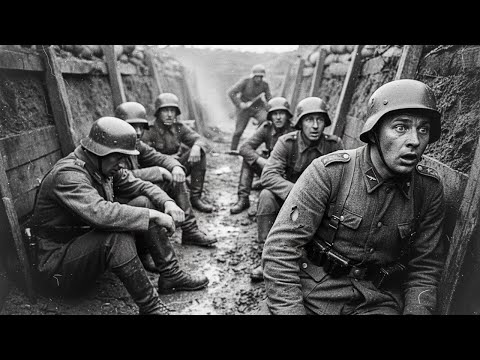
These German soldiers had been trained in a very specific way. They followed orders without question. When an officer gave a command, every soldier obeyed instantly. This was called discipline, and the German Army was famous for it. Their combat plan was called “Blitzkrieg,” which meant lightning war. They moved fast, struck hard, and gave the enemy no time to think. Tank units would punch through enemy lines while aircraft bombed from above. Infantry soldiers marched in perfect formation. Everything worked like a well-oiled machine.
But there was something else driving the German soldiers forward. At home, their government had spent years telling them they were special. The Nazi Party said Germans were the master race, superior to everyone else. They told them other peoples were weak and inferior. British soldiers were soft. French soldiers were cowards. And anyone living in far-flung colonies must be even worse. This is what they believed. This is what they had been taught since childhood.
With the warm April air settling over the desert, German reconnaissance units advanced toward a coastal town called Tobruk. This town sat on the Mediterranean Sea like a tiny dot on a vast, empty map. It had a port where ships could dock. Whoever controlled Tobruk controlled the supply lines for the entire region. The British knew this. The Germans knew it too. Tobruk had to be taken.
German intelligence officers looked at their maps and reports. They saw that Tobruk was defended by soldiers from Australia. Most German commanders had never fought Australians before. Their files indicated they were colonial troops, men from a distant land at the far edge of the world. Australia was a place where Britain had once sent criminals as punishment. The Germans assumed these soldiers would lack proper training. They expected them to run at the first sign of real combat. German reports stated there were about 14,000 Australian soldiers defending Tobruk. There were some British units with them as well. The defenders had been rushed to this location. They hadn’t had time to build strong fortifications. Their defensive line consisted of sandbags, barbed wire, and shallow trenches dug into the rocky desert ground. From the German perspective, this looked like an easy target.
What the Germans didn’t know was the true identity of these Australian soldiers. Many came from the “Outback,” the vast, empty interior of Australia, where survival meant being tough. Some had grown up on sheep stations covering thousands of square miles. Others worked on cattle ranches where the nearest neighbor might be 50 miles away. Some came from mining towns where men dug for gold and copper in harsh conditions. They weren’t city boys. They were men who knew how to handle hardship. They knew how to fix things with their hands. They knew how to keep going when things got tough.
The Australian soldiers wore a distinctive uniform. On their heads were slouch hats made of felt with one side pinned up by a badge. This was their trademark. Under the desert sun, these hats provided shade. In the rain, they kept the water off. The Australians had trained in Palestine and Egypt before coming to Tobruk. They were part of the 9th Australian Division, a unit that would become legendary.
On April 11, the first real engagement occurred. German reconnaissance units on armored cars and motorcycles approached the outer defenses of Tobruk. They expected to scout the position and return with a report. Perhaps they would find some frightened colonials hiding in trenches. Perhaps they would take some scattered sniper fire. Instead, they encountered something completely unexpected.
The Australians didn’t hide. They didn’t wait nervously behind their defenses. As soon as the German vehicles came into range, the Australian soldiers opened fire with machine guns and anti-tank weapons. But the most surprising thing wasn’t the shooting. It was what happened next. Small groups of Australian soldiers left their trenches and moved forward. They advanced toward the Germans. This was not normal defensive behavior. Defenders were supposed to stay behind their cover and shoot at attackers. But these men were doing the opposite.
The German soldiers radioed their commanders, their voices filled with confusion. The enemy was aggressive. The enemy was attacking during a reconnaissance mission. This didn’t match what they expected from colonial troops. One German officer wrote in his field notes that night. He said these soldiers didn’t fight like the English they had faced in France. He said they were something else. He used the word “different” three times in one paragraph. He couldn’t explain what made them so different. He just knew something was wrong. Something didn’t fit the usual pattern.
As darkness fell over the desert that first night, German sentries stood watching around their camps. The temperature dropped from scorching heat to bitter cold within hours. That was the nature of the desert. In the distance, they could see the faint lights of Tobruk. Somewhere out there in the darkness, the Australians were waiting. The Germans had their orders. They would attack soon and take the town. It should be easy. Their officers said it would take maybe 3 days, or a week at most. But that night, many German soldiers reported hearing something strange. From the direction of the Australian lines, across the empty sand, came sounds—not gunfire, not engines, but singing. The Australians were singing in their trenches.
As days turned into weeks, the German forces around Tobruk began to notice patterns that made no sense according to everything they had been taught. The siege was supposed to be quick. Take the town, move forward, maintain momentum. But the Australians had other ideas, and those ideas were unlike anything any German soldier had seen before in this war.
The first shock came at night. In European wars, night meant rest. Both sides would dig in, set sentries, and wait for morning. Night attacks were rare because they were dangerous and confusing. Soldiers could shoot their own men by mistake in the dark. But the Australians seemed to love the night. They used it as a weapon. German sentries began reporting strange things. Shapes moving in the darkness, sounds that might be wind or might be footsteps. Then suddenly, grenades would explode in German positions. Machine gun nests would go silent. When dawn came, German officers would find their forward positions destroyed. Sometimes, the soldiers were dead. Other times, they were simply gone, captured and dragged back to Australian lines for questioning.
One German company commander began counting these attacks. In the first month of the siege, his unit was hit by night raids 17 times. 17 times in 30 days. That meant his men never got proper rest. Every night brought the possibility of Australians crawling through the darkness. Some German soldiers stopped sleeping normally. They would doze for an hour, wake in panic, then try to sleep again. The exhaustion wore them down more than the actual fighting during daylight.
The Australians had a specific method for these raids. They would remove their shirts so their bare skin showed under the moonlight. Then they would cover their bodies with dirt and sand until they blended with the desert floor. They would blacken their faces with soot or mud. Some would wrap cloth strips around their boots to muffle their footsteps. Then they would begin to crawl. Not walk—actually crawl on their bellies like snakes, moving inch by inch across hundreds of yards of open ground. German machine gunners, trained to spot any movement, would stare into the darkness until their eyes hurt. But the Australians moved so slowly and carefully that they became invisible. Sometimes they would crawl for two hours just to cross 300 yards. When they got close enough to touch the German wire, they would cut it silently with special tools. They would slip through, and then the violence would begin.
One German soldier named Klaus wrote a letter home to his mother. He wasn’t supposed to say much about the fighting, but he wrote anyway. He said the Australians fought with their hands and knives as much as with their rifles. He said they seemed to enjoy close combat. When they entered a trench, they used grenades, bayonets, and even shovels as weapons. Klaus mentioned seeing an Australian soldier knock a German sentry to the ground with a punch, then drag him across “no man’s land” to disappear into the night. The sentry woke up the next morning in an Australian prison camp with a terrible headache but no other injuries. Klaus said it was like being hunted by ghosts.
During daylight hours, the differences became even clearer. The German Army operated on strict rules. An officer gave orders. Soldiers carried out those orders. Precisely. A regular soldier never made major decisions. That wasn’t his job. His job was to obey. This system had worked in Poland. It had worked in France. It was supposed to work everywhere. But the Australian soldiers operated in a completely different way.
A German lieutenant, watching through his binoculars, saw something that deeply puzzled him. An Australian patrol was moving across open ground. Suddenly, they came under fire from a German position. Instead of waiting for orders from their officer, the Australian soldiers immediately scattered. Some ran left, some ran right. Two moved straight toward the German position. They moved without any clear commands being given. Each man seemed to know exactly what to do on his own. The German lieutenant watched these soldiers flank his machine gun nest and destroy it in less than 3 minutes. No one had told them what to do. They just did it.
When he reported this to his commander, he was told he must have seen it wrong. Soldiers needed officers to tell them what to do. Everyone knew that. But the lieutenant knew what he had seen. These Australians were different.
Intelligence reports began piling up at German headquarters. The numbers told a story no one wanted to believe. In direct infantry combat, the Germans were losing more men than the Australians. Not by a small margin—by a significant one. For every German killed or wounded, only one Australian fell. This was reversed. This was wrong. The superior German soldier was supposed to win these engagements easily.
One report circulated among German officers described an incident that seemed almost impossible. An Australian unit of about 80 men was surrounded by roughly 200 German soldiers. The Germans had more men, more ammunition, better positions. The Australians should have surrendered. Instead, they attacked. They actually attacked the larger German force. The fight lasted for 3 hours. When it was over, the Australians had broken through the German lines and escaped. They took their wounded with them. The German force suffered 43 casualties. The Australians lost 11 men.
German soldiers began talking among themselves about these strange enemies. They gave them a nickname. They called them the “Rats of Tobruk.” Some said it as an insult, but many said it with respect. They weren’t ordinary soldiers. They were something else entirely.
The way the Australians treated their officers shocked the Germans even more. German soldiers would never dream of arguing with an officer. You saluted. You said “yes sir.” You carried out orders. But Australian soldiers argued with their officers. They called them by their first names. One German prisoner reported hearing an Australian soldier tell his lieutenant that the battle plan was stupid. The soldier suggested a different approach, and the lieutenant listened. They discussed it like equals. Then they agreed on a new plan together. This seemed like chaos to the German mind. How could an army function if soldiers questioned their leaders? How could discipline exist if soldiers spoke to officers like friends? But it worked somehow. Somehow these disrespectful colonials were winning.
Food was another shock. German rations in the desert were basic. Hard bread, canned meat, and water carefully measured in bottles. Each soldier got just what he needed to survive, nothing more. Supply lines stretched across thousands of miles. Everything had to be calculated and controlled. But prisoners captured from Australian positions reported something amazing. The Australians had real food—not just survival rations, but actual meals. They had canned fruit from Australia. They had tea with milk and sugar. Some forward positions even had cigarettes and chocolate. One German prisoner said he was given a full bowl of hot soup at the Australian camp. He couldn’t remember the last time he’d had hot, tasty food. This abundance suggested something troubling. If the Australians, who were supposed to be surrounded, had better supplies than the attacking Germans, what did that mean about the war? What did that mean about German superiority? These were questions that began to haunt the soldiers who had come to Africa believing they were part of a master race destined to rule the world.
The moment that changed everything came on a hot day in late April. Rommel was tired of waiting. He had been told Tobruk would fall quickly, but weeks had passed and the town still held. His reputation was at stake. The Desert Fox does not lose battles. He decided to end this siege with a massive assault that would crush the Australians once and for all.
The German plan was simple and powerful. They would push 5,000 soldiers against the Australian defenses. 50 tanks would lead the attack, their cannons firing. Artillery batteries positioned in a long line behind the German front would fire hundreds of shells to soften up the enemy positions. The bombardment would be so intense that nothing could survive it. Then the tanks would advance. Then the infantry would swarm in to secure and declare victory. Every German officer who saw the plan agreed it would work. It had to work.
The attack began at dawn. The artillery started with a sound like continuous thunder. Shells flew through the air and exploded on Australian positions. Dirt and sand flew into the sky. The ground shook like an earthquake. This continued for two full hours. German commanders watched through their binoculars and smiled. Nothing could live under this kind of bombardment. The Australians must be hiding in their deepest holes, too terrified to move.
When the shelling finally stopped, the tanks moved forward. Fifty mechanical monsters grinding through the sand, engines roaring, tracks squealing. Behind them marched thousands of German infantrymen in neat lines. This was Blitzkrieg. This was German military power. This was how wars were won.
But something went wrong almost immediately. As the tanks approached the Australian defense line, hidden guns opened fire. The Australian soldiers had dug special pits for their anti-tank weapons. These pits were so well concealed that German scouts had never noticed them. The pits were covered with cloth and sand. From the air or from a distance, they looked like empty desert. But inside each pit was a gun crew waiting patiently for its moment. The Australian anti-tank guns were called “2-pounders.” They fired a shell that weighed exactly two pounds, and when it hit a German tank at close range, it punched through the armor. The Australian gun crews had trained for months. They knew exactly where to aim. They waited until the German tanks were less than 400 yards away. Then they fired.
The first German tank exploded in a ball of flame. Then the second. Then the third. Within 30 minutes, 17 tanks were burning wreckage scattered across the battlefield. Black smoke rose into the clear blue sky. The carefully planned attack was falling apart.
German tank commanders sent frantic radio calls. Some tanks tried to retreat. Others pushed forward, hoping to overrun the Australian guns with sheer force. Then something happened that no German soldier expected. Instead of staying in their defensive positions and shooting from safety, the Australian infantry came out of their trenches. They advanced. They ran straight toward the attacking Germans. This was against every expectation. Defenders were supposed to defend their positions. They were supposed to hide behind their walls and wire. But these Australians charged forward as if they were the attackers.
There was a German lieutenant named Friedrich that day. Years later, he told his story to a historian. He said watching the Australians advance was like watching madness. German machine guns cut down the first wave of attackers. But more kept coming. They ran through the machine gun fire. Some fell, others kept running. When they reached the German lines, the fighting became brutal and personal. Men fought with rifles as clubs. They fought with knives and bare hands. Friedrich said he saw one Australian soldier take three bullets and keep fighting for a full minute before he collapsed.
The battle lasted 5 hours. When it was finally over, the German attack had completely failed. They had not taken any new ground. They had not broken through the Australian defenses. Instead, they had been pushed back to their starting positions. German medics rushed forward to collect the wounded. The count began. Friedrich’s company had started the morning with 140 men. Only 61 returned unharmed. The rest were dead, wounded, or missing.
That night, Friedrich sat in his tent writing in his diary. His hands were shaking as he held the pen. He wrote about seeing death up close. He wrote about how the Australians fought without fear. He wrote something else too. He wrote that he no longer believed what he had been told about German superiority. He said: “If Germans are the master race, why are we being beaten by colonial soldiers who are supposed to be inferior?”
This idea spread like a disease through the German ranks. Soldiers talked quietly among themselves. They asked questions they had never dared to ask before. If the government had lied about the Australians being weak, what else had they lied about? If racial superiority was real, why were they losing to these men from the far side of the world?
A German soldier, captured and held in an Australian prison camp, had a long conversation with his guards. He spoke a little English. The Australians gave him tea and biscuits. They treated him fairly, which confused him. He had been told prisoners would be tortured or killed. Instead, they gave him food and medical care. The Australian guard, a man from a sheep farm in New South Wales, asked him why Germany was really fighting this war. The German soldier realized he didn’t have a good answer.
By August, after four continuous months of siege, the German army had suffered between 8,000 and 12,000 casualties around Tobruk. It was hard to know the exact number because the fighting was constant every day, but every German unit had lost men. Some companies had been rebuilt three or four times as reinforcements arrived to replace the dead and wounded.
German High Command began issuing special orders about fighting Australians. A memo sent to all units in North Africa gave specific instructions. It stated that German forces should avoid direct combat with Australian troops whenever possible. It said they should use artillery and air support instead. It explained that night operations in Australian-held areas were extremely dangerous and should only be conducted under exceptional circumstances. These orders were essentially an admission of fear. The German Army was being told to avoid hand-to-hand combat with the enemy because the enemy was better at it. This had never happened before in the war. German soldiers had been taught they were the best fighters in the world. Now their own leaders were telling them to stay away from certain enemies.
Rommel himself wrote private notes about the Australians. These notes were found years after the war ended. In them, he described the Australian soldier as the best opponent he had faced among all British Empire forces. He said they were strong fighters, intelligent, and naturally talented. He noted that their officers and regular soldiers showed excellent tactical sense. This was high praise from a man who rarely praised anyone.
But the real transformation happened in the hearts and minds of ordinary German soldiers. They had marched into Africa believing in their destiny. They believed they were part of something great and invincible. They believed the propaganda about racial superiority and German invincibility. The Australians had shattered those beliefs like a hammer smashing glass.
A young German corporal, recovering from his wounds in a field hospital, spoke to a doctor about his experience. He said he had joined the army because he believed in the cause. He thought Germany would build a better world. But after fighting at Tobruk, he no longer knew what he believed. He said the Australians showed courage, discipline, and fighting skill that exceeded his own. And they did it without all the speeches and flags and propaganda. They did it simply because that was their nature. The doctor wrote down what the corporal said. He noted that many wounded soldiers expressed similar thoughts. They had begun to question everything. And once a soldier starts to question, once doubt creeps in, it never completely goes away. The certainty that had driven the German Army forward was cracking. And it was cracking because of men in slouch hats who refused to fight the way they were supposed to.
December 1941. After eight long months, the 9th Australian Division finally received orders to withdraw from Tobruk. They had endured the blistering summer heat when temperatures reached 54 degrees Celsius. They had weathered constant shelling, air raids, and ground assaults. Now, British and Polish forces were arriving to replace them. The Australians could finally leave the desert fortress they had defended for so long.
Ships arrived at night to carry the soldiers away. The Australians boarded quietly, their uniforms dirty and worn, their faces sun-scorched. They had arrived as a force of 14,000 men. They left having suffered 3,000 casualties. But they had achieved something remarkable. They had stopped Rommel. They had held a position everyone said was indefensible. And they had forever changed how German soldiers viewed war.
The Germans who fought at Tobruk also eventually left Africa. Some stayed and fought until the Afrika Korps surrendered in Tunisia in 1943. Others were transferred to different fronts as the war spread across the globe. But whether they left early or late, they all carried something invisible with them. They carried doubt. They carried questions. They carried the memory of men in slanted hats who shattered everything they had believed.
Friedrich, the lieutenant who survived the April battle, was sent back to Germany in 1942 after being wounded. He recovered in a hospital in Berlin. Nurses and doctors asked him about Africa. They wanted to hear stories of German victories. They wanted him to confirm that the war was going well. But Friedrich told them the truth instead. He said the Australians were the toughest soldiers he had ever faced. He said they fought like devils and showed no fear.
One doctor, a member of the Nazi Party, grew angry at these statements. He said Friedrich must be suffering from battle fatigue. He said it was impossible for colonial troops to defeat German soldiers. Friedrich simply looked at him and asked a question. If it was impossible, then why did it happen? The doctor had no answer. He walked away without saying another word.
When the war finally ended in 1945, Germany was in ruins. Cities were destroyed. Millions were dead. The country was divided and occupied by foreign powers. The German soldiers who survived returned home to find everything changed. The government that had promised them glory was gone. The leaders who had spoken of a thousand-year empire were either dead or on trial for horrific crimes. Everything they had fought for had turned to ash.
The men who fought at Tobruk returned carrying more than just physical scars. They returned knowing something that many other Germans did not yet understand. They knew that the Nazi ideology was built on lies. They had seen those lies proven false in the desert. While other Germans were just beginning to learn that their government had lied about many things, the Tobruk veterans had known it for years.
Klaus, the soldier who wrote letters home about the Australian night raids, returned to his small village in Bavaria. His mother had kept all his letters. After the war, he read them again. He barely recognized the young man who had written those early letters, full of confidence and belief in German superiority. By the last letters he wrote from a prison camp after being captured, his tone had completely changed. He wrote about learning that all humans are ultimately equal. He wrote that courage and strength have nothing to do with race or nationality.
Years later, in the 1950s, historians began interviewing German veterans about their wartime experiences. Many men refused to talk. The memories were too painful. The shame of what Germany had done was too heavy. But some Tobruk veterans spoke openly. They had a different perspective from other soldiers. They had learned their lesson early on the sands of North Africa rather than in the desperate final days of the war.
One former German corporal explained it simply during a conversation with a university researcher. He said the Australians taught him that propaganda means nothing when the bullets start flying. He said you cannot fake courage. You cannot pretend to be strong when someone is trying to kill you. The Australians were real fighters, while the Germans were boys playing at being soldiers, drowning in flags and speeches that meant nothing.
Another veteran, who became a teacher after the war, made it his mission to tell young Germans the truth about the Nazi era. He would describe his experiences at Tobruk to his students. He told them about expecting to fight weak colonial troops but instead facing men who fought with a ferocity he had never seen. He used this story to teach a larger lesson. He said: “You cannot judge people by their race or background. You must judge them by their actions.” The Australians, if judged by their actions, were heroes. The Germans, if judged by their actions, had supported a government that committed horrific crimes. This was a difficult truth to accept.
Germany spent decades after the war struggling with feelings of guilt and shame. But the men who fought at Tobruk began this struggle earlier than most. They were forced to confront the failure of Nazi ideology while the war was still ongoing. In a strange way, the Australians gave them a gift. By defeating them so thoroughly, by showing such courage and skill, the Australians broke through the propaganda barrier and showed these German soldiers the truth.
Rommel himself, before his death in 1944, wrote extensively about military tactics and his campaigns. In every document where he discussed fighting the Australians, his respect for them was clear. He never blamed his failures at Tobruk on bad luck or lack of resources. Instead, he credited the fighting quality of his opponents. For a proud German general, admitting that the enemy was simply better was a rare form of honesty in that era.
Some German Tobruk veterans even tried to contact Australian soldiers after the war. They wrote letters. Some traveled to Australia to meet the men they had fought. These meetings were awkward at first. How do you talk to someone who tried to kill you? How do you shake hands with a man you once called an enemy? But many of these encounters ended in mutual respect. The old soldiers from both sides realized they shared the same qualities. They had both survived hell. They had both done their duty. The politics and ideologies that had divided them seemed less important with time.
One such meeting happened in Sydney in 1962. A former German soldier visited Australia and tracked down an old Australian veteran who had fought at Tobruk. They met in a small cafe and talked for hours. The German apologized for the war and the death and destruction his country had caused. The Australian listened quietly. Then he said something the German never forgot. He said they were both just men doing what they thought was right at the time. He said the real enemy was the evil ideas that had sparked the war in the first place. Those ideas had been defeated. That was what mattered.
The legacy of what happened at Tobruk lived on in both countries. For Australia, it became a source of national pride. Their soldiers had stood against one of the most powerful armies in the world and prevailed. For Germany, at least for those men who were there, it became a lesson in humility. They learned that no nation has a monopoly on courage. They learned that believing you are superior does not make it true.
In the end, the German soldiers who fought the Australians for the first time learned what warriors throughout history have learned. War reveals truth. It strips away pretense and propaganda. It shows you the reality of people. And at Tobruk in the spring and summer of 1941, the truth that was revealed was simple. The Australians were magnificent soldiers. And the German belief in racial superiority was a dangerous lie that cost millions of lives.
The men who learned this lesson carried that truth home with them in their hearts. Some shared it widely, others kept it to themselves as personal knowledge that shaped how they lived for the rest of their lives. But they all knew the truth. And with that knowledge, they helped plant the seeds of a better Germany, a Germany that would eventually reject the hatred and lies of the Nazi era and build something new from the ruins of the past.
So here is the question that remains: When the dust of history settles and the flags are folded away, is it our beliefs about ourselves that define us—or our actions when the bullets fly?
Report this article
Select a reason for reporting:






