In the dense, suffocating jungles of Phuoc Tuy Province, South Vietnam, a rumor spread like wildfire among Viet Cong ranks—a whisper about soldiers who moved like shadows, struck without warning, and vanished without a trace. They called them the ghosts. “We heard nothing. We saw nothing. Then half my section was gone and the forest was empty again,” a VC battalion commander would later write in his diary. This is the story of how a handful of Australian SAS operators turned the jungle into their deadliest weapon and earned a reputation that haunted an entire enemy force.
The jungle itself was a living, breathing adversary. Triple-canopy rainforest blocked the sun, heat hung thick like a curtain, and the air hummed with insects so loud they blurred into a single wall of sound. For American units, this terrain was a nightmare; for the Viet Cong, it was home. But for the Australians of the Special Air Service Regiment, it was an opportunity. They didn’t try to overpower the jungle—they became part of it. Moving slower than any other unit in Vietnam, sometimes covering just 500 meters in a day, they perfected the art of silent stalking, turning patience into a lethal weapon.
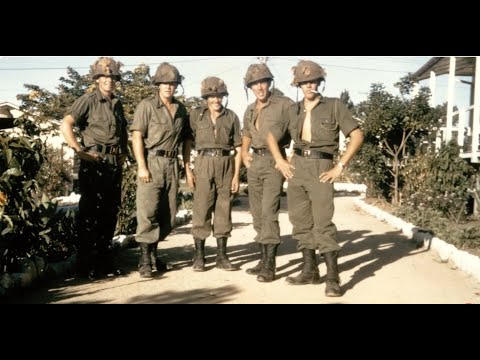
To understand why the Viet Cong feared them, you must strip away the myth and look at what an SAS patrol truly was: four to six men, operating deep behind enemy lines, with no safety net. Their missions were pure reconnaissance—watching, listening, and reporting—but when contact came, it was swift and deadly. “Any fool can shoot first. A soldier waits for the right first shot,” one SAS veteran later said. And when they fired, it was with surgical precision, often ending firefights in under ten seconds.
The immediate silent contact ambush was their signature tactic. It began with stillness—a pause every few steps to listen, to read the jungle’s whispers. A broken spiderweb, a fresh footprint, the smell of fish sauce on the breeze—all were clues. The Australians positioned themselves on high ground, invisible, waiting for the perfect moment. Then, a single shot from the patrol commander would drop the enemy leader, followed by controlled bursts from the rest of the team. “It sounded like a sudden, precise assassination of an entire unit,” one VC survivor recalled. Within seconds, the Australians would vanish, leaving only shell casings and unanswered questions.
By 1966, the legend of the ghosts had taken root. Captured VC documents revealed frustration and awe: “They appear when we do not expect them and disappear before we can respond.” The Australians left no tracks, no scent, no sound. They taped their gear, ate cold food, and breathed through parted lips. Even VC trackers, masters of the jungle, lost them. “It is as if they float,” one report noted. The psychological impact was profound. Viet Cong patrols began to avoid contact with the Australians unless they had overwhelming numbers—ten to one, and even then, they expected losses.
But the ghosts were not invincible. They were men—tired, sweat-soaked, and leech-bitten—who relied on discipline and training. Their selection course was brutal, designed to break the will, with a 70–80% failure rate. Those who passed learned to read landscapes like books, to smell water before seeing it, and to move with a silence that defied explanation. In the jungle, they were predators, but they were also prey, always aware that one mistake could mean annihilation.
As the war dragged on, the Australians adapted faster than their enemy. When the Viet Cong tried to set traps, the SAS outmaneuvered them, striking from unexpected angles and vanishing before counterfire could be organized. “Australian tactical awareness exceeds our ability to predict,” a captured VC report admitted. The ghosts had become unpredictable, and unpredictability is a weapon no army can counter.
But behind the legend were human beings. They carried the weight of their actions—the faces of men they killed, the silence of a war that few understood. Their legacy wasn’t just in the tactics they pioneered, but in the respect they earned from their enemies. “The Australians fought war as professionals. They did not hate us. They simply did their job,” a North Vietnamese colonel later said. And in that respect, the ghosts found a kind of immortality.
Yet the story of the ghosts did not end with a single ambush or a single patrol. It lived on in the way the Viet Cong moved, hesitated, and second-guessed themselves long after the Australians had vanished into the green. Fear, once planted, grows faster than bamboo. And in Phuoc Tuy, it grew into something close to paralysis.
Consider the arithmetic of that fear. A VC company commander planning a supply run now had to account for an enemy he could not see, hear, or track. Every trail bend became a potential grave. Every ridge line a possible firing position. Every patch of elephant grass a curtain that might hide four silent men with rifles already leveled. The Australians had turned the jungle itself into a weapon of psychological attrition.
They rarely fought the same way twice. One week they struck from high ground above a stream crossing. The next they waited in the mud of a swamp, submerged to the chest, breathing through reeds, for a courier column to wade past. Another time, a patrol crawled within arm’s reach of a VC sentry, slipped a hand over his mouth, and took him prisoner without a single shot. “The silence was the worst part,” one captured VC later admitted through an interpreter. “We feared the quiet more than the shooting.”
And the Australians understood that fear better than anyone. They cultivated it deliberately, not through cruelty, but through consistency. They never left their dead behind. They never abandoned a wounded mate. They never fired a round that wasn’t aimed. To the Viet Cong, this was incomprehensible—an enemy that fought with the discipline of a machine yet the loyalty of brothers.
There was one engagement that the VC would whisper about for years. It happened in the dry season, when the trails hardened and sound carried farther. A VC battalion, nearly two hundred strong, was moving to reposition after a string of losses. They were cautious, spread out, with flankers on both sides. They believed no patrol of four or six men would dare challenge such a force.
They were wrong. Two SAS patrols—eight men total—had been shadowing them for two days. They communicated with hand signals and the faintest taps on a radio. They chose their ground carefully: a shallow ravine where the trail narrowed and the vegetation forced the column into single file.
The ambush lasted eleven seconds. The lead element was cut down before the flankers could react. The Australians fired from three directions, then vanished so completely that the VC battalion spent the next hour firing into empty jungle, killing nothing but trees. “We fought shadows that day,” a VC sergeant later wrote in his journal. “And the shadows won.”
By the time the Australians reached their extraction point, they had not lost a single man. Their report was three lines long. No drama. No embellishment. Just the facts, logged with the same calm precision they brought to everything else.
But the war was changing. The Viet Cong were learning, too—adapting, hardening, becoming more cautious. And the Australians knew that every patrol could be their last. The jungle that hid them could also betray them. The silence that protected them could, in a single misstep, become their grave. That was the bargain every SAS trooper made when he stepped into the green.
And still they went. Patrol after patrol, into the shadows, into the heat, into the place where the ghosts lived and the living feared to follow.
The legend did not stay confined to Phuoc Tuy. It traveled. It seeped into the radio intercepts and captured diaries of units who had never set foot in the province, carried by survivors who could not explain what had happened to them and by commanders who could not afford to ignore the warnings. By 1970, the phrase “ghost soldiers” had entered the working vocabulary of North Vietnamese planners, not as superstition, but as a tactical variable—a known unknown that had to be budgeted for in every operation.
What made it remarkable was how little the Australians did to cultivate it. They issued no propaganda, held no press briefings, published no war stories. Their operations were classified, their patrol reports buried in filing cabinets, their faces unknown to the Vietnamese public. The myth grew entirely from the enemy’s own testimony. That, more than any medal or commendation, was the measure of what they had achieved.
Yet the men themselves rarely spoke of it. Ask an SAS veteran about the ghosts and you would get a shrug, a quiet deflection, a change of subject. They remembered the leeches, the heat, the weight of the radio, the ache of holding still for hours in mud that stank of rot. They remembered the faces of men they had killed before those men ever knew they were there. Glory was a word that had no place in the jungle.
There was one story, though, that veterans told more freely as the years passed. It happened near the end of the Australian commitment, when the drawdown had already begun and patrols were growing shorter, more cautious, less ambitious. A four-man team was moving through secondary growth near the edge of the province, close to where the jungle thinned into rubber plantations and rice paddies.
They were tired. The patrol had been compromised two days earlier—a chance encounter with a VC courier who had stumbled into their harbor position at dusk. They had killed him silently, but the shot had been heard, and the pursuit had been relentless. They had moved for forty-eight hours with almost no sleep, eating nothing, drinking from canteens that were nearly dry.
On the third morning, the scout heard voices ahead. Not a patrol—something larger. A staging area, perhaps, or a headquarters element. The team went to ground and watched. Through the foliage they counted more than thirty men, moving with purpose, carrying maps and radios. This was a target worth more than a single ambush.
The patrol commander made a decision that would have been unthinkable to a conventional unit. He did not attack. He did not call for fire support. He simply watched, and listened, and took notes, and then he led his men away, silent as the dead they had left behind. Four days later, the intelligence he carried reached headquarters, and a week after that, an American air strike reduced the staging area to smoking craters.
That was the real work of the ghosts. Not the ambushes, not the body counts, not the whispered legends. The patient, unglamorous, invisible labor of men who understood that information was worth more than blood—and that the greatest victory was the one the enemy never knew had happened.
When the Australians finally left Vietnam in late 1971, they left behind no monuments, no forward bases, no permanent footprint. The jungle reclaimed the trails they had walked within a season. The bamboo closed over the kill zones. The rain washed away the last of the tracks. Only the stories remained—and the stories, as the Viet Cong had learned, were the hardest thing of all to kill.
Years later, long after the war had ended and the province had been renamed and the rubber plantations had spread over the old battlefields, a Vietnamese veteran was asked by a journalist what he remembered most about the Australians. He thought for a long moment. Then he said, simply: “They were the only enemy I ever fought who made me feel like the jungle was on their side.”
That was the legacy of Phuoc Tuy. Not firepower. Not numbers. Not technology. Just a handful of men who had learned to listen to the jungle, to move with it, to disappear into it—and to leave behind a silence that echoed for decades.
The ghosts had never asked to be ghosts. But the jungle had chosen them, and the jungle, as every soldier who fought there knew, did not make mistakes.
Decades later, in a quiet suburban garden far from Phuoc Tuy, an old veteran pruned his roses and paused at a sound—a cicada, shrilling in the afternoon heat. He stood motionless, breathing slow and even, listening the way the jungle had taught him. His wife called from the kitchen. He smiled, set down the shears, and walked inside.
“You were somewhere else again,” she said. He nodded. “Just listening.”
The ghosts never truly left the green. They simply learned to carry its silence home, folded quietly behind their ribs, where no one else could hear it.
And the jungle? The jungle still remembers every footstep. But do we—do we remember the men who walked so softly that even history had to strain to hear them?
Report this article
Select a reason for reporting:






