The snow blanketed Grunewald forest as Kurt and I strolled through the trees, the crunch of our boots the only sound in the still winter air. We stopped for a beer, the cold seeping through our coats, but the warmth of the moment—a fleeting escape—kept us going. By six, we were back home, celebrating New Year’s Eve with the Schultz family. The year had been eventful, but as the clock struck midnight, a shadow loomed over us. “We are afraid of 1945,” I whispered, the words hanging in the smoky room. No one replied; we all knew what was coming.
The next morning, Lieutenant Kuttner ordered the entire battalion to gather around the radio. Hitler’s voice crackled through the speaker, a familiar mix of defiance and delusion. “The German people, the National Socialists—” The words blurred as I glanced at the faces around me. Some nodded, others stared blankly. We had heard it all before.
January 2nd. Back to work. Everyone talked about how drunk they had been on New Year’s Eve, as if laughter could drown out the sirens. That evening, Kurt and I went to the Ufa cinema on Alexanderplatz. The film was “The Right to Sacrifice,” starring Christina Söderbaum and Carl Ludwig. It was beautiful and tragic, and for two hours, we forgot the war. But the sirens wailed again on January 4th—from quarter to twelve until quarter to one. Another heavy raid. Forty fast bombers crossed the city in loose formation. Twelve dead, twenty-three injured, 1,324 homeless.
January 9th. Something terrible happened. Count Moltke was dragged into the People’s Court, accused of plotting against Hitler. The room was packed. Freisler, the judge, read out his biography with a sneer, twisting details, ignoring what didn’t fit. Moltke’s name echoed through the hall—they wanted him dead. I sat in the gallery, my hands clenched, as the prosecutor demanded the death penalty before evening fell.
The barracks where I was stationed sat between the main street and the subway, next to a sports field. From above, they looked identical—just another complex to the Berliners who passed by. Across the large meadow, there were several camps for prisoners of war and forced laborers. Most were Ukrainians, and the screams that came from there were horrifying. Neighbors closed their windows as if following orders. I tried to block out the sound, but homesickness hit me like a wave. How many years of my youth had I wasted?
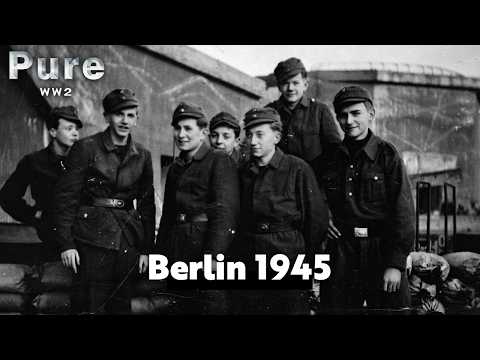
January 11th. Kurt came for dinner. Mother left us alone, and he played the mandolin while I sang. Then he kissed me, gentle and warm. For a moment, I felt human again. But the next day, the news was grim: the Russians had launched a massive offensive. Manfred, one of our men from Königsberg, cried in his bunk at night, terrified for his family. The front lines were already deep in Silesia. The Volkssturm was being called up—men in civilian clothes, some who had never held a rifle. I saw their faces in the darkroom, boys barely old enough to shave, dressed in uniforms they would never grow into.
Kurt took me to the station for the last time. “Who knows when we’ll see each other again,” he said, his voice tight. The first refugees from Silesia arrived that day—a train car full of dead children, frozen after ninety-six hours in the cold. They were stacked like herring in a barrel. Our commander told us to clear the snow and dig graves. The ground was frozen fifty centimeters deep. We hacked at it with picks and iron stakes, the effort breaking us.
At three o’clock, I visited Müller, the Gestapo chief. He said he couldn’t help Moltke—“He’s a traitor.” I walked home through streets teeming with refugees, all cursing these cursed times. For twenty-four hours, people could vent their despair without consequence. Then Goebbels would tighten the reins again.
January 30th. The twelfth anniversary of the Party’s rise to power. One hundred and two British air raids every night. During the day, desperate reports from the Wehrmacht. Hitler’s speech was a strong boost to morale, they said. We went down to Mataksa’s basement again, wine flowing until ten. Then we listened to the Führer. Uncle Paul was drunk, as always. Stalin was at the border. Stalin was at the gate. The Russians had crossed the Oder and were advancing toward Berlin with a hundred tanks. Nothing stood between them and the city—no anti-tank guns, no barricades, no soldiers. People were panicking.
My dear wife, you ask what we should do. I remain generally optimistic. The more rational voices say we have large reserves and will get new weapons. The only thing we can do is wait. Berlin is no safer than where you are. With no means of travel, I believe staying put is best.
The early weather report at four o’clock indicated clear visibility over Berlin-Magdeburg. This was confirmed at the ten o’clock conference. In Berlin, the aiming points were the heart of the city, bounded by Lindenstrasse, Unter den Linden, and Wilhelmstrasse. We had to go to Rosenthaler Platz early to build barricades. Everyone was in good spirits, the young ones singing—until the air raid sirens wailed. Over a thousand “Flying Fortresses” took off from England to pound the German capital. The sound of strict retributive justice came to Berlin with the roar of heavy bombers. From Berlin had come the orders that devastated Rotterdam and Warsaw. From Berlin, Germany had watched indifferently as millions of refugees were turned into sad armies of the displaced. Today, the wheel of time had come full circle. Berliners were undergoing the ordeal they had unprotestingly inflicted on the great cities of Europe.
In forty-five minutes, 2,500 tons of explosives and incendiaries rained down on the government and military offices in the heart of the city. The city was in a terrible state. Through the smoke and soot, I reached the publishing house. Rain poured, mixed with smoke and soot that clung to our shoes like thick porridge. Disaster struck our anti-aircraft unit. A bomb hit the ammunition depot, and all four hundred shells exploded. All my classmates died. The districts of Kreuzberg, Mitte, Horst Wessel, and Wedding were the worst hit. 1,130 dead, 738 missing, 1,116 injured, and 102,061 homeless. The Bayrischer Platz subway station was also damaged. Over a hundred bodies under the rubble. Men, women, and children stood huddled together, heads bowed in silence. With dignity and silence, they waited for their dead to be extracted.
Your pickaxe sinks into something soft. You scream: “Here, I found someone!” A policeman comes running. Only Germans are allowed to touch the cold German body. They finally pull the corpse out, grabbing it by the leg and dragging it away. Sometimes the leg comes off. Some vomit. At least they still have something in their stomachs. In this operation, the Americans lost nineteen bombers and five fighters. As they head home, they leave behind a reminder that war brings only loss. They say Berlin has now become the city of dreadful night. As an American pilot said after this raid: “When Stalin’s men reach Berlin, they’d better bring a fire brigade because the place is really burning now.”
February 8th. We arrived at Stalag 7 in Luckenwalde early in the morning. Due to overcrowding, there were no beds. Each man got a dirty blanket. The latrine for hundreds of men was just a deep pit. If it filled up, Russian prisoners had to climb down and clean it. They were treated horribly. The power went out for two hours today. I received the first two letters from Kurt. Air raid warning from 8:45 to 9:30. We just learned that during the daytime raid last weekend, the president of the People’s Court, Dr. Freisler, was killed along with most of his staff. For a moment, I was torn between horror and joy. Freisler, the man who sentenced everyone to death, died a month late and weeks too early to face justice. My dear little pet. My little doll, news from here. The night was clear, the temperature dropped to zero. Tomorrow morning at 10:07 I must go to the Volkssturm, probably to build tank barriers again. I still hope the announced countermeasures will turn the tide. All good wishes from your father.
February 15th. Today I am alone in the clinic. Professor Sauerbruch isn’t here, nor his deputy. The order came to move all patients to shelters, or at least to the cellar. First the children and private patients, then the women. In the shelter, I met a half-Jewish biology professor. He told me there were Jews hiding in Berlin. They had been living for months or years in cellars and attics, cared for by friends and acquaintances. I have been separated from my loved one for two years now. This fear, of being tracked down—for what? I lived my whole life as a respectable human being, and now I must hide like a criminal, like a murderer, and my thoughts about the children torment me. That is the worst of it. I am desperate because I simply know nothing about them. If things went badly for Miss Müller, they are probably not alive. But I had no choice, otherwise I would have had to face the Gestapo with them. When children sing on the radio, my eyes fill with tears.
February 25th. My confirmation ceremony at the Jesus Christ Church in Dahlem. Father came. We were fourteen girls and six boys. Unfortunately, the ceremony wasn’t held inside the church. It was very cold. Still, it was very solemn and not interrupted by any sirens. For lunch, we had well-cooked meat that Father had brought. In the afternoon, we received visitors and drank real coffee and ate cake.
February 26th. Today was the day we had trained for. I had always longed to bomb Berlin, ruled by Hitler. The city had the toughest anti-aircraft defenses and more enemy fighters than any other target in Germany. So it was understandable that the crews let out anguished groans when they heard the order at the briefing. After takeoff, I felt a profound loneliness in my position at the rear of the plane, despite the many aircraft around us. Loneliness and a deep fear that this would be my last flight. I cannot describe the emptiness I felt.
At the cinema. I went out with Liana to the movies. At the best moment, the sirens started and we ran to the shelter. After the longest distance we had ever flown, we were in the thick of it. Planes wobbling, a direct hit sent the plane next to us into flames. I trembled with fear of the steel that could tear my body apart at any moment. Then the bomb bay doors opened. A wing of the factory was hit. Fires broke out from the incendiaries. As we walked to the shelter, we had to avoid the burning asphalt. Alexanderplatz was on fire. We had no light or water at home. After the all-clear, the film resumed. After what seemed like hours, we reached the beautiful shores of England. We had made it. It was over and I was so happy that I couldn’t find words.
Now the city was dying and could no longer be saved. Tired and exhausted people. The porter at the entrance said to a weeping woman: “Thank God, I tell you, he was buried in a mass grave. At least he’s not alone there.” German morale was steadily deteriorating, and each bombing raid reinforced this sense of despair. But no matter how critical the situation, it did not affect the usual daily routine. Police surveillance was intensified. The camp was fenced with electrified barbed wire. The guards had dogs and machine guns. Our strength was dwindling. Work had completely exhausted us. One day, the kitchen made soup from dried potato peels. It was like pig slop.
February 28th. Margot’s house was damaged by bombs again. Incendiary bombs fell on the doctor’s apartment, but the fire was extinguished. It caused only minor damage. He says: “This is how we’ll win the war.” I danced until seven in the evening.
March 3rd. We left Berlin early in the afternoon. The Führer wanted to see the progress on the front lines himself to boost troop morale and inspect ammunition supplies. The Führer was here. His visit increases our awareness of our current situation. And that is the defense of the Reich capital. A fundamental order for preparations to defend the capital. Berlin must be defended to the last man and the last bullet. The struggle must be waged with fanaticism and imagination, with all means of deception and cunning above and below ground. It is necessary that every city block, every house, every floor, every fence be defended to the end. We built more tank traps on Landsberger Allee and Kniprodschtrasse. We now have daily training in firing bazookas and rifles under the supervision of the SA in Friedrichshain. Many old men from the Volkssturm militia took part. Wehrmacht reports were shocking.
We visited my parents. As soon as we arrived, the sirens went off. We stayed in an above-ground shelter. I had long overcome my fear, but today I trembled with fear for my life. A terrible roar, the cellar swayed, lights went out, and people screamed. The attack lasted two hours. We saw the glow of a huge fire over Prenzlauer Berg. The building at number 15 opposite us was hit and collapsed. Half of Berlin was burning and turning to rubble. You could go mad just walking the streets. Our Berlin, the Berlin I loved so much. Despite my disgust that its inhabitants allowed us to be excluded from society just because we were Jews, I still love my hometown.
March 20th. We face the hardest challenge in our history, the battalion commander told us this morning. We must endure with religious fanaticism. At the store at 9:00 a.m. I had to walk back home. I went for a walk with Kotzi in the evening and we fetched water. I received a wonderful letter from Kurt. I read some of the most beautiful parts to Kotzi. I went to the cinema with Margot. I saw the cellist Anna Alt. Some comrades no longer know where their relatives are. East Prussia, Silesia. Without a homeland, war becomes pointless. I cannot imagine that Berlin could be lost. Today they are the ones deprived of their last possessions and homes, their relatives facing an unknown fate in long queues and refugee trains. I know well what it means to live in constant uncertainty about one’s closest people, in misery, hunger, and torment, without hearing any news of them. We, we Jews, have lived this for a long time. Am I now supposed to feel sorry for them?
Transport 63 was scheduled for Sachsenhausen and Ravensbrück. Destination: Theresienstadt. Departure date, March 27, 1945. For the evacuation of Jews from the territories of the Reich to the Theresienstadt ghetto, the following regulations apply. Transport is in single cars within a regular train running on the Theresienstadt line. Each person takes 50 Reichsmarks, a complete set of clothing, a sheet and blanket, eating utensils, a plate or bowl with a spoon, and food rations for eight days. Prohibited items are stock certificates, currencies, savings account documents, etc., or animals and ration cards. Before departure, the cars are searched for weapons, ammunition, explosives, poisons, coins, jewelry, etc. All property is confiscated without exception.
Easter Sunday. We slept very late. We read during the day and exchanged horror stories in the evening. We did some exercises and then went to bed. I am tired of the war. Every night, the fast bombers raid Berlin. We are always tired and exhausted. And those wonder weapons, where are they? Again in the evening, another Mosquito raid, another enemy attack on the capital with Mosquitoes. We are so used to it that it has become part of our daily routine. If they didn’t come, Berliners would feel something was missing.
My comrade Udo received a letter from the German Labor Front in Banko. His mother and little sister Ilka had burned to death north of Berlin. He had no one left. He stood silent for a long time, then suddenly jumped on a chair, tore the large portrait of the Führer from the wall, spat on it, and stamped on Hitler’s head. When the sergeant on duty came, Udo was locked in a cell.
April 12th. The Russians and Americans had advanced across the borders of the Reich. The situation deteriorated markedly. At the office, we only completed the most urgent work. We burned most of our files in anticipation of Berlin’s fall. My dear, your birthday was the day before yesterday. Will we spend another birthday together? I no longer believe it. And what about the children? Yesterday the Allies took Weimar. How will I find a trace of them if things go badly? I will listen to the American radio today to find out what happened in Weimar.
This is London calling. I have just returned from the Belsen concentration camp. I find it difficult to describe accurately the horrific things I saw and heard. But here are the facts as they are, without embellishment. There are 40,000 men, women, and children in the camp. Thousands of them are Jews. In the last few months alone, 30,000 prisoners were killed or left to die. The bodies, some decomposed, were scattered on the road and along the rough tracks. Inside the huts, the situation was far worse. I have seen many horrific scenes in the past five years, but nothing, nothing approaches the terrible interior of this hut in Belsen. I made my way over corpse after corpse in the dark until I heard a voice rising above the low, continuous moaning. I found a girl. She was a living skeleton. She stretched out her thin arm and gasped something. She was saying: English, English, medicine, medicine. In Teterow, Mecklenburg, SS guards who shot many prisoners after we arrived at the camp when they thought no one was watching are now collecting all the bodies and moving them for burial. Allow me to add to this story the confirmation that the officers and men who saw these things returned to the Second Army in a state of anger I have never seen before. It has been a long time since we began our crawl across Germany. I recall the Baltic Sea where the Germans drowned us. Now victory is within our grasp.
The broadcast ended, and the room fell silent. “Now victory is within our grasp,” the voice had said, but for us, victory meant only survival. I looked at the faces around me—Udo’s empty eyes, Margot’s trembling hands. We had nothing left but each other.
Outside, the guns rumbled closer. The Russians were coming, and with them, the end. I thought of Kurt, somewhere in the chaos, and of the children I might never see again. Hope was a luxury we could no longer afford.
But then, a strange calm settled over me. We had endured so much—the bombs, the fear, the loss. And yet, we were still here. “We will survive this,” I whispered, not knowing if it was true.
As the first shells fell on Berlin, I closed my eyes and waited for dawn. What would be left of our city—and of us—when the war finally ended?
Report this article
Select a reason for reporting:






