The spotlight fades, the credits roll, but the applause never truly dies—it just passes to the next generation. In the glittering world of Hollywood, where fame is fleeting and legends are born, there exists a rare and powerful bond: the unbreakable thread between a mother and her daughter, woven with talent, ambition, and the weight of a legacy. From the haunting melodies of Judy Garland to the fearless wit of Carrie Fisher, these women have not only conquered the screen but also raised daughters who would go on to define eras of their own.
But behind the glamour and the golden statuettes lies a story far more complex—one of sacrifice, shadow, and the relentless pursuit of individuality. What happens when your mother is a legend? How do you step into the spotlight without being consumed by its glow? These are the questions that haunt the daughters of Hollywood’s royalty, and their answers are as varied as the roles they’ve played.
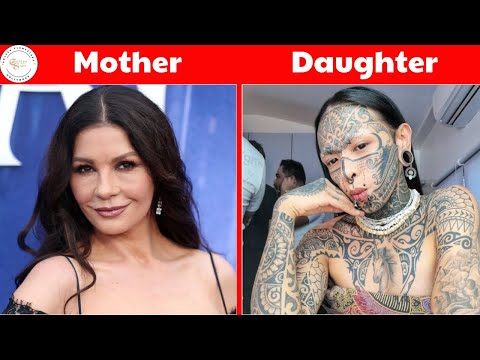
Take Liza Minnelli, for instance. The daughter of Judy Garland and director Vincente Minnelli, she grew up in a whirlwind of music and movie sets. “My mother was my everything,” she once said, her voice tinged with both love and sorrow. But being Garland’s daughter meant living under a microscope, every triumph and failure compared to the woman who sang Somewhere Over the Rainbow. Liza didn’t just follow in her mother’s footsteps; she carved her own path, winning an Oscar for Cabaret and becoming a Broadway icon in her own right. Yet the shadow of Garland’s tragic life loomed large, a reminder that fame can be as cruel as it is kind.
Then there’s Carrie Fisher, the daughter of Debbie Reynolds and singer Eddie Fisher. “I am my mother’s daughter,” she wrote in her memoir, Wishful Drinking, a line that captured both her heritage and her burden. Carrie became a global sensation as Princess Leia, but her life was a battle with addiction and mental illness, fought with the same ferocity her mother displayed on screen. Their relationship was a rollercoaster of love and conflict, two strong women who clashed and cherished in equal measure. When Carrie passed away in 2016, followed by Debbie just a day later, it felt like the end of an era—a double curtain call for two legends who couldn’t bear to be apart.
But the story doesn’t end with tragedy. It continues with women like Kate Hudson, daughter of Goldie Hawn, who inherited her mother’s radiant smile and entrepreneurial spirit. “My mom taught me to be fearless,” Kate said in an interview, and she’s proven it—balancing a successful acting career with her own fashion line and family life. Similarly, Gwyneth Paltrow, daughter of Blythe Danner, has taken her mother’s grace and turned it into a lifestyle empire, Goop, while still delivering Oscar-winning performances. These women show that legacy isn’t just about repeating the past; it’s about reimagining it.
Yet not all daughters choose the spotlight. Vanessa Vadim, Jane Fonda’s daughter, became a documentary filmmaker and activist, far from the Hollywood machine. “I prefer being behind the camera,” she admitted, finding her own way to honor her mother’s legacy of social justice. And then there are those like Sachi Parker, Shirley MacLaine’s daughter, who wrote a tell-all memoir about her unconventional upbringing, revealing the cracks beneath the glittering surface.
As we delve into these 25 legendary mother-daughter duos, we’ll uncover the untold stories, the heartbreaks, and the triumphs that define Hollywood’s most famous families. From the golden age of cinema to today’s red carpets, the bond between these women is a testament to the enduring power of love and talent. But the question remains: what price does one pay for a legacy? And how do you shine when the spotlight is already taken?
The answer, it turns out, is rarely simple. For every Liza Minnelli who embraced the family business with open arms, there’s a daughter who ran in the opposite direction—or found the spotlight thrust upon her whether she wanted it or not. Legacy, after all, is not a gift you can politely decline. It follows you into auditions, into interviews, into the quiet moments when you catch your mother’s reflection staring back from the mirror.
Consider Jamie Lee Curtis, the daughter of Janet Leigh and Tony Curtis. Her mother’s scream in Psycho became the blueprint for an entire genre, and Jamie Lee inherited that terror—first as the ultimate scream queen in Halloween, then as an Oscar winner decades later. “I spent years trying to outrun my mother’s shadow,” she confessed, “only to realize I was running toward her all along.” That revelation—that the shadow and the light are the same thing—is the quiet truth shared by so many of these daughters.
And then there are the relationships that fractured under the weight of it all. Tippi Hedren’s daughter, Melanie Griffith, grew up watching her mother navigate Hitchcock’s obsessive gaze, a trauma that rippled through their family for generations. “My mother was a survivor,” Melanie said, “and I learned to survive too—just in a different way.” Her own daughter, Dakota Johnson, has spoken openly about the therapy that helped her untangle three generations of complicated mother-daughter knots. The legacy, it seems, isn’t just talent. It’s also pain, passed down as surely as eye color or a gift for comedy.
But perhaps the most fascinating dynamic belongs to those daughters who actively rejected the Hollywood machine, only to find themselves pulled back in. Natasha Gregson Wagner lost her mother, Natalie Wood, when she was just a child—a tragedy that defined her life. “For years, I couldn’t watch her films,” she admitted. “It was too painful.” Yet eventually she produced a documentary about her mother, reclaiming the narrative and keeping Natalie’s spirit alive for a new generation. It wasn’t about following in her footsteps; it was about making peace with them.
Similarly, Lisa Marie Presley spent her entire life in the orbit of two legends—her father Elvis and her mother Priscilla—before her own untimely death in 2023. Her music was raw, confessional, a window into the impossible task of being the daughter of the King. “I never wanted to be a curiosity,” she once said. “I wanted to be an artist.” And she was—just one whose art was forever tangled with the mythology of her bloodline.
These stories reveal something deeper than fame. They reveal the universal struggle of daughters everywhere: the desire to honor where you come from while still becoming who you are. Whether your mother is a movie star or a schoolteacher, the question is the same. How do you carry the torch without letting it burn you? For the women of Hollywood, that question plays out on a global stage, every triumph and misstep documented for eternity.
And yet, the next generation is already stepping forward—Zoe Kravitz, Maya Hawke, Rumer Willis—each one a living bridge between past and future. They’ve watched their mothers navigate the treacherous waters of fame, and they’ve learned. They know the spotlight is borrowed, not owned. They know the legacy is a gift, but also a responsibility. And they’re ready to write their own chapters, even as they turn the pages their mothers left behind.
But the stories that linger longest are often the quietest ones—the duos who never demanded headlines, yet whose bond speaks volumes in a single glance. Take Diane Ladd and Laura Dern, a mother-daughter pair whose collaboration spans decades and genres. “My mother taught me that acting isn’t about being seen,” Laura once reflected. “It’s about seeing.” Together they appeared in Wild at Heart and later in Enlightened, their scenes crackling with an intimacy no director could manufacture. When Laura won her Oscar for Marriage Story, it was Diane’s face in the audience that told the whole story—pride, yes, but something fiercer too. Recognition. The torch, passed without a single word.
Then there’s Blythe Danner and Gwyneth Paltrow, a pair whose public affection borders on the theatrical. “My mother is my best friend,” Gwyneth has said more than once, and she means it—the two are frequently photographed together, laughing, cooking, trading barbs. But even that warmth has its shadows. Blythe’s own career, though distinguished, never reached the stratosphere her daughter’s did, and Hollywood being Hollywood, that inversion has fueled endless speculation. Yet Blythe waves it away with a patrician flick of the wrist. “I never wanted her to be me,” she said. “I wanted her to be more.”
And what of the mothers who watched their daughters become bigger stars than they ever were—and how did they bear it? Goldie Hawn, whose comedic timing defined an era, now beams from the sidelines as Kate Hudson builds an empire of her own. “She’s the sun,” Goldie said of Kate. “I’m just the moon, reflecting her light.” It’s a generous metaphor, and perhaps a truthful one. But listen closely and you’ll hear the faintest note of something else—the bittersweet knowledge that in Hollywood, even the brightest stars eventually become someone else’s backdrop.
Yet not every daughter wants the crown. Claudia Rose Pfeiffer, Michelle’s daughter, chose a life far from the red carpet, and Michelle has never once pressured her otherwise. “My job was to love her, not to make her famous,” Michelle said in a rare interview. That sentence alone could serve as a manifesto for the healthier side of Hollywood parenting. Similarly, Vanessa Vadim has spent her life behind the lens, documenting the world her mother fought to change. Jane Fonda, for all her fire, has never demanded her daughter join the family business. “She’s her own woman,” Jane said. “She always was.”
But the pull of the spotlight is not easily resisted—especially when the spotlight is already warm. Consider Maya Hawke, daughter of Uma Thurman and Ethan Hawke, who has quietly become one of the most intriguing young actresses of her generation. “I grew up on sets,” she said. “I didn’t know there was any other way to live.” Her mother’s fierce independence, her father’s restless creativity—both are woven into Maya’s choices, though she insists she’s still figuring out who she is. “I’m not my mother,” she said. “But I’m not not her either.”
That paradox—the impossibility of separating yourself from the woman who made you—runs through every one of these relationships. For some, it’s a blessing. For others, a wound that never quite heals. But for all of them, it’s a story worth telling, a thread that connects the golden age to the present moment and stretches toward a future none of us can yet see.
And so the reel keeps spinning, generation after generation, each daughter adding her own frame to the family film. Zoe Kravitz directs her first feature; Maya Hawke strums a guitar her mother once held; Rumer Willis sings lullabies to a child who may one day ask about Grandma Demi. The torch is not a burden—it’s a baton, passed in love.
What none of these women say aloud, but all of them know, is that the legacy was never really about fame. It was about the kitchen-table laughs, the whispered line readings, the mother who said, “You can do this” before anyone else believed it. Hollywood merely provided the stage. The bond provided the script.
The credits may roll, but the story never ends—it simply changes hands. And somewhere, a daughter is watching her mother’s old films, learning the lines, preparing for a scene she doesn’t yet know she’ll play.
Which mother-daughter duo do you think best proves that talent is inherited—and which one surprised you most? Tell us in the comments below.
Report this article
Select a reason for reporting:






