War is hell, but for some, it was a calculated death sentence. In the sprawling chaos of World War II, millions were thrust into roles that defied human endurance and sanity. While the frontlines claimed countless lives, there were jobs so perilous, so soul-crushing, that survival seemed a cruel joke. Among them, four stand out as particularly harrowing—roles that demanded the ultimate sacrifice, often with little glory and even less chance of return.
Imagine piloting a torpedo straight into an enemy ship, knowing you were the warhead. Or sailing unarmed into hostile waters, a sitting duck for submarines. Picture carrying wounded comrades through a hail of bullets, or being hunted like an animal because you were a sniper. These were not just jobs; they were nightmares dressed in uniform.
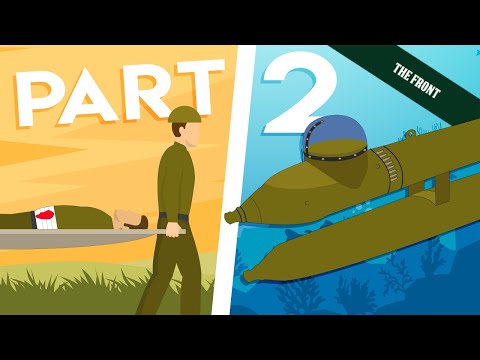
Take the human torpedoes, for instance. These weren’t metaphorical. Italian frogmen and Japanese Kaiten pilots literally steered manned torpedoes toward their targets. “After arriving at the Kaiten base, I was thinking about my death for 2 or 3 days,” recalled veteran Toshiharu Konada. “But gradually, I became calm and finally I could decide. What made me decide was the thought that Japan would not be protected without changing myself into a bullet.” The Kaiten was a suicide craft, and its pilots were expected to die. Over 100 Japanese sailors perished in these missions, often with minimal impact. The Italian Maiale was less suicidal but still deadly: pilots rode on the surface, easy targets for enemy fire, and many never returned.
Then there was the merchant navy. These civilian sailors, thrust into wartime service, faced death rates higher than any other branch. The British Merchant Navy lost up to 37,000 men—a staggering 25% casualty rate. They carried vital supplies in ships that were poorly defended, prime targets for German U-boats and aircraft. “We saw the ship as it slid into the water, the captain still aboard. 26 of our crew who had to go down into the water were drowned and frozen,” described US Merchant Marine Spud Campbell. The cargo was essential, but the cost was human lives.
Stretcher-bearers faced a different kind of horror. They ran into the line of fire, unarmed, to carry the wounded to safety. The physical exertion was immense, often over treacherous terrain, and the emotional toll unbearable. “We evacuated men shot in the lungs, feet, abdomen. Men shocked, and one crazed with nerves, starting and crying at every sound,” wrote one British stretcher-bearer. Many wounded died during the grueling journey, making their efforts feel futile. Yet they persevered, driven by duty and compassion.
Finally, snipers. These lone wolves were feared and hated by infantry on both sides. If captured, they faced torture and execution, often after being forced to reveal intelligence. Soviet sniper Tatyana Baramzina was captured after killing 20 German soldiers. The Germans gouged out her eyes and shot her point-blank with an anti-tank rifle. Her body was mutilated beyond recognition. Snipers knew the risks, but they also knew their value—their intel and marksmanship could turn the tide of battle.
These four roles represent the extremes of wartime service, where bravery and horror intertwined. But they are just a glimpse into the myriad of dangerous jobs that defined World War II. As we delve deeper, we’ll uncover more stories of sacrifice and survival, and perhaps even explore the roles that offered a glimmer of hope amidst the darkness.
But the human torpedoes and Kaiten were only the tip of the iceberg when it came to maritime suicide missions. The Italian Navy’s Maiale—the “pig”—was a two-man craft that required its pilots to wear oxygen rebreathers and ride astride the torpedo like a horse, navigating through minefields and harbor defenses in total darkness. If the rebreather failed, the pilot would suffocate. If the torpedo’s warhead detonated prematurely, both men would be vaporized instantly. The odds were grim, yet the men of the Decima Flottiglia MAS volunteered anyway, often with nothing more than a handshake and a promise that their families would be cared for.
Then there was the grim calculus of the merchant navy, where survival often depended on the whims of a U-boat commander. Convoy routes were plotted with cold mathematics—some ships were expendable if it meant the rest got through. “We were told to keep going, no matter what,” one British merchant seaman recalled. “If a ship went down, you didn’t stop. You couldn’t. The whole convoy would be at risk.” Men watched their comrades burn in oil-slicked waters and forced themselves to look away, because stopping meant joining them.
The stretcher-bearers’ burden was measured not just in blood and weight, but in time. Every second spent fumbling with a litter strap or slipping on rocky ground was a second the wounded man’s life ebbed away. One bearer described carrying a soldier with a stomach wound across a mile of open ground: “He begged me to put him down and let him die. I told him to shut up and keep breathing. He didn’t make it to the aid station.” The bearers themselves were often targeted by snipers, who knew that taking out the stretcher-bearers meant the wounded would die where they lay.
And snipers—the hunters who became the hunted. Their war was one of patience and precision, but also of profound isolation. A sniper might spend three days in a single position, urinating into a bottle and eating cold rations, waiting for a single shot. “You become an animal,” admitted one Soviet sniper. “You stop thinking about the man in your crosshairs as a man. He is a target. A job. If you think about his mother, you will miss.” When captured, the veneer of humanity was stripped away entirely. The Germans, the Soviets, the Japanese—all sides executed snipers on the spot, often after extracting whatever information they could through methods too gruesome to detail.
Yet for all the horror, there was a strange camaraderie among these doomed men and women. Kaiten pilots shared cups of sake before their final dives, laughing at jokes that weren’t funny. Merchant sailors sang shanties as their ships went down, a defiant middle finger to the sea. Stretcher-bearers developed an unspoken language of nods and grunts, communicating volumes in the chaos of battle. Snipers, alone for weeks, sometimes left small tokens for their enemies—a cigarette, a chocolate bar—a twisted gesture of respect between killers.
These were not jobs anyone wanted. They were jobs that war demanded, and ordinary people answered. The question that lingers, decades later, is not why they did it—duty, survival, patriotism, fear—but whether any of us, placed in the same impossible circumstances, would have the courage to do the same.
But the ledger of wartime suffering had more entries to write. Beyond the suicide craft and the merchant convoys, beyond the stretchers and the sniper’s scope, there were roles that gnawed at the soul in quieter, more insidious ways. Among them, the men who cleared the battlefields after the guns fell silent—the burial details, the grave registration units, the ones who had to make sense of what modern weapons did to the human body.
They worked in teams of four or six, often under a flag of truce that was respected more in theory than in practice. Their job was to recover the dead from no-man’s-land, to identify what could be identified, and to bury the rest with whatever dignity the circumstances allowed. “We found one boy with his legs blown clean off and his eyes wide open, still clutching his rifle,” wrote a British soldier assigned to a burial party in Normandy. “He looked like he was waiting for orders. I told him the war was over for him. Then I threw up in a ditch.”
The smell was the worst part, they said. Not the blood, not the flies, but the sweet, cloying stench of putrefaction that clung to their uniforms and hair for days. Men who did this work often stopped eating meat. Some stopped eating altogether. And they had to work fast, because the dead were a health hazard, and the living were already sick with dysentery and typhus.
Then there were the bomb disposal technicians—the “bomb doctors” who defused unexploded ordnance with nothing but a pair of pliers and a steady hand. Every city in Europe had them: men who walked toward the thing everyone else ran from. “You learn to listen to the bomb,” one RAF officer explained. “The ticking tells you if it’s a time fuse or a booby trap. If it’s a booby trap, you have about three seconds to decide which wire to cut. I never met a bomb doctor who wasn’t missing a finger or two.”
They worked in the dark, often by feel, because the bombs were designed to explode if moved or exposed to light. Some were fitted with anti-handling devices that would trigger if the casing was tilted more than a few degrees. The men who defused them were volunteers, and they were given no training manual—only a set of tools and a prayer. One technician in London defused forty-seven bombs in a single week during the Blitz. He survived the war. His assistant did not.
And then there was the quietest horror of all: the men and women who worked in the codebreaking rooms. They sat in windowless huts, hunched over reams of intercepted messages, knowing that every decrypted signal could send a convoy to its doom or a bomber crew to its death. They had to live with the arithmetic of sacrifice—the knowledge that letting a city burn might save a fleet, that withholding a warning might win a battle.
“We saved thousands of lives,” one Bletchley Park analyst said decades later, her voice flat. “But I still dream about the ones we didn’t. The ships we let sink because telling them would have told the Germans we knew their code. There were men in the water because of me. I know that.” She never told her family what she did during the war. Most of them never did.
These were the jobs that didn’t make the newsreels. No medals were struck for burying the dead or defusing a bomb in the dark or reading a message that condemned a ship. But they were jobs that had to be done, and someone had to do them. The war demanded it, and ordinary people—clerks and schoolteachers and farmers’ sons—answered.
And yet, for every horror, there was a counterweight. The Kaiten pilot who left a haiku on his locker door. The merchant seaman who gave his life jacket to a Norwegian baby. The stretcher-bearer who carried three men on his back when the litter broke. “You do what you have to do,” one veteran said simply. “Then you do it again tomorrow.”
These jobs were not chosen for glory. They were chosen—or assigned—because someone had to stand between the world and its darkest impulses. The human torpedo pilots, the merchant mariners, the stretcher-bearers, the snipers, the burial details, the bomb doctors, the codebreakers—they were not superheroes. They were frightened, exhausted, ordinary people who did extraordinary things because the alternative was unthinkable.
And when the war ended, most of them went home and never spoke of it again. They built houses, raised families, sat in traffic. But somewhere in the back of their minds, the ticking of a bomb or the smell of a burial detail or the face of a man they couldn’t save remained. “I don’t want a medal,” one Bletchley analyst said. “I want to forget. I never do.”
So the next time you hear someone say “they don’t make them like that anymore,” remember: they do. They’re just quieter about it. And they’re still out there, doing the jobs no one else will do.
Which of these jobs do you think would have broken you first—and which would you have volunteered for? Let us know in the comments below.
Report this article
Select a reason for reporting:






