The first time Major Eric Halden watched an Australian sergeant refuse a direct order, he thought he had misheard. It was January 2011, and the man across the table—a sergeant with eleven years in the Special Air Service Regiment—had just told an American lieutenant colonel that his plan would get people killed. Not with a whisper. Not in a hallway. In front of the entire joint planning cell.
Halden had spent sixteen years in Army intelligence believing that rank was a reliable measure of judgment. That the insignia on a man’s collar told you something real about how much his opinion should weigh in a room. By the time he left Tarin Kowt, he no longer believed that. And the man who stripped him of that belief did it with only four words.
Prove you deserve it.
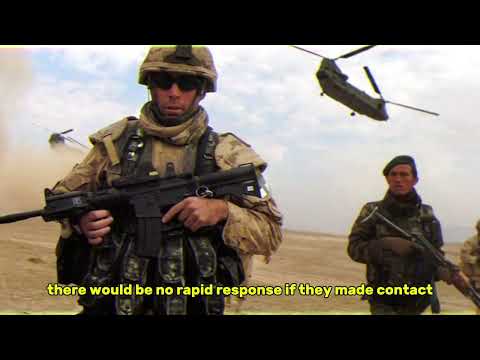
Tarin Kowt, Uruzgan Province, Afghanistan. The forward base sat in a high desert bowl ringed by mountains that never quite lost their snowcaps, even in the worst summer heat. A strange contradiction that made the valley floor feel hotter by comparison, as if the cool above were mocking the furnace below. Dust storms arrived without warning in the afternoons, wiping out visibility for twenty or thirty minutes at a stretch. Every vehicle, every weapon, every piece of sensitive equipment wore a fine gray film that never fully came off no matter how often it was cleaned.
Halden was thirty-eight, from Annapolis, Maryland—son of a Navy captain who had assumed, unreasonably, that his son would follow him to the fleet. Instead, Halden joined the Army, earned his commission through ROTC at the University of Virginia, and built a career in intelligence that took him through two tours in Iraq and a staff posting at Central Command in Tampa. He arrived in Uruzgan in January 2011 as the senior American liaison officer in a joint special operations planning cell. The role put him in every major targeting meeting on base and gave him, on paper, significant influence over how resources were allocated and operations approved.
He had sixteen years of service, two master’s degrees, and a conviction formed across those years without ever being truly tested: that a good plan built by qualified people usually beats any improvised plan built by anyone else.
The numbers he inherited should have troubled him from the first week. According to data compiled by the operations analysis cell, patrols by the Australian Special Air Service Regiment in Uruzgan between 2007 and 2011 achieved a target interdiction success rate above 74 percent. American special operations elements operating in the same province during the same period achieved a rate closer to 41 percent—despite working with a budget the analysis cell estimated at roughly six times larger per operation.
Halden’s first instinct, as a trained analyst, was to look for a confounding variable. Easier targets. Better intelligence from allied agencies. A statistical fluke in a relatively small sample. He requested the raw mission data to test his own hypotheses. What he found over the following weeks eliminated every explanation except the one he was least prepared to accept.
The Australians he worked with did not behave the way Halden expected special operations soldiers to behave. Their equipment was outdated by American standards—some of it clearly repaired rather than replaced. Their fitness leaned toward lean endurance rather than the bulky gym musculature common in the American compound, a building whose air-conditioning costs alone exceeded what the entire Australian patrol program spent on ammunition in a typical month.
Halden mentioned this once to his American counterpart on the planning staff—a lieutenant colonel named Purcell who handled logistics for the joint task force. Purcell shrugged and said maybe they just can’t get the gear. Later, Halden would consider that comment the first of several assumptions this deployment would systematically dismantle.
The real friction came during a planning session for a reconnaissance mission against a courier network operating out of a village called Dowa, about thirty kilometers northwest of the base, three weeks into Halden’s posting. American intelligence assessed the courier location at 58 percent confidence, based primarily on a signals intercept pattern and indirect reporting from an Afghan source of uncertain reliability.
Halden proposed an operations package built the same way he had built every plan he helped assemble in Iraq. Dedicated drone coverage for seventy-two hours before infiltration. A signals intelligence asset tasked specifically to monitor the target’s suspected communications window. A quick-reaction force on fifteen-minute standby at the base with helicopter support pre-positioned. Total resource cost, by Halden’s own estimate: roughly $190,000 for a single reconnaissance mission.
The Australian sergeant assigned to the patrol—a man named Caelan Brody, eleven years in the regiment—sat through the presentation without taking notes and without asking a single question about the target package Halden had spent four days assembling. When Halden finished, Brody instead asked about the irrigation cycle in the valley. About which compounds kept dogs and which did not. About the timing of the mosque calls to prayer, and whether the pattern shifted with the seasons.
Halden found the questions almost insulting in their apparent irrelevance to a target with 58 percent confidence that could be anywhere within a six-kilometer radius by the time drone coverage began. He said so, carefully, the way officers learn to disagree with enlisted men without formally invoking rank. Brody listened to the objection, considered it for a moment longer than Halden expected, and then said the thing that would end up being written verbatim in a personal notebook Halden kept far from any official record.
Your plan spends one hundred ninety thousand dollars to prove you were watching. My plan spends four days to prove I understand what I’m looking at. Only one of those two plans actually finds him.
Brody’s patrol left for Dowa without drone coverage, without signals assets, without a quick-reaction force on standby. Four men carrying eight days of water and food and equipment Halden’s own logistics shop valued at under twenty thousand dollars total. They returned on the sixth day, having pinpointed the courier compound, documented the daily movement pattern by the hour, and identified two additional men in the network that American intelligence had no record of at all.
No firefight. No contact. No indication to anyone in the valley that they had been watched. Halden read the post-mission report twice. The second time, he asked his own intelligence section whether anything had been mistranslated. There had been no mistranslation.
To understand what Halden was watching—and why an eleven-year sergeant felt entitled to challenge a major’s target package without hesitation—requires understanding what the regiment does to a man before it lets him near an operation like Dowa.
Selection runs through the Bindoon training area in Western Australia. The version most candidates fail happens long before anyone fires a shot in anger. Candidates cover distances up to forty kilometers a night, carrying loads between twenty-five and thirty-five kilograms across terrain chosen deliberately for its lack of landmarks. They navigate by compass and map alone, in darkness that swallows every visual reference a tired mind might reach for.
There is no partial credit. A candidate who reaches a checkpoint outside the time window fails that phase, regardless of how hard the journey was. Attrition in the navigation phase alone often exceeds 60 percent, and the men who withdraw are rarely the physically weakest. They are often the ones whose judgment degraded under fatigue in ways the course was designed to expose.
What survives that process and eighteen months of subsequent training is a particular kind of authority. One with no relationship to the chain of command as Halden had understood it across sixteen years in a different system.
In the American Army—and Halden would have said this without hesitation before Uruzgan—rank is the basic currency of authority. A colonel’s judgment carries institutional weight because the institution built a ladder that colonel climbed. To challenge that judgment publicly in front of subordinates, the way Brody challenged Halden’s plan, would be treated in most American units as a serious breach of discipline, regardless of whether the sergeant turned out to be right.
The Australian system Halden now worked inside operated on an entirely different premise. One in which authority is earned continuously in the field by demonstrating sound judgment, and can be lost regardless of rank the moment that judgment proves unreliable. A sergeant who had passed Bindoon, completed multiple operational rotations, and built a record of correct decisions under pressure was not required to defer to a plan from an officer simply because that officer outranked him. He was required to be right, and the system trusted him to know the difference.
Halden watched this dynamic play out again three weeks after the Dowa operation, during a joint planning session for a larger mission against a weapons-transfer network moving material through a Baluchi valley. The proposed infiltration routes had been drawn up by an American lieutenant colonel named Aldous Raynor, based on satellite imagery showing a dry streambed running clearly along the approach to the target.
Brody, as commander of the Australian element in the operation, objected before the briefing had even finished. The valley was a grazing corridor used by three separate villages, he said, and moving through it at any point during daylight hours would put the entire approaching force in plain view of shepherds working that ground every morning and evening without exception.
Raynor cited the imagery, pointing out that it showed the valley empty at the time of capture. Brody asked when the images had been taken. Raynor said sixteen hours ago. Brody nodded slowly.
Goats pass at first light and again before dusk. Every day, in every season. Those images are a snapshot of the only window when no one is watching that ground. And building your entire approach on crossing during the one window when no one is watching is precisely the time your crossing will be wrong.
Raynor, despite everything, asked how Brody could be so certain. The answer was the moment Halden would later describe, in his private notes, as the one that rearranged his understanding of the entire enterprise.
Because I have walked that valley eleven times in the last four months, while you have looked at it through a lens at four hundred kilometers’ altitude once. You outrank me, sir. That is not in dispute. But rank does not know the goat schedule. If you want me to send four of my men through that corridor, you need to prove your plan deserves that trust before I hand it to them. The same way I have had to prove my competence every day since I was twenty-one. Prove you deserve it.
No one in the room said anything, in what Halden remembers as a long and uncomfortable silence. The route was changed. The operation was rerouted through a longer but concealed approach Brody had personally reconnoitered two weeks earlier. Complete surprise was achieved, and a weapons cache was recovered that intelligence later estimated had been destined for distribution across at least four separate districts.
In April began the operation that would settle the matter in Halden’s mind for good. It targeted a mid-level commander responsible for coordinating a series of IEDs that had killed or wounded eleven coalition personnel over the previous two months. American signals intelligence had tracked the commander’s communications pattern for nine weeks. Drones had logged over 160 hours of surveillance against his suspected network. The target file Halden’s section helped assemble ran to thirty-eight pages, at a total intelligence and surveillance cost Halden conservatively estimated at just over three million dollars.
Three separate capture attempts failed. The first, executed by an American airborne force, detained the wrong man entirely—an elderly shopkeeper with no known affiliation. The second produced a brief firefight that killed two low-level fighters with no confirmed connection to the network. The third was aborted mid-route after the convoy was spotted, likely by a paid watcher, about two kilometers from the target.
Halden attended the after-action review of the third failure. A ninety-minute presentation by a full colonel that ended with a recommendation to increase Reaper coverage and a proposal to impose a forty-eight-hour communications blackout between partnered Afghan units before any future attempt. An Australian noncommissioned officer sitting near the back of the room, who had not said a word throughout the presentation, was asked directly for his assessment once the colonel finished.
His answer was three words: You are too loud.
No one in the room, including Halden, understood at the time what he meant.
The fourth attempt went to Sergeant Brody’s patrol. His plan, submitted the next morning, was one page: an entry point, a general area of operations, and an expected duration of seven to eleven days. No communications schedule, no pre-set extraction window, no quick-reaction force on standby.
Halden raised every objection his training demanded. Without scheduled comms checks, the patrol would be unreachable if something went wrong. Without a QRF, there would be no rapid response in the event of contact. Without a fixed extraction timeline, coalition command would have no way of knowing whether the mission had failed entirely.
Brody listened to each objection, then explained, in terms Halden found uncomfortably simple, why every element Halden considered essential for safety was, from the regiment’s perspective, a marker that increased the odds of the failure that had already claimed the previous three attempts. The satellite link needs batteries. Batteries add weight. Weight slows movement. Slower movement means greater exposure. A QRF on standby needs helicopters ready. Ready means engines running. Running engines burn fuel. Fuel burned on standby needs resupply. Resupply flights create a pattern anyone watching the base can learn to read. Every precaution Halden had been trained to build into any operation was, in Brody’s calculus, noise the target network had already learned to hear coming from kilometers away.
The patrol left with four men, eight days of supplies, and equipment Halden’s logistics section valued at just under twenty-two thousand dollars. For the next seven days, Halden received nothing. No signals traffic, no drone feed movements covering the general area. He was reviewing intercept logs each morning out of a habit that had hardened by day four into something closer to genuine worry. On day five, he drafted—and did not send—a memo recommending search protocols be initiated. The Australian liaison officer at the base, a terse man named Fitch who ran the coalition coordination office, intercepted the draft before it reached the communications staff and asked Halden, without any sharpness in his voice, whether he understood what the word ‘secret’ actually meant in practice, not in the manuals. Halden did not send the memo.
The commander was captured on day nine, and Halden learned of it not through any broadcast from the patrol but through intercepted enemy communications expressing confusion over the sudden disappearance of a senior figure and his two bodyguards. There were no reports of gunfire, no indications of a helicopter or explosion or any coalition activity in the area at all. The three men simply ceased to exist according to what their own network could determine. The patrol walked to a pre-arranged extraction point about nine kilometers from the border after twenty-six hours, with one detainee and a quantity of recovered material that took Halden’s section fourteen hours to fully catalog.
When Halden requested through the liaison officer a direct debrief of the patrol, he was told that Australian special operations personnel do not participate in coalition debriefs as a matter of policy. When he asked for the written post-mission report, he was told none would be prepared. When he finally asked whether he could speak informally with the patrol commander about what happened, the request was approved after three days. In a small office at the edge of the base smelling of diesel and instant coffee, Brody sat across from him without notes, without any apparent need to display a confidence he did not feel the need to prove twice.
Halden asked how they had located the commander in nine days without external support, after nine weeks of American signals tracking and drone coverage had failed entirely. We asked people, Brody said. Halden pointed out that any direct inquiry about the target would certainly be reported to the network within hours. Brody agreed that was true. We didn’t ask about him, he said. We asked about water. We asked which wells were drying up, which families were feuding over grazing rights, whose daughter was getting married next month. After four days, they knew which families were nervous when strangers asked ordinary questions. After six days, they knew which family had started receiving money from outside the valley with no clear source. After eight days, only one explanation remained for why that family had suddenly stopped complaining about a land dispute they had been angry about for a year.
Halden sat silent for a moment before asking the question he had really wanted to ask since the operations briefing weeks earlier. The question underneath all the operational ones. Why does the regiment allow a sergeant to tell a lieutenant colonel his plan is wrong in front of everyone without any consequences for what he says? Brody’s answer came without hesitation. The same way it comes from a man who has thought about the question longer than the person asking it.
Because rank tells you how long a person has been in the system. But it doesn’t tell you whether he’s right about what he’s facing on the ground today. Colonels earn their rank in schools and staff positions and years of doing things correctly according to regulations. That is a real kind of merit. I’m not saying it isn’t. But here, the regulations don’t know the goat grazing schedule and they don’t know which family just got paid. And if a sergeant, who has spent eleven years moving through this specific province, tells an officer his plan will get people killed, then he had better be able to prove it immediately and every time with convincing reasons, or no one will listen to him again. That is the essence of it. No one gets trust here because of their position. Everyone proves their worth every time, including me, especially me.
There was a second operation, smaller and less dramatic than the commander’s capture, which Halden came to regard privately as the lesson that the larger operation had only confirmed. In late May, a joint planning cell was formed to assess a proposed daylight patrol through a market area in the provincial capital. The aim was to reassure local residents after a series of intimidation attacks against shopkeepers cooperating with coalition forces. The American plan included a large show of force: four armored vehicles, a twelve-man dismounted force, and a helicopter presence intended to demonstrate stability and deter further attacks.
Brody, attached to the planning cell as senior Australian adviser for that district, objected to almost every element of the plan within the first ten minutes of the briefing. Halden watched an American captain, younger and less patient than Raynor, push back hard, arguing that a visible presence was the point itself. That the market needed to see coalition forces unafraid to be seen. Brody did not raise his voice. He asked the captain one question. Who are you trying to convince? The captain said: the residents, of course, the shopkeepers, the people being threatened. Brody shook his head slowly. He said the people being threatened already know exactly how powerful you are. They have watched your vehicles roll through that market dozens of times. What they fear is not whether you can protect them today. It is whether you will still be standing in front of their shop the night after you leave, when the men who threatened them come back to ask why they talked to you. Four armored vehicles and twelve soldiers for one afternoon do not answer that question. They only put a target on the back of everyone who waves at you while you are there.
The commander, to his credit, asked what Brody would do instead. Brody’s answer was smaller than anyone in the room expected, and far less satisfying to plan around. Two men, no armor, walking through the market on foot over three separate days spread across two weeks, buying bread and talking to the same three shopkeepers each time. Building something that does not look like a security operation but like a relationship. No show of force, no convoys. Just repetition until the men making threats understand that the people they intimidate today will still be talking to the same two familiar faces next month. Long after any single dramatic patrol has gone. The plan was adjusted, not entirely to Brody’s specifications, but closer to them than the commander had originally intended. And the intimidation campaign in that particular market quietly stopped within three weeks without a firefight, without an incident, without anything that would warrant a commendation or a report from any of those involved.
Halden asked Brody afterward how he knew the show of force would fail. Brody’s answer stuck with him longer than anything else from that mission. Because a show of force answers the question of who is strongest today, he said. And everyone in that market already knew the answer to that question before you arrived. The only question that was actually being asked was who will still be standing there tomorrow, and a convoy cannot answer that. Only a face they know can.
That answer, and the operation that had just confirmed it, became the centerpiece of the report Halden eventually submitted. But in the end, it was not this part of his mission that stayed with him longest. There was something else forming quietly in the background of everything he documented, and it took until his fourth month in Tarin Kowt to name it properly.
Halden later learned that Brody had completed thirteen rotations in Afghanistan by that point. Nearly four years of accumulated service time in one of the most consistently violent provinces in the country. Halden watched him during meals, during planning sessions, across the long stretches of downtime that punctuated life on the base. And what he began to notice disturbed him in a way none of the operational statistics had. Brody did not laugh—not once in four months of regular contact. He smiled occasionally, briefly, in a way that moved the muscles of his face without seeming to move anything inside him. But the kind of laughter that comes from genuine surprise or warmth or connection seemed to have been entirely deleted from his vocabulary.
When Halden mentioned this, carefully, to an Australian combat medic who had worked alongside regiment elements on three separate missions, the medic did not look surprised by the observation at all. They’re the best at what they do, full stop, the medic said. But watch their eyes when they come back from a contact. There’s nothing behind them. No anger, no relief, not even satisfaction. Just mental processing. As if they had already moved through three more operations before the report on this one was even written. The medic told Halden about treating one element after a near-miss incident, where an IED detonated less than three meters from his position, causing shrapnel wounds to his arm and part of his torso. While the medic worked to extract the shrapnel from the wound, the element’s only comment was a dry assessment that the injury might affect his shooting accuracy for about nine days, and a request that this be noted so the patrol schedule could be adjusted accordingly. He did not say ‘it almost killed me.’ He did not say ‘I could have died.’ Just a variable logged and filed, the way one might note that a piece of equipment needs maintenance.
Halden began to understand, slowly and with a discomfort he never fully shed, that the exceptional operational effectiveness he had spent four months documenting carried a cost that never appeared in any official evaluation. A study by the Australian Defence Force mental health unit, kept classified for years afterward, found that special air service elements showed rates of what doctors call ‘adaptive detachment’—the ability to separate emotional response from immediate experience to maintain operational performance—at nearly three times the rate of conventional forces. The study’s conclusions were blunt in a way Halden found difficult to read without a sense of unease. The researchers concluded that the trait that produced this exceptional battlefield effectiveness was the same trait that eroded long-term psychological well-being. It developed through the same process. It was impossible to select for one without producing the other alongside it.
Halden’s final report, submitted that August, ran over a hundred pages, much of it remaining classified for years after he left the service. The core operational findings were eventually briefed to senior leadership at several American command centers. The institutional response was more reserved than Halden had expected. Several officers acknowledged, in language Halden considered honest if uncomfortable, that the Australian approach had achieved superior results in the specific operating environment of Uruzgan. But they argued, not without logic, that adopting the same model wholesale would require restructuring the entire U.S. Army’s relationship with oversight, accountability, and the legal framework governing decisions made far from any commander’s direct view. One senior officer’s comment, preserved in a meeting record that remained restricted for years, summarized the institutional position more honestly than anything else Halden read that year. We cannot give our sergeants that kind of autonomy, because our system is not built to produce sergeants capable of carrying it. Whatever process produces a man like that, we do not fully understand it, and I am not certain we would choose to replicate it even if we could.
Before Halden’s rotation ended, a single sentence found its way into a classified assessment filed at a facility in Canberra—a sentence Halden only learned of indirectly years later, from a contact who had seen the document during an unrelated review. The sentence stood alone as a complete statement with no additional explanation attached. They did not make better soldiers. They made something else, and we still lack a description of what we are asking them to become. That sentence was never fully declassified, and the question beneath it—what a country owes to a man it has deliberately reshaped to be more capable and less whole—never received an official answer.
As Halden’s flight lifted off from Kandahar that final week, heading north over mountains still capped with snow even as the valley heat blazed beneath them, he thought about Brody’s four words in that first planning session, and how they had rearranged everything he thought he understood about the source of real authority. He had spent sixteen years assuming that trust followed rank up a ladder the institution built, and that the insignia proved the merit so the man wearing it did not have to. Brody’s way of moving through the world rejected that assumption entirely, replacing it with something harsher and, Halden believed, more honest. No one gets trust based on position. Everyone proves it every time, for as long as they are asked to keep proving it. And in the midst of that proving, across eleven or thirteen combat rotations, or whatever number a man can survive, something is drained that does not appear to return once the deployments stop.
Halden also thought about the market district and the two men who spent three afternoons over two weeks buying bread from the same vendors instead of rolling through them in armor. And how a small plan like that never appeared in any operational summary he submitted that year, because there was nothing in it that fit the categories the summaries were designed to capture. No contacts, no detentions, no recovered material. Just a market that stayed quiet, and three shopkeepers who kept their shops open, and a captain who never got to write the after-action report he had intended to write. Halden had spent sixteen years learning to measure success in the language of that report. Communications, detentions, confirmed effects. And it had taken four months in Uruzgan to realize that much of what actually worked refused entirely to be measured that way.
Halden never knew what became of Brody after he left the regiment. Men who build that kind of record tend to return precisely to the obscurity they came from. And by every account Halden later encountered, that obscurity is exactly what they prefer. Whether that means peace is another matter. What Halden carried home from Uruzgan was not a tactic he could write into a training manual, though elements of what he witnessed eventually leaked, in diluted form, into military doctrine discussions at Bragg and elsewhere. It was a harder question he never fully answered for himself. A question that lingered uncomfortably beside every statistic he had once found so convincing. A system that produces men capable of walking through darkness without support, and returning after nine days having accomplished what three million dollars of technology could not, is by any operational measure a better system. Whether it is a system any country should be proud to build, or one it should be quietly ashamed of needing, is a question that ultimately returns to the men who actually made the bargain. And to those who sent them to make it in the first place. Most of us will never be asked to prove, every day for more than a decade, that our judgment deserves the trust given to it. But almost everyone eventually faces a moment when they discover that being right and being senior are entirely different things. And in that moment, rank was never the thing telling the truth.
What do you think—does true authority come from rank, or from proving yourself every single day?
Report this article
Select a reason for reporting:






