On June 1, 1879, a young man bearing one of history’s most storied names bled to death in a dried riverbed in Zululand, surrounded by the bodies of his slaughtered escort. He was Louis Napoleon Bonaparte, the 23-year-old Prince Imperial, great-nephew of the mighty Napoleon. His death would echo across Europe—not just as a colonial tragedy, but as the final nail in the coffin of the Napoleonic dream.
How did the heir to France’s greatest military legend end up fighting the Zulus in a British war? The answer lies in a tangle of ambition, exile, and the crushing weight of a name that promised glory but delivered only heartbreak.
Louis Napoleon was born in 1856, the only son of Emperor Napoleon III and Empress Eugénie. From the start, he was raised in the shadow of his great-uncle, the original Napoleon, whose martial genius had once made France the master of Europe. The Bonaparte dynasty, however, had known only decline since Waterloo. Napoleon III’s reign ended in disaster in 1870, when the Franco-Prussian War shattered the French army and toppled the empire. The 14-year-old prince watched his father ride off to war, only to see him captured and humiliated.
In the chaos that followed, the imperial family fled to England, settling at Camden Place in Chislehurst, Kent. The young prince, now heir to a fallen throne, found himself adrift. “No throne to inherit, no martial glory to emulate,” as one historian put it. His father died in 1873, leaving the 17-year-old as the leader of the exiled House of Bonaparte and the hope of a restoration. But the republican press in France mocked him as “Napoleon III and a half” and “the imperial baby.”
Desperate to prove himself, Louis Napoleon enrolled at the Royal Military Academy in Woolwich. Despite being a native French speaker, he excelled—graduating seventh in his class and winning first prize in both fencing and horsemanship. He was commissioned as an officer in the Royal Artillery, but the appointment was honorary. As the leader of a government-in-waiting, he could not serve in the British armed forces without destroying his credibility in France.
Then, in 1879, an opportunity arose. The Anglo-Zulu War had begun, and Britain suffered a catastrophic defeat at Isandlwana, where over a thousand men were wiped out by the Zulus. A new invasion force was needed to restore British honor. Louis Napoleon saw his chance to gain military experience and burnish his credentials without fighting a European war that could entangle him in diplomacy.
But British Prime Minister Benjamin Disraeli was horrified. “There was no way he was going to have the Bonaparte heir being killed by the Zulus on his watch,” and he flatly refused the prince’s request. Only after relentless lobbying by Empress Eugénie and Queen Victoria herself did Disraeli relent—with conditions. Louis Napoleon would go as an observer, not a serving officer. He could wear the uniform of a Royal Artillery officer, but without insignia of rank.
The prince arrived in South Africa in late March 1879, greeted by cheering crowds in Cape Town and Durban. He purchased a grey horse named Percy, despite warnings that the animal could be skittish. Assigned to the quartermaster general’s staff, he was kept far from the front lines. But the young Bonaparte was restless. He accompanied patrols into Zululand, sometimes charging alone at distant Zulu scouts, waving his great-uncle’s sword. Senior officers were dismayed. “Chelmsford told Harrison to try and keep the young prince imperial on a tighter leash,” but the prince’s thirst for action could not be contained.
On May 31, Louis Napoleon requested permission to go out on a patrol to complete landscape sketches—vital for military planning. The area was believed free of Zulus, and the prince would have an escort of six men from Bettington’s Horse and six mounted Basutos from the Edendale contingent. But the Basutos never arrived, and the patrol set out with only half its strength: the prince, Lieutenant Carey, a Zulu guide, and six troopers under Corporal Grubb.
By early afternoon, they reached a deserted kraal. The men dismounted, let their horses graze, and settled down to coffee and conversation. They had no idea they were being watched. A Zulu patrol had spotted them and was silently creeping through the thick grass and maize that surrounded the kraal on three sides. No lookouts had been posted.
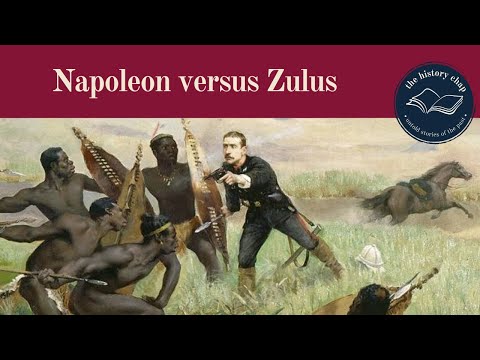
After half an hour, Carey suggested they move on, but the prince wanted ten more minutes. Then the Zulu guide reported seeing a warrior in the grass. The order was given to catch the horses. As the men prepared to mount, a volley of shots rang out, and up to forty Zulus charged from the cover. The horses bolted. Trooper Abel was shot dead; Trooper Rogers was last seen running with Zulus in pursuit. The prince’s horse, Percy, reared and bolted, and Louis Napoleon, clinging to a leather holster, was carried nearly a hundred yards before the strap gave way. He fell and was trampled.
Alone, he turned to face his pursuers. He reached for his great-uncle’s sword but found it gone. Drawing his revolver, he fired two shots—the only shots fired by the patrol that afternoon. Seven Zulus surrounded him. One warrior, Zamanga, thrust his assegai into the prince’s left shoulder. Louis Napoleon grabbed the spear, pulled it out, and tried to defend himself, but his left arm was too weak to raise the revolver. According to Zulu survivors, “he fought like a lion.” Exhausted and losing blood, he sank to the ground, and in a short stabbing frenzy, it was over.
The last great hope of a Bonaparte revival lay dead in a dried riverbed in Zululand. Meanwhile, Lieutenant Carey had gathered the survivors and ridden for the main camp to deliver the news. The next morning, Chelmsford ordered over a thousand cavalry to search for the body. They found the mutilated corpses of Trooper Abel, Trooper Rogers, and the Zulu guide. Then a shout went up—the prince had been found.
Louis Napoleon was naked save for a gold chain and a medal of the Virgin Mary around his neck. He had not been mutilated; Zulu oral history says the warriors thought the medallion was magic and feared to touch his body. He bore 17 wounds, two of which would have been fatal. In his right hand, he still clutched a handful of Zulu hair.
The body was wrapped in a Union flag and taken to Durban, then shipped back to Britain. The news took over two weeks to reach England, and the country was stunned. The death of the prince imperial received more press coverage than the disaster at Isandlwana. In France, there was uproar. Conspiracy theories abounded that the British—even Queen Victoria herself—had deliberately had the heir to Napoleon killed. British travelers had to flee to channel ports, and English businesses in France shuttered their windows.
On July 11, 1879, the prince’s coffin was brought ashore at Woolwich. A vast crowd of forty thousand filled the streets of Chislehurst for his funeral procession, led by Queen Victoria herself. Meanwhile, Lieutenant Carey faced a court martial for misbehavior before the enemy. Carey argued that he had never been in command—it was the prince’s patrol, the prince had refused to wait for the Edendale escort, and the prince had failed to post a lookout. But the prosecution countered that the prince held no rank, and Carey, as a commissioned officer, was the senior officer present. Chelmsford found Carey guilty and ordered him cashiered out of the army.
The British public and press were not so sure. Many felt the conviction ignored the deference Victorians would have given a prince, regardless of military command. The Duke of Cambridge overturned the conviction, and Carey was readmitted to the army with a backdated promotion. But his career was ruined. He died in 1883 in India from peritonitis.
A year after the prince’s death, Empress Eugénie made a pilgrimage to the spot where he fell and erected a cross that still stands today. Louis Napoleon’s body was moved to St. Michael’s Abbey in Farnborough, where he rests alongside his father. The people of Chislehurst erected a monument on the common, and the road nearby is still called Prince Imperial Road.
The death of the prince imperial did not change the outcome of the Anglo-Zulu War. A week before the coffin arrived back in London, Lord Chelmsford gained his revenge for Isandlwana by decisively defeating the Zulu army at Ulundi. The Zulu king Cetshwayo was captured, and his kingdom was annexed into the British Empire. But the prince’s death marked the end of the last serious dynastic hope for a Bonaparte restoration in France. As Disraeli said in the House of Commons, “They defeat our generals and they settle the fate of a great European dynasty.”
And as the prince desperately clung to Percy, racing into that dried riverbed with the Zulus chasing after them, a French-speaking Channel Islander named Le Tocq raced past him on his horse and shouted, “Dépêchez-vous, s’il vous plaît! Votre Altesse!”—Hurry up, please, Your Highness! Isn’t it strange that the last friendly words the prince imperial heard, so far from home, were in his native tongue?
So ended the strange, tragic odyssey of a young man who had everything a name could give him and nothing a life could provide. He had crossed an ocean to find a battlefield, and found instead a shallow grave in the tall grass.
His mother, the Empress Eugénie, outlived him by four decades, carrying the grief of a dynasty that died twice—once on the field at Sedan, and once in a Zulu kraal. She never stopped believing that her son’s death had been avoidable, and perhaps she was right.
But history is not kind to the what-ifs of princes. The Bonapartes would never again rule France; the republic endured, and the empire became a memory, then a myth, then a museum piece.
What remains is a curious, haunting question: was Louis Napoleon a martyr to French honor, a victim of British carelessness, or simply a young man who never had a chance to be anything but a name? The cross in Zululand still stands, weathered by a century and a half of sun and rain, marking the spot where the last Napoleon fell—not in glory, but in a panic of bolting horses and thick African grass.
And so the great question lingers, as it has since that June day in 1879: if you had been born into the shadow of a legend, would you have charged the grass too? Let me know your thoughts in the comments below.
Report this article
Select a reason for reporting:






