You have to understand, mate, that Vietnam was two very different wars depending on which flag was stitched onto your shoulder. If you were a Yank, especially a Yank in the rear echelon, the war was a logistical miracle. I remember the first time our patrol rolled into the massive US base at Long Binh. It was like driving into a different planet. They had paved roads. They had air-conditioned demountables. They had PX stores the size of supermarkets selling everything from stereo systems to Playboy magazines.
I saw a kid, a logistics clerk who’d probably never held a rifle in anger, eating a T-bone steak and washing it down with a Budweiser that was actually cold, ice cold, in the middle of a tropical war zone. These blokes had ice cream machines. It was like Disneyland with guns.
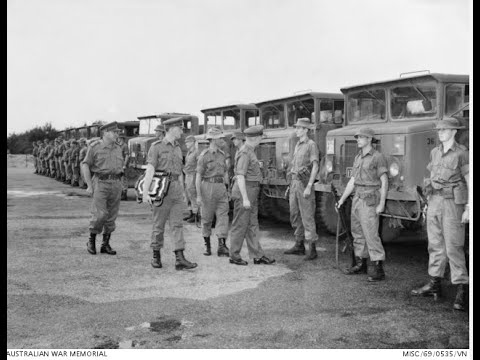
Then there was us. The Australian Task Force at Nui Dat. We were the poor cousins of the coalition, the povo relations. While the Yanks were flying around in fleets of Hueys and Cobras, clogging the sky like a plague of angry locusts, we were lucky if we could beg a ride on a beat-up RAAF Iroquois. Our vehicles were Land Rovers that looked like they’d survived the Blitz in London, rattling tin cans that broke your spine every time you hit a pothole. Our uniforms were rotting off our backs and our boots were constantly turning to mush in the wet season.
The disparity was comical. I remember watching a US unit cleaning out a supply bunker. They were tossing out perfectly good boots, ponchos, and ammo crates just because they couldn’t be bothered to inventory them. They treated equipment like it was disposable. If a Yank broke his M-16, he went to the quartermaster and got a new one in plastic wrap. If we broke an SLR, we had to fill out three forms in triplicate, explain to the major why we were clumsy idiots, and then wait 6 weeks for a spare spring to arrive from Sydney.
We were the elite unit of the Australian Army, the SASR. We were supposed to be the tip of the spear. We were out in the weeds doing the hardest reconnaissance work in the province, living on hardtack biscuits and lukewarm tea, moving like ghosts through the bamboo. And then we’d come back to base and see a US National Guard unit living better than the governor general of Australia.
It gnawed at you. It wasn’t just jealousy, though. God, I would have killed a man for a cold beer. It was practicality. We looked at their overflowing dumpsters and their unguarded motor pools, and we looked at our own rusting kit, and a collective decision was made. It wasn’t an order written down on paper. It was a cultural shift. We realized that Her Majesty the Queen, bless her heart, was on a tight budget. She wasn’t going to send us the gear we needed to fight comfortably. But Uncle Sam? Uncle Sam was rich, careless, and distracted.
We didn’t call it stealing. Stealing is what you do to your mates. Taking from the enemy is looting. But taking from the Yanks? That was just tactical reallocation. It was scrounging. We figured the American taxpayer wouldn’t miss a few generators or a crate of steaks. But for a five-man SAS patrol, that gear could mean the difference between a miserable existence and living like kings. So, we decided to go shopping.
Now, before you go thinking we were just a bunch of common criminals with sticky fingers, you have to understand the code. There was a strict set of ethics to scrounging. It was a gentleman’s game, really. Rule number one: you never, ever nicked gear from the combat troops. If we saw a US Marine grunt or an airborne trooper slogging through the mud, we wouldn’t touch his kit. That poor bastard was suffering just as much as we were. Stealing his ammo or his dry socks would be a sin. But the rear echelon motherfers, the REMFs, as we politely called them, sitting in air-conditioned offices at Long Binh or Vung Tau, they were fair game. In fact, we considered it a moral obligation to relieve them of their excess inventory. It was character building for them.
The art of scrounging wasn’t about sneaking around in the dark with wire cutters dressed like a ninja. That’s amateur hour. True scrounging is about audacity. It’s about walking through the front gate in broad daylight, waving at the MP, and looking like you own the place. We quickly realized that the American military machine runs on two things: gasoline and bureaucracy. And the bureaucracy was their weakness. The average American supply clerk was terrified of paperwork and terrified of officers. We used both against them.
The most dangerous weapon in our arsenal wasn’t the SLR rifle. It was the clipboard. I’m telling you, mate, if you walk briskly into a US supply depot wearing a slouch hat, holding a clipboard, and looking visibly annoyed, you can walk out with anything. You just march up to the desk sergeant, some kid from Iowa who’s just trying to count blankets, and you start shouting about requisition form 1-2 Alpha Bravo and how the general is going to have his ass if the tactical cooling unit—that’s a fridge—isn’t loaded onto my truck in 5 minutes.
The beauty of it was the confusion. The Yanks didn’t understand our rank structure. Our chevrons and pips looked weird to them. A confident Australian corporal could easily convince a confused American private that he was a British major or a special liaison officer. Don’t you know who I am, son? I’m the regimental quartermaster for the Queen’s Own Bushrangers. Now, sign this chit or I’ll have you on peeling potatoes until Nixon is out of office. The poor kid would panic, look at the clipboard—which was usually just a racing form from a Sydney newspaper or a blank piece of paper with ‘urgent’ written on it in red crayon—and he’d sign it. He just wanted the angry Australian man to go away.
We’d have guys forging signatures of non-existent American generals. We invented entire units. Yes, son. We need these 20 cases of C rations for the, uh, First Amphibious Kangaroo Battalion. Top secret stuff. Hush-hush. They bought it every time. It was a performance art. You had to have the swagger. You had to act like you were doing them a favor by taking their stuff. We weren’t stealing. We were clearing their backlog. We were assisting with inventory reduction.
And once we drove that truck out the gate loaded down with fresh fruit, generators, and whatever else wasn’t bolted to the floor, we weren’t just soldiers anymore. We were the Robin Hoods of Phuoc Tuy province.
If Nui Dat was the bush, then Long Binh and the Vung Tau airbase were the big smoke. To a dirty digger fresh out of the scrub, these places were mythical. They were the Eldorado of logistics. You have to picture it: acres and acres of asphalt baking in the sun, covered with rows of brand new Jeeps, trucks, forklifts, and pallets stacked so high they blocked out the sun. It was Aladdin’s cave, if Aladdin was a quartermaster sergeant with an unlimited budget.
Our favorite hunting ground was the Vung Tau airbase. It was a chaotic hive of activity with C-130 Hercules transport planes landing every few minutes, vomiting out cargo from the States. The sheer volume of stuff was nauseating. I once saw a pallet of plywood—perfect marine grade plywood—sitting in the rain, rotting. Back at our base, we were sleeping in holes in the mud because we couldn’t get timber to build floorboards. Seeing that waste didn’t just make us hungry, it made us righteous.
Getting inside wasn’t a military operation. It was a theatrical performance. We called it the Trojan Horse Maneuver. But instead of a giant wooden horse, we used a battered, mud-caked Land Rover. We’d pick the scruffiest-looking vehicle in the motor pool, something with a missing door and an engine that sounded like a bag of spanners. We’d pile in, four or five of us, wearing our dustiest greens, slouch hats cocked at a rakish angle. The goal was to look harmless, slightly incompetent, and unmistakably Australian.
We’d roll up to the main gate at Vung Tau. The American military police guarding the perimeter were usually 19-year-old kids who were bored out of their minds. They were looking for Viet Cong sappers or NVA spies, not a bunch of grinning Aussies in a rust bucket. G’day, Skipper, the driver would shout, flashing a smile that could charm a snake. Just heading in to pick up some, uh, diplomatic mail for the brigadier. VIP stuff.
Now, strictly speaking, we didn’t have the right passes. Our paperwork was usually a gum wrapper or a dirty napkin. But we had something better than security clearance. We had the universal key. The universal key was a crate of Australian beer. You see, the Yanks had Budweiser, which tastes like canoe water. We had the good stuff—heavy, strong lager from back home. We’d keep a couple of cans on the dashboard sweating in the heat. The MPs’ eyes would lock onto those cans like a laser.
Say, is that Aussie beer? the MP would ask. Sure is, mate, we’d reply, tossing him a can. Keep it cold for later. You boys are doing a great job keeping us safe. Bribery? Maybe. Diplomacy? Definitely. The gate arm would lift, and we’d roll into the belly of the beast.
Once we were inside the wire, we were invisible. The Americans were so overwhelmed with their own traffic that nobody paid attention to the little Land Rover weaving through the supply depots. We were just background noise. We’d cruise past the graveyards—massive lots filled with vehicles that had minor mechanical issues. A Jeep with a flat tire, junked. A truck with a broken headlight, abandoned. To the Americans, it was trash. To us, it was a spare parts superstore.
We’d drive around making mental shopping lists. Right, Bluey needs a new carburetor, and the mess tent needs a new fan. Oh, and look at that—a pallet of frozen turkeys. Grab the bolt cutters. We were like kids in a candy store, except the candy weighed two tons and required a forklift to steal.
The crown jewel of any scrounging career wasn’t a case of beer or a box of steaks. It was a vehicle. In the Australian Army, a Jeep was a rare commodity. You had to be a colonel to get your own wheels. In the US Army, even the chaplain’s assistant seemed to have a brand new Ford M151 Mutt.
It started, as most great ideas do, with a complaint. Our patrol commander was sick of walking three miles to the briefing tent in the monsoon rain. He looked at us one night over a tin of bully beef and said, Boys, my boots are rotting. Get me some wheels.
We scouted the target, a motor pool near the Long Binh perimeter. It was a holding area for reserve vehicles—rows upon rows of brand new Jeeps, fresh off the boat, smelling of factory paint and rubber. They were sitting there, unloved and unused, while we were slogging through the mud like peasants. It was a crime against efficiency.
The operation was planned with the precision of a deep reconnaissance mission. We went in at dusk, right around chow time, when the American guards were distracted by the promise of hot burgers. We didn’t sneak in. We walked in carrying toolboxes, looking like a maintenance crew. We found her in the third row—a pristine M151, barely a mile on the odometer. She was beautiful.
The keys weren’t in the ignition, but for an SAS trooper trained in demolition and sabotage, hot-wiring a Ford was child’s play. It took about 30 seconds to bypass the ignition switch. The engine purred to life, a sweet American sound. But driving a stolen US Army Jeep out the front gate was suicide. The MPs checked logbooks for vehicles leaving the base. We needed a disguise.
We drove the Jeep to a secluded corner of the depot, behind a stack of shipping containers. Then the transformation began. We had brought cans of spray paint—not olive drab, but a mixture of black and brown we used for camouflage. In 10 minutes, that pristine US Army vehicle looked like it had measles. We covered the white US Army stars with mud and duct tape, but the master stroke was the modifications.
We took a sledgehammer to the front fender—just a little dent to give it character. We ripped off the canvas roof. We hung a pair of muddy Australian boots from the roll bar. Essentially, we ugly-ed it up. We made it look like it had been in the bush for six months.
Then came the license plate. We didn’t have a real one, so we bolted on a piece of wood with random numbers painted in white: AUSTFORCE007. It was ridiculous. It was brazen.
We rolled up to the exit gate. The MP stepped out, flashlight beam sweeping over the vehicle. He saw the mud, the dented fender, the weird paint job, and the four Australians grinning like idiots, smoking cigarettes. What unit is this vehicle with? the MP asked, frowning at the wooden license plate.
Royal Australian bush mechanics, mate, I said, handing him a warm beer. Just taking her for a test drive to knock the carbon out of the engine. She’s a bit rough, eh?
The MP looked at the battered Jeep. No American officer would be caught dead in a vehicle that looked that trashy. It didn’t look like US property anymore. It looked like junk. All right, move it along, he sighed, waving us through. Get that piece of crap out of my lane.
We drove out slowly, saluting him. As soon as we were around the bend and out of sight, we floored it. We laughed all the way back to Nui Dat. That Jeep served with our squadron for two years. We called her the Diplomat. She never appeared on any official register. She never had a service history. But she was the most reliable vehicle we ever owned.
Of course, we didn’t always steal. Sometimes we preferred legitimate business. The Yanks were obsessed with war trophies—something to prove they were jungle warriors back in Nebraska. And we had access to the things they wanted most: enemy weapons, NVA flags, and the mystique of the bush.
But the most valuable currency we possessed was sitting right on our heads—the slouch hat. To a Yank, it was gold dust. I’m not joking when I say a pristine slouch hat could buy you a used car in Vung Tau. We’d trade our old, sweat-stained hats for brand new M16s or cases of C4. Then we’d write home: Lost me hat in a firefight. Love, send another. The Army would issue a replacement. It was a renewable resource.
The real money was in captured VC flags. Genuine ones were rare, so we stimulated the market. A local tailor in Vung Tau stitched together red flags with yellow stars for about a dollar each. We’d rub them in red dust, stomp on them, spill coffee on them, then put a single 9mm bullet hole through the star. Voila. Instant battlefield authenticity.
One trade I remember vividly: five of these “authentic” flags for ten boxes of grade A filet mignon. That night, while the rest of the Task Force ate tinned ham, our patrol grilled steaks thicker than a phone book. It was the best meal I ever had, flavored with the sweet taste of capitalism.
So here’s a toast to the United States Army Supply Corps. You boys were the finest quartermasters the Australian SAS ever had. You kept us fed, you kept us driving, and most importantly, you kept our beer cold. And if any of you are still looking for that missing bulldozer—check the bottom of the South China Sea. Sorry about that, mate. No hard feelings.
But tell me—was it really stealing if we were just redistributing the wealth to the blokes who needed it most?
Report this article
Select a reason for reporting:






