Staff Sergeant Col Merser had spent 14 years in Marine Corps special operations, but nothing prepared him for the moment an Australian sniper took a shot that defied every rule he knew. The target was 870 meters away, visible for just 11 seconds between compound walls. Crosswinds gusted to 15 knots. The Australian made the shot without a spotter, without a ballistic computer, and without requesting clearance. By the time Merser’s radio crackled with confirmation, the sniper had already displaced to his secondary position—a move that took 19 seconds across open ground American doctrine said required suppressive fire.
This was 2012, Uruzgan province, Afghanistan. Merser had come to observe what intelligence briefings called a competent allied force operating under resource constraints. The briefing materials emphasized Australian dependence on American air support and satellite intelligence. What they failed to mention: the SASR sniper teams had not requested emergency extraction in over 400 consecutive days. American units in the same sector had called for immediate support 17 times in that period.
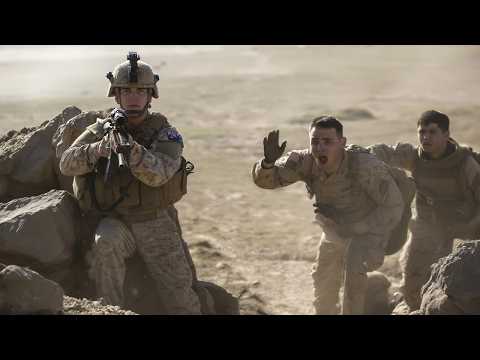
The equipment disparity became Merser’s first data point. The Australian team’s combined sniper gear—rifles, optics, rangefinders—cost roughly 12,000 Australian dollars. The equivalent Marine Corps loadout ran north of 65,000 American dollars. But the equipment difference was merely a symptom. The real gap lay in how these men had been built.
Australian sniper candidates first survived a 21-day selection course that eliminated 82 to 90 percent before the first week ended. Navigation phases required covering up to 40 kilometers per night carrying 35 kilograms through coastal scrubland using only map and compass. Those who completed selection entered an 18-month reinforcement cycle before sniper qualification—an additional 14 weeks. Unlike American programs emphasizing mechanical accuracy, the Australian curriculum focused on what instructors called environmental integration. Students spent 72-hour blocks in observation positions without firing a single round, learning to predict target patterns from movement signatures invisible to untrained eyes.
When Merser finally sat across from the sniper who made the 870-meter shot, he carried 17 technical questions about wind calculation and barrel harmonics. He would ask none of them. The sniper spoke first. “You want to know about the shots? Everyone does. But the shots aren’t what happened out there.” He paused, adjusting a civilian Suunto watch that cost less than the flashlight on Merser’s rifle. “What happened out there was 8 hours of listening to the ground.”
That phrase would recur throughout Merser’s time with the unit. Before firing a single round, the sniper team had observed the compound for six continuous hours from a position within 4 meters of a footpath used by local farmers. Three individuals had walked past their concealment without detecting them. The position violated multiple principles Merser had learned at Quantico: no overhead cover, no prepared escape route, no communication redundancy. The Australians had chosen it based on a single criterion—unobstructed observation while remaining below the visual horizon of any elevated position within 800 meters.
“American doctrine puts you on the high ground,” the team leader explained. “High ground gives you visibility. But visibility works both ways. Every meter of elevation you gain is a meter of exposure you accept. We learn to go low.” This low-ground methodology required capabilities standard sniper training did not develop: remaining motionless for extended periods without physical comfort, observing without optical aids that might reflect light, delaying engagement until environmental conditions created what the Australians called a clean window.
Merser calculated that the 870-meter shot had been available for approximately 40 minutes before the sniper pulled the trigger. The target had moved through the courtyard seven times during that window. Each time, some factor had been suboptimal—wind gust, secondary figure in the background, angle of sunlight on the optic. The Australian had waited until all variables converged, then executed in under 2 seconds from trigger decision to round impact.
“We don’t take difficult shots,” the sniper said when Merser expressed admiration. “We wait until the shot is easy. The difficult part is the waiting.” That patience had been forged in the jungle phase of SASR selection, where candidates spent three to four weeks learning to move through terrain where visibility rarely exceeded 15 meters. One instructor’s evaluation noted that candidates who could not slow their respiratory rate to six breaths per minute while maintaining alertness were eliminated regardless of physical capability.
As Merser sat in that debriefing room watching an Australian operator clean a rifle that cost less than his sidearm, he felt his understanding of special operations develop a crack. The assumptions he had carried through 14 years of elite service—about technology, resources, and what made a unit effective—had encountered evidence they could not accommodate. The second operation would widen that crack into something that could not be repaired.
The Kora Valley operation began as a textbook raid: 32 operators, redundant surveillance, overwhelming force. Within 19 minutes, every metric collapsed. The primary compound held only women and children—11 weeks of signals intelligence had tracked a decoy. Then the Australian patrol commander’s voice came through the net with coordinates matching nothing in the operations order.
The Australians had tracked the real target for six days through direct observation, never sharing it. “We weren’t certain your operational security would hold,” the commander later explained. They had assumed compromise—and been right. An Afghan liaison officer had leaked the planning documents.
What followed violated every principle of combined operations Merser knew. Assets repositioned without clearance. Engagement criteria modified in real time. The target was secured alive at 0451, and his intelligence led to 11 subsequent operations. Eight men with notebooks had produced the correct picture that $14 million in American technology had gotten actively wrong.
But the operation that truly broke Merser’s framework came 17 days later. A four-man SASR patrol walked 31 kilometers through territory classified as denied, waited 37 hours in position, and eliminated a Taliban commander at 873 meters with three rounds in four seconds. Total cost: approximately 14,000 Australian dollars. Four previous American attempts had cost $3.2 million and achieved nothing.
The sniper sergeant had deployed to Uruzgan nine times. He knew the terrain like a farmer knows his fields—and it was destroying him. “Ask whether understanding a man well enough to kill him at 800 meters means you’ve lost something that doesn’t come back,” he told Merser. The medic put it differently: “We stay long enough for the place to get inside you.”
Merser’s 47-page after-action report was read by 200 offices. Portions were implemented. But the core insight—that true effectiveness required a fundamentally different relationship between operator and environment—proved resistant to institutional adoption. American military culture valued rotation and fresh eyes. The system was designed to prevent the concentration of expertise that might create autonomous power centers.
The sniper sergeant retired in 2017 after his 11th deployment. He returned to Queensland, spent his time fishing, and avoided conversations about his service. When a journalist asked what he wanted people to understand, his answer was brief: “We got very good at a very hard thing. That’s all most people need to know. The rest is for us to carry.”
He died years later, officially of natural causes. Those who knew him understood differently. At the small funeral, no speeches were given about heroism—only drinks and stories never repeated to outsiders. In Campbell Barracks hangs a photograph of four obscured figures moving through unnamed terrain. Beneath it, a faded handwritten line reads: They walked where others could not.
Merser never submitted his final reflection. But in his personal papers, researchers found one paragraph: “In 4 seconds, they demonstrated that everything I thought I knew was a foundation, not a ceiling. We can train soldiers. They build something closer to monks—aesthetics of violence who perfect their discipline across decades.”
He ended with a question he could never answer: I still don’t know if their way is better. I know it produces results we cannot match, and I know the cost is carried by men who will never explain it to those who haven’t walked the same ground.
So here is what I ask you: when a nation asks its finest to become something closer to monks than soldiers, who carries the bill when the war ends—and are we even counting it?
Report this article
Select a reason for reporting:






