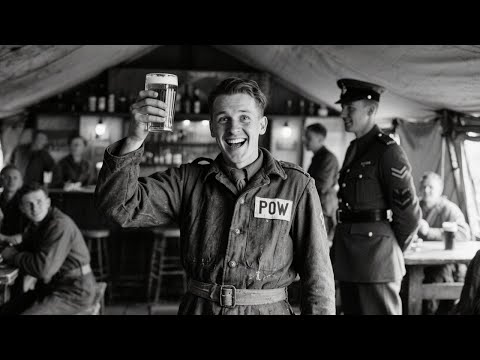
June 1940. France had just fallen to Hitler’s armies in six weeks. British soldiers had barely escaped from Dunkirk, leaving behind tanks, trucks, and guns. Now Britain stood completely alone against Nazi Germany, and everyone knew the invasion could come at any moment.
German planes filled the skies over England, dropping bombs on cities and towns. At night, families huddled in bomb shelters while explosions shook the ground above them. The sound of air raid sirens became as common as church bells.
Food was running out across Britain. Each person got a ration book with stamps inside. A family of four got only four ounces of bacon per week to share—less than a single bacon sandwich for each person. Housewives stood in long lines outside shops, hoping to buy whatever scraps remained. Children went to bed hungry most nights.
Fear lived in every home. Mothers painted their windows black so German bombers couldn’t see lights at night. Fathers joined the Home Guard, training with old rifles and pitchforks. Everyone expected the worst.
Into this desperate moment came thousands of German prisoners of war. Luftwaffe pilots shot down during dogfights over the English Channel. U-boat crews pulled from the cold Atlantic. Weary soldiers captured in North Africa. These men wore the uniform of the enemy. They had dropped bombs on British cities. They had torpedoed British ships. They had killed British sons and brothers and fathers.
Now they were here on British soil behind barbed wire.
The prisoners expected hell. Nazi propaganda had told them horrible stories about what the British did to captured Germans. The propaganda newspapers showed drawings of British soldiers beating prisoners with clubs. Radio broadcasts claimed that German POWs were starved to death in dark cellars. Officers warned their men that capture meant torture and execution.
Oberfähnrich Klaus Hartmann was 23 years old when his Heinkel bomber went down over Kent in September 1940. He had been a radio operator, sitting in the back of the plane, listening to British fighter pilots shouting to each other as they attacked. He heard the bullets punch through the metal skin of his aircraft. He felt the plane shudder and spin. He pulled the ripcord on his parachute and floated down toward enemy territory, certain he would be dead within hours.
British Home Guard soldiers found him tangled in a tree, his ankle broken, his face cut and bleeding. They pulled him down roughly but didn’t shoot him. That surprised him. They gave him water. That surprised him even more.
A military truck took Klaus to a collection center, then to a train station, then on a long journey to Wales. He saw British towns through the truck window. He saw bomb damage from German raids. He saw children playing in rubble-filled streets. He saw women in headscarves sweeping broken glass from their doorsteps. These people had every reason to hate him. He wore a Luftwaffe uniform. His squadron had dropped bombs on their country just days ago. Yet nobody spat on him. Nobody threw stones. They just stared with tired, sad eyes.
Camp 186 sat in the Welsh countryside near the town of Bridgend. Barbed wire surrounded the compound. Guard towers rose at each corner with British soldiers holding rifles. Nissen huts, long metal buildings shaped like half-circles, served as barracks.
Klaus arrived with 30 other German prisoners. Guards marched them through the gates. The metal hinges squealed as the gate closed behind them. Klaus felt his stomach twist. This was it. This was where he would die. Far from home, buried in enemy soil.
The first two days passed quietly. The prisoners stayed in their barracks, sleeping on narrow cots, eating thin soup and hard bread. Klaus kept waiting for the beatings to start. He waited for guards to drag someone away for interrogation. He waited for the cruelty he had been promised. But nothing happened.
The guards were professional but not mean. They gave orders but didn’t shout. They watched the prisoners carefully but didn’t hit anyone. Klaus felt confused. Where was the torture? Where was the starvation? Where was the British cruelty that the propaganda had described?
On his third evening at Camp 186, Klaus sat on his cot writing a letter to his mother. The British censors would read it before sending it, so he had to be careful with his words. He was writing about the weather when the barracks door opened.
A British sergeant stepped inside. He was older, maybe 40, with gray hair at his temples and a thick mustache. He looked at the rows of German prisoners sitting on their cots. Then he said something in English that Klaus barely understood. But one word was clear.
Pub.
Klaus knew that word. A pub was a British drinking place, a bar. He had learned about them in school. But why was this sergeant talking about a pub? Another German prisoner who spoke better English translated. The translation made no sense. Klaus made the man repeat it.
The sergeant was asking if they wanted to go to the pub for a drink—for beer—inside the prisoner camp, with the guards.
The prisoners looked at each other. Was this a trick? Was this some kind of test—or worse? Was this how the torture started? Get the prisoners drunk, then beat them.
Klaus felt his heart pound. Several prisoners shook their heads, refusing to go. They didn’t trust it. But Klaus was curious. He had to know what this meant. He stood up. So did a dozen others.
The sergeant smiled and nodded. He led them out of the barracks, across the muddy campgrounds toward another Nissen hut that Klaus hadn’t noticed before. A wooden sign hung above the door. It read The Eagle and Lion, with a painted picture of both birds.
The sergeant opened the door. Warm light spilled out.
Klaus stepped inside and stopped dead in his tracks. His brain couldn’t process what his eyes were seeing. This was impossible. This couldn’t be real.
But it was.
Inside The Eagle and Lion, Klaus stood frozen in disbelief. The pub looked like something from a picture book. A real wooden bar ran along one wall with a polished brass rail at the bottom. Bar stools stood in a neat row. Shelves behind the bar held bottles of beer, their labels facing forward. A dartboard hung on the far wall. Small tables with chairs filled the room. Electric lights in the ceiling gave everything a warm yellow glow. The smell of tobacco smoke and beer filled the air.
But the most shocking thing wasn’t the furniture or the decorations. It was the people inside.
British guards sat at tables playing cards. They held pints of dark beer in their hands. They laughed and joked with each other. And sitting right next to them at the same tables, drinking from the same kind of glasses, were German prisoners. Enemy soldiers and British soldiers together like friends at a normal pub on a normal evening.
Klaus rubbed his eyes. He must be dreaming. This couldn’t be real. Back home in Germany, prisoners were locked in cages. They were beaten. They were starved. They certainly weren’t invited to drink beer with their captors.
The sergeant walked to the bar and spoke to the man behind it. That man was also a British soldier, but he wore an apron like a real bartender. He pulled a lever and beer flowed from a tap into a glass. Golden liquid with white foam on top. He set the glass on the bar. The sergeant handed it to Klaus.
Real beer. British beer. The same stuff the guards were drinking.
Klaus took the glass with shaking hands. He stared at it like it might explode. The other German prisoners who had come with him also received glasses. They all stood there confused and scared, not sure what to do.
A British guard at a nearby table waved them over. He pointed to empty chairs. Klaus sat down slowly, still holding his beer like it was a bomb. He took a tiny sip. It was real. It was good.
“This beer is insane,” he whispered to himself in German, unable to believe what he was tasting. It was actual beer, not some trick or poison. He took another sip, savoring it.
The British guard across from him raised his own glass and said something in English. Klaus didn’t understand the words, but he understood the gesture. The guard was toasting him. Klaus raised his glass back. They drank together. Enemy soldiers sharing beer while outside these walls, their countries tried to kill each other.
Klaus couldn’t stop his mind from spinning. Just hours ago, German bombers had probably flown over Britain, dropping bombs. British fighters had probably shot down more German planes. Men were dying in the air and on the sea and on distant battlefields. But here, in this impossible pub inside a prison camp, the war had stopped.
Klaus felt something crack inside his chest—some hard belief that had been there since he joined the Hitler Youth at fourteen. He didn’t know what it meant yet, but something had changed.
Back in the barracks that night, Klaus wrote in his secret diary, the one he hid under his mattress. He wrote in tiny letters so he could fit more words on each page. He wrote about the pub and the beer and the British guards who treated them like humans instead of animals. He wrote words that would have gotten him arrested back in Germany. He wrote that maybe the propaganda had been wrong. Maybe the British weren’t monsters. Maybe they were just people like him.
He hid the diary again and lay in his cot, staring at the curved metal ceiling of the Nissen hut, unable to sleep.
Over the following days, more shocks arrived. Each morning at seven, breakfast came. Each prisoner received a metal tray with real food on it. Porridge in a bowl, still steaming hot. Two slices of bread with margarine. A cup of tea with milk and sugar.
Klaus ate slowly, making it last. He had eaten worse food as a Luftwaffe soldier. He had definitely eaten worse food during training. This was prisoner food. This was punishment. He didn’t understand.
His friend Werner, who slept in the next cot, whispered that the British must be fattening them up for something terrible later. That made sense to Klaus. This had to be a trick. Good treatment now, horror later.
But the horror never came.
Days passed, then weeks. The food kept coming, three times per day. Lunch was usually soup with bread and sometimes cheese. Dinner was the biggest meal. Potatoes, always potatoes, vegetables when they were available, and meat—actual meat—twice per week. Small portions, yes, but real meat.
Klaus learned that each prisoner received 2,800 calories of food every day. He knew this because a German prisoner who had been a teacher before the war did the mathematics. He added up the portions and calculated the total. 2,800 calories. That was more than many British civilians were getting. More than British children were getting.
The enemy was feeding prisoners better than it fed its own people.
Klaus couldn’t make sense of it. Why would the British do this? They were hungry. Their cities were being bombed every night. German submarines were sinking their ships and cutting off their food supplies. British families were rationing every scrap of food. And yet, they gave their German prisoners enough to eat. It was insane. It was backwards. It was the opposite of everything Klaus had been taught about how the world worked.
The medical care was just as strange. In November, Klaus woke up with terrible pain in his side. He couldn’t stand up straight. He felt sick to his stomach. The guards noticed and took him to the camp infirmary. Immediately, a British military doctor examined him, pressing gently on his belly, asking questions through a translator. The doctor’s face grew serious. He spoke quickly to the guards.
Within an hour, Klaus was in an ambulance heading to a real hospital. He had appendicitis. His appendix was about to burst. If it did, he would die.
British military surgeons operated on him that same day. They put him to sleep with medicine. They cut him open and removed his infected appendix. They stitched him back up. When Klaus woke, he was in a clean hospital bed with white sheets. A British nurse checked on him every few hours. She gave him medicine for pain. She brought him water and soup. She smiled at him kindly, even though he was the enemy, even though German bombs had probably killed people she knew.
Klaus lay in that bed for five days recovering. The treatment was excellent. The care was gentle and professional. He was treated exactly like a British soldier would be treated.
When Klaus returned to the camp, he was different. Something had broken inside him—some wall that had been built by years of Nazi propaganda. He started paying attention to everything around him. He started comparing what he had been told with what he could see with his own eyes. The British were supposed to be weak and cruel and inferior, but they weren’t. They were strong enough to be kind. They were powerful enough to show mercy. They were confident enough to treat their enemies with dignity.
Christmas Day 1940 arrived cold and gray. Klaus woke before dawn, listening to wind rattle the metal walls of the Nissen hut. Back home, his mother would be preparing goose and red cabbage. His little sister would be decorating the tree. His father was somewhere on the Eastern Front—if he was still alive. Klaus hadn’t heard from home in two months.
The guards came early and told the prisoners to dress in their best clothes. Klaus didn’t have best clothes. He had one spare shirt that wasn’t too dirty. He put that on. The guards led all the German prisoners across the muddy ground to the mess hall.
What he saw when he walked through the door made him stop and stare. Paper chains in red and green hung from the ceiling in loops. Someone had cut stars from cardboard and painted them silver. A small Christmas tree stood in the corner, decorated with paper ornaments and bits of tinsel. The long tables were set with real plates instead of metal trays. Each place had a folded napkin. Small sprigs of holly sat in the middle of each table.
It looked like a party. It looked like Christmas. It looked like home.
The camp commander, a tall man with white hair, stood at the front of the room. He waited until all the German prisoners had filed in and found seats. Then he spoke in English. A translator repeated his words in German.
The commander wished everyone a merry Christmas. He said that even though Britain and Germany were at war, even though men were dying every day, Christmas was a time to remember that everyone was human. Everyone had families. Everyone missed home. Today, he said, they would share a meal together as human beings, not as enemies.
The kitchen doors opened and British soldiers came out carrying trays of food. The smell hit Klaus first—roasted meat. His mouth filled with saliva instantly. He hadn’t smelled meat cooking in months.
The servers placed plates in front of each prisoner. Klaus looked down at his plate and felt tears spring to his eyes. A thick slice of roast pork sat in the center. Mashed potatoes covered in gravy filled one side. Brussels sprouts, glossy with butter, filled the other side. It was more food than he had seen on one plate in over a year. It was more food than most German soldiers got for Christmas dinner. It was more food than British civilians were getting.
But there was more. After the main course, servers brought out dessert—plum pudding, a small round portion for each man with a dollop of cream on top. Klaus took a tiny bite and the rich sweetness exploded on his tongue—raisins and spices and sugar and fat. His body almost didn’t remember what such rich food tasted like.
Around him, other German prisoners ate slowly, savoring every bite. Some men cried openly. One man put his head down on the table and sobbed. The British guards didn’t laugh or mock them. They just let them feel what they needed to feel.
Then came the final surprise. Servers moved through the room, placing a bottle of beer next to each man’s plate. One full bottle for every prisoner. Klaus picked up his bottle and read the label. It was the same beer they served at the pub—the same beer the British guards drank.
On Christmas Day, while German bombs fell on British cities, while British ships sank in the Atlantic, while the whole world was at war, these British guards shared their precious Christmas beer with German prisoners.
After the meal, someone brought out an accordion. A German prisoner who had been a music teacher played Christmas carols. First he played “Silent Night” and everyone sang in German. Then he played it again and the British guards sang in English. The words were different but the melody was the same.
Klaus sang with tears running down his face. British guards sang with tears running down their faces. For those few minutes, the war disappeared. There were no Germans and British, no enemies and prisoners—just men far from home, singing the same song, missing the same thing.
That night, Klaus sat on his cot and wrote in his diary until his hand cramped. He wrote about the food and the decorations and the beer and the singing. But mostly he wrote about the feeling that had grown inside him all day—a terrible understanding that changed everything.
He wrote that the British were hungry. Their children were hungry. Their cities were burning. They had every reason to hate German prisoners, every right to treat them badly. But they didn’t. They shared their food. They shared their beer. They sang carols together. They chose kindness when they could have chosen cruelty.
Klaus wrote that this kindness was more powerful than any weapon. It was more dangerous than bombs or bullets because it destroyed what he believed. He had been taught that Germans were the master race. He had been taught that other people were inferior, that they were weak, that they deserved to be conquered.
But if the British were inferior, why did they act with more honor than Germans? If the British were weak, why did they have the strength to be generous to their enemies? If the British deserved to be conquered, why were they winning?
The questions spiraled in his mind. He wrote that if the British weren’t cruel and weak like the propaganda said, then what else was the propaganda lying about? Was the war really necessary? Were Jews really the enemy? Was Hitler really making Germany great?
Every question led to more questions. Every answer he had been given for ten years suddenly seemed hollow and false. The whole structure of beliefs that held up his world started to crack and crumble. It was terrifying. It was like standing on solid ground and suddenly realizing the ground was just paper stretched over a pit.
He thought about Poland. He thought about what German soldiers had done there. He had heard stories—whispers, things people didn’t talk about openly. He had pushed those thoughts away before. Now they came flooding back. What had the Germans done to Polish prisoners? What had they done to Polish civilians? Had they given them Christmas dinner? Had they sung carols with them?
He knew the answer. Everyone knew the answer. They just didn’t say it out loud.
Klaus wrote one sentence in his diary that summed up everything. He wrote it in capital letters so he would never forget.
“How can we claim to be the master race when our enemies show more humanity than we ever did?”
That question haunted him for days and weeks and months. He couldn’t stop thinking about it. He started going to the camp library and reading British newspapers. He started taking English classes taught by a retired teacher from Cardiff. He started having long conversations at the pub with a British guard named Corporal Davies.
Davies was a coal miner before the war. He had a wife and two daughters. He showed Klaus pictures of them. They looked like normal people. They looked like Klaus’s own family.
Klaus asked Davies questions carefully, afraid of what the answers might be. He asked why Britain was fighting Germany. Davies didn’t give him propaganda. He just told the truth simply and clearly. He said Germany had invaded Poland. Britain had promised to protect Poland. So Britain declared war. Britain didn’t want to fight. Churchill didn’t want to fight. The British people didn’t want to fight. But Hitler kept invading countries. Someone had to stop him.
Klaus asked if Germans were evil. Davies shook his head. He said Germans weren’t evil, but the Nazi government was doing evil things. There was a difference. Good people could follow bad leaders. Good people could believe lies if those lies were told often enough and loud enough.
Davies said he didn’t hate Germans. He hated what Germany was doing. He hated the war. He hated that boys on both sides were dying for nothing. But he didn’t hate Klaus. Klaus was just a kid who had been lied to, same as millions of others.
Those words cut Klaus deeper than any punishment could have. Being treated well was one thing. But being understood—being seen as a victim of the same propaganda machine that had sent him to war—that was something else entirely. Davies didn’t see Klaus as evil. He saw him as lost. And somehow that made Klaus feel worse and better at the same time.
May 1948. The train screeched to a stop at Cologne Station. Klaus Hartmann pressed his face against the dirty window and looked out at what used to be his hometown. He couldn’t recognize it.
Mountains of rubble filled the streets. Buildings stood like broken teeth, their walls blown away, their insides exposed to the sky. Whole blocks had been flattened into fields of brick dust and twisted metal. The train station itself was half destroyed, its glass roof shattered, its walls pockmarked with bullet holes.
This was home. Or what was left of it.
Klaus climbed down from the train carrying a worn suitcase. Inside were British work clothes, English textbooks, and a small wooden carving of a Welsh dragon. Corporal Davies had given him the dragon on his last day at Camp 186. Davies had carved it himself during long night shifts in the guard tower. He said it was to remember that even enemies could become friends.
Klaus had cried when Davies pressed it into his hands. He had cried harder when they shook hands goodbye. That handshake meant more to Klaus than any medal or honor he had received in the Luftwaffe.
The war had ended three years ago, but Germany looked like the war had ended yesterday. Everywhere Klaus looked, he saw destruction. Women in ragged clothes hauled bricks in wheelbarrows, clearing rubble one load at a time. Children with thin faces and hollow eyes played in bomb craters. Old men sat on piles of stone, staring at nothing. The smell of dust and rot filled the air.
Klaus had been gone for eight years. Eight years in British prison camps. He had expected Germany to be damaged. He hadn’t expected it to be dead.
He walked through streets he used to know, trying to find his mother’s apartment building. But the street signs were gone. The landmarks were gone. Everything was rubble. He asked an old woman for directions. She looked at him with empty eyes and pointed.
He walked another twenty minutes through ruins until he found the address. Or rather, he found where the address used to be. The building was gone. A pile of broken concrete marked the spot. His family home had been bombed into dust.
Klaus felt his chest tighten. Where was his mother? Where was his sister? He asked neighbors who lived in the cellar of a nearby destroyed building. They told him his mother had survived. She lived three blocks away in the basement of what used to be a bakery. She shared the space with six other families.
Klaus walked there with his heart pounding. Would she recognize him? Would she still love him? He had been a Nazi believer when he left. He was something else now—something without a name.
He found the basement entrance and climbed down broken stairs into darkness. A candle flickered somewhere in the depths. He called out for his mother. A thin woman emerged from the shadows.
Klaus almost didn’t recognize her. She had aged twenty years. Her hair was completely gray. Her face was lined with deep wrinkles. Her clothes hung loose on her shrunken body. But her eyes, when they saw him, filled with light.
She screamed his name and ran to him. They held each other in that dark basement and cried. His mother kept touching his face like she couldn’t believe he was real.
Later, sitting on a crate in the dim basement, Klaus learned what had happened to his family. His father had died on the Eastern Front in 1943, frozen to death during the retreat from Russia. His little sister had been killed in an air raid in 1945, just weeks before the war ended. A British bomb had destroyed the shelter she was hiding in.
Klaus felt that news like a knife in his chest. A British bomb. The same British who had treated him with kindness and dignity. The same British who had given him Christmas dinner and taught him English and shaken his hand goodbye. War was like that. It made no sense. Good people on both sides killing each other for nothing.
His mother asked about his years in the camp. Klaus told her about the pub. He told her about the beer and the Christmas dinner and the British guards who treated prisoners like humans. His mother listened with wide eyes. She said she didn’t believe him at first. It sounded like a fairy tale.
But Klaus showed her the dragon carving. He showed her his English textbooks with notes written by his British teacher. He showed her a letter from Corporal Davies that had arrived at the camp just before Klaus left. The letter said Davies hoped Klaus would help build a better Germany—a democratic Germany, a Germany that would never start another war.
His mother cried when she read that letter. She said the Nazis had lied about everything. She said she wished she had known the truth sooner. Maybe she could have stopped Klaus from joining. Maybe she could have saved him from believing the propaganda.
Klaus told her it wasn’t her fault. Everyone had believed. Everyone had been lied to. The lies had been everywhere—in the newspapers and the radio and the schools. You couldn’t escape the lies. You could only learn the truth later, when it was too late to matter.
The contrast between Britain and Germany hit Klaus harder every day. In Britain, even during rationing, there had been order. There had been law. There had been fairness. Yes, people were hungry, but everyone was hungry together. The rich didn’t get more than the poor. The rules applied to everyone.
Here in Germany, chaos ruled. The black market controlled everything. If you had money or cigarettes or something to trade, you could get food. If you had nothing, you starved. Children begged in the streets. Women sold themselves for bread. Men fought over scraps.
This was what Nazi Germany had become. This was the master race. Starving in ruins, fighting over garbage.
Klaus found work as an electrician. The British had taught him the trade during his last two years in the camp. He had worked on rewiring the camp buildings, learning from British military electricians who taught him patiently and carefully. Now that training saved his life. Cologne needed electricians desperately. The power grid was destroyed. Buildings needed wiring. Factories needed repairs.
Klaus worked twelve hours a day, six days a week, helping rebuild his destroyed city. The work was hard, but it felt good. He was building instead of destroying. He was creating instead of killing.
In 1950, Klaus married a woman named Anna, who worked as a nurse. She had survived the war by hiding in hospital basements, treating wounded soldiers and bombed civilians. She understood suffering. She understood loss. They didn’t talk much about the war at first. The wounds were too fresh. But slowly, over months and years, they shared their stories.
Klaus told her about the pub and Corporal Davies and the Christmas dinner. Anna told him about the patients she couldn’t save and the children who died in her arms and the guilt that haunted her dreams.
They had three children together—two boys and a girl. Klaus raised them with iron rules. No nationalism. No militarism. No hatred of other people because of their race or religion or nationality.
When his oldest son came home from school singing a patriotic song, Klaus sat him down and told him about the pub. He told him about British guards and German prisoners drinking beer together while cities burned. He told him that strength doesn’t require cruelty. He told him that you can be powerful without being hateful. He told him that the British had won the war not just with weapons but with humanity.
His son asked why the British had been so kind. Klaus thought about that question for a long time before answering. He said the British understood something that Germans had forgotten. They understood that your enemies are still human. They understood that cruelty creates more enemies, but kindness can create friends. They understood that winning a war means nothing if you lose your soul doing it.
The British defeated Germany with bombs and tanks and planes. But they defeated Klaus Hartmann with beer and Christmas dinner and a handshake from a coal miner named Davies.
In 1967, twenty-two years after the war ended, Klaus received a letter from Wales. His hands shook when he saw the return address. It was from Corporal Davies. Davies had tracked him down through the Red Cross. The letter was short and simple. Davies said he thought about Klaus sometimes and wondered how he was doing. He hoped Klaus had built a good life. He hoped Germany was healing. He hoped they could write to each other as friends.
Klaus wrote back immediately. He told Davies about his family and his work and the new Germany that was rising from the ruins. He told Davies that everything good in his life came from lessons learned in that camp pub. Davies wrote back. They exchanged letters for twenty-three years. They became real friends—not just former guard and former prisoner.
When Davies died in 1990, Klaus traveled to Wales for the funeral. He stood in the rain outside a small church and cried for his friend—the friend who had shown him that humanity could survive even in the darkest times.
Klaus Hartmann died in 2003, surrounded by children and grandchildren. Before he died, he told them one last time about the pub, about the impossible kindness, about the beer that changed his life. He told them that civilization isn’t measured by how you treat your friends. Anyone can be kind to friends. Civilization is measured by how you treat your enemies.
The British had taught him that. The British won the war with bombs and tanks and planes, but they won Klaus Hartmann’s soul with a pint of beer and a handshake from a coal miner named Davies. That victory lasted longer than any military victory ever could.
That victory helped create the Germany his grandchildren lived in—a democracy allied with Britain, a nation that had learned the hard way that strength and kindness can live together. The pub had been more than a place to drink. It had been a laboratory for peace, and the experiment had worked.
So here is the question that remains, long after the bombs fell silent and the barbed wire rusted away: if a single act of kindness inside a prison camp could change one man’s entire world, what might a little humanity—offered freely, even to those we fear—still be able to change today?
Report this article
Select a reason for reporting:






