The Green Berets didn’t just laugh. They called them dead men walking.
When 120 Australian soldiers landed in Vietnam, they looked like a gang of hobos armed with scrap metal. Their uniforms were caked in swamp filth. Their hair was wild, their beards unkempt. They smelled like the jungle itself. To the elite American troops, these Aussies were a joke—a suicide squad destined to be wiped out in a week.
But within 90 days, those same arrogant officers would be begging these ‘amateurs’ to save their lives.
What did a tiny unit of Australians know that the most powerful army in the world missed? How did they turn butchered weapons into tools deadlier than napalm? And why were the Viet Cong terrified of these jungle ghosts while American special forces walked into trap after trap?
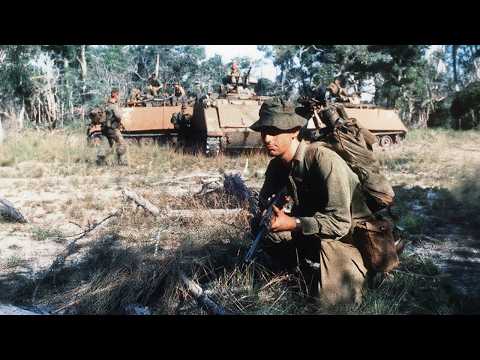
By early 1968, America’s most elite secret warriors faced a nightmare no technology could defeat. The Military Assistance Command, Vietnam—Studies and Observations Group, known as MACV-SOG—was the Pentagon’s finest. These men were trained to strike like lightning, equipped with cutting-edge gear. Yet deep in Vietnam’s choking jungles, invisible enemies tracked them with deadly precision.
Classified statistics left even battle-hardened officers speechless. In the northernmost zone, each reconnaissance team survived an average of only six missions before catastrophe struck. Cross-border raids into Laos boasted a 100% contact rate—every patrol got spotted, stalked, and hit hard. Certain SOG units suffered casualty rates soaring past 300% yearly. Entire rosters vanished and refilled three times within 12 months.
This wasn’t combat. It was a relentless shredder draped in stars and stripes, devouring America’s bravest generation.
The crisis boiled down to one brutal truth: the Viet Cong and North Vietnamese forces detected American patrols from hundreds of meters away, flipping hunters into helpless targets long before bullets flew. Training failed to bridge the gap. Equipment poured in by the millions couldn’t save them. From test sensors to prototype night sights, the real enemy was the jungle, clashing violently with American firepower-focused strategy that made every team a noisy, lumbering bullseye.
Typical six-man SOG squads crashed through undergrowth like armored trucks overloaded with gadgets and rounds. They lugged 23-pound PRC-25 radios, vital for air strikes, but hissing electronically to alert ears. M16 rifles featured 20-inch barrels, scraping vines with sharp metallic screeches. Every fighter packed 400 to 600 rounds alongside grenades, smoke pots, and explosives, generating endless jangles and thuds. Six men hauled over 400 pounds total, boots meant for cold forest crunching tropical brush. To silent foes lurking nearby, the Americans broadcasted their position like parade drums.
Lieutenant Colonel John Singlaub, SOG’s operations chief, confessed later: “They dispatched top talent into terrain stacked against them—except for raw guts.” Foes moved lighter, quieter, with endless patience. Their edge above all: invisibility. Americans thundered heavy, rushed, and exposed.
Desperate fixes consumed fortunes. People sniffers hunting sweat ammonia. Infrared traps, acoustic arrays. $3.7 million vanished into hushed radios. Nothing stemmed the tide. By March 1968, top brass debated halting recon entirely in hot zones. The human toll had grown unbearable.
While Saigon generals scrambled over battlefield flops, uglier clashes erupted in base camp mess halls over basics like soap and pride. This wasn’t about guns. It was culture war, hygiene battles. What made a soldier professional versus savage?
Australian SAS arrival at Nui Dat stunned allies expecting crisp Commonwealth troops. Instead came wild-haired, unshaven figures wreaking earthy rot—uniforms caked in swamp filth. No spit polish here, just stench hitting Americans like a slap. Impossible to stomach or excuse.
Scandal exploded fast in tight quarters. One starched American sergeant, boots gleaming mirror-like, berated an SAS fighter over beard growth and sour odor clinging like fog. Cleanliness equaled godliness in US ranks. Sharp looks signaling iron discipline. Patrol prep meant thorough soap scrubs, deodorant layers, heavy insect spray clouds wreaking chemicals. Troops clung to civilization amid chaos, shielding skin from jungle grime with scented walls.
Australians preached the opposite gospel, deeming US routines suicide invitations. Jungle demanded merger, not conquest. Their smell code ruled absolute. Three days pre-patrol banned soap, shampoo, paste, scents entirely. Shaving halted cold. Diets shifted to garlic heaps and Vietnamese spice, tweaking sweat chemistry to mimic locals. Outbound, they rolled gear in mud, leaf rot, charcoal dust, trading human trails for forest perfume.
Americans recoiled, deeming it beastly, unfit for civilized fighters. Mess hall clashes peaked ugly, scent divide turning physical. GIs abandoned tables at SAS approach. Noses pinched, barbs flying loud. One Green Beret wrinkled his face at a nearby corporal’s stench ruining chow. “You weak like filthy beasts,” he spat. “Can’t swallow food near that.” The Australian stayed ice cool, eyes locking on the pristine foe. “We carry jungle scent, friend. Yours screams easy mark from miles off.”
Brutal reality hung heavy. US pros were blind to hygiene’s fatal flaw, but the jungle cared little for pride. Proof loomed bloody near.
Tragedy exploded across American tactics on April 15th, 1968, during a mission that ripped the mask off every deadly flaw in US doctrine. Call sign Python, a six-man team of battle-hardened Green Berets under Sergeant Harland, a three-tour veteran decorated with the Silver Star, launched into Hat Dich territory with total confidence. These elite operators followed training manuals to perfection, advancing at 100 meters per hour with security stops every 15 minutes. Each soldier carried 87 pounds of gear. M16 rifles polished that morning. Uniforms fresh from laundry smelling of soap and aftershave. Heavy insect repellent applied thick against mosquitoes. Speed meant safety. Firepower overwhelmed danger. Cleanliness proved discipline. Python owned this jungle—or so every textbook swore.
That very cleanliness doomed them from helicopter touchdown. Soap, Old Spice aftershave, and chemical bug spray drifted ahead on humid winds, announcing their presence 200 meters before any boot touched dirt. Viet Cong sentries caught the unnatural scent instantly, sharper than rustling leaves or radio static. To jungle natives, American hygiene smelled like a billboard, not soldiers. Mortar crews adjusted fire based purely on that chemical trail floating through trees. Python pushed forward blind, unaware morning routines broadcasted their position like sirens. Enemy spotters tracked every step by odor alone, setting the perfect trap.
Sergeant Harland rotated point men every 30 minutes per protocol, logging all clear at 0615 halt despite distant bird silence 300 meters out. Chemical signature carried farther than sound, alerting tracker Nguyen Van Duc, a 27-year-old Long Hai native, before visual contact. Duc radioed mortar coordinates using wind direction, zeroing 82mm tubes 600 meters distant. Python maintained textbook pace, confident heavy loads guaranteed survival against primitive foes.
First real warning came at 0630. Monkey chatter ceased across a wide radius, wildlife fleeing unnatural intruders. Americans dismissed it as normal jungle noise, pressing toward the objective. At 1040 hours exactly, the ambush matrix detonated like clockwork horror. Three machine gun nests unleashed from preset flanks. Left position raking with 1,200 rounds per minute bursts. Right flank pouring 7.62mm fire from cover. Mortars crashing center mass.
Point man Rodriguez was shredded instantly by the opening volley before reaching his fighting position. Radio operator Klein caught shrapnel across the shoulder in the first blast. Communication gear sparked useless as extraction calls drowned in chaos. Claymore mines ripped the 20-meter front arc clear but revealed nothing. Attackers hid in shadow pockets invisible to thermal scan.
Survivors poured counter fire desperately. 600 rounds per man burned through magazines. Fragmentation grenades bounding uphill blind. Violet smoke popped for close air support. Yet phantoms dictated battle rhythm, having mapped the patrol route hours earlier via drifting cologne cloud. Mortars walked tighter with spotter corrections. High-explosive fuses slicing air at 900 feet per second.
Harland’s team fought shadows across null thermal signature. Every rustle amplified by overloaded gear crashing through brush. Panic gripped the remnants as unseen enemy controlled tempo. This was execution theater, not combat. Helicopter extraction fought through curtain fire. Pilot taking multiple hits, just reaching the landing zone. Two irrecoverable tragedies marked Hat Dich forever. Rodriguez’s gear tangled in grass. Klein’s radio shattered beside probable final position. Three survivors dragged clear, broken under 87-pound dead-weight packs. Medevac litters stained through. Zero intelligence returned despite massive ammunition expenditure averaging 90 rounds per confirmed hostile. Base camp coordinates remained phantom.
Mission scrubbed after 60 minutes ground time. Sector denied for SOG operations six critical hours. Captain Wallace monitored the collapse from the tactical operations center. Fists clenched across radio reports matching the fourth identical pattern that quarter. Brave operators sacrificed upon predictable noise, betrayed by soap scent broadcasting position like neon signs. Doctrine demanding speed, weight, hygiene created the perfect enemy targeting profile across the sensory battle space. Python’s disaster wasn’t misfortune. It was mathematical certainty.
Civilized warriors announced arrival via department store perfume against silent jungle natives. But this crimson lesson marked only the opening salvo shaking Allied confidence foundations brutally. Just kilometers distant in the same Hat Dich slaughter zone, an Australian SAS patrol was about to detonate a warfare revolution—mocking every American tactical instinct with surgical defiance.
Sergeant Terry Ferrell commanded five swamp-caked warriors. They inserted thirty minutes after Python’s wipeout, yet advanced at an insulting tortoise crawl—seventy-five meters in the first hour. Deliberate heel-roll steps pulverized zero twigs across the razor-grass gauntlet. Their 23-pound radios were absent, eliminating the electronic hiss. Their 400-round bandoliers were silenced, denying the jangling idiot symphony. They carried merely 200 precision rounds.
Their cut-down L1A1 rifles resembled drunken garage hacksaw experiments—unfit for regulation inspection. Unwashed for forty-eight hours, they executed the smell doctrine gospel. Garlic sweat replicated the cooking-fire bouquet. Uniforms deliberately swamp-rolled assimilated peat decomposition and charcoal dust—all olfactory cloaking. Captain Wallace sneered at map markers inside the plywood TOC, muttering about suicidal Aussies begging for swift catastrophe.
Ferrell executed zero patrol movement. The jungle inhaled the lethal quintet breathing in synchronized wildlife rhythm. No panicked macaque troops flushed overhead branches. No anopheles swarms scattered artificial intruders polluting the humid baseline. Enemy K9 teams circling the patrol route thrice daily registered null alerts. The Australian chemical fingerprint matched leaf mold substrate identically—molecular profile mirroring fermented fish sauce saturating indigenous cuisine.
Ferrell mandated twenty-minute freeze intervals. Palms cupped, filtering avian disruption patterns across a 300-meter battle space envelope. Heel-to-toe methodology positioned feet blind, navigating thorn-vine lattices, avoiding a solitary snap that would compromise position sovereignty. Identical southeast breeze vectors that hauled Python’s lava-soap signature now diffused pure humus bouquet exclusively, concealing five killers threading micro-gaps past dozing sentries oblivious across five-meter separation.
At 1800 hours, twelve hours into the insertion cycle, Ferrell dominated an overlooking ridge crest—the same phantom base camp that had slaughtered Python. A blind northeast drainage parallel, a null contour approach. To ten meters from an isolated machine gun nest, he endured a forty-minute guard cadence cycle. His second prone position lasted twenty-seven minutes, enumerating respiration cycles via periscope aperture, undetected beside a dozing ammunition loader.
Six hours of continuous surveillance cataloged fifty-two hardened structures spanning a 300-square-meter fortified envelope. Twenty-two tiered bunkers with mutual defilade. Eleven pre-registered weapons pits with reciprocal fire coverage. Seven elevated command hooches identified by blinking radio mass clusters. A Pentax 35mm telephoto captured irrefutable brass-starred regimental commanders through bamboo lattice apertures.
Southern defensive arcs: precisely zero projectiles expended. Zero security alarms triggered. Pure data dominance—harvesting battalion-equivalent intelligence across six humid hours. The patrol’s biomass merged with terrain substrate seamlessly. Reverse-trail exfiltration executed SAS doctrinal perfection. Two hundred meters of retrograde crawling obliterated inbound signatures via leafy-drag methodology. Compass azimuths preserved the exact outbound vector through absolute lunar blackout. Jungle egress completed at 0600 the following dawn—twenty-four hours total, yielding twelve exposed film canisters and sketched coordinate overlays accurate to plus-minus three meters.
Captain Wallace received the tactical intelligence cascade across the TOC wire tray. Grainy rooftop antenna photographs slammed his desktop—undeniable validation. The suicide patrol had accomplished tactical miracles precisely where firepower colossus perished bloodily. Aerial Yankee Tango validation sorties corroborated 100% structural correlations. Next sunrise, the base camp force estimate revised upward 300% instantaneously. Wallace fixated, disbelieving, upon command hooch rooftop signatures matching Ferrell’s six-hour grid logs. The enemy had been utterly oblivious throughout.
How did filthy, glacial operators execute impossibilities dominating clean supersonic warriors? The Australians amplified the dominance spectrum beyond passive surveillance, launching midnight psychological Armageddon. Corporal Ian ‘Ghost’ McBride prosecuted a confirmed regimental nerve center, penetrating at 1900 hours under absolute blackout. He exploited a twelve-minute patrol overlap, neutralizing claymore pressure plates via a twelve-inch bamboo probe, infiltrating through an eighteen-inch drainage aperture beneath a corrugated drip edge.
McBride navigated eight minutes of interior shadow topography, circumvented six slumbering guards, and reached the operations station. He extracted the operational overlay via scalpel precision, preserving coordinate corner folds intact. Rather than neutralizing the slumbering commander, he orchestrated a data-dominance masterwork: an empty Fosters lager tin—standard SAS field issue—positioned exactly twelve inches from the major’s left ear, atop the rice-field pillow. He egressed by mirrored reverse methodology, maintaining an absolute acoustic null print.
At dawn, radio intercepts captured operational meltdown across the Viet Cong R16 push. The target regiment’s cohesion evaporated overnight. Major Tran Van Men urgently requested relief across three maneuver battalions, citing a ‘Maung Forest demon’ interior penetration—confirmed sanctuary violation, absolute. Frenzy transmissions cataloged aluminum material evidence. Supernatural visitation authentication. Security personnel publicly disciplined, halting operational tempo for forty-eight hours pending traditional shamanic decontamination protocols.
A single alloy container achieved strategic paralysis equivalent to 3,125 artillery missions. McBride’s aluminum artifact crystallized the invisibility calculus, surpassing conventional lethality metrics exponentially—weaponizing paranoia beyond any frangible hollow-point cranial impact. The confirmed regimental paralysis endured three consecutive operational halts. Primary supply convoys involuntarily rerouted, exposing maneuver flank vulnerabilities. Cobra gunship interdiction windows widened. Battalion rotation cycles delayed catastrophically, compromising the Hat Dich counteroffensive slate. American forward air controllers registered a 27% intercept volume escalation, referencing confirmed morale degradation across three captured documents enumerating mandatory supernatural counter-measures.
A legend solidified instantaneously—a singular beverage container surpassing B-52 Arc Light saturation in terror amplification. Captain Wallace digested the dawn intercept transcripts across his battered plywood workstation, a Fosters replica taunting beside the operational overlay validations. Filthy, unwashed Australians had expended zero projectiles, yet dismantled an adversary’s will via metallic psychological warfare.
May 6th, 1968. Route 328, two kilometers north of Binh Beay Village. Sergeant Barry ‘Tiny’ Peters orchestrated a patience masterclass, etching the SAS legend into the Vietnam War’s tactical pantheon indelibly. His patrol shadowed a Viet Cong supply column for sixteen continuous hours, maintaining a 300-meter standoff, leveraging enemy footfall cadence as acoustic masking through the nocturnal transit phase. Dawn analysis revealed a predictable daylight harbor phase. Peters elected predictive terrain denial over reactive intercept.
Eleven hours of mobile ambush posture commenced at 0600 across a confirmed kill-sack ridge line. Peters anchored the primary pivot, prone for seven continuous hours, when a bull ant penetrated his boot upper via canvas mesh, delivering a formic-acid venom cocktail searing his calf musculature—neuropathic fire across the gastrocnemius complex. Seven-hour immobility threshold breached biological tolerance. Yet Peters maintained absolute statue discipline. Respiration regulated to four breaths per minute, suppressing diaphragm micro-vibration.
Fifteen meters downslope, Viet Cong militia smoked hand-rolled tobacco, rifles slung casual, utterly oblivious. Only after the smoker’s egress did Peters execute a fractional rifle reposition—a 0.03-milliradian adjustment—maintaining biological lock through optic shadow signature. At 1640 hours, the supply column entered the kill zone apex. Peters authorized surgical execution protocol, diverging fundamentally from the American saturation-firepower paradigm. The first ten porters traversed the primary position undetected, within arm’s reach—tactile proximity execution optionality deliberately preserved.
The remaining thirty triggered synchronized point-blank precision fire across modified L1A1 platforms at fifteen-to-twenty-meter engagement envelopes exclusively. 7.62x51mm rounds delivered hydrostatic shock trauma exceeding 5.56mm M16 terminal ballistics demonstrably. An eight-second execution window registered fourteen confirmed tragedies across the primary volley. The residual twenty-six scattered into chaotic jungle matrix, lacking coherent counter-response. Australian doctrinal genius manifested in immediate post-contact zero pursuit, preserving acoustic silhouette. Cut-down rifle ergonomics permitted target acquisition with minimal somatic displacement. Six additional precision terminations registered across attempted concealment arcs.
Total ammunition expenditure: ninety-seven rounds, inclusive of confirmatory double taps. Twenty confirmed tragedies plus an estimated eight to ten wounded. Australian tragedies: absolute zero across a four-minute engagement chronology. Surviving Viet Cong fled on an erroneous cardinal bearing directly into the Australian blocking position. Peters signaled pre-ambush via Morse lamp micro-bursts. Eight additional captures secured, yielding supply manifests and unit designations across the Long Hai sector. A forty-strong echelon reduced to twenty-eight tragedies or detainees—a 70% elimination ratio, unprecedented in conventional engagement metrics.
Captain Wallace digested the after-action summary across his battered desktop. Ninety-seven rounds versus twenty confirmed hostile tragedies registered statistical impossibility per US doctrine requiring a minimum 250 rounds per engagement casualty. Peters’ methodology shattered the fire-volume supremacy paradigm demonstrably. Precision trumped saturation. Patience overwhelmed aggression. The cut-down rifle modification validated tactical calculus beyond conventional wisdom entirely. The supply intelligence cascade triggered three sequential interdiction cycles, dismantling a confirmed regimental logistics backbone for six weeks.
This wasn’t mere patrol success. This represented doctrinal apocalypse, rewriting jungle combat arithmetic irrevocably. Skepticism persisted despite mounting evidence—until direct salvation forged unbreakable brotherhood bonds across allied fracture lines permanently.
Green Beret reconnaissance team Delta lay pinned in a riverine dead end under battalion-strength envelopment. Their primary radio smashed in the first contact burst, rendering FAC coordination null across a confirmed three-hour siege. Ammunition critical across all positions: forty-seven rounds remaining. The primary saw gunner down to nine magazines. Morphine exhausted, tending catastrophic wounded. The enemy consolidated twin RPD and 40mm machine-gun nests dominating the left and right flanks, riverine choke points. PKM support weapons registered confirmed kill sacks across the sole extraction avenue. The perimeter tightened methodically for the final annihilation sweep at 0600.
Delta’s leader contemplated a final bayonet charge, composing mental last letters home. The left-flank RPD chattered at 1,200 cyclic rounds—then suddenly, silence. 0542 hours. No grenade detonation signature. No LAW rocket back-blast thermal plume. Absolute acoustic cessation. The right-flank PKM nest followed an identical termination pattern forty-seven seconds subsequent, maintaining a zero-explosive-ordnance indication footprint.
The jungle bordering the primary defensive arc parted silently, revealing a swamp-blackened apparition emerging at zero-visibility separation. An Australian SAS tracker, indistinguishable from foliage substrate through deliberate mud-charcoal facial striping, manifested a finger-to-lip universal silence imperative. Beckoning the shattered Green Beret element to follow single file through an apparent solid green wall barrier defying egress logic entirely—Aboriginal-trained visual acuity exploited a twelve-inch drainage swale paralleling the primary riverine feature, a needle passage threading interlocking Viet Cong fire lanes undetected across the confirmed battalion deployment envelope.
The Green Beret survivors traversed the salvation corridor, observing the handiwork confirming Australian methodology supremacy firsthand at zero-meter separation. The flanking RPD crew slumped across linked belts, terminated by identical single 7.62mm headshot entry wounds center-mass cranial vault. Brass casings ejected precisely upslope, maintaining zero footfall contamination forensic signature. Cut-down L1A1 platforms registered across the kill confirmation signatures. The Delta team leader locked visual confirmation across the miniature carnage tableau. The contemptuous sneer was absent—replaced by humbled reverence, recognizing a life debt across a tactical methodology chasm bridged violently.
The Australian tracker ghosted forward, threading three additional interlocking fire lanes across the envelopment pocket. The extraction rally point materialized at a degraded rubber plantation fringe, 500 meters from the primary riverine feature. A PRC-25 burst transmission coordinated the dust-off medevac slick at 0615 under a Cobra Overwatch envelope. The Green Beret commander grasped the tracker’s forearm in the final moments pre-boarding, conveying unspoken brotherhood forged across shared jungle trial by fire. The SAS operator nodded fractionally, maintaining operational security facade, then vanished reverse-trail single-bound into primary concealment, maintaining zero acoustic footprint post-salvation.
Delta’s after-action debrief registered 100% casualty aversion across a confirmed battalion-strength envelopment. Australian intervention credited as the primary causal salvation factor across tactical operations center documentation formal. Captain Wallace reviewed the dawn casualty reports across his plywood partition, noting zero Delta tragedies versus projected total team elimination. The filthy, slow Australians hadn’t merely survived jungle calculus. They’d rewritten survival arithmetic, saving skeptical allies witnessing tactical divinity firsthand.
Warrant Officer Ron Exton faced a packed briefing room of stunned American officers—including the riverbank salvation survivors—laying bare the SAS physics rewriting combat arithmetic forever. He placed a standard M16 beside a cut-down L1A1 across the scarred briefing table, his voice cutting through stunned silence like a bayonet twist.
The American rifle measured thirty-nine inches total length, forcing constant vegetation contact every single meter through dense jungle lattice. Every bamboo scrape generated distinctive metallic resonance propagating 300 meters through ambient humidity amplification. Thirty-nine inches of metal constantly wrestling tropical overgrowth equaled a noise signature equivalent to walking a brass band through a library cathedral. The Australian modification’s total length: thirty-three inches. A six-inch reduction sounding trivial until tactical math exposed the reality gap. A single 100-meter advance registered 200-plus vegetation contact points across a standard patrol cycle. The modified profile reduced interference 40 to 50% via vertical maneuverability, permitting rifle lift over vine tangles without horizontal swing exposing barrel signature continuously.
A Green Beret captain, clinging to doctrinal purity, challenged the muzzle-velocity degradation beyond 200-meter effective range. Exton conceded the 150-feet-per-second sacrifice point-blank, acknowledging the 300-meter theoretical maximum sacrifice as jungle-reality optimization. Then the critical question landed brutally: precisely how many firefights erupted beyond 250-meter sight lines across the monsoon-obscured battle space envelope? The room’s silence answered instantly. Virtually zero engagements registered past fifty meters. The majority detonated at twenty-meter maximum separation envelopes exclusively.
Exton hammered the doctrinal fracture mercilessly. Viet Cong ambushes materialized at fifteen-meter point-blank ranges, where 7.62 NATO rounds delivered catastrophic hydrostatic trauma exceeding 5.56mm terminal effectiveness demonstrably. Speed killed equally viciously. One hundred meters per hour equaled sprinting through auditory ambush trigger zones, advertising position continuously. The SAS crawl of twenty to forty meters hourly permitted deliberate foot placement, avoiding acoustic tripwires entirely. The American doctrine broadcasted arrival across a confirmed 300-meter detection envelope consistently.
Soap equaled suicide equally definitively. Chemical residue persisted on skin surfaces seventy-two hours post-application, generating a persistent olfactory beacon. The SAS banned cleansing products three days pre-mission entirely. Dietary garlic saturation altered sweat chemistry baseline, mimicking the indigenous population profile perfectly. American insect repellent, triple-layered across exposed integument, broadcasted a distinct signature 200 meters downwind consistently across controlled tracker trials. Jungle wildlife ignored SAS passage entirely. No bird alarm calls. No insect swarm displacement. No mammalian flush patterns compromising position sovereignty.
Exton produced a decibel meter logging the PRC-25 squelch break registering forty decibels against a quiet jungle background—audible 200 meters to skilled tracker ears. SAS canvas gear generated fifteen decibels at walking speed, equivalent to jungle ambient, nullifying detection entirely. The riverbank survivors nodded recognition across the identical salvation signature—firsthand witness validation.
This tactical apocalypse demanded operational crucible validation. July 18th, 1968. Operation Port C delivered the definitive Allied methodology showdown in the Long Hai Hills Viet Cong stronghold. American SOG call sign Winder prosecuted an aggressive six-man insertion, confirming supply-cache coordinates via signals intelligence, covering ground rapidly per revised noise-discipline protocols averaging ninety meters hourly. Four hours post-drop, Winder dominated the objective cave complex, registering empty chambers exclusively—cold cooking fires, hasty equipment scatter indicating enemy foreknowledge hours previous. A defensive perimeter established pending extraction decision as tactical surprise evaporated completely, exposing patrol ambush liability maximum. Winder’s egress extraction point compromised regardless. At 1545, a planned enemy ambush matrix triggered, costing two wounded and requiring gunship intervention. Mission abortion, total.
Australian call sign Wannabe crawled a parallel sector, a five-man element maintaining a glacial twenty-five meters hourly signature across a confirmed 400-meter total displacement in a four-hour insertion cycle. Corporal Jack Kelly registered anomalous fresh boot impressions crossing the patrol route, indicating Viet Cong rapid egress evading the noisy Winder signature two hours previous. Rather than pursuing the predetermined cave grid blindly, Kelly elected track-parallel analysis, exploiting enemy displacement acoustic masking deliberately. Six hours of continuous shadow pursuit paralleling the confirmed enemy vector maintained a 300-meter standoff leveraging foliage penetration. Null thermal signature, completely.
At 1900 hours, Wannabe dominated an overlooking concealed resupply nodal, guarded by four sentries minimally. A ninety-minute observation phase cataloged a medical station serving multiple Viet Cong echelons, confirmed across pharmaceutical manifests and container markings. Kelly transmitted a sole radio call for the mission cycle, relaying revised grid coordinates at 1930 precisely. B-52 Stratofortress Arc Light delivery impacted at 2100, saturating the confirmed nodal destruction—100% structural obliteration, aerial photo verification. The Wannabe intelligence cascade triggered three sequential interdiction operations, dismantling a confirmed regimental supply architecture across a six-week operational window completely. Winder’s patrol registered zero target acquisition and two tragedies incurred. Wannabe prosecuted a high-value nodal with zero friendly tragedies across the identical battle space envelope.
Operation Port C’s after-action summary reached General Creighton Abrams’ desk within a forty-eight-hour execution cycle. The MACV commander’s response crystallized the paradigm shift instantaneous: “Relay complete Australian methodology documentation. Immediate across SOG enterprise mandatory.” The tactical debate evaporated definitively. The suicidal slowpokes were validated in supremacy beyond numerical reputation, permanently rewriting Allied operational calculus foundationally.
Twenty-one years later, Colonel Jim Wallace stood before wide-eyed Special Forces candidates at Fort Bragg’s JFK Special Warfare Center, scarred hands gripping two rifles that told the story of jungle warfare’s greatest lesson. On the left lay the old M16 with its regulation twenty-inch barrel—the symbol of 1968 arrogance that cost good men their futures. On the right sat the M4 carbine with a 14.5-inch barrel, standard issue for every Delta operator, SEAL, and Ranger carrying America’s fight into the twenty-first century.
The young faces watched silently as Wallace hefted the shorter weapon, his voice thick with memories of Nui Dat’s plywood TOC and the smell of burning Huey fuel. “This carbine,” he began, “was no accident of engineering evolution. It was the direct granddaughter of hacksaw-cut L1A1 rifles that Pentagon generals called garbage and mess-hall warriors called suicidal.”
Wallace paced slowly before the class, eyes distant, replaying Python’s radio silence and Ferrell’s impossible photographs. “Those 120 Australians we mocked as hobos and beach bums saved more American lives than we ever admitted. They proved that in jungle warfare, invisibility trumps firepower every single time. Their cut-down rifles silenced by 40%. Their glacial twenty-meter-per-hour crawl heard by no one. Their refusal to wash made enemy dogs ignore them completely.”
“We watched good men bleed out because our M16 screamed through bamboo and our Old Spice announced us from 200 meters. Those idiots with garage weapons showed us warfare’s real math. One silent shot beats a thousand noisy bullets. The M4 in my hand proves they were right all along.”
The room hung heavy with the weight of that truth. Every modern special operations manual—from Ranger handbook noise-discipline chapters to SEAL team tracking protocols—carries Australian DNA in its pages. Delta Force trains with SASR instructors, learning patience-based reconnaissance that rewrote Vietnam doctrine. The short-barrel carbine dominating today’s battlefield evolved directly from lessons learned watching dirty Australians out-hunt Americans.
“We spent three months in rivers of blood, learning what they knew instinctively. Sometimes the crazy ones are the only ones who survive.” Wallace set down the rifles, looking at faces that would deploy to jungles, deserts, mountains. “Don’t repeat our mistake. Don’t laugh at the guy who looks different, moves slower, carries less. He’s probably the one who will save your life when the bullets start flying. Innovation always looks like insanity until it works.”
Those hacked-up Australian rifles, mocked in 1968, became the blueprint for the M4 carbine saving lives in Iraq, Afghanistan, every hot zone since. 120 filthy, garlic-eating, slow-walking operators humbled the world’s greatest army and rewrote special warfare forever. They taught us that judging by appearances kills faster than enemy fire. Their jungle-ghost legacy lives in every modern operator’s rucksack, proving dirty beats shiny when survival hangs by a thread.
The Australians didn’t just fight a war—they redefined winning it. And as Colonel Wallace looked out at the next generation of warriors, one question lingered in the heavy silence: what other ‘insane’ ideas are we dismissing today that could save lives tomorrow?
Report this article
Select a reason for reporting:






