The USS Kitty Hawk, commissioned in 1961, was the first true supercarrier—a floating fortress of 80,000 tons, projecting American power across the globe. But its revolutionary design owed a debt to a forgotten predecessor: a Japanese behemoth from World War II that, in scale, foreshadowed the modern supercarrier. Yet this ship, the Shinano, would meet a fate so swift and tragic that it would become a haunting legend of the seas.
Born from the hull of a Yamato-class battleship, Shinano was conceived as a supership—a carrier twice the size of any American counterpart. But as war closed in, desperate decisions and fatal flaws sealed its doom. It would be sunk just 10 days after commissioning, taking over 1,400 souls with it. This is the story of Japan’s ill-fated supercarrier, a vessel that promised greatness but delivered only catastrophe.
In the aftermath of World War I, naval strategists faced a harsh truth: battleships, once the undisputed kings of the sea, were becoming obsolete. The rise of aircraft and submarines had shifted the balance, but old convictions died hard. While some clung to the battleship’s firepower, others saw the future in carriers. Japan, an island nation with ambitions of Pacific dominance, invested heavily in both—building the world’s most powerful carrier fleet while secretly designing the ultimate battleship.
Between 1934 and 1937, the Japanese Navy studied 23 proposals for a super battleship, settling on a 71,000-ton behemoth armed with nine 18.1-inch guns—the largest ever mounted on a warship. These guns could hurl 3,240-pound shells over 41 kilometers. The first of these, Yamato, was completed just a week after Pearl Harbor. But almost immediately, these ultimate battleships found themselves overshadowed by carriers, as Japan’s devastating strike at Pearl Harbor and subsequent carrier victories proved that air power now ruled the waves.
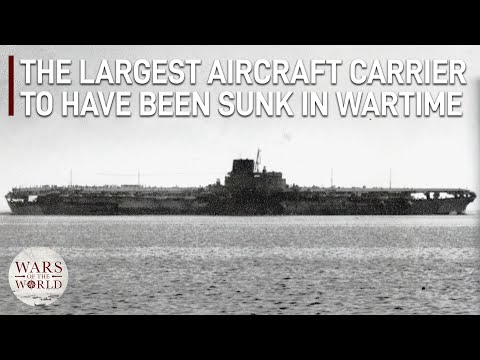
The Battle of Midway in June 1942 shattered Japan’s carrier force, losing four fleet carriers in a single day. Desperate to replace them, the Japanese Navy turned to the unfinished hull of a third Yamato-class battleship: Shinano. The conversion would create the largest aircraft carrier the world had ever seen—840 feet long, displacing 68,000 tons, with an air wing of up to 150 planes. But bureaucratic infighting and resource shortages plagued the project. Some argued Shinano should be a support carrier, resupplying other carriers; others insisted it be a true fleet carrier. In the end, the support carrier faction won, but the conversion was slow and fraught with problems.
By the time Shinano was launched on October 8, 1944, Japan’s situation was dire. The loss of two more fleet carriers at the Battle of the Philippine Sea and the sinking of the battleship Musashi underscored the urgency. During the launch ceremony, a minor accident—water breaking free and striking the dock—was seen as a bad omen. It would prove prophetic.
Shinano was commissioned on November 19, 1944, under Captain Toshio Abe. He protested the order to sail to Kure, citing incomplete safety features and an untrained crew, but his superiors, fearing American air raids, insisted. On the evening of November 29, Shinano departed Yokosuka with three destroyers, carrying 50 Oka kamikaze glide bombs and six Shinyo suicide boats. No aircraft were on board. The crew included dock workers unfamiliar with the ship. Abe was warned of a U.S. submarine in the area, but he believed it was part of a wolf pack. In reality, only one submarine lurked nearby: the USS Archerfish, commanded by Joseph F. Enright.
Enright’s crew spotted the massive carrier and began pursuit. Shinano zigzagged, slowing its progress and allowing the submarine to catch up. At 3:15 AM on November 29, Enright fired six torpedoes. Four struck home, tearing into the carrier’s hull. Water flooded in, and Shinano developed a list. Abe, confident in damage control, maintained speed—but the crew was untrained, watertight doors were improperly closed or missing, and fires raged. Bucket chains replaced fire hoses. Panic spread among the dock workers.
By mid-morning, the list reached 30 degrees. Abe ordered abandon ship. At 10:55 AM, Shinano capsized and sank, taking 1,435 officers, sailors, and civilian workers with it—including Abe. It was the largest warship ever sunk by a submarine. Shinano had been in commission for just 10 days.
Shinano’s demise was not merely a tactical loss—it was a symbol of an empire’s desperate overreach. The ship had been rushed to sea with a skeleton crew, incomplete safety systems, and a captain who knew his vessel was not ready. Every shortcut taken in her construction, every compromise forced by resource shortages, and every delay caused by bureaucratic infighting converged in that single, catastrophic night.
Yet the story of Shinano does not end with its sinking. Its wreck, lying in the deep waters off Japan, remains the largest warship ever destroyed by a submarine—a record that still stands. More importantly, the lessons learned from its flaws—the need for trained damage-control crews, properly sealed bulkheads, and realistic operational readiness—echoed in the design of future carriers, including the American supercarriers that would eventually dwarf it.
When the USS Kitty Hawk was commissioned in 1961, it carried none of Shinano’s ghosts—but it inherited the same ambition: to project power across vast oceans. The difference was that Kitty Hawk was built with the hard-won wisdom of a war that had exposed every weakness of rushed construction and unprepared crews. Shinano, in its brief and tragic existence, had helped write that lesson.
Today, the name Shinano is little remembered outside naval history circles. But every time a modern supercarrier steams into a crisis zone, it carries forward a legacy shaped by the mistakes of a doomed Japanese giant. For in war, the cost of hubris is often measured in the lives of those who serve.
What do you think—was Shinano a victim of circumstance, or a cautionary tale about the dangers of rushing technology into battle? Share your thoughts in the comments below.
Report this article
Select a reason for reporting:






